Visiting Expo Biznesam 2015
Today I spent half a day at the Expo Biznesam 2015 business solutions and contacts fair, held at the Radisson Blu Hotel Latvija. There were stands from companies across various industries, two halls where parallel 30-minute seminars took place, and a private consultation room. But the greatest visitor interest and participation was drawn by two other activities in particular: the contacts wall and speed contacts.
Today I spent half a day at the Expo Biznesam 2015 business solutions and contacts fair, held at the Radisson Blu Hotel Latvija. There were stands from companies across various industries, two halls where parallel 30-minute seminars took place, and a private consultation room where you could sit down at a table - by prior arrangement - to discuss topics of interest. But the greatest visitor interest and participation was drawn by two other activities in particular: the contacts wall and speed contacts.
Contacts wall
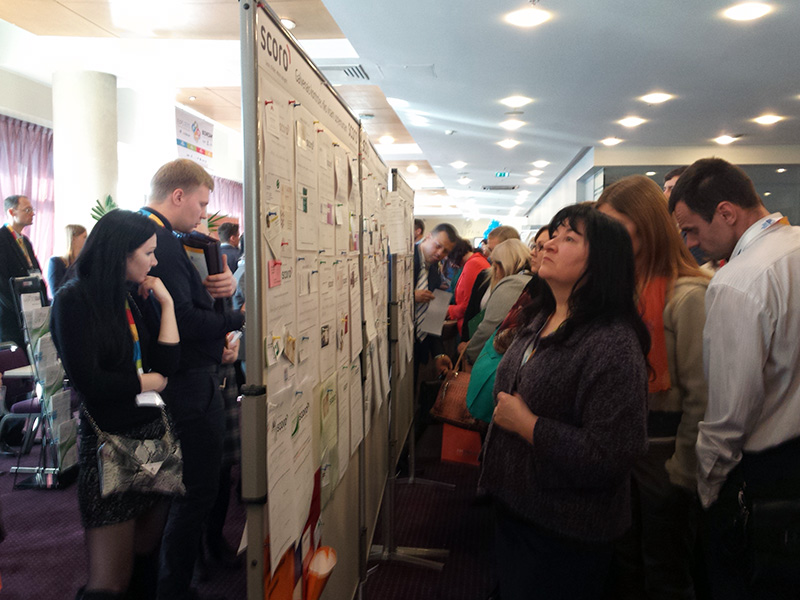
On both sides of the contacts wall - at first a little tentatively, then more and more - contact sheets were pinned up with requests for a service or product of interest, along with the company contact person's business card. Other event participants could then pin or stick their own business cards to these sheets as a sign of readiness to discuss collaboration in providing that particular service or supplying those products. Judging by the number of business cards, the most popular requests and offers were in the areas of business consulting and training, personnel recruitment and assessment, website development, and other IT solutions.
Speed contacts
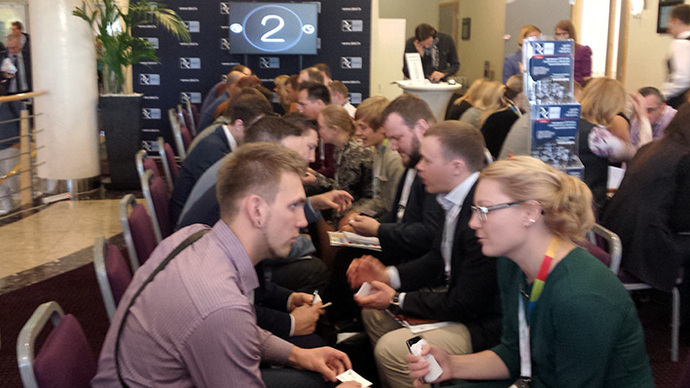
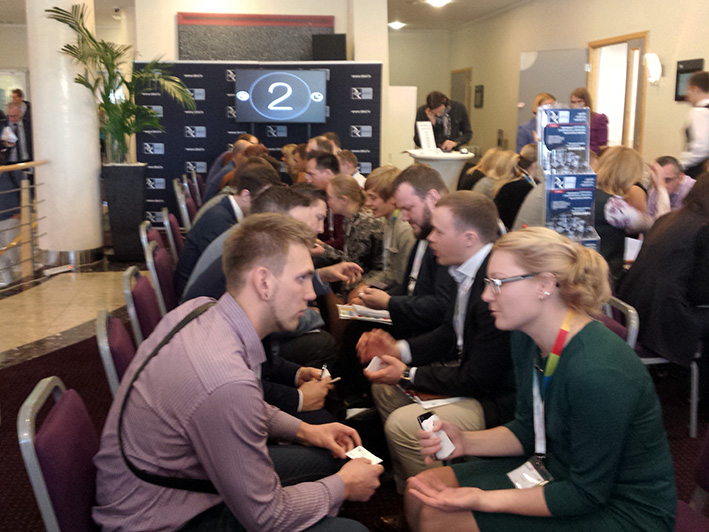
Similarly, the speed contacts session - in which I participated for the second time (the first was at LTRK) - was well attended. The concept: two rows of participants seated facing each other, a facilitator controlling the time for each brief self-introduction (1 minute each), and rotation - shifting one seat to the right - until every participant has met everyone else, exchanged business cards, and had a short conversation. The activity requires a sizeable stack of business cards, the ability to say the most important thing about your business and ask the one question that interests you - and quite strong vocal cords, as your voice can go hoarse from non-stop, loud talking.
Seminars
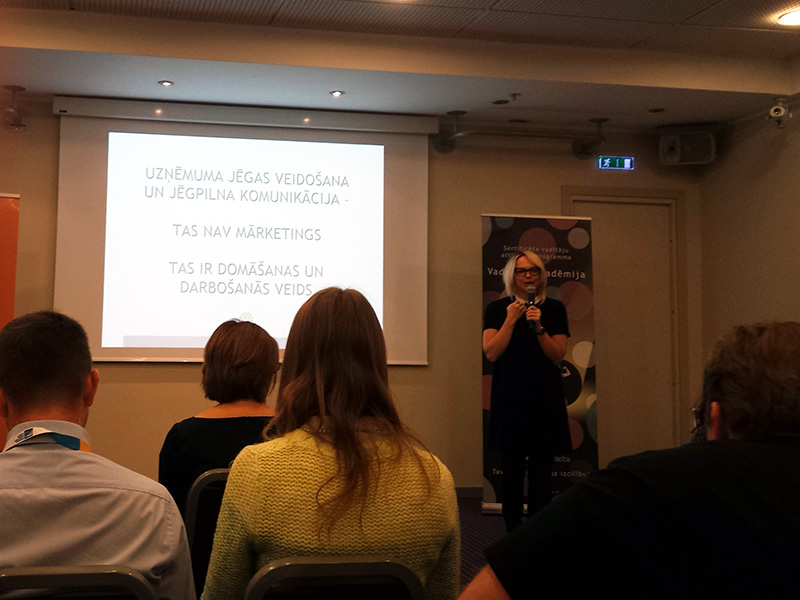
I also managed to attend two mini-seminars. In the first - "To Be or Not to Be - That Is the Question! What Is the Meaning of Your Company?" - two speakers took the stage: Kaspars Kauliņš (Trivium) and Linda Saulīte (Vizeum). The first spoke about the importance of employee engagement in a company's work. I liked his comparison - "positive dissatisfaction" - when you want to do something better, more, with higher quality, and so on.
A leader's main responsibility in today's company is to create meaning - why are we doing this? Sustainable companies are those that have meaning, and they know not only how to create it but also how to communicate it to employees, clients, and partners.
Linda then took the baton, expanding on the thought about the wise leader. The 21st century is very personal: we no longer talk about things or goods, but about what they give me. A shift from media to personal experience, from consumer to individual, from product to result and impact, from segmentation to interest groups, from functional brands to creators of values and change.
Create meaning, not positioning:
- Believe what you say!
- Make the client the hero, not the brand!
- Create positive change in people's lives!
Meaningful communication is, first and foremost, listening - and, secondly, dialogue.
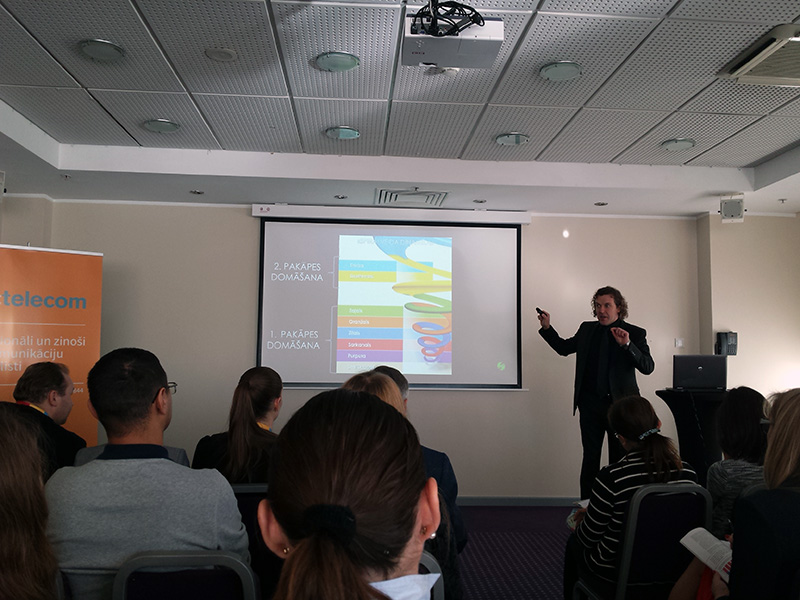
The speaker at the second seminar - "The Integral Model - The Next Step in Business Thinking" - Jānis Audijāns (SmartStream), attempted to overturn the belief many have settled into: people don't change! He introduced the audience to 8 stages of consciousness development, or memes, each assigned its own colour in the diagram presented.
First-tier thinking:
Meme 1 - Archaic instincts (beige) - 1% of the world's population;
Meme 2 - Magical animism (purple) - 10% of the world's population;
Meme 3 - Egocentric power meme (red) - 10% of the world's population;
Meme 4 - Mythic order (blue) - 40% of the world's population;
Meme 5 - Scientific achievement (orange) - 30% of the world's population;
Meme 6 - Sensitive individual (green) - 10% of the world's population.
Second-tier thinking:
Meme 7 - Integrative (yellow) - 1% of the world's population;
Meme 8 - Holistic (turquoise) - 0.01% of the world's population.
This was followed by a brief introduction to Ken Wilber's Integral Model - which I suspect is a topic for more than a few hours. Well, yet another theory from America, with its own right to exist. I spotted several contradictions, but all in all it was very interesting to learn about.
comments