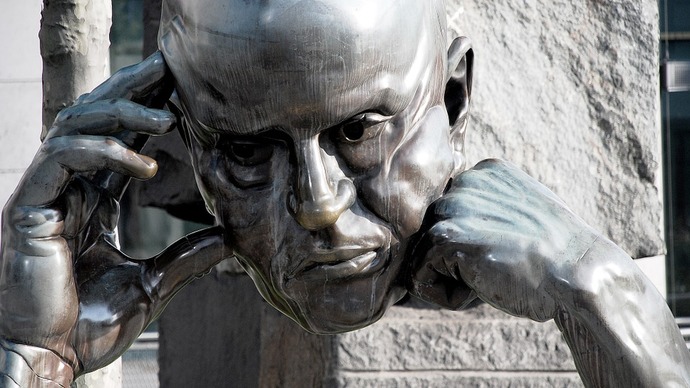
The Powerful Thinking Algorithm
A person's weak thinking is shaped by their life experience - that is, their stereotypes - and all decisions and conclusions are made on the basis of trial and error. Practitioners of powerful thinking, on the other hand, use specific algorithms to resolve any situation (in their own favour).
At one of the LTRK seminars I was introduced to a thinking technology presented to the assembled members by a lecturer from Estonia, Marks Lučins. The speaker called this technology "powerful thinking" - which, unlike "weak thinking", provides the ability to break any problem down into specific tasks, resolve them, and derive concrete benefit from doing so.
Despite the fact that the speaker's address was aimed at promoting his own series of seminars - which are, pricewise, rather "salty" - there was one very compelling example or algorithm that has been occupying my mind for the second week now, and is therefore worth sharing.
In the lecturer's view, a person's weak thinking is shaped by their life experience - that is, their stereotypes - and all decisions and conclusions are made on the basis of trial and error. Practitioners of powerful thinking, on the other hand, use specific algorithms to resolve any situation (in their own favour).
Here is one of the powerful thinking algorithms - преследование цели, or goal pursuit (the lecture was delivered in Russian). When facing a situation requiring a solution, we must ask ourselves 4 questions:
1. Do you want a goal or a means to an end?
2. Do you want to dig yourself, or to have it dug?
3. Do you want to work yourself, or to have it done?
4. Do you want to pay, or to be paid?
People have a tendency to immediately plunge in and "start digging", without considering other possible solutions they could use to achieve their goal. Instead of spending effort and money to lure the customer into the shop, build a system so the customer comes on their own. In the end, either we use technology to earn money, or someone uses technology so that we earn money for them.
Example: What would you do if you needed to learn, say, French? A weak-thinking person will immediately search for courses they can afford and that are conveniently located near their workplace so they can comfortably drive over or get there on time. A powerful-thinking person, working through the four questions above, will build a system - find at least 3–4 more people who want to learn French, invite them to their office or home, collect money from them, find a French language teacher, and pay the teacher half the money. The result: they don't go anywhere, everyone comes to them, they spend nothing, and everyone pays them.
Well - do you like it? Is it applicable?
comments