Attending the Subject:Creativity Creative Industries Conference at Lielais Dzintars in Liepāja
Thanks to reviews and a fairly wide social media campaign, this year I decided to attend the one-day Subject:Creativity conference, dedicated to four themes - identity, place, boundary, and the human being. The prospect of visiting the newly built Lielais Dzintars concert hall in Liepāja was also enticing. I must say straight away that despite plans to stay longer in Liepāja, I was back in Riga by midnight. Why that was - more on that below.
So, on Friday 19 February, at a fairly early hour (around 6:30), together with my BNI colleague Vita Kaiva, we set off from Riga by car towards Liepāja, as participant and guest registration began at 10:00. The weather was unkind - the roads were covered in wet, freshly fallen snow - and as we approached the city of winds, a thick white wall of fog surrounded us on all sides.
Event organisation and material provisions
Despite all that, we arrived in good time. We comfortably parked in the free car park located across the road from Lielais Dzintars. In the foggy morning the building rose above the city's silhouette like a large, asymmetrical curved block, and its imposing amber-coloured glazed façade was not visible. Inside, crowds of visitors were already milling about. A light drizzle was falling.
The start was promising. The good organisation was a pleasant surprise - signage, greeters, name badges with the event programme, speakers, topics, hashtag #subjectcreativity, and a phone number for texting questions to conference speakers; a generously sized Purpurs notebook of excellent quality, a branded wooden pen, a booklet of special offer coupons, a coffee break with breakfast cereal and yoghurt, boxes of apples of various varieties, small water bottles, and more.
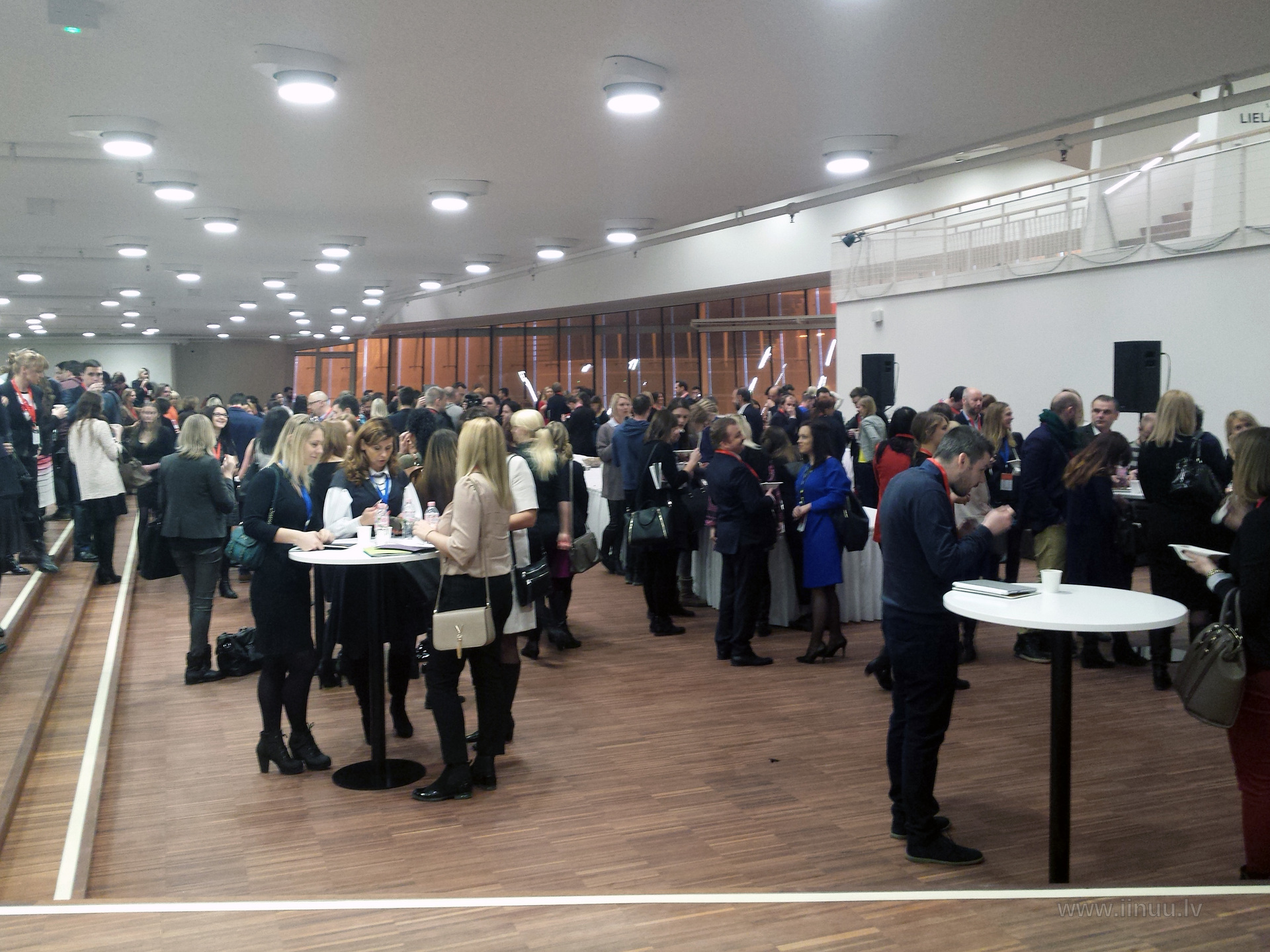
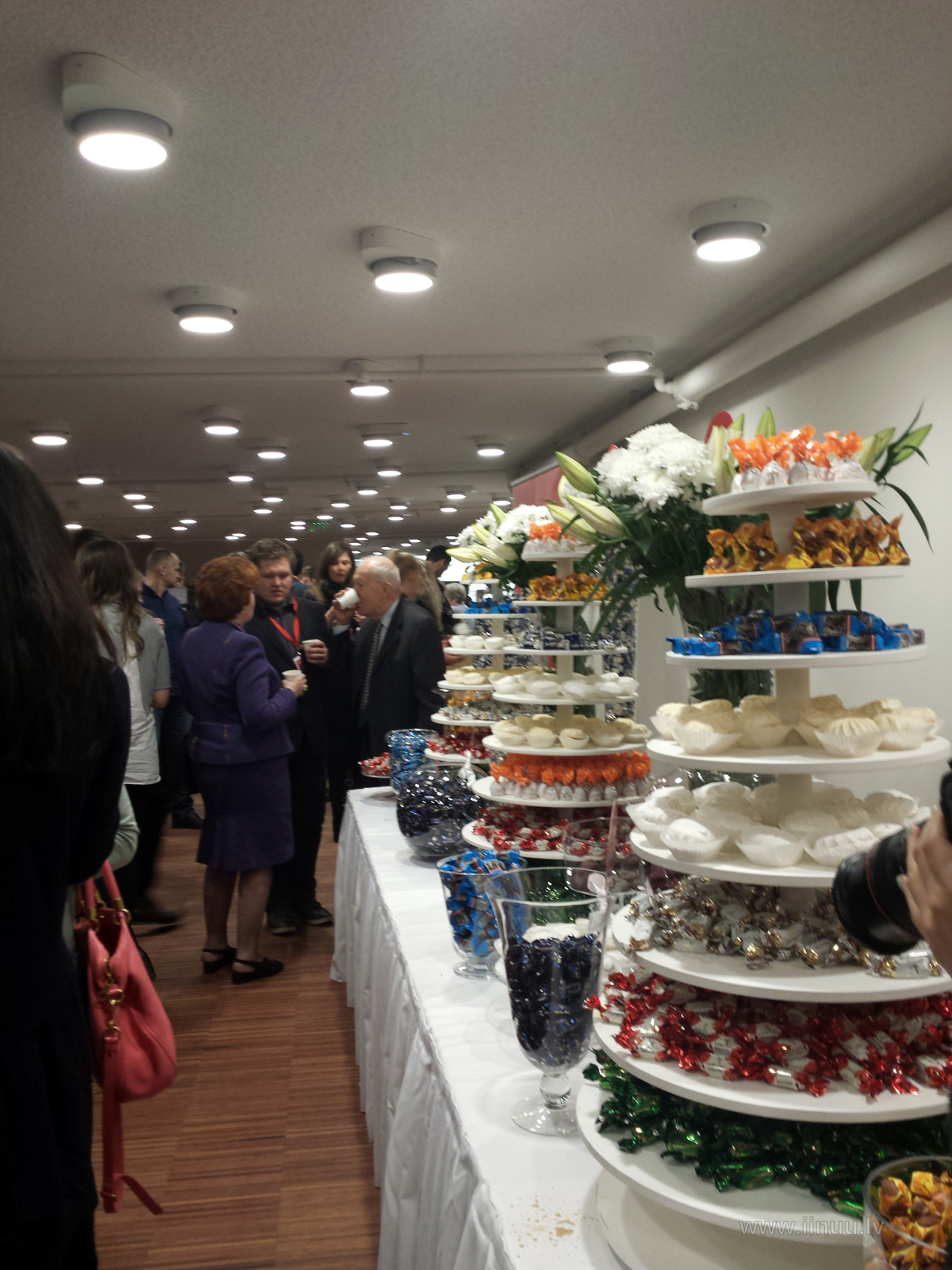
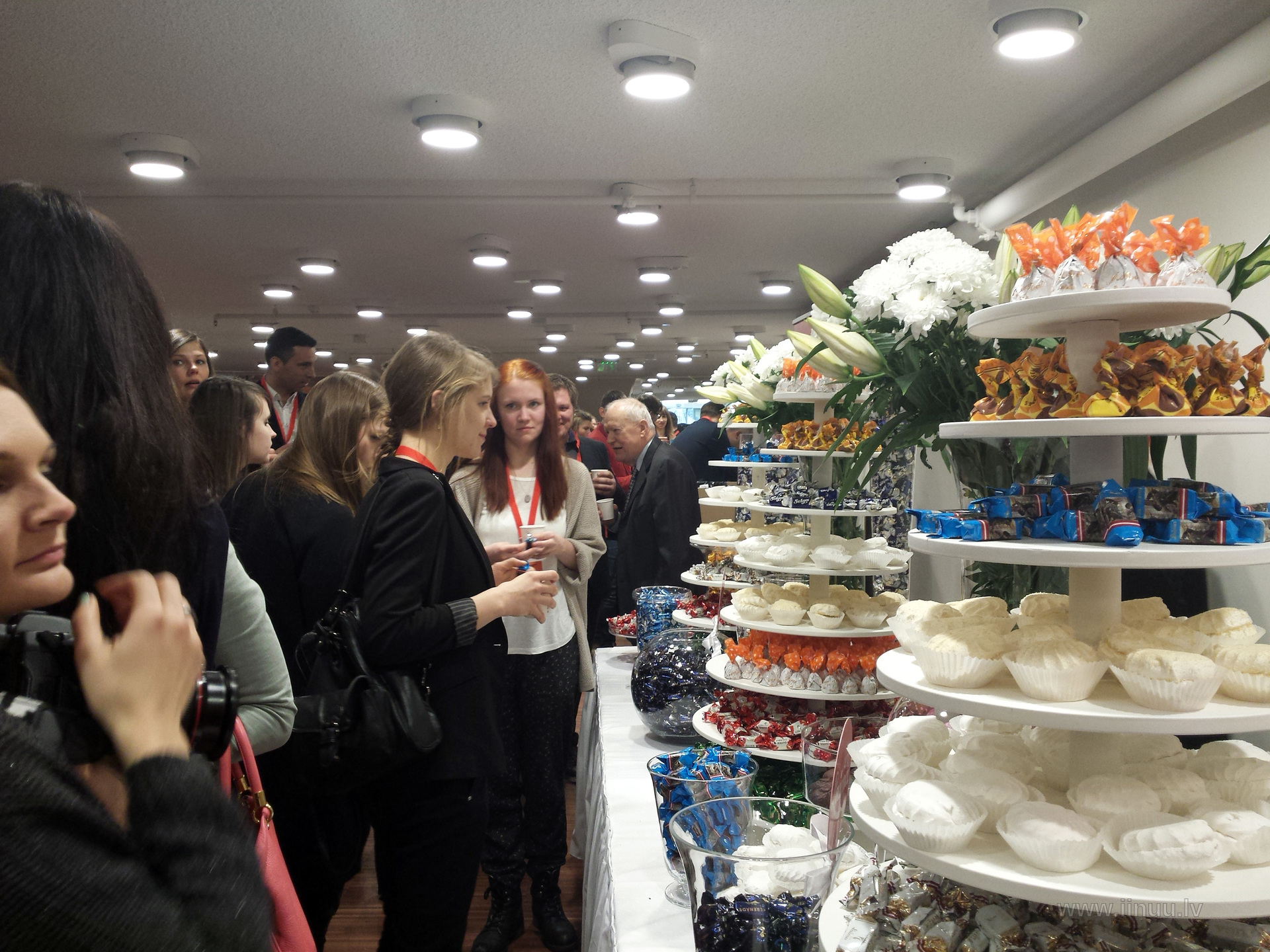
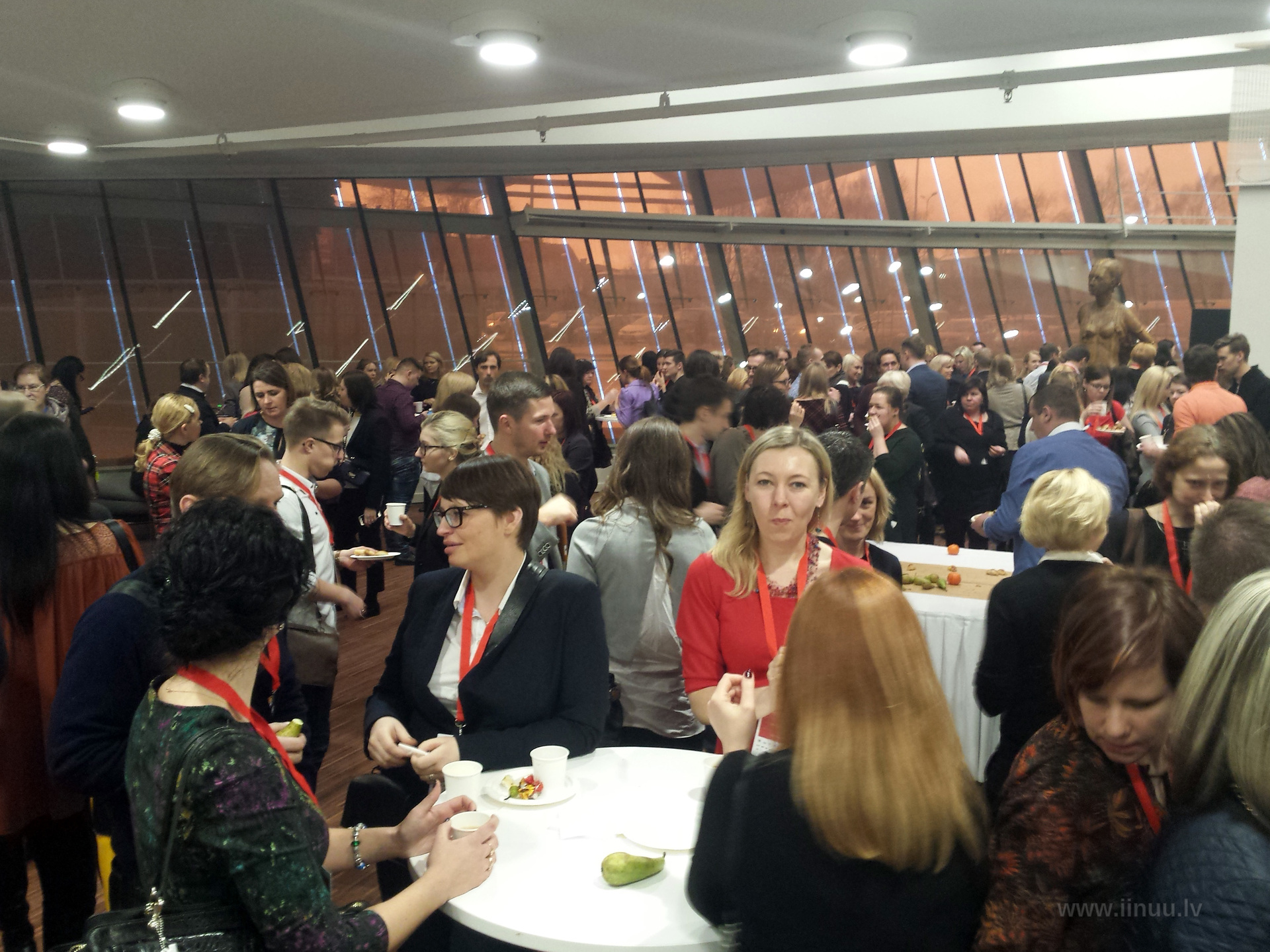
The lunch break and fruit break were also well organised. The crowd of around 800 attendees was directed by staff holding signs, and managed efficiently. The event sponsors had also made an effort with both informational and promotional stands and various culinary delights. For example, Laima's sweets table was piled with marshmallows, various chocolates, and cakes - eat, enjoy, taste as much as you like. Until the evening finale at 19:00, refreshments were continuously available to every guest, with produce restocked without interruption. In the evening, Aldaris raised a toast with their newest brand of beer.
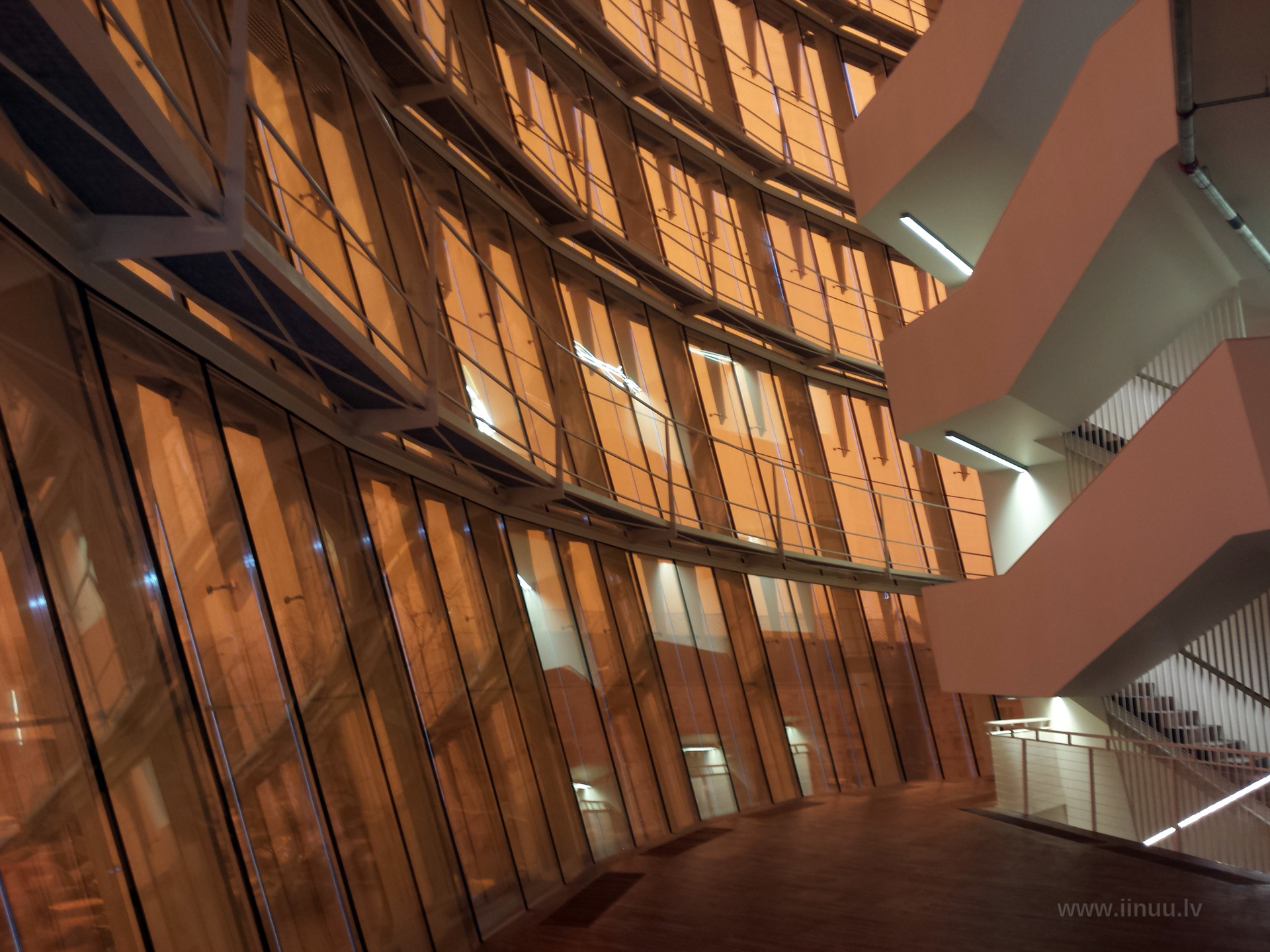
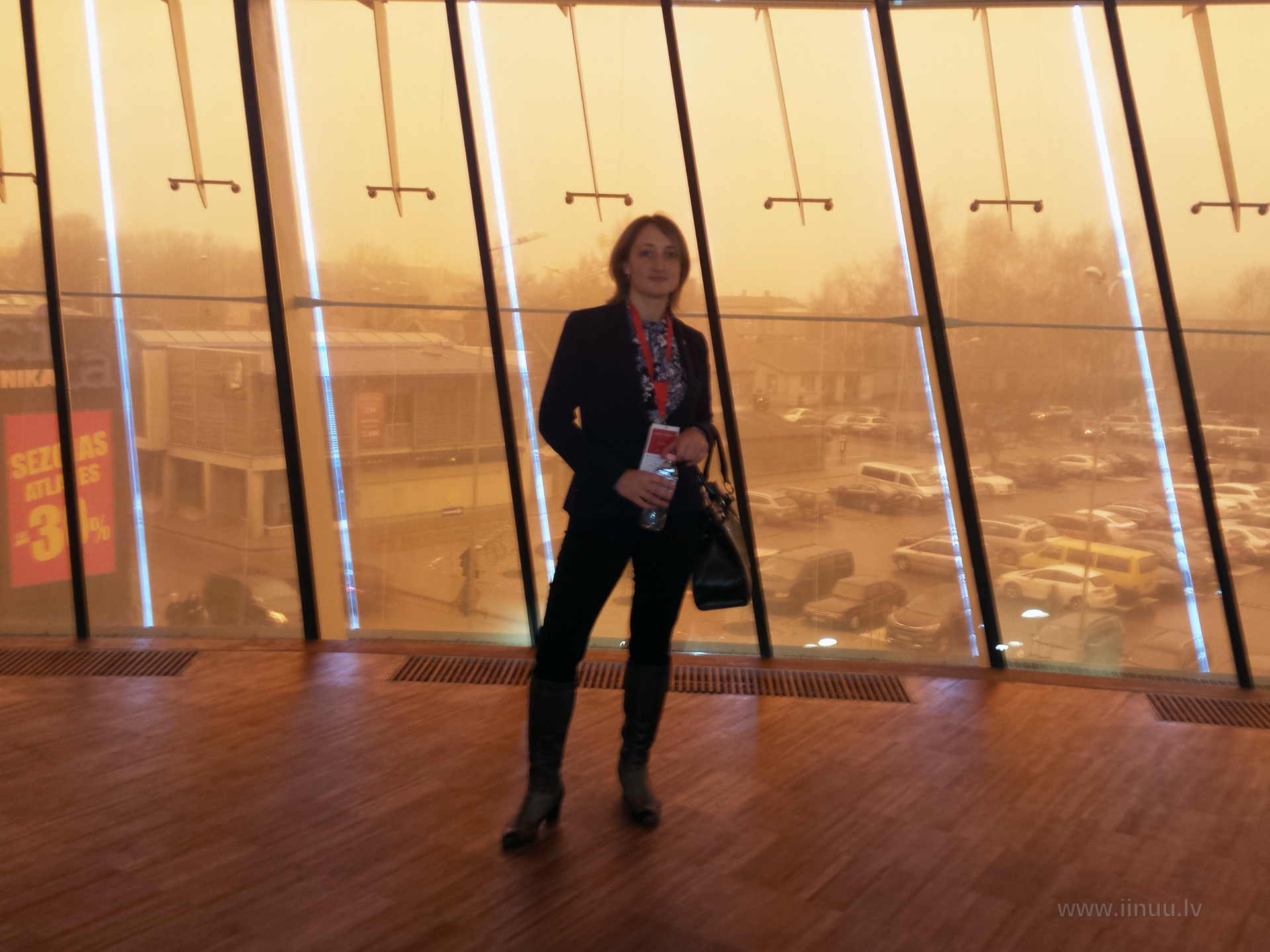
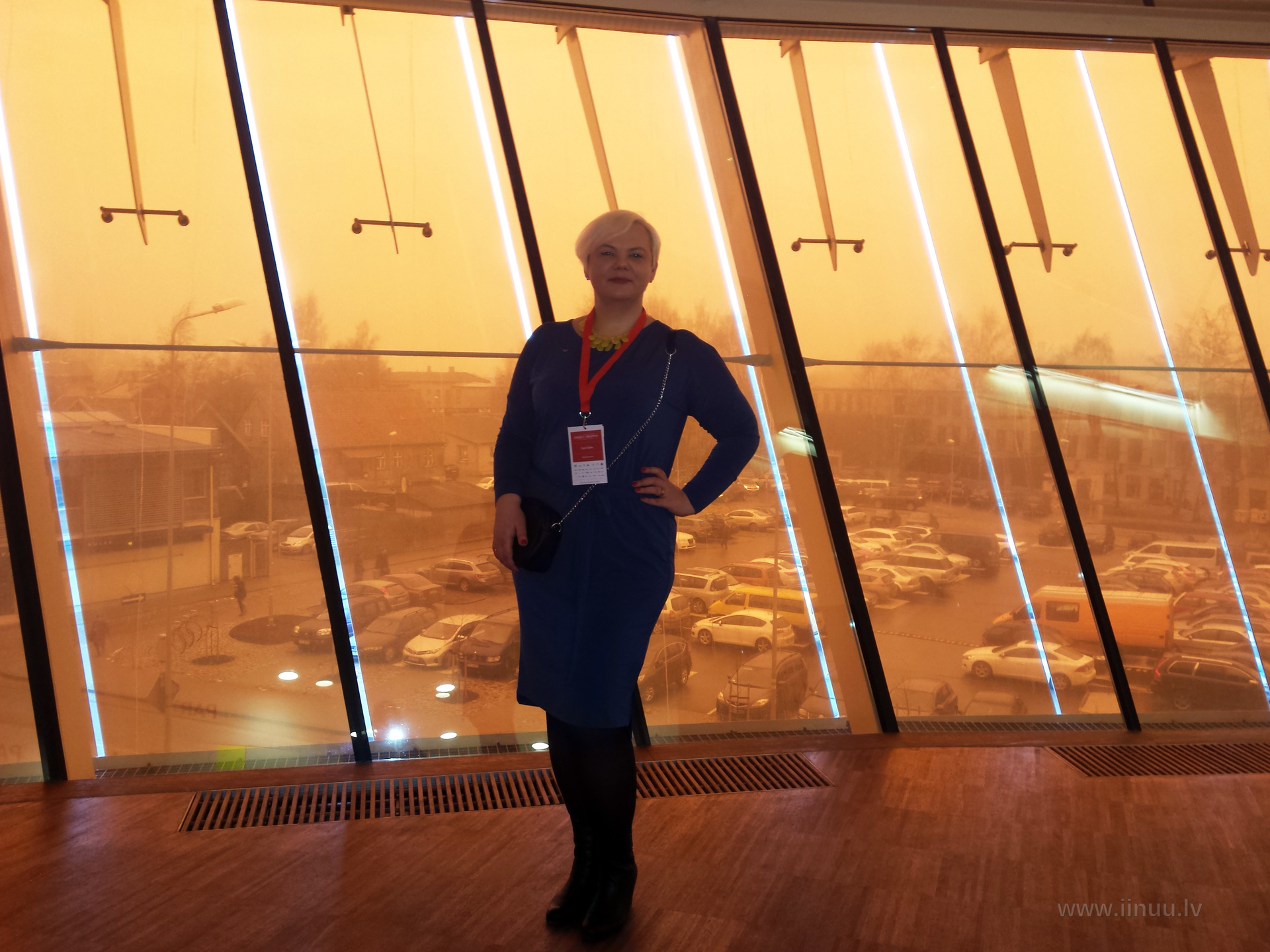
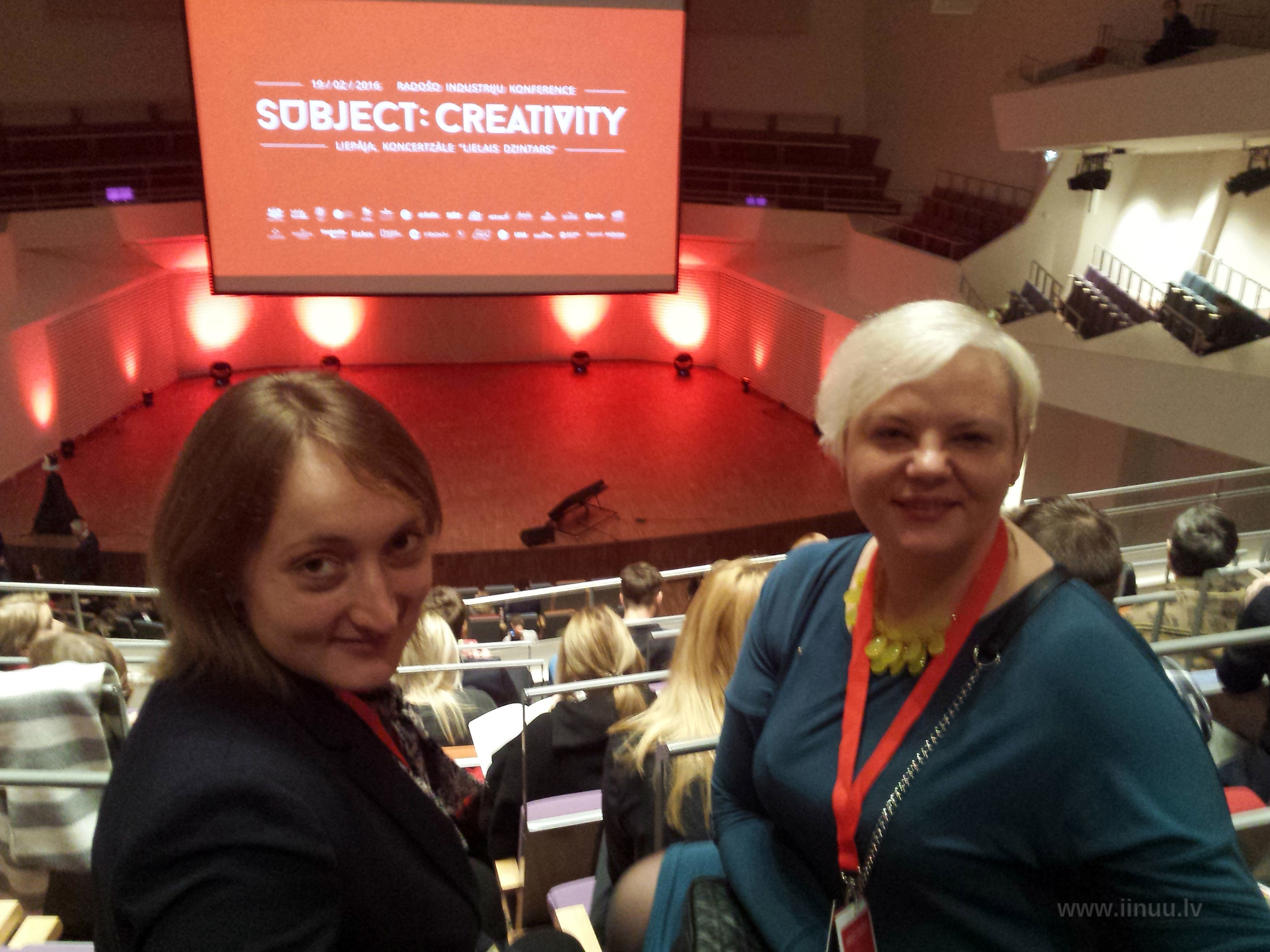
The building's glazed exterior wall, seen from the inside, is also quite impressive. Many visitors happily posed for photos and admired it. A pity it was not to be seen in sunlight - I imagine the effect would have been far more striking. The staircases and corridors are rather confusing though; the first time, reaching the first balcony required careful study of the signs. The hall itself is bright and visually compact yet actually very spacious, with good acoustics. The varying floor levels between rows of seats were disorienting, and the low, unfamiliar steps tripped up more than one hasty visitor.
Subject:Creativity conference speakers and insights
The conference was moderated by Māris Olte, who invited 20 speakers to the stage one after another throughout the day. The four themes announced - and which I mentioned above - were not particularly emphasised or distinguished during the conference (at least, that was not at all apparent). In essence, all speakers talked about creativity as such, about boundaries, the human being and the urban environment, innovation, successes, and failures.
Below are a few insights I picked up and the feeling from the participants' presentations - as always, deeply subjective, of course.
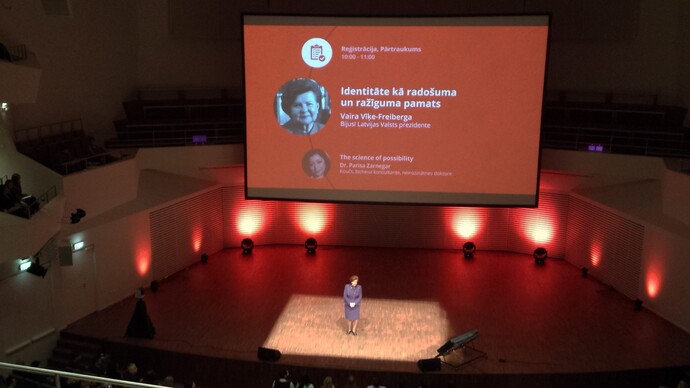
Vaira Vīķe-Freiberga - Identity as the Foundation of Creativity and Productivity
As always, an inspiring, polished, and outstanding speaker. Applause before and after the former president's address did not die down for a long time. I thought to myself: that is precisely what a head of state must be like - so that the people love and respect her and always greet her exactly that way. A aside - later, Madam Freiberga was approachable and available for conversation with practically every event visitor right there at the coffee break.
Insights from the address:
- It is a false claim that intelligent people are usually unattractive, or conversely, that a beautiful blonde cannot be clever. A Stanford study showed that the most intelligent children are also better-looking and more appealing.
- The ability to adapt to circumstances is part of creativity.
- Creativity requires freedom from correctness.
- The first and main obstacle to creativity - "we have always done it this way".
- Every person must remember - I have the right to be creative; I can always grow, change, and improve.
- Don't try to be creative where it isn't needed. A positive daily routine has its benefits. Don't listen if someone tries to convince you that you must get out of bed on the right or left foot for things to go better. Get out of bed on whichever side the bed is closest to and it's more comfortable!
Be open to the world - ears, eyes, heart, and mind wide open!
Parisa Zarnegar (Sweden) - The science of possibility
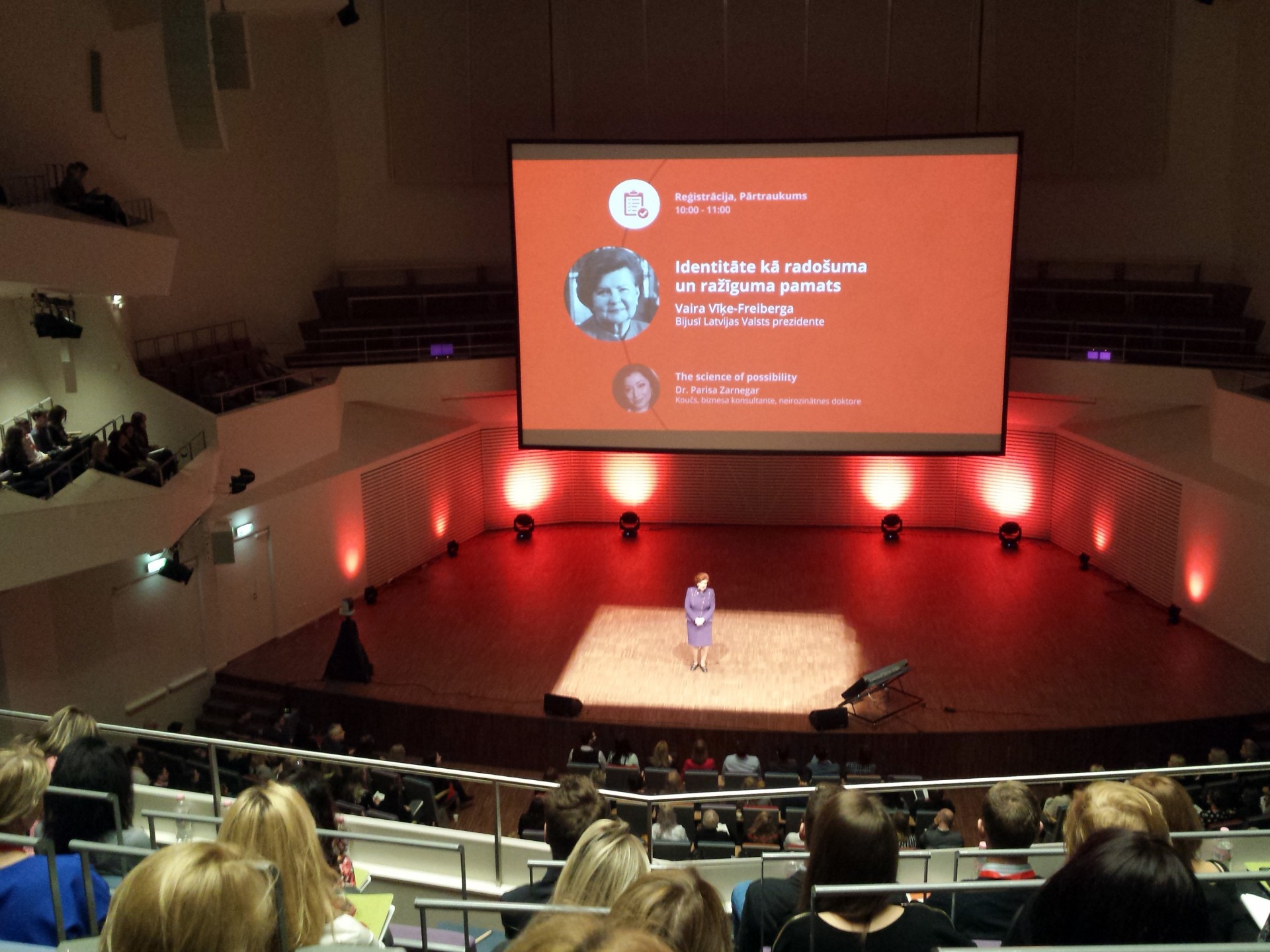
A neuroscientist whose address began with an invitation - this is not my day, but yours. So be as active as you can! A very honest statement about the true purpose of attending such events.
Insights from the address:
- One component of every creative process is an incubation period, during which every idea must be given time to develop in your mind. Do nothing, be in nature, go for a run, and simply devote time to thinking.
- Our brains are built to demand engagement and the sharing of ideas with other people. You don't need to keep an idea to yourself or fear that someone will steal it. Even if they do, it will only be a copy - the original remains with you, in your mind.
- Identity is closely linked to creativity. Know who you are!
Using your mind to change your brain!
Nara Petrovič (Slovenia) - Riding the wave of inner calling
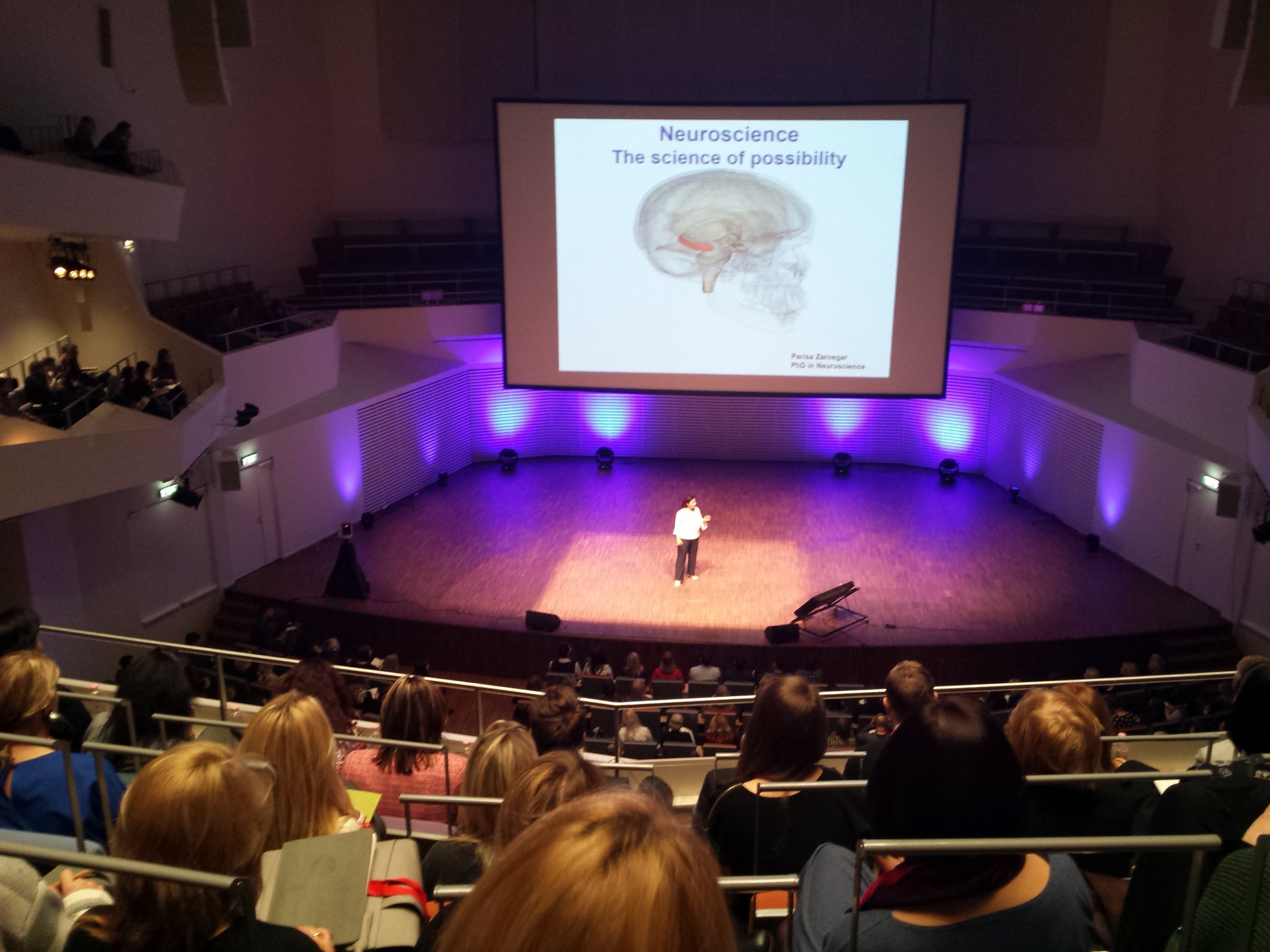
A barefoot speaker - a person who for several years simply does not wear shoes, as he is convinced there is no worthwhile justification for wearing them.
Insights from the address:
- Everything great begins with one person, not the majority.
- We form our identity through stories, by answering the question - who am I?
Zane Eniņa - The Anatomy of a Dream
Her address was the story of how she realised her dream of travelling to Antarctica. Zane raised 5,000 in donations for this journey and also sparked a public discussion about who has the right to ask for funds, and for what purposes.
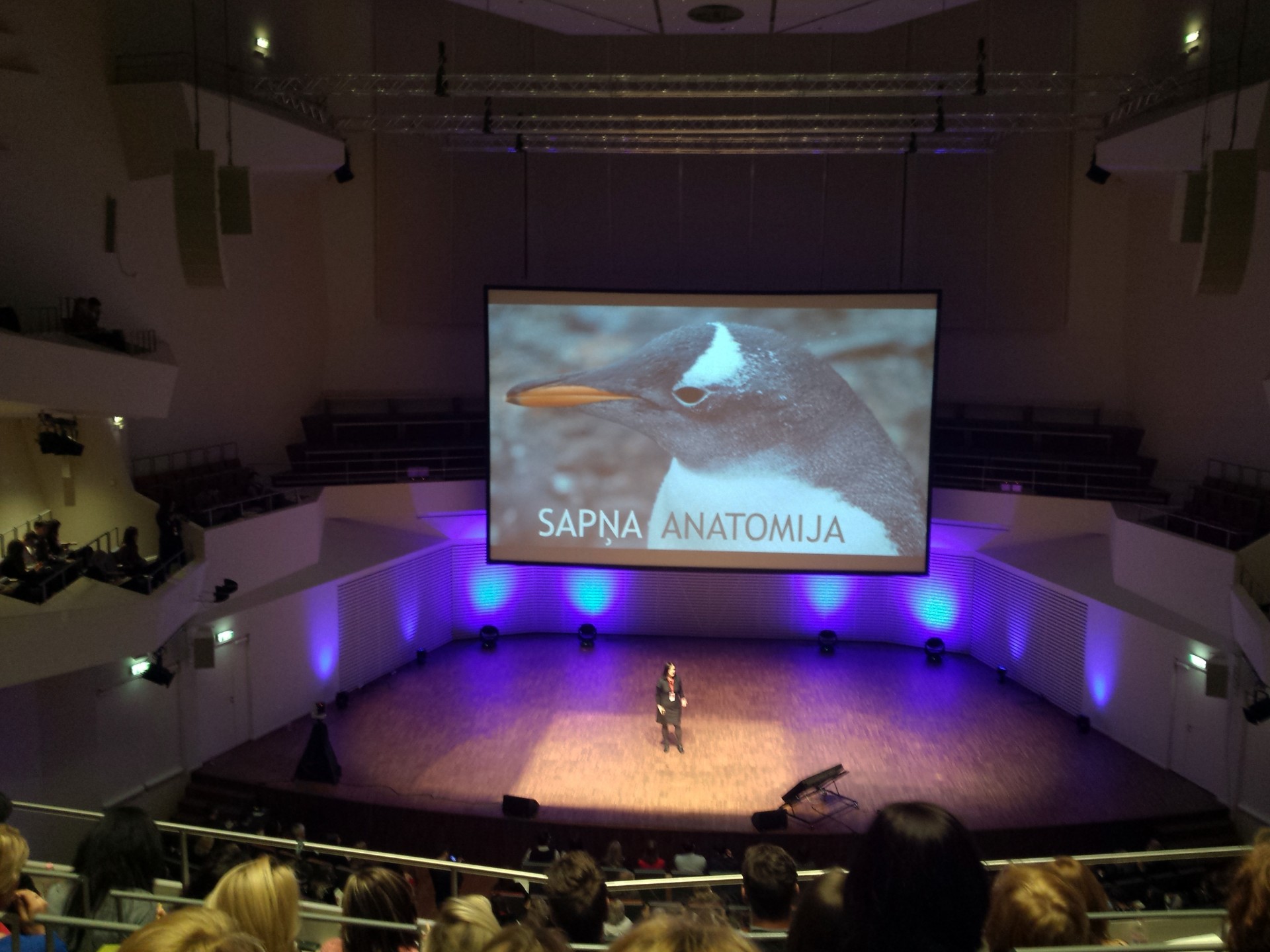
Zane's anatomy of a dream: 1. Idea 2. Goal 3. Form 4. Foundation 5. Passion 6. Your People 7. Thank You
1. Fulfil your dreams
2. Don't worry about what others will say
3. Be glad for what you have
And of course her presentation was especially engaging for me because of the visual materials and their ever-present subject - a penguin.
Gatis Mūrnieks - Does Latvianness Have a Future?
A rather lofty address, similar to a classic lecture from a pulpit delivered from notes, though the thought and idea were worthy. One good insight - Latvians are strong in their creativity when they must be AGAINST something; they still need to learn to be strong when they must be FOR something.
The future of Latvianness cannot be predicted, but it can be shaped, if you believe in it.
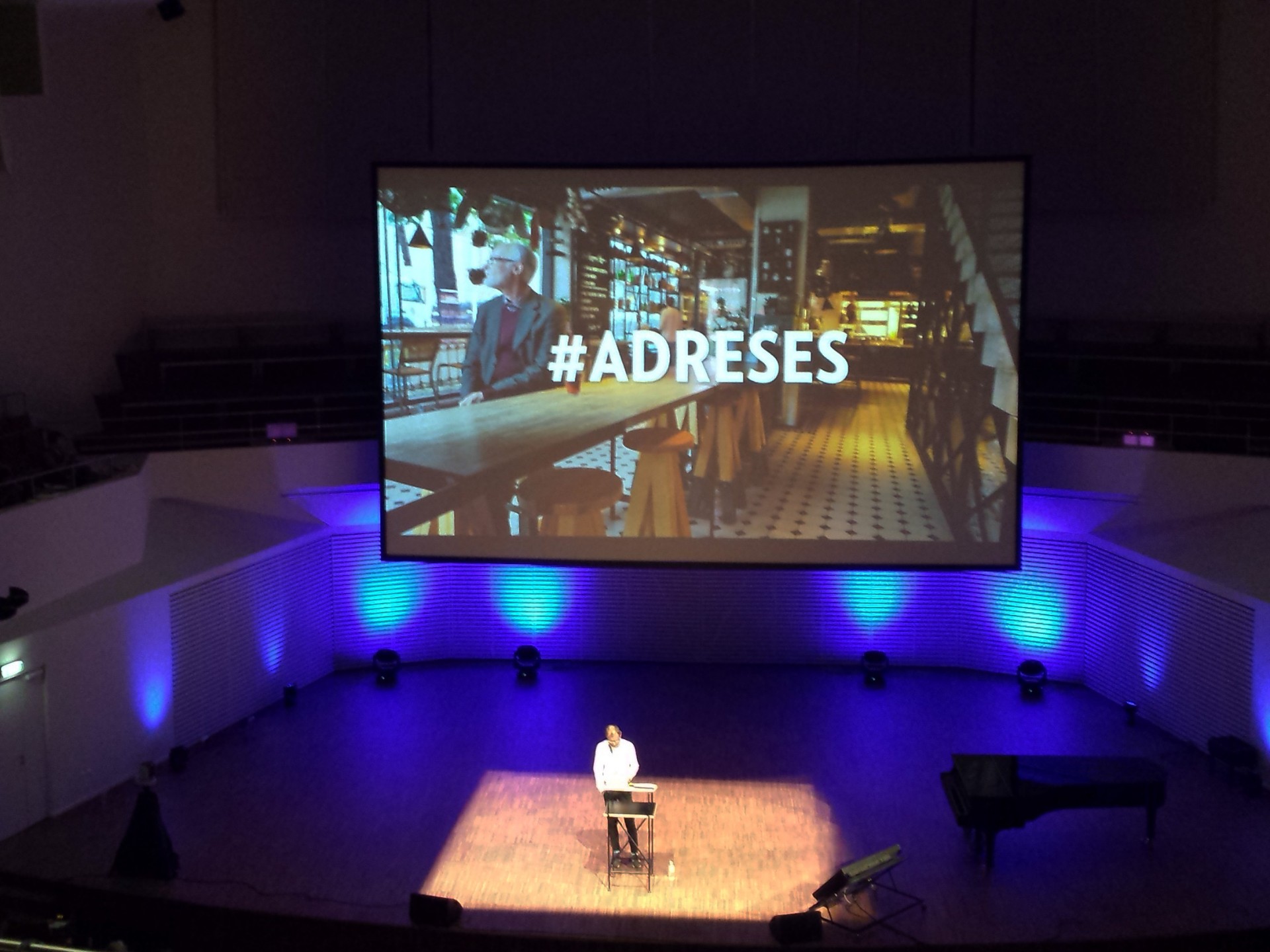
Mārtiņš Ķibilds - The Human Place in Architecture. Architecture's Place in the Human
A story about the documentary series "Addresses" that he created.
- The concept of "place" has several meanings - a physical point on a map, a place of work or life, a place in a person's consciousness, and finally, a place in the heart - to be in your place! (to love what you do)
- If you want to explain something well to others, you yourself must know three times as much about it.
- Don't be afraid to be personal, even if it is a company profile (Mārtiņš Ķibilds. Addresses)
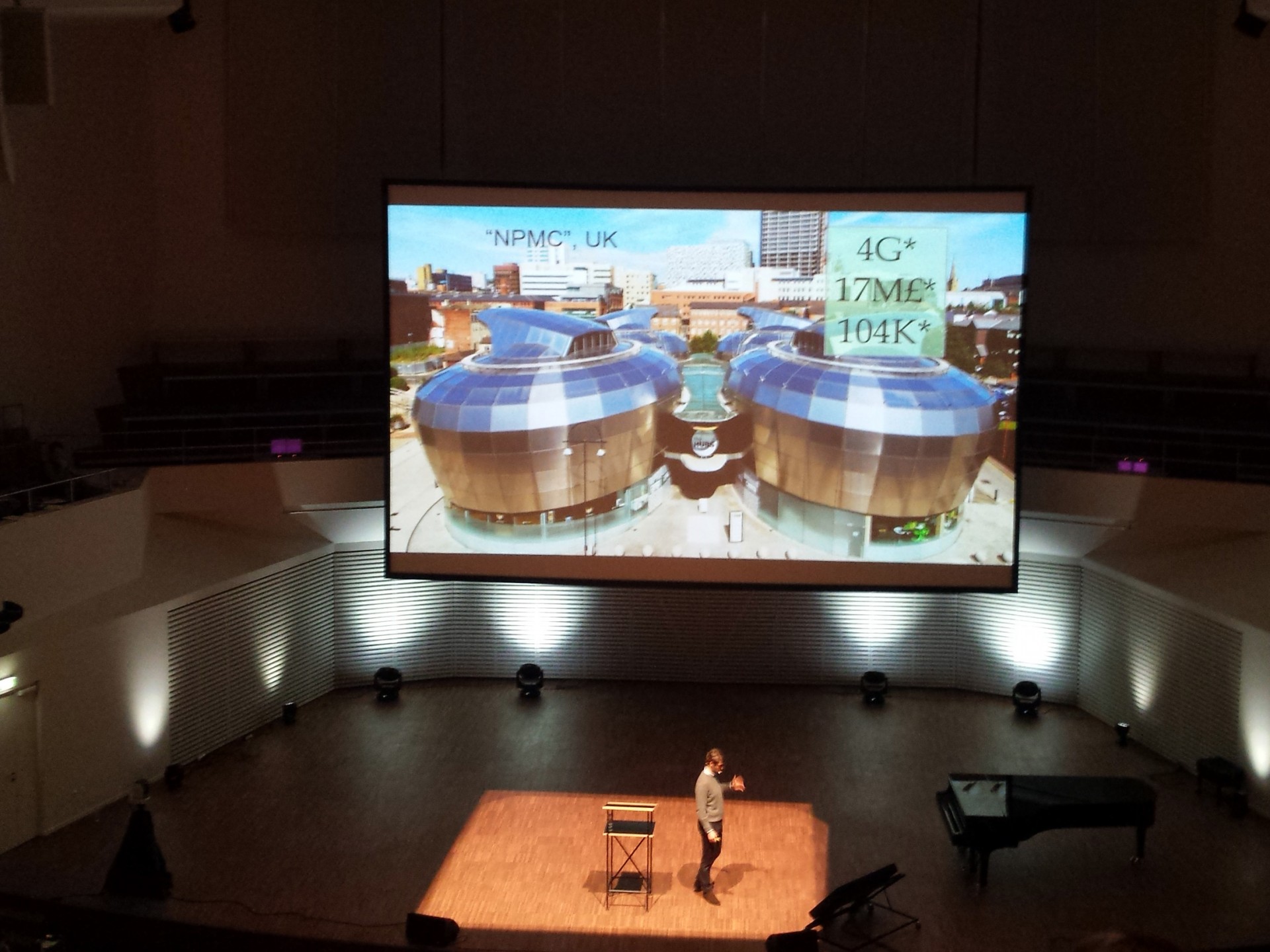
Tony Armstrong (United Kingdom) - Keep it local
A presentation that can be summed up as: what was it actually about?
Jānis Ķīnasts - From Space to Place? Place-Making?
A place-maker who shared his philosophy about a place, its geography, design, and potential. A rhetorical question - how can people converse if there is no place, no geography of conversation?!
Examples - three projects, one of which is DarbaVieta on Blaumaņa Street in Riga - a coworking space. People come here for the space, but stay for the place.
Where we come from is not as important as where we are going.
Viesturs Celmiņš - The City's Heavy Hand
This speaker, a social anthropologist, presented in his address examples of projects that are visually and spatially grandiose, have exceeded all conceivable budgets and delivery deadlines, yet ultimately went bankrupt. Why do they fail and why do they succeed?
For success, in the speaker's view, three basic principles must be observed - soil (the story of the place, the building), ensemble (a building must not dominate its environment, but complement it), and relationships (working with the audience, the people who will use this building).
Ģirts Majors - What Does the Entertainment Business Contribute to City and Regional Development?
The success story of the Positīvus festival - which this year will celebrate its tenth anniversary - in Salacgrīva. The speaker's main insight about success: organise something grand not to satisfy your own ambitions, but to satisfy the needs of your audience and visitors.
Uldis Pīlēns - Seeing Beyond Boundaries
Insights from the address:
- The creative industry is boundary thinking, not horizon thinking.
- The road to lasting success begins within us.
- Nature does not burden a person with more than they can bear.
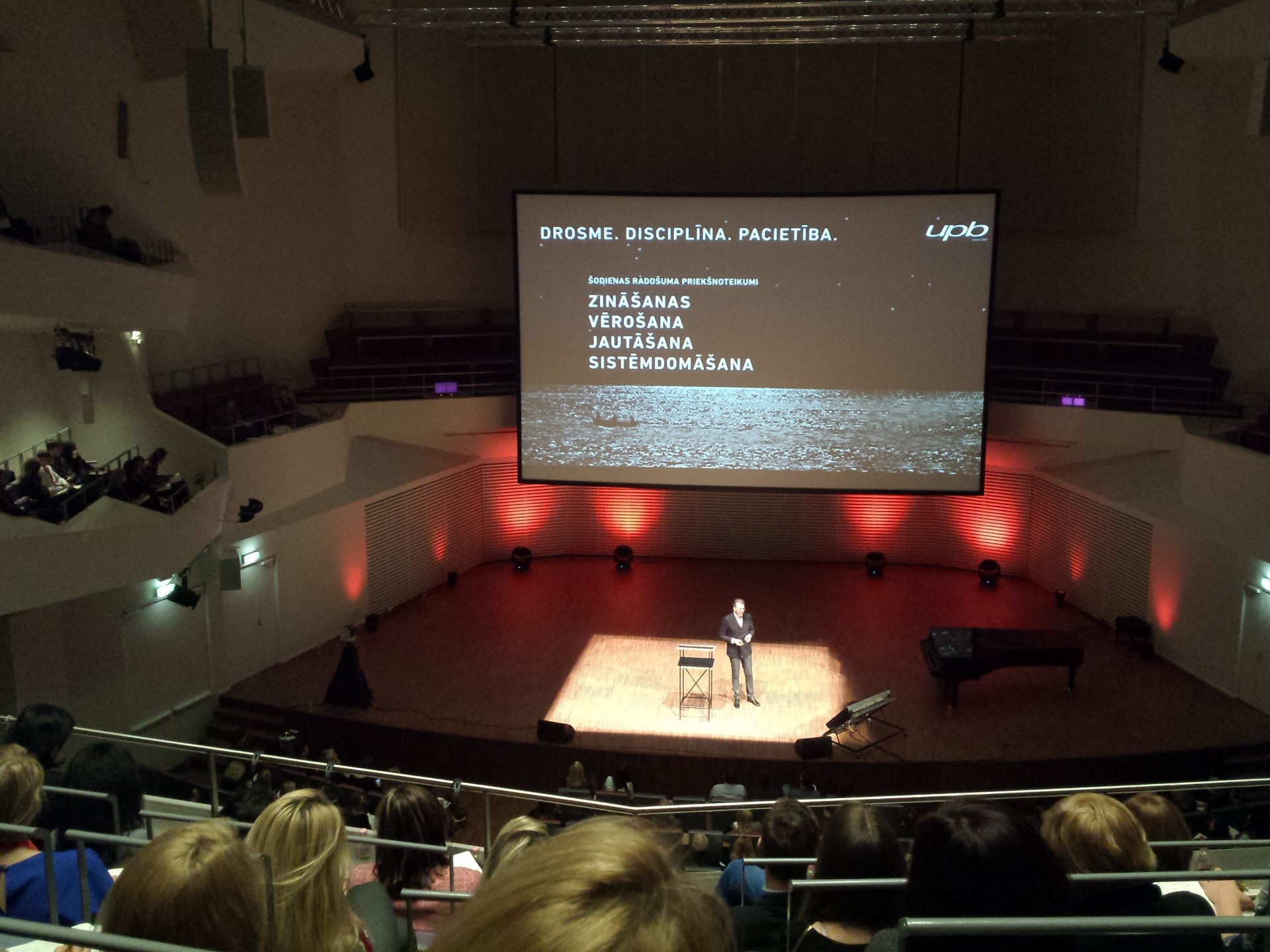
Jānis Vanags - Innovation = Money
An address that was essentially an airBaltic promotional presentation about newly introduced services.
Brendan Jan Walsh (Netherlands) - Do you dare to pioneer?
A presentation that can be summed up as: what was he smoking?! But the Poirot moustache and patent leather shoes were stylish.
Arnis Jaudzems - Cross the Boundary to Stay One Step Ahead
An address that, much like the airBaltic one, was essentially a Sixt promotional presentation about newly introduced services.
The only boundary is the brand's promise!
Vestards Šimkus - Does a Boundary Constrain?
In my view, a very sincere address - practically simple on one level, yet on another, a deep conversation with the audience about boundaries for an artist.
- Voluntary constraints are necessary.
Here is a short clip from the address:
Lotte Tisenkopfa-Iltnere - Breaking Down Barriers Between Producer and Person
The speaker discussed the relationship between the person (deliberately not called "the client") and the producer, which has changed significantly over the centuries. The distance has narrowed. Relationships have become far closer, more open, and with immediate feedback.
Open Business - at the centre of the organisation is the answer to the question WHY? A co-thinking organisation that incorporates the concepts of Open Innovation - a product shaped by users; Open Data - sharing information about a factory's technological processes, which were previously considered trade secrets; Transparency, Trust - an open-type production facility that any interested person can visit, where photography and information sharing are freely permitted.
The fundamental purpose of business is to serve people.
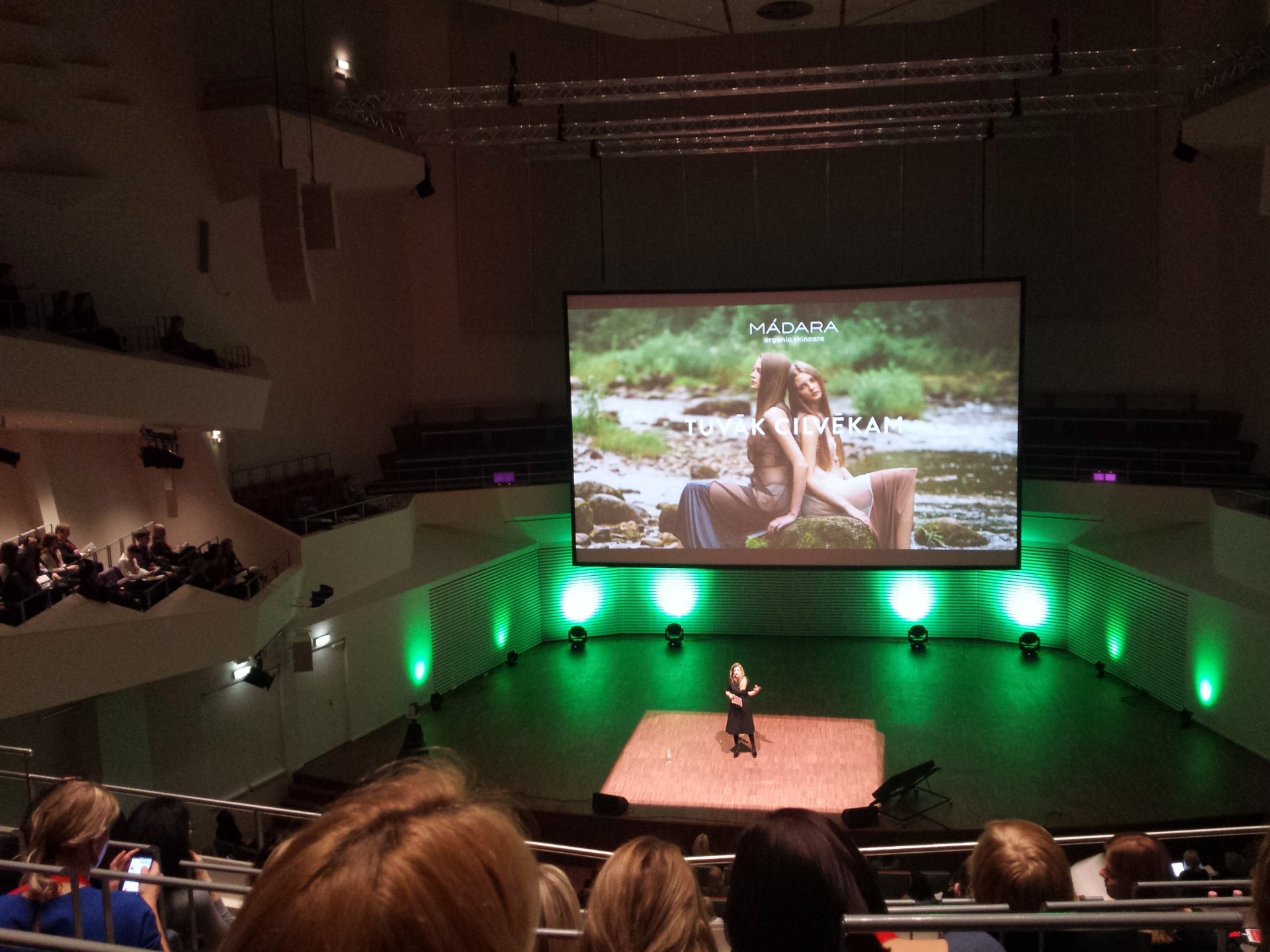
Edgars Untāls - Gravity
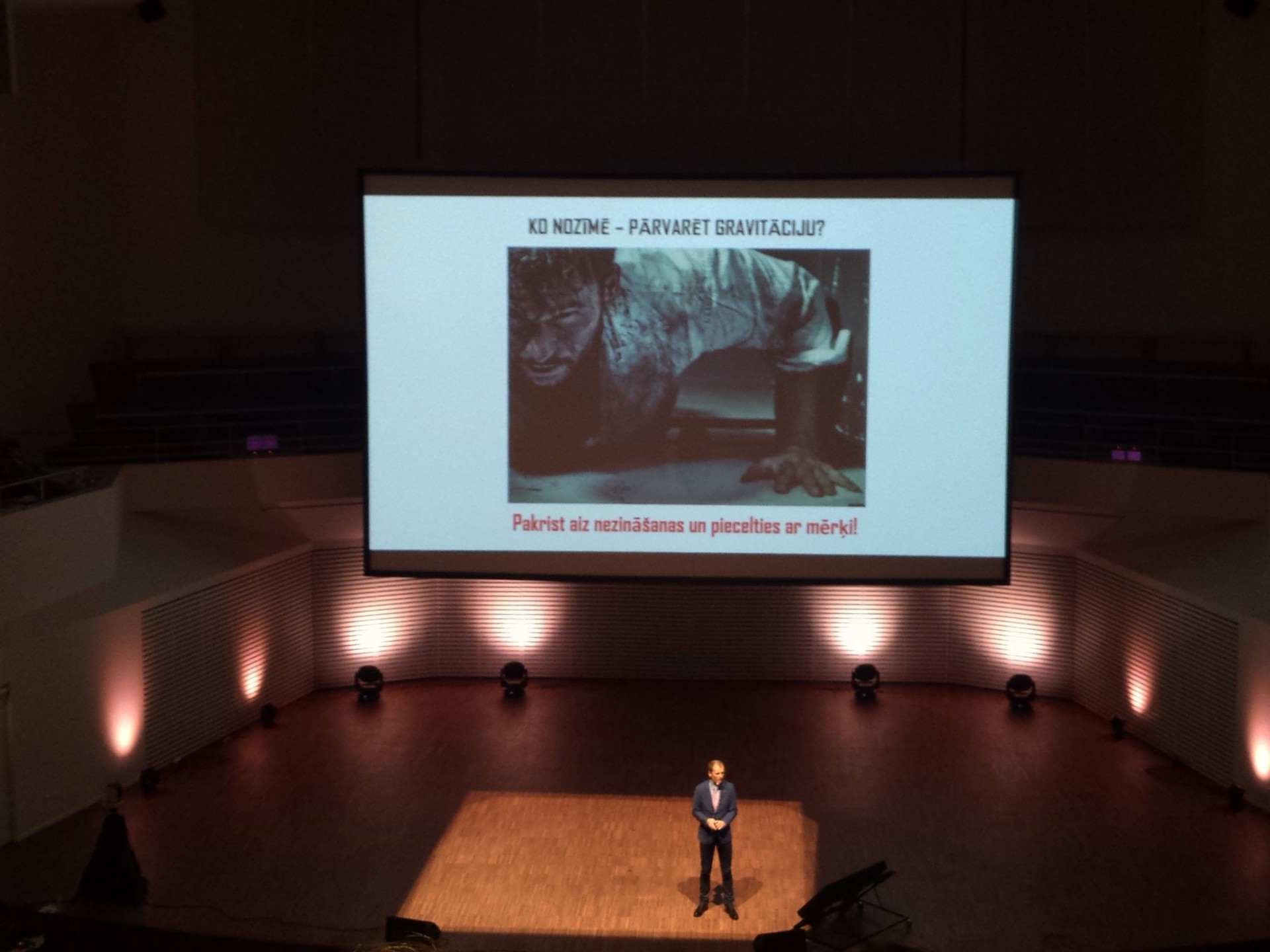
The presentation was rather quote-heavy, with many insights (though valid ones), but little inspiration. Hmm - emotions still matter to an audience.
Insights from the address:
- People change for only two reasons - first, when there is a goal that is greater than yourself; second, when life pins you to the ground.
- A consciousness that has once expanded never returns to its previous level.
- A new life will only begin when you decide it will.
- Change happens from the inside out.
- Two important words that stand between you and success - willpower and discipline!
Toms Ērenpreiss - The Cycling Revolution
A lot of material and presentation slides from history, but not so much of the personal story. I suppose I was waiting for the latter.
The bicycle has always been a symbol of individual freedom.
Laura Groza-Ķibere - Failures That Set You Free
Sorry - by the 19th speaker my smartphone battery was almost completely dead, so there will be no more illustrative material.
The only message I caught in Laura's talk was: life forces you to accept that you cannot control everything. However, from her address I drew many good lessons: 1) don't speak in a monotone; 2) don't rush; 3) don't sigh during a talk as though someone had forced you to speak in public; 4) try to get rid of a dry mouth (I know the feeling - I've experienced it when greatly nervous) by drinking some water, unafraid that it will create a pause in the talk; 5) don't focus on yourself, but on the audience.
Māris Jansons - You Are What You Eat
A mouth-watering address with interesting explanations of terms. Ēstgriba [desire to eat] - the more you eat, the more you want. Izsalkums [hunger] - when your stomach growls and you want to eat. Apetīte [appetite] - personal associations with food that come from childhood.
Insights from the address:
- Food is also the quality of thought, which only develops over time.
- A people with a strong national identity has strong self-confidence, and along with identity comes a powerful culinary heritage.
- It is important whether our traditions respect our products. When preparing food, ingredients should not be chopped so finely as to become unrecognisable.
- People who eat foods similar to ours seem more appealing than those who eat differently.
- The modern chef seeks truth, and reveals the ingredient.
Every day we chefs throw stones into the pond and wait for the ripples to turn into squares.
The finale: a spectacular BANG! with the help of liquid nitrogen and Māris's magician-like disappearance from the stage.
The non-networking part
At the close of the conference, the moderator invited everyone to a networking session together with a DJ and one of the previously mentioned speakers, Brendan Jan Walsh. The billing was promising, but in reality it turned out to be a completely unorganised affair - the crowd of visitors sipped their wine or beer, shuffled about listening to an unannounced art auction, and en masse headed for the exit.
The DJ, humming away in his own world, maintained an unobtrusive background, but for another half hour or so around 10% of all conference visitors patiently waited for something, or chatted in their closed circles. We approached two young women to talk about their impressions of the event - and with that, our networking ended, having barely begun.
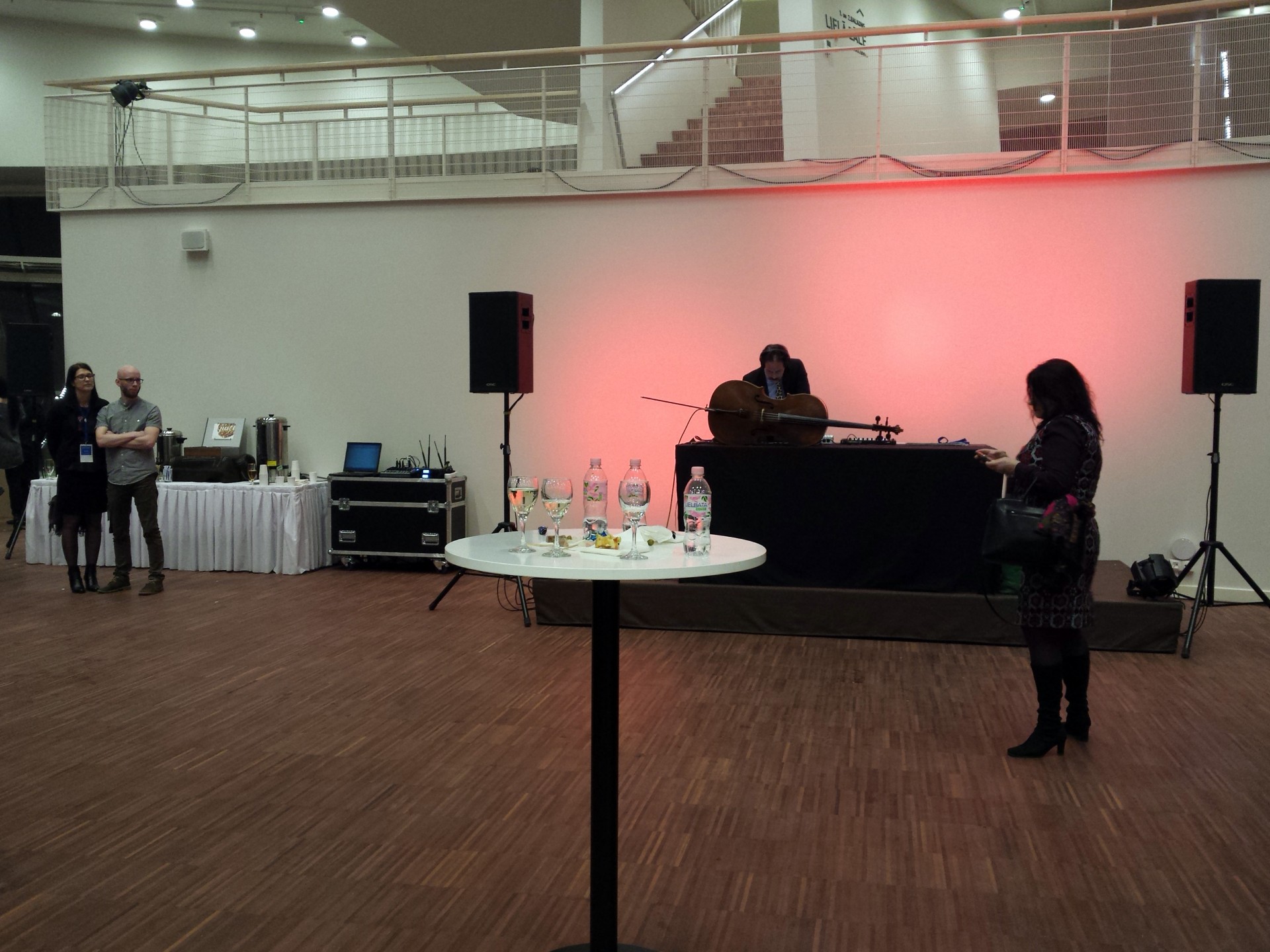
You see, knowing the experience of other networking events, one must say that the networking segment also requires careful planning and organisation; effort must be put in to get the audience moving (especially a Latvian audience) - nothing can be left to run itself. Disappointed in our expectations of the closing segment, we got in the car and headed back to Riga.
Conclusions on the Subject:Creativity conference
Many valuable insights (I would not call them novel) and a few very charismatic speakers who inspired. Good conference organisation and material provisions for guests right up to the closing segment. An unplanned and entirely absent networking portion. A wish to the organisers - if you're going to do something, do all of it well, right to the end!
comments