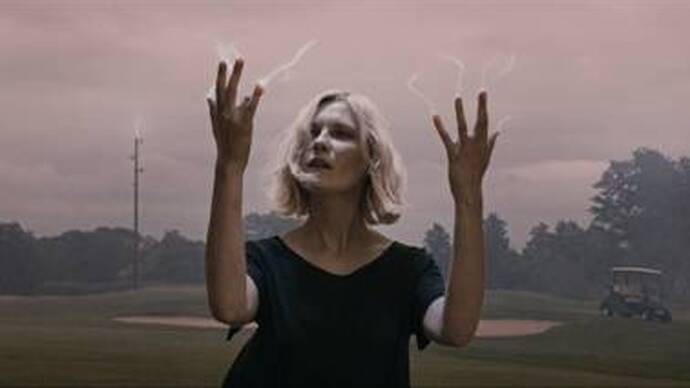
"Melancholia" (2011)
A truly masterful escalation of emotion in the face of inevitable destruction. Such is the film "Melancholia" by controversial Danish director Lars von Trier. For a fuller impression I recommend watching it on the big screen.
A truly masterful escalation of emotion in the face of inevitable destruction. Such is the film "Melancholia" by controversial Danish director Lars von Trier. For a fuller impression I recommend watching it on the big screen.


At the very start of the film, with magnificent slow-motion scenes, the inevitable is announced - the gigantic planet Melancholia, which has long been hiding behind the Sun, has suddenly changed its orbit and is hurtling towards Earth. Collision is unavoidable, but while the minds of the world's scientists are busy calculating the true outcome, people - the melancholic ones - await this moment as a redemption from evil.
Justine and Michael are celebrating their wedding surrounded by family and friends - a wedding that at first glance might become the beginning of a successful and love-filled family life, yet an ever more powerful melancholy takes hold of the bride. Her destructive behaviour initially offends her sister's husband, who has invested considerable resources in arranging the wedding, then her employer, who announces at the wedding Justine's appointment to the position of creative director, then Michael, who is forced to leave the house on the wedding night. Justine renounces everything, for she understands the order of things.

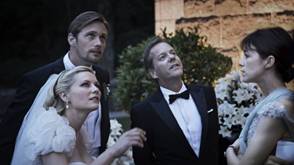
Justine initially collapses physically - incapable of washing herself, of preparing food, having completely lost interest in herself and those around her; she simply lies in bed, rising at night to gaze at the approaching celestial body in the sky. The only one who does not abandon her in this state is her sister Claire.
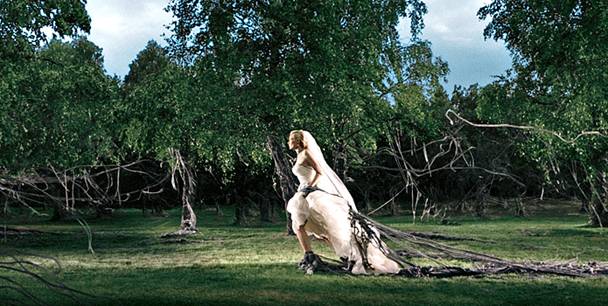
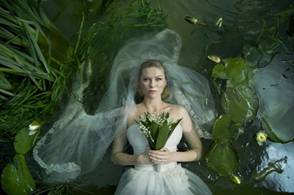
Justine, seized by melancholy, is convinced that the world is evil and that its total destruction need not be mourned. Unlike her sister Claire, her world is not composed of such values as family, children, a splendid home, a successful career, a good aged wine, Beethoven's music or John Everett Millais's "Ophelia."

In essence, through the example of one family the film shows how people behave or cope as the inevitable approaches. Claire's husband seems to refuse to believe what is happening until the very last moment - seized by optimism and euphoria, he observes the approaching planet through his telescope. His practicality and readiness to face life's changes lead him to stockpile provisions for the moment of catastrophe, if it might occur, so that the family could wait it out in their sumptuous estate and survive. But later, on the basis of his observations and calculations, he is the first to decide to commit suicide, for he simply cannot accept the fact of destruction as such.
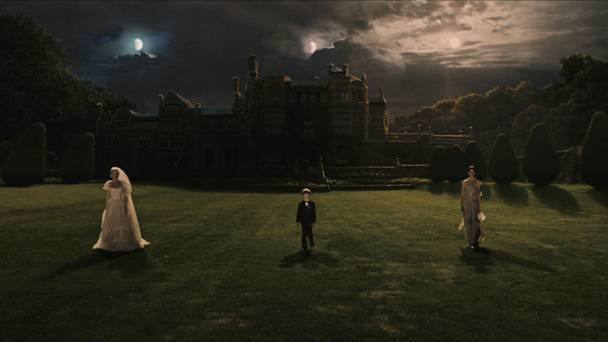
Claire, unlike Justine, has something to lose; she marshals her last strength to try to find a way to save her child's life. She is overcome by unspeakable fear. Claire is a creature of ritual - even dying she wants to die beautifully: on the terrace with a glass of wine in hand, surrounded by loved ones, with music playing. She sees the world as beautiful, good, flowering, full of love and life. Claire is a person for whom it is important to hold a loved one's hand in the last hour of her life. People like her are not alone - they form families, they have children, they care for others and know how to receive others' love.

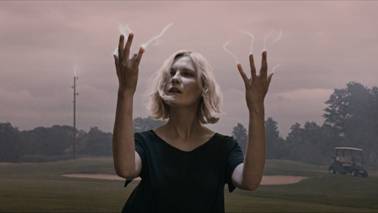
Justine, in turn, is a loner. Strangely, people like her seem to be from another world - they see and feel differently. On Earth they can physically survive only if someone takes selfless care of them. Such people are often called egoists, compensating for their sense of inadequacy through grandiose projects or art - but is that really so? The approach of Melancholia grants Justine strength and peace of soul. Destructivism has always been the basis of her creative inspiration (as it is for Trier, if you like; as it was for Hitler). Paintings created by artists burn; living creatures die; people die; nothing remains. Such is the order of things.
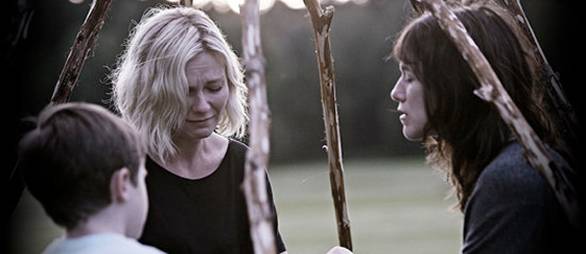
The film's finale - a cosmic roar and the fateful collision of the two planets. Silence. Darkness. Nothing remains.
comments