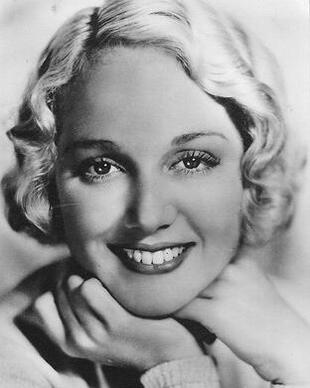
Gentlemen Prefer Blondes
Various theories exist as to why blonde hair appeared and spread during evolution, and why the majority of women since time immemorial have strived to bleach or dye their hair blonde. One of them explains that fair skin and fair hair help people accumulate more vitamin D in those northern regions where there is less sun. Canadian anthropologist Peter Frost simplifies it: the spread of blonde hair occurred because men preferred fair-haired women - that was natural selection.
The word "blonde" appears in written sources for the first time in England in 1481. It was used to describe a hair colour between golden and light hazelnut, although blonde shades can be described in many different ways - for example, platinum blonde, sandy blonde, golden blonde, ash blonde, honey blonde and even strawberry blonde.
What our natural hair colour is depends on two types of pigment - phaeomelanin and eumelanin. If the hair follicle produces more eumelanin, the hair is black or dark brown; if phaeomelanin - blonde or red. Japanese scientists have established that blonde hair first appeared in Europe as the result of a genetic mutation 11,000 years ago, during the so-called Ice Age. Before that, all Europeans had dark hair and dark eyes. Moreover, the book "The History and Geography of Human Genes" claims that the first place in Europe where blonde hair began to dominate was Lithuania - around 3,000 BC.


Jessica Biel in Easy Virtue (2008) & Kirsten Dunst in Marie Antoinette (2006)
The largest numbers of blonde people are found in Scandinavia, Poland, the Netherlands, the Baltic states, Belarus and the eastern part of Russia. The map below shows regions where blonde-haired people proportionally dominate. In the areas coloured yellow, 80 to 100% of the native population are blonde; sandy-coloured areas denote regions where 50–79% of people are blonde; in light brown-coloured territories - 20% to 49% blondes; in brown and dark brown - 1–19% and less than 1% respectively.

Various theories exist as to why blonde hair appeared and spread during evolution, and why the majority of women since time immemorial have strived to bleach or dye their hair blonde. One of them explains that fair skin and fair hair help people accumulate more vitamin D in those northern regions where there is less sun. Canadian anthropologist Peter Frost simplifies it: the spread of blonde hair occurred because men preferred fair-haired women - that was natural selection.
For several decades, golden locks have been celebrated and admired in various art forms - painting, poetry and prose, songs and cinema. The very appearance of American screen icon Marilyn Monroe alone (including her consistent refusal to return to her natural dark curls) and her demonstrative declaration "Gentlemen prefer blondes" says something.

Marilyn Monroe in Gentlemen Prefer Blondes (1953)
The latest public opinion surveys in Great Britain confirm that of 3,000 respondents, 36% said that blondes are sexier, while 31% considered brunettes to be. However, one view remained unchanged even today - almost all the men surveyed admitted that they would rather go on dates with blondes, as blondes are more suited to social outings, as well as being fun, cheerful and open. As for wives, however, brunettes would be preferred, as 52% believe that dark-haired women are far more loyal and sensitive.


Meryl Streep in The Devil Wears Prada (2006) & Mariza
As is widely known, and as the studies mentioned above confirm, hair colour significantly changes how a person's visual image is perceived. Moreover, some people change their hair colour deliberately, while others experiment and discover that the chosen hair colour suits them far more organically than their natural one. The latter has also happened to me - having now been a blonde for some seven years, neither any acquaintance or friend, nor I myself, can any longer accept my visual image any other way. At the start of this year I tried returning to my natural brownish-grey, but could only endure it for a couple of months.
A few tips to keep in mind if you want blonde hair:
• Make sure it will actually suit you. This can be done with any number of graphic hairstyle modelling programmes on the computer, or simply by trying on blonde hair extensions or a wig. Moreover, the effect will be more guaranteed if as a young child you already had naturally light hair that darkened in colour over the years.
• Reckon on regular colour touch-ups - at least once a month as a minimum. That means it requires time and money. I warmly recommend choosing professional help rather than experimenting yourself with hydrogen peroxide at home, which can end in seriously damaging your hair. You won't be able to avoid thorough bleaching in the first couple of visits to the hairdresser; after that it depends on the individual - perhaps you can manage with a light hair colour containing bleaching particles. Moreover, bleached and colour-treated hair requires more pampering and special care to look alive and naturally shiny.
• Choose to go blonde if you are self-confident, not afraid of attention from the opposite sex and the tiresome stereotypical jokes about blondes' supposed dimwittedness.
• Remember that along with radical changes in hair colour, decorative cosmetics and clothing will also need to change, so that some colour combinations don't look vulgar or, conversely, "swallow up" your individuality.
Sources used:
http://www.diena.lv/lat/politics/sestdiena/blondines
http://en.wikipedia.org/wiki/Blond
http://www.patti.lv/blondines_sievas1
comments