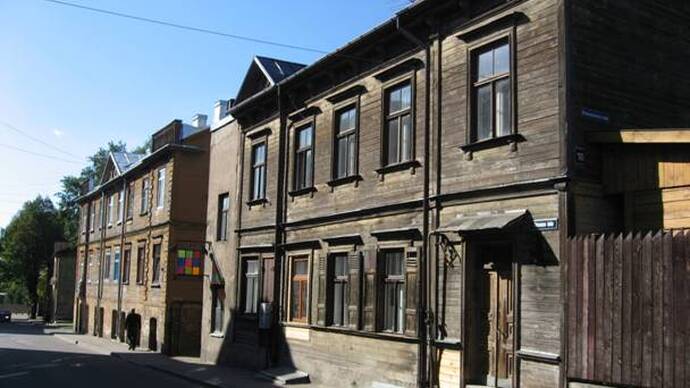
Sarkandaugava
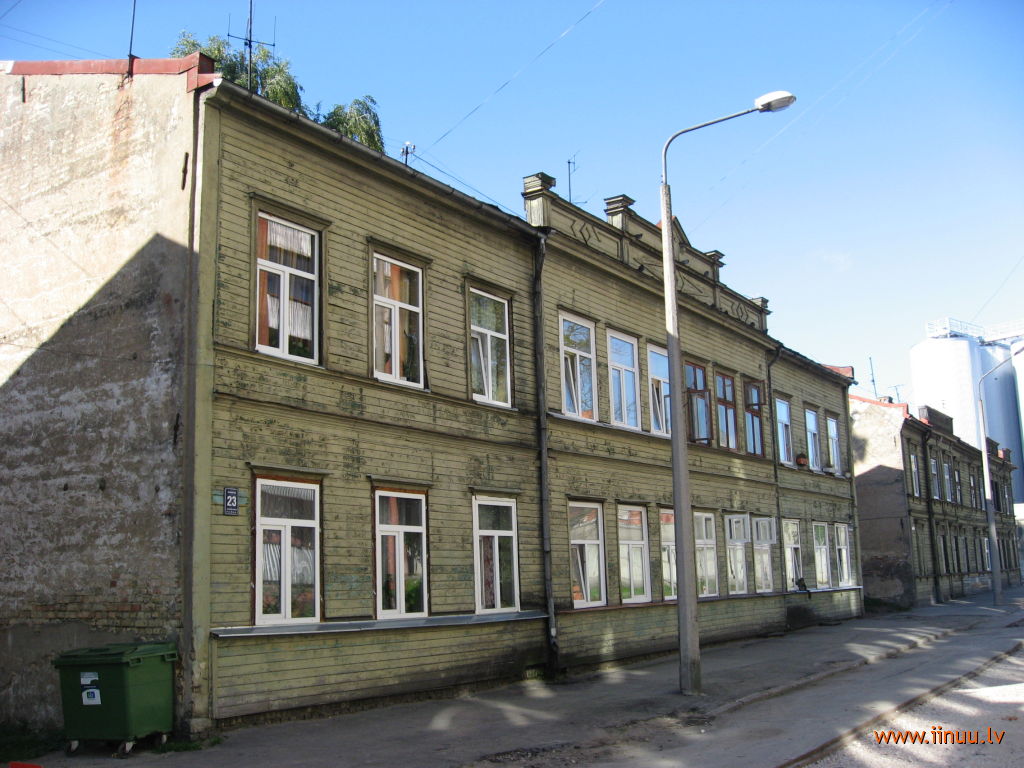
Walking through Sarkandaugava, one can pass through at least three centuries and admire architecture from different eras. Here dive bars operate 25 hours a day, pairs of sneakers hang from power lines, here stands the former summer residence of Kārlis Ulmanis, Latvia's largest brewery and the Punishment Ditch where the city's witches were once drowned. More about factory history, the mental asylum regulations, 19th-century treatment methods and what Sarkandaugava looked like 300 years ago.
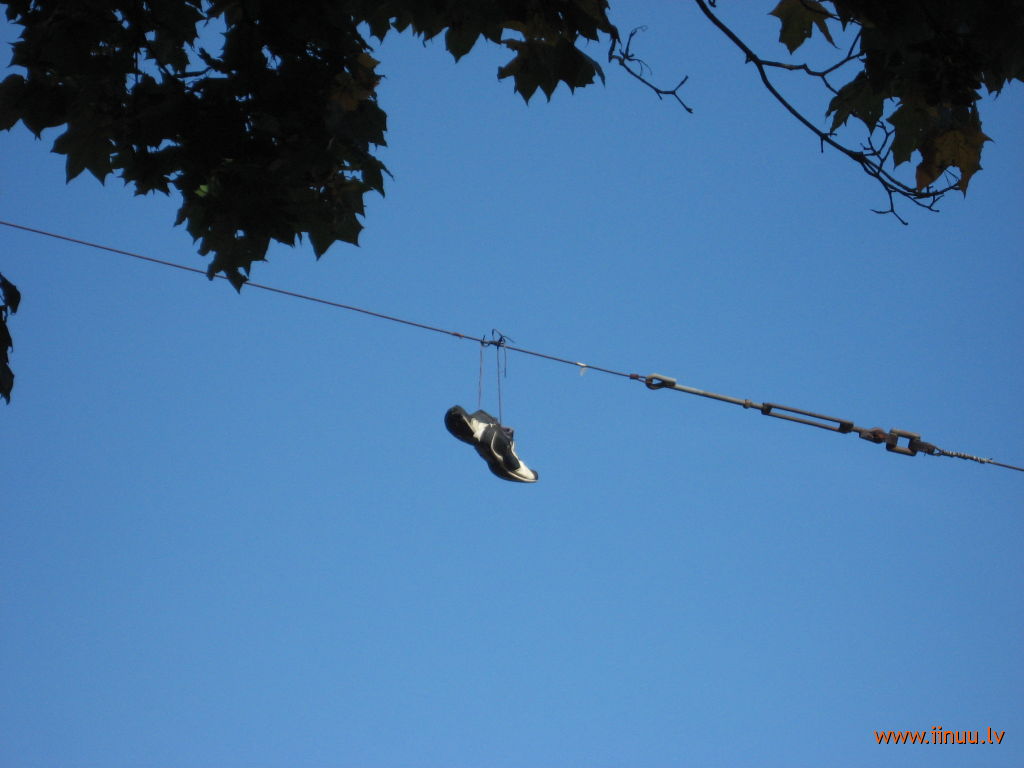
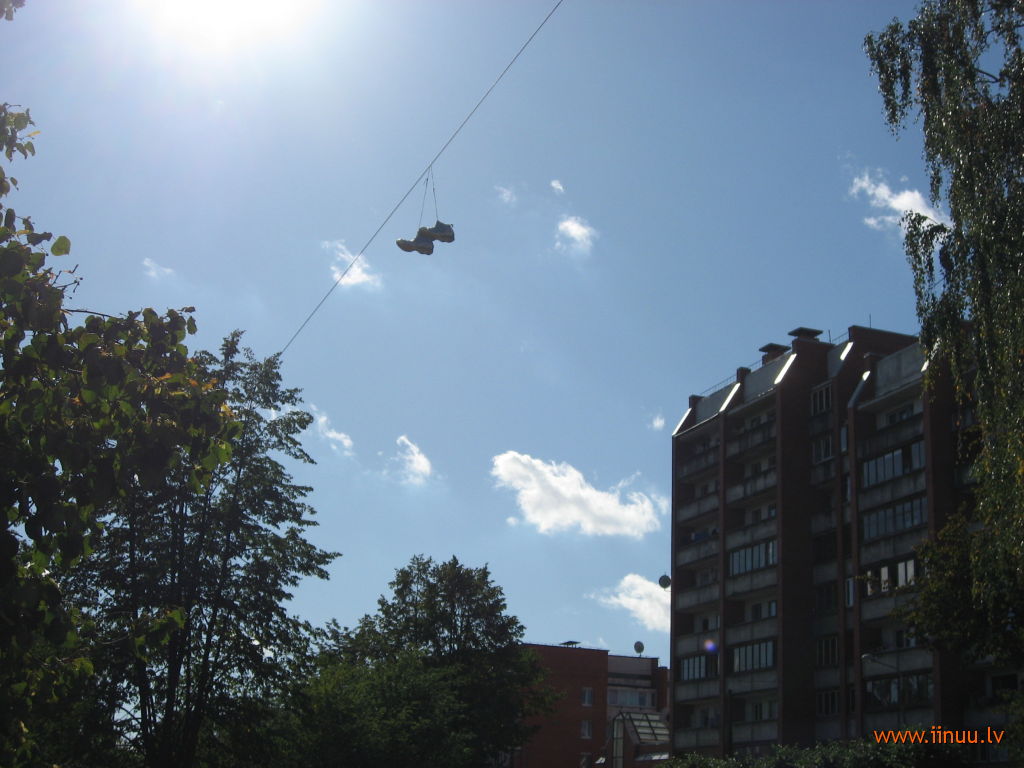
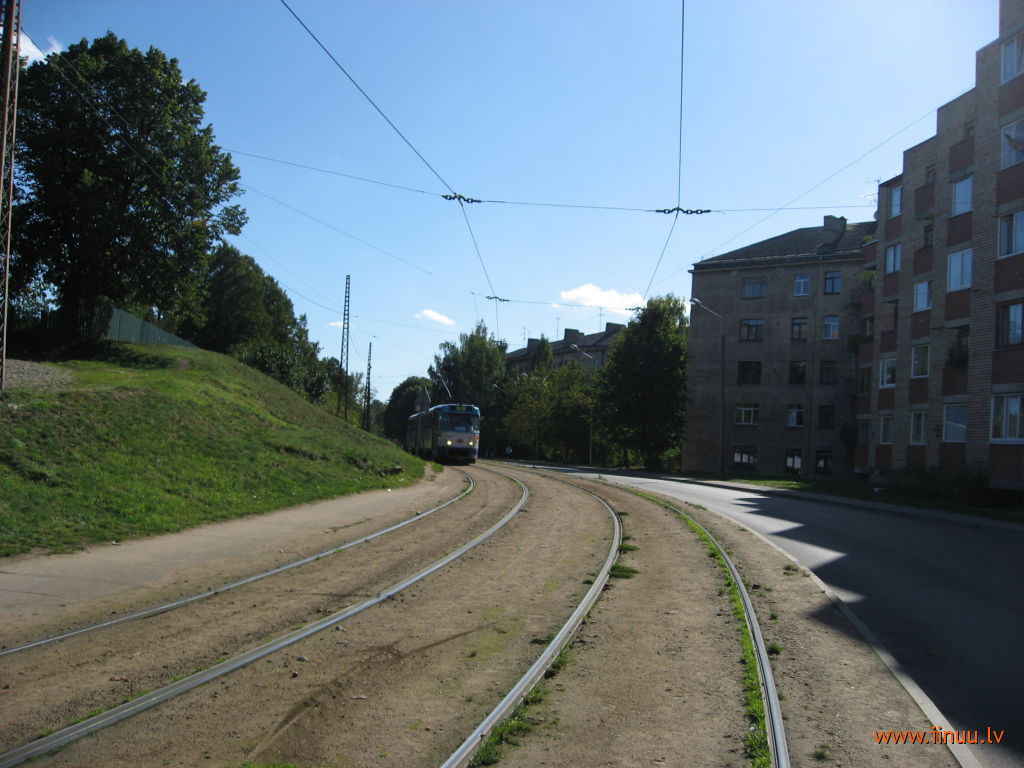
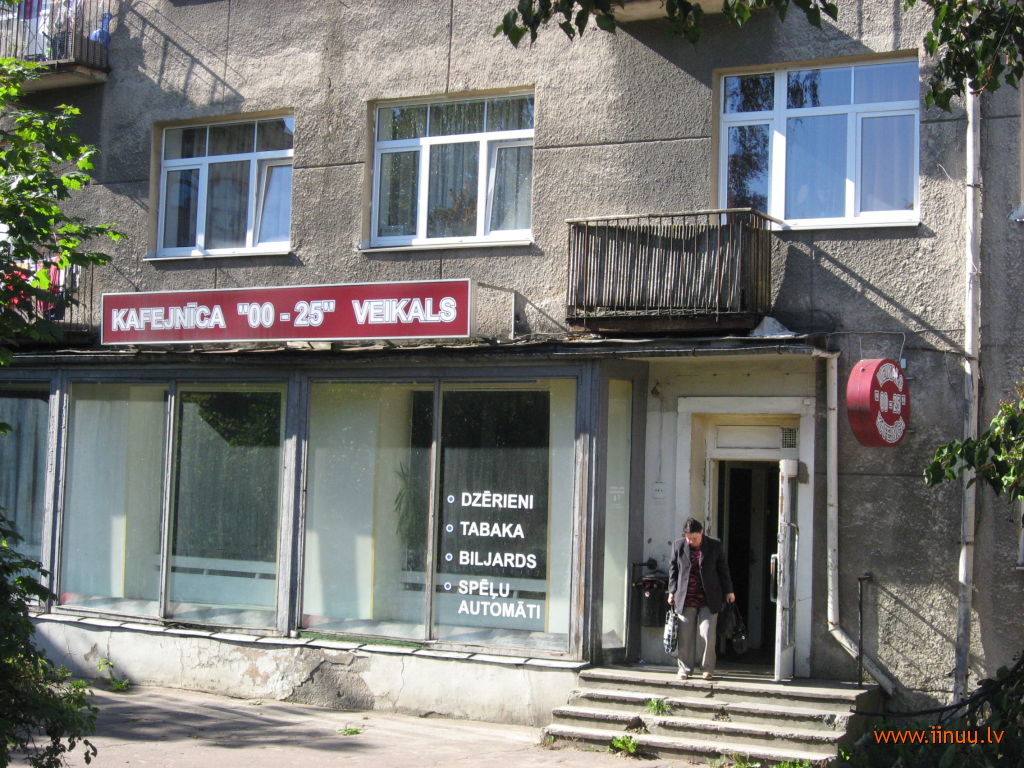
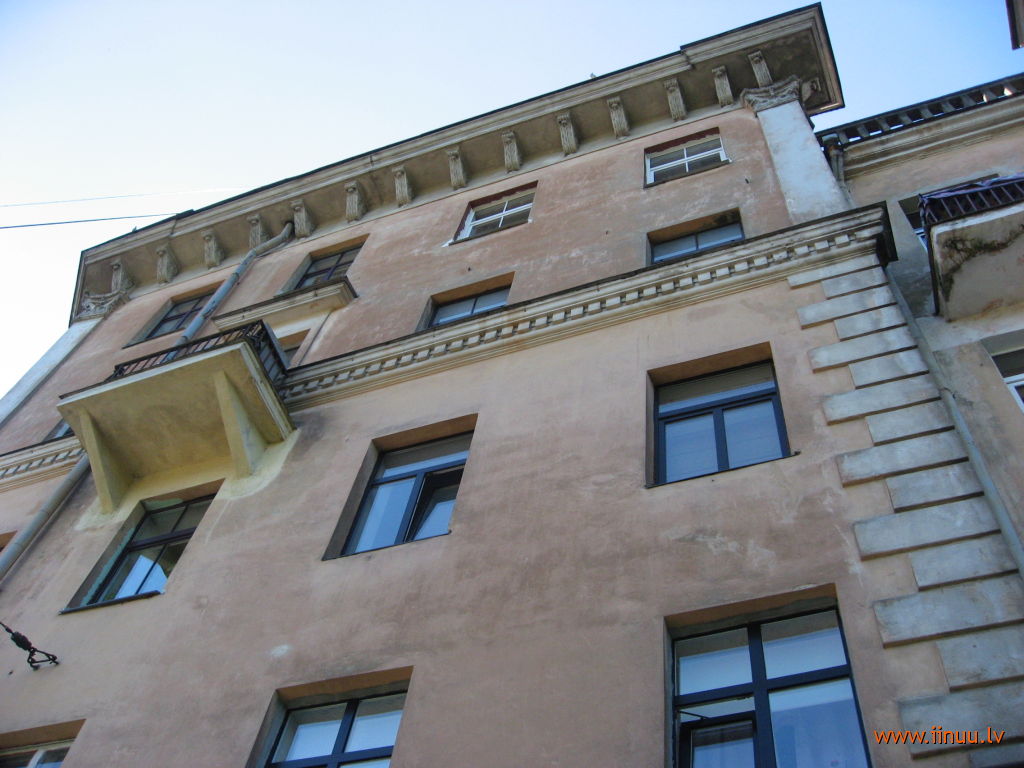
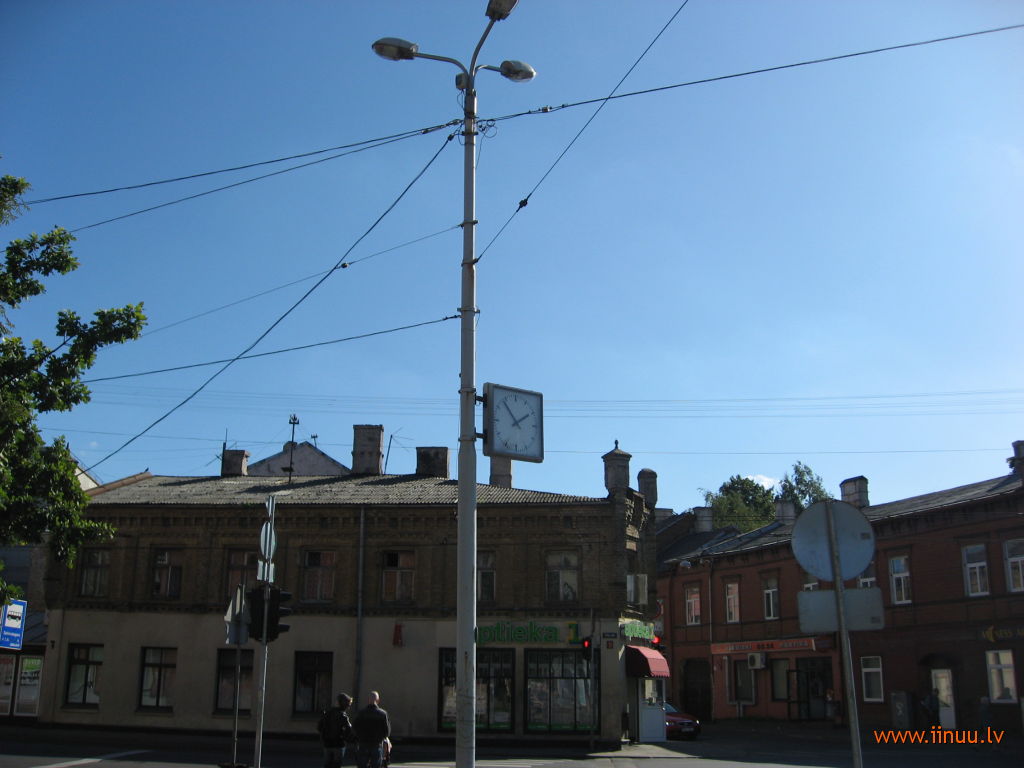
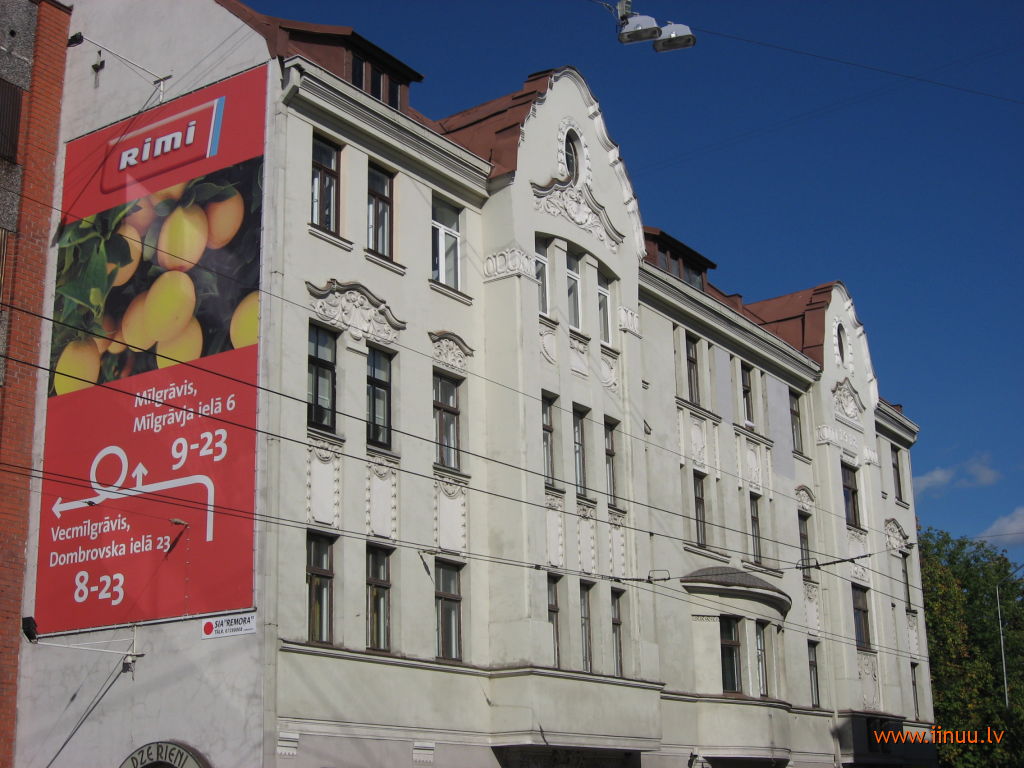
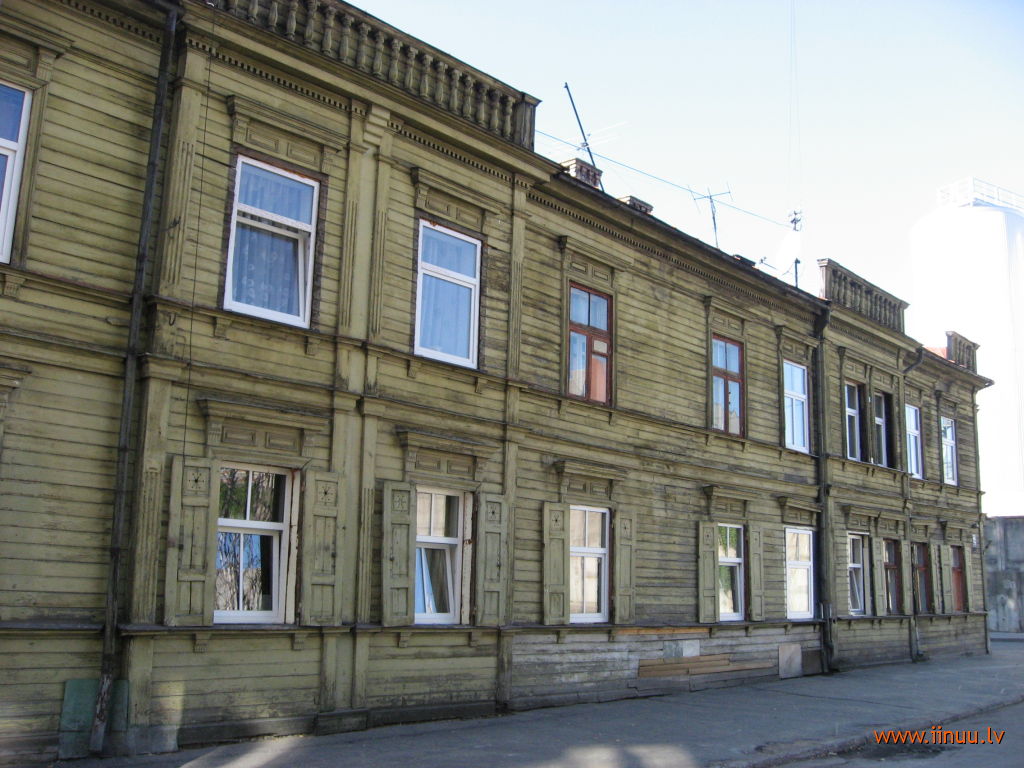
A thoroughly industrial district in the northern part of Riga, where walking along its streets - paved with asphalt and in places still old cobblestones - one can pass through at least three centuries and admire architecture from different eras: from late 18th and early 19th-century wooden and masonry buildings with ornamental decorations, to so-called Stalin-era buildings, Khrushchyovkas, achievements of Soviet architecture, all the way to modern office complexes that have sprung up in the last two or three years. In Sarkandaugava, dive bars operate 25 hours a day, pairs of trainers hang from power lines, here stands the former summer residence of Kārlis Ulmanis, Latvia's largest brewery and the Punishment Ditch where the city's witches were once drowned. But let us take everything in order.
Why Sarkandaugava?
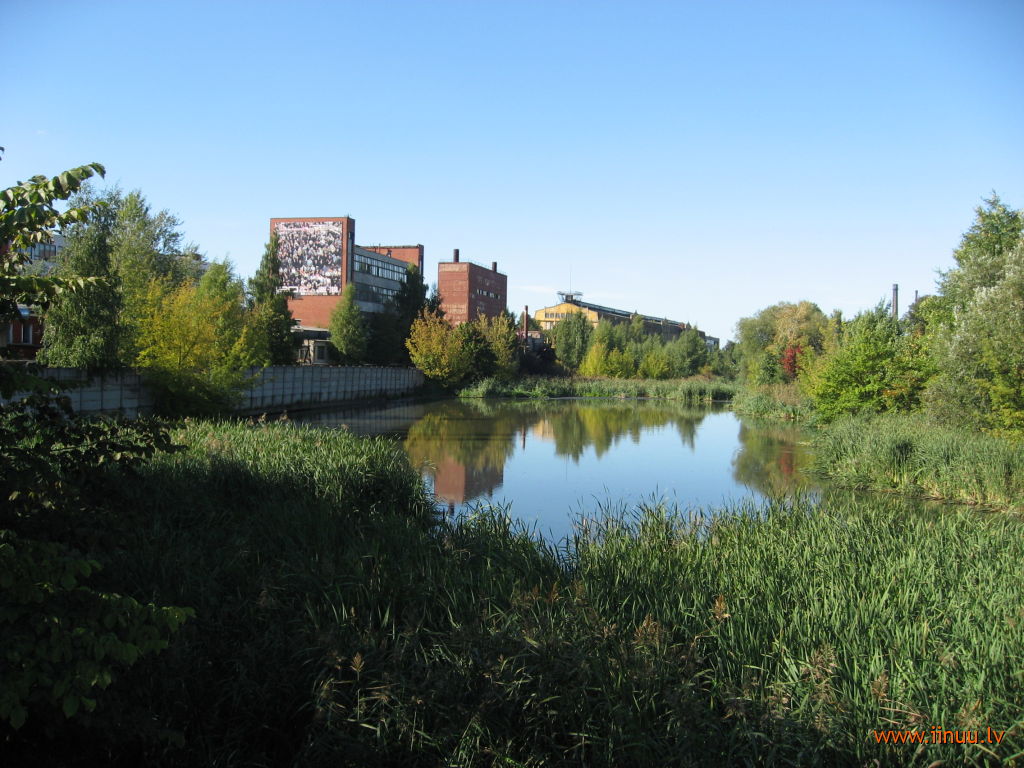
Sarkandaugava is a 2.5 km long and 25 m wide branch of the Daugava River, whose upper end terminates in what were once known as the city pastures. Johan Christoph Brotze, a former teacher at the Riga Lyceum, historian and local historian, expressed the view in 1806 that Sarkandaugava derived its name from the yellow and reddish sand hills that once rose on the right bank of the river.
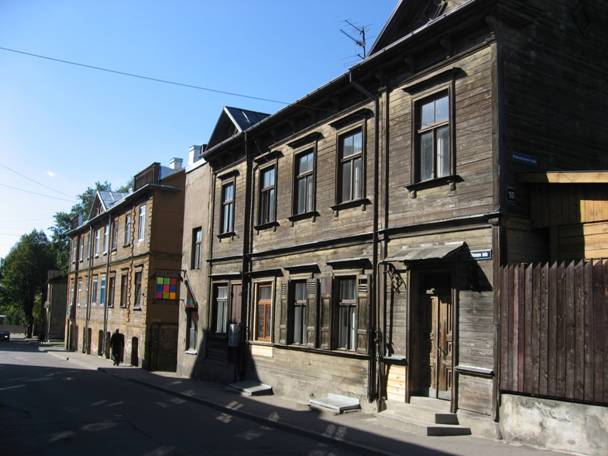
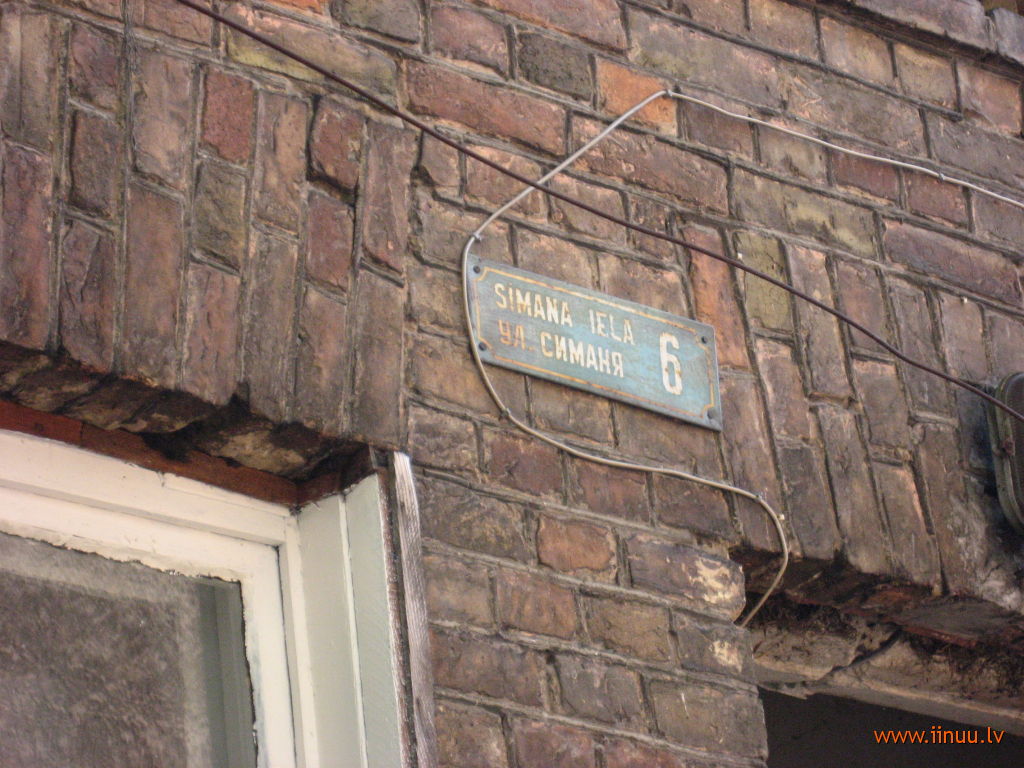
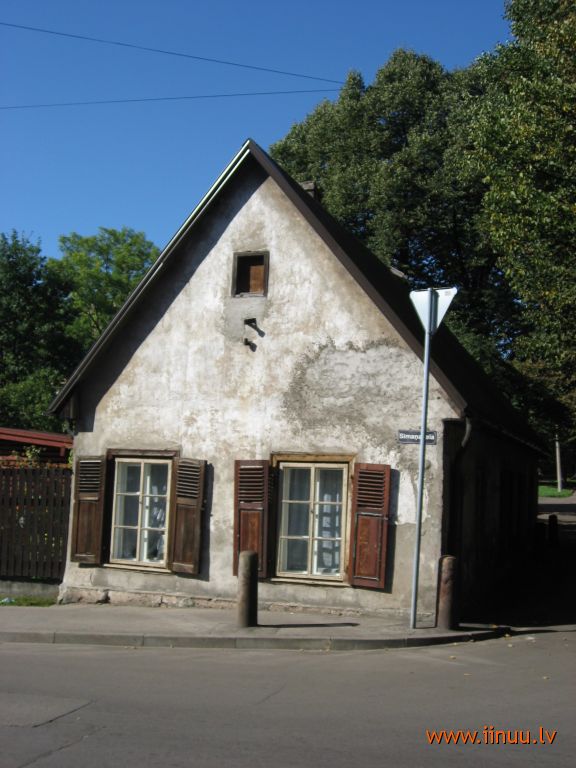
Glassmakers' workshop on Sīmaņa Street
In topographical materials right up to the mid-19th century this branch of the Daugava was called the Punishment Ditch, as it was preserved in popular memory as a place of punishment. In the Middle Ages, those accused of witchcraft and dealings with the devil were brought here by court sentence. Bound with rope, they were thrown into the water. If the accused did not sink, their guilt was proven, for the devil was helping them. Afterwards the guilty party was burned at the stake.
Tvaika Street
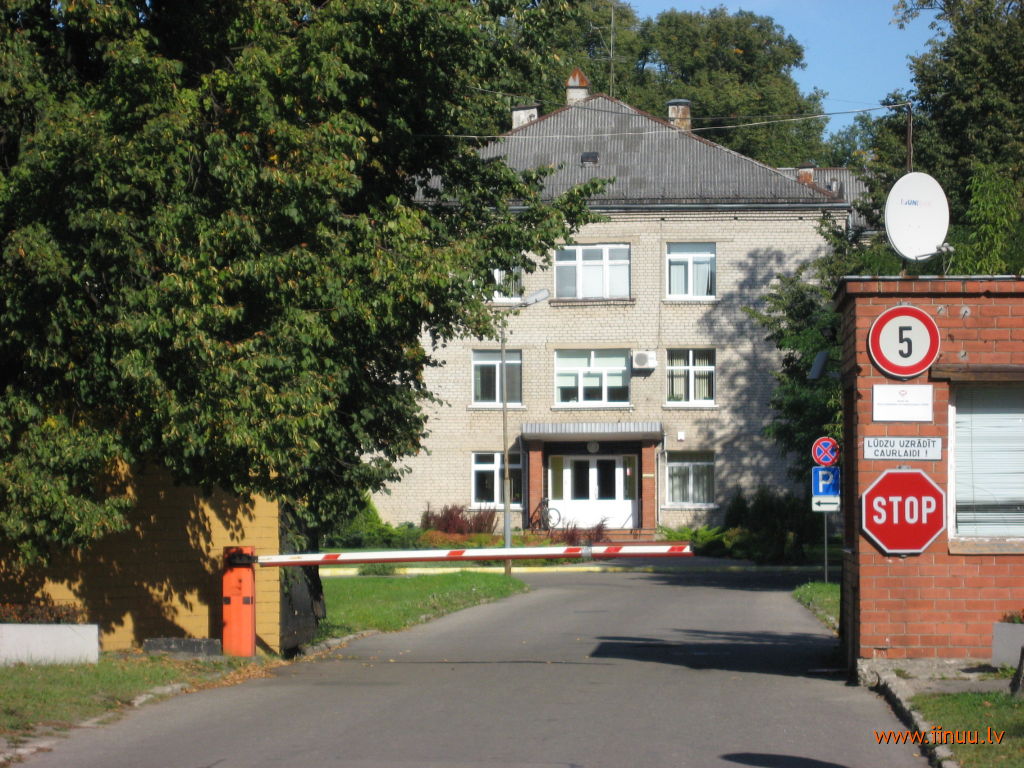
Tvaika Street (Steam Street) is, in my view, Sarkandaugava's most well-known street, if only because the well-known Psychoneurological Hospital is located there (read about its history and treatment specifics below). Tvaika Street has retained its industrial character to this day, as there are relatively few residential buildings on this street but many industrial enterprises. Tvaika Street is a former part of Tvaika Sawmill Street, which is mentioned in the Riga street register as far back as 1861. The street name derives from the first steam sawmill in Riga, founded in 1819. The street is 3,380 metres long.
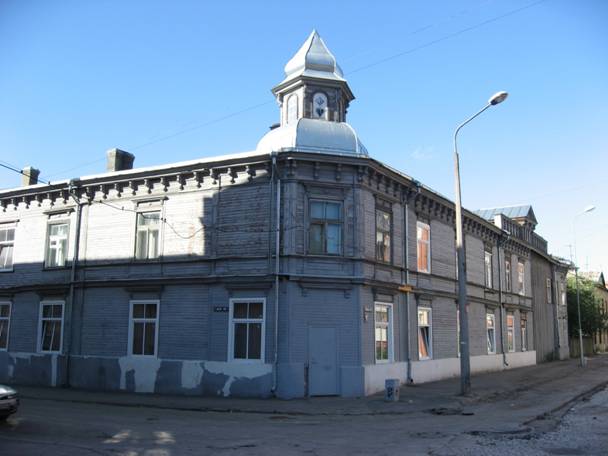
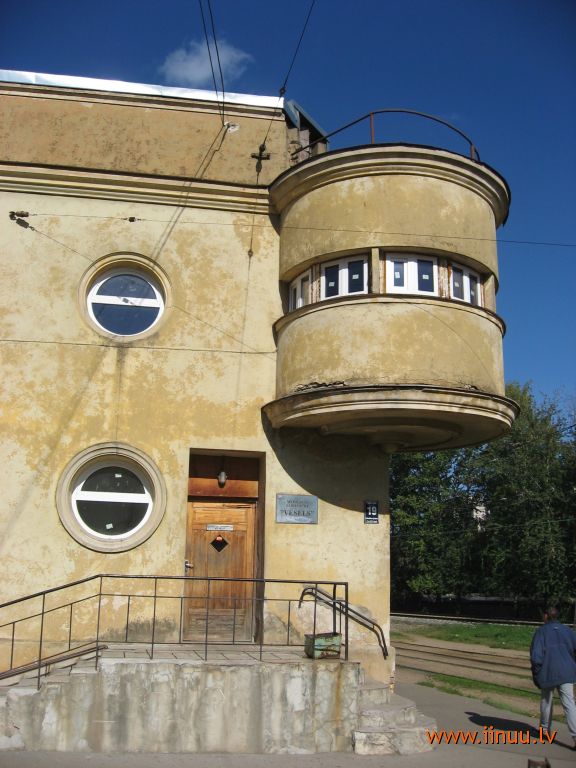
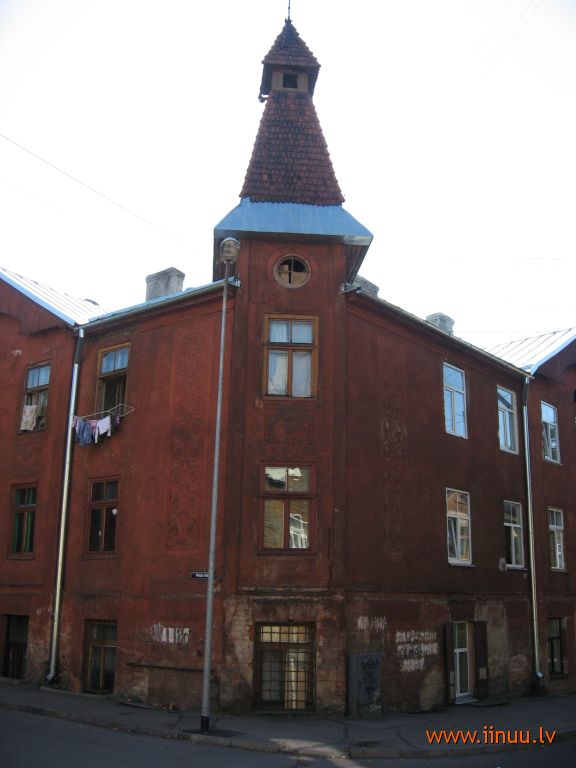
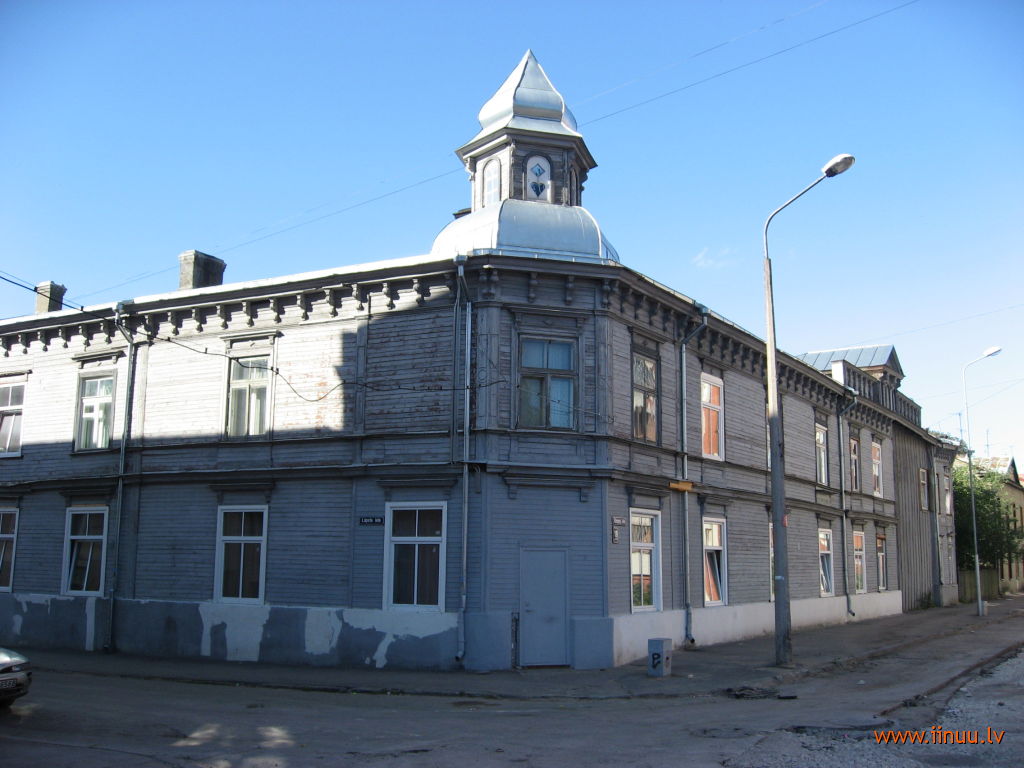
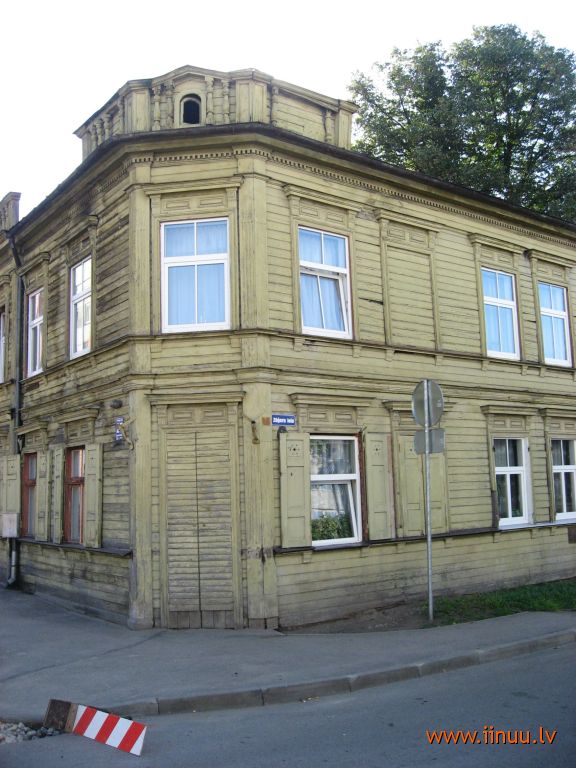
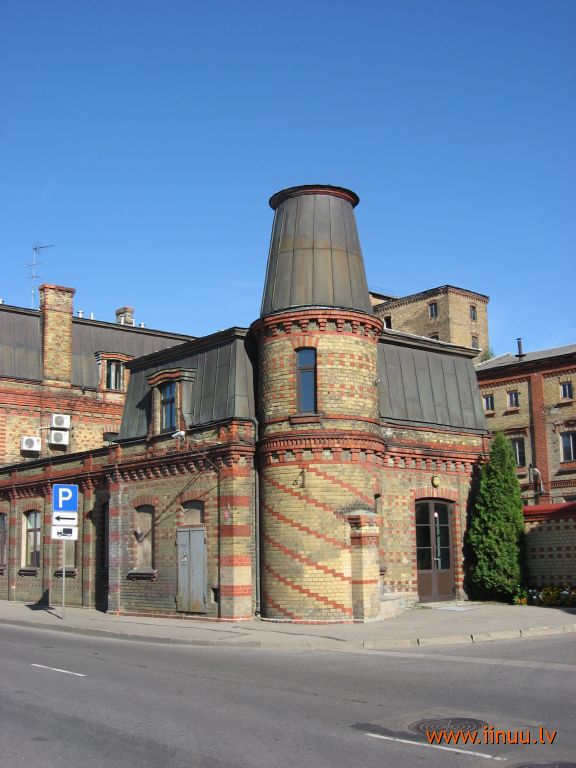
Corner of Lāpstu and Ziemeļu Streets
The Cradle of Riga's Industry
Sarkandaugava is the cradle of Riga's industry. In the 1830s, large industrial enterprises began to concentrate here. The industrial enterprises located in Sarkandaugava reflected the industrial character of the entire Baltic coast, as a broad range of industrial enterprises were located in the comparatively small area of Sarkandaugava.
The oldest factory in Riga is considered to be the Rāve sugar refinery, built in 1784 in Sarkandaugava (on the site of the present-day Traumatology and Orthopaedics Institute on Duntes Street). After 1832, when J. Wöhrmann purchased a small factory on the bank of the channel, rapid industrial development began in this district. In a very short time, a machine factory, leather factory, mill, sawmill, oil press, distillery, breweries, the Provodnik rubber factory and the Buffalo shoe factory were built nearby.
Provodnik
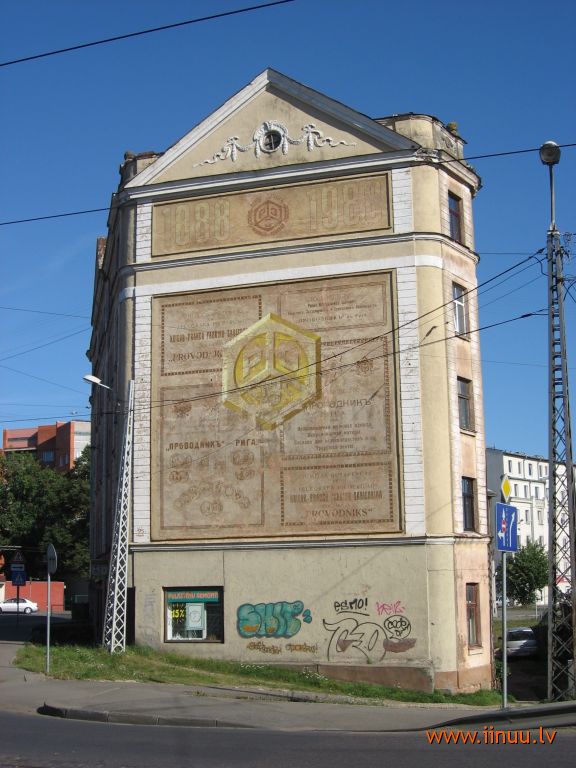
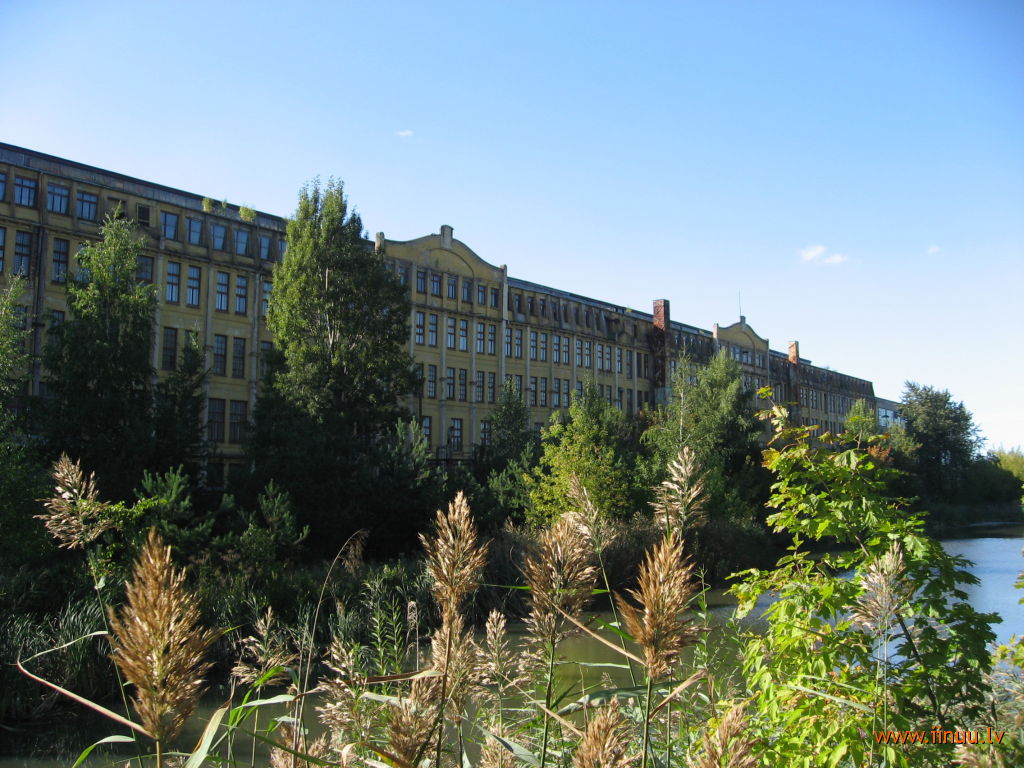
The Russian–French joint venture "Provodnik" was founded in 1888 and was engaged in the production of rubber goods. Although "Provodnik" cannot be considered the oldest rubber industry enterprise in Riga, it can be called the most significant rubber factory. Already by 1889 the range of goods produced was quite broad, from surgical rubber, hard rubber and linoleum. "Provodnik" even had a special galosh workshop producing 50 pairs of rubber footwear daily.
Although "Provodnik" was considered a powerful industrial enterprise, in the autumn of 1889 the galosh workshop burned down and the factory suspended its operations, resuming them a year later. The period from 1892 to 1900 was a crisis phase in the enterprise's history. The upswing began in 1900, when all production and financial indicators improved. Whereas in 1888 the production area covered 13,700 square metres, by 1906 it was already 46,000 metres. The enterprise's share capital was also increased from 700,000 roubles in 1888 to 7 million roubles in 1907, and a reserve capital of 6 million was also created. Annual turnover in 1910 was 21 million roubles. The number of employees reached 6,000 people. The factory's growth up to World War I is evidenced by the increase in galosh production from 500 pairs per day in 1889 to 35,000 pairs per day in 1910.
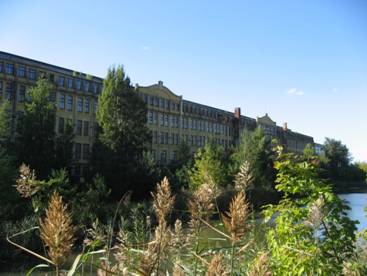
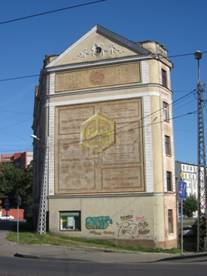
Factory building on the bank of the Sarkandaugava stream and the Provodnik workers' housing block
After World War I, like all Sarkandaugava industrial enterprises, "Provodnik" did not resume operations, as all equipment had been evacuated to Russia. In 1946, on the territory of the former Provodnik factory, the Riga Electric Machine Factory (RER) was established. In 1948 RER began producing electrical equipment for suburban electric trains; in 1958 - washing machines. From 1958 the newspaper "Rerietis" was published. In 1981 the Riga Electric Machine-Building Factory association was created, whose main enterprise was RER, which also included the Rēzekne floor-mounted trackless transport vehicle electrical equipment factory, Eksperim, the Powder Metallurgy Development Factory and the Household Appliances Factory. The production association manufactured crane electric motors, electrical equipment for electric forklifts and household goods, lighting equipment for train carriages and trams, "Rīga" brand washing machines, "Centa" centrifuges and other consumer goods.
Aldaris
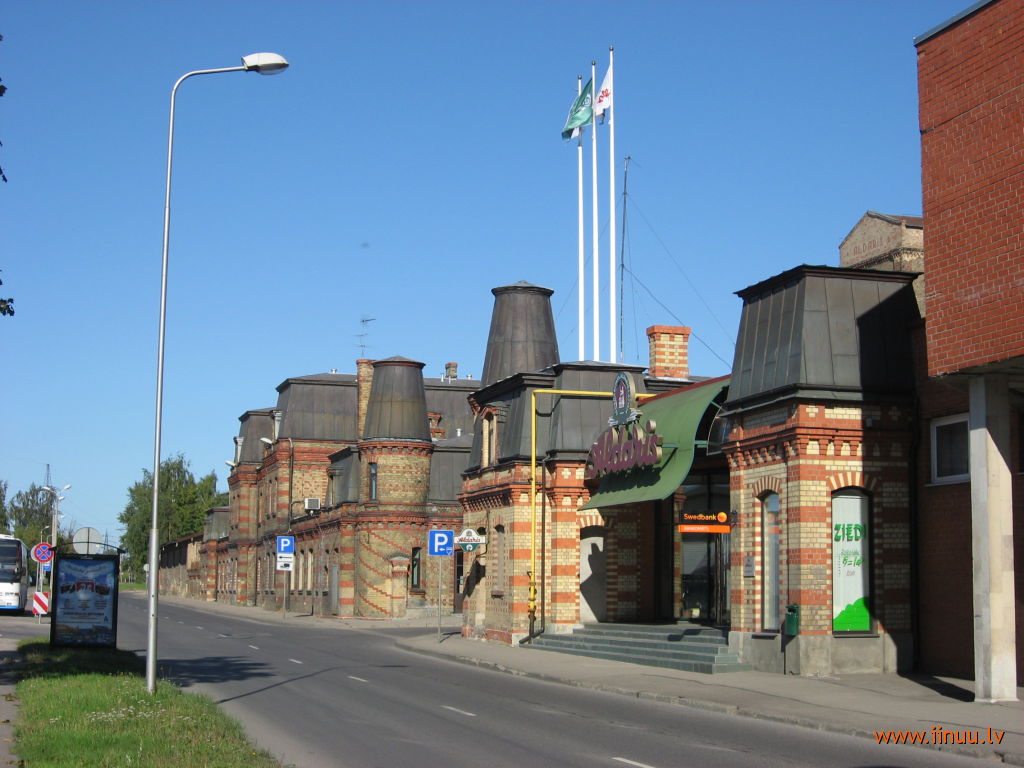
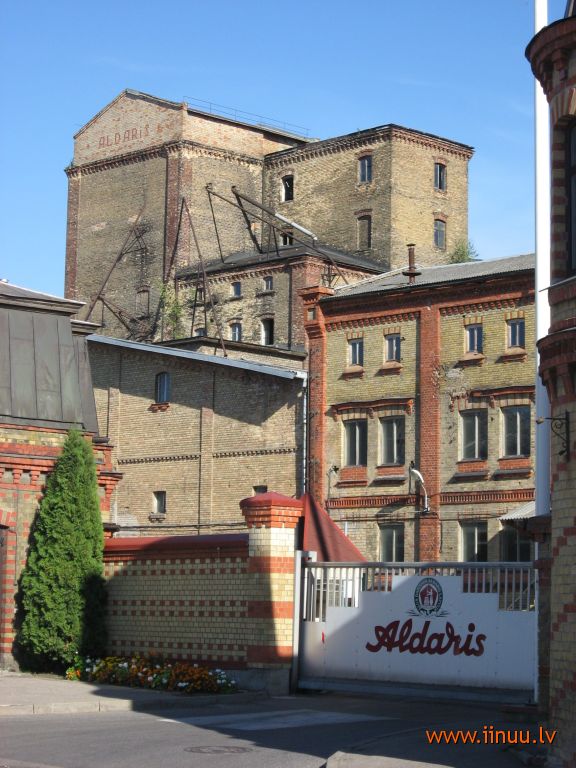
In 1865, at the initiative of Bavarian German Joachim Dauder, the "Waldschlößchen" or "Forest Castle" brewery was built, though most of its buildings were erected during reconstruction in 1890–1891. The factory buildings are arranged in blocks and built from red or yellow brick in the Neo-Gothic style with small towers, gables and rhythmically segmented window surrounds. In 1900, when the major brewery reconstruction was carried out, several multi-storey buildings in the Neo-Gothic style were erected. In 1937 the joint-stock company "Aldaris" was established (Tvaika Street 44). The enterprise also acquired at that time the emblem drawn by Artūrs Apiņš, which still adorns the labels today.
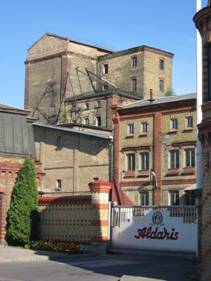
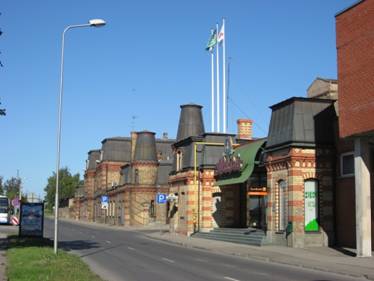
Aldaris brewery on Tvaika Street
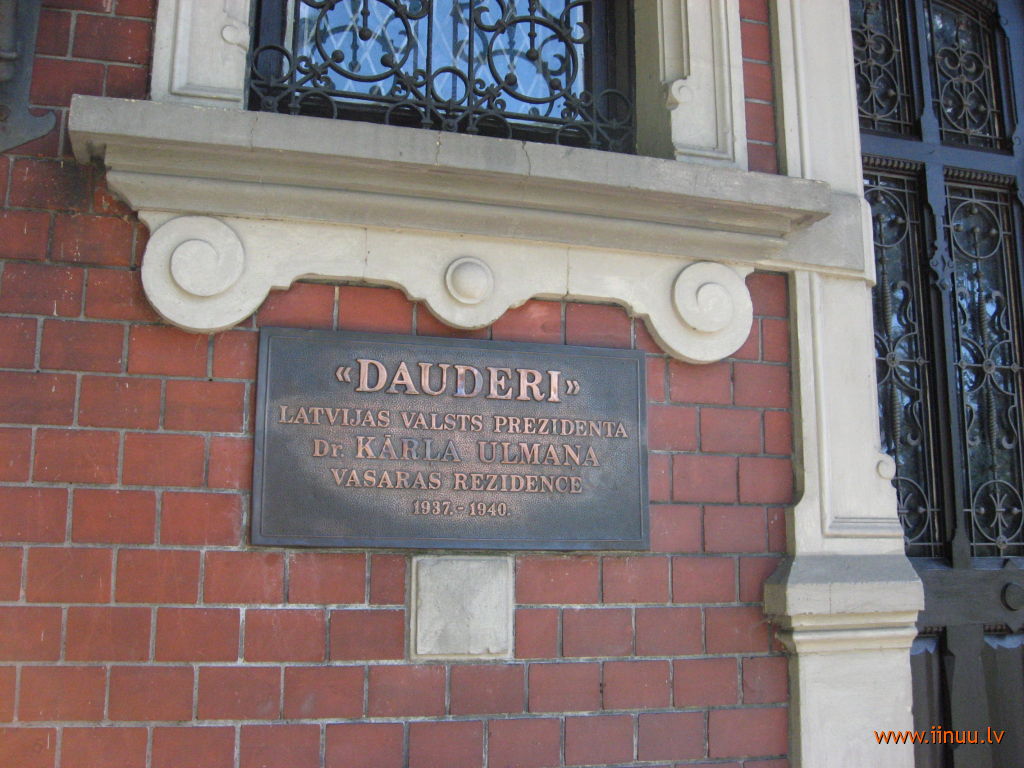
The Brewery Owner's House and K. Ulmanis's Residence - Dauderi
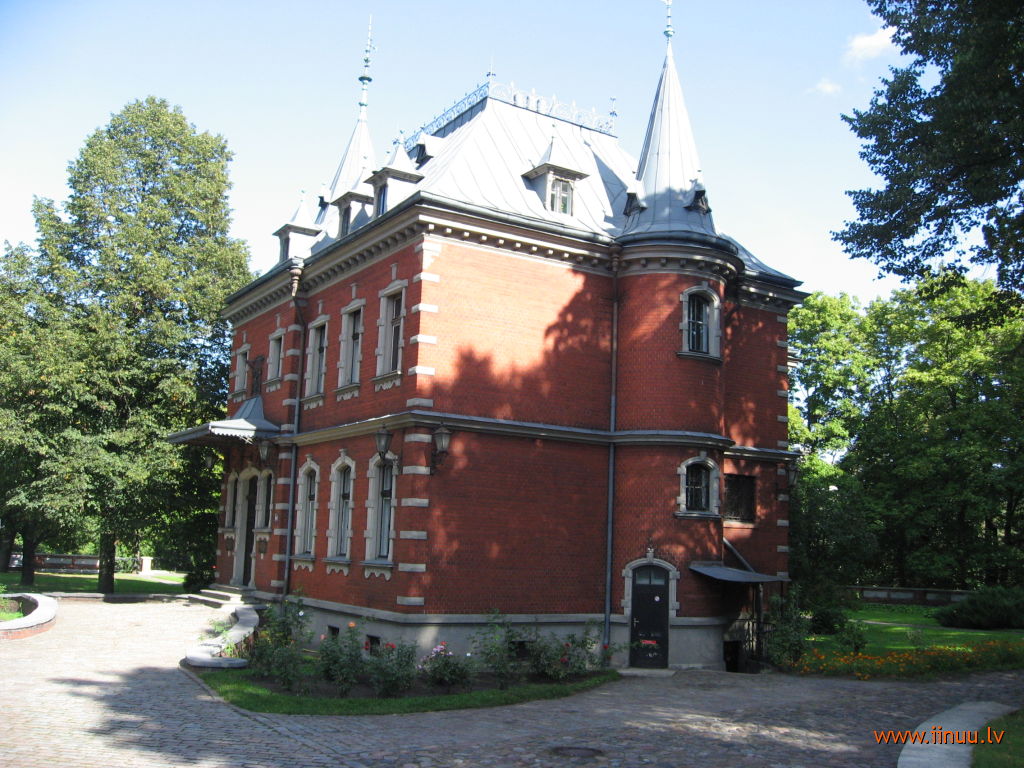
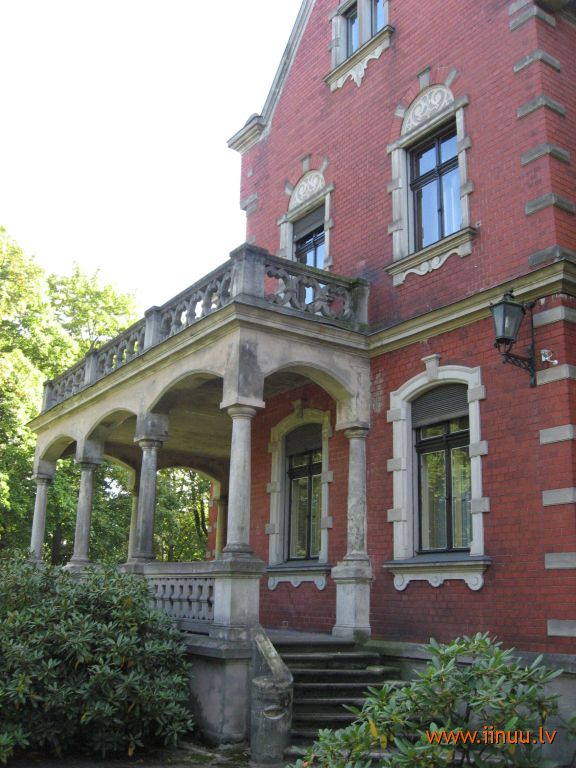
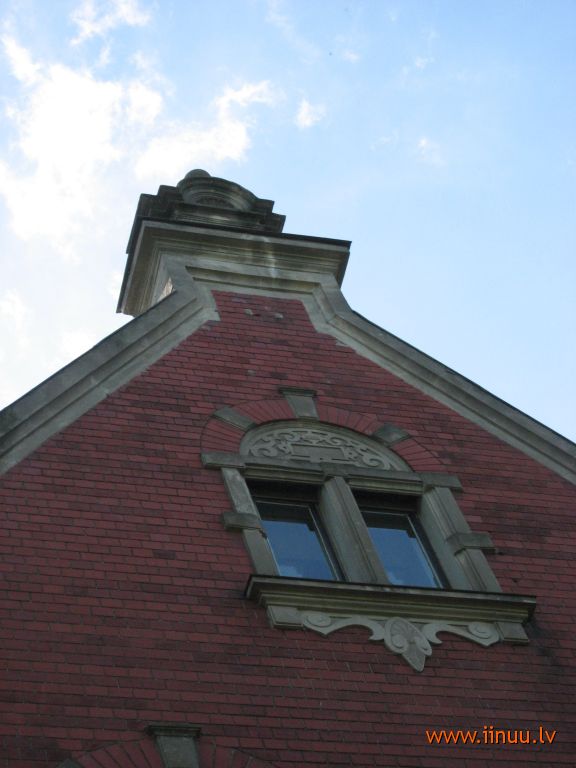
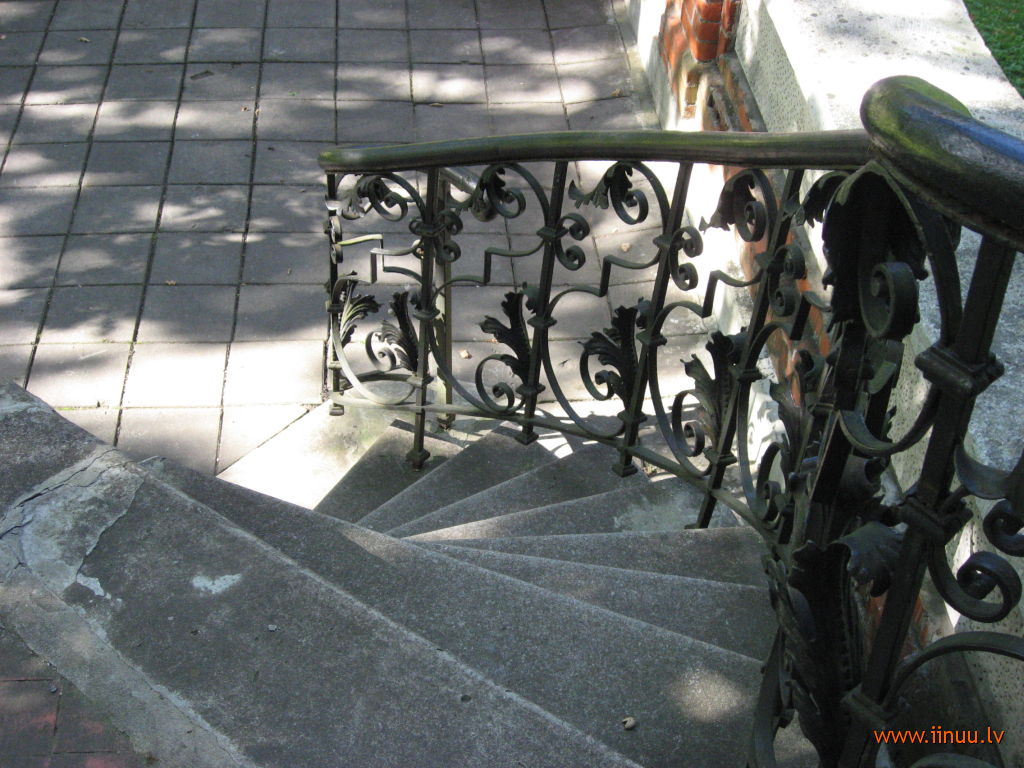
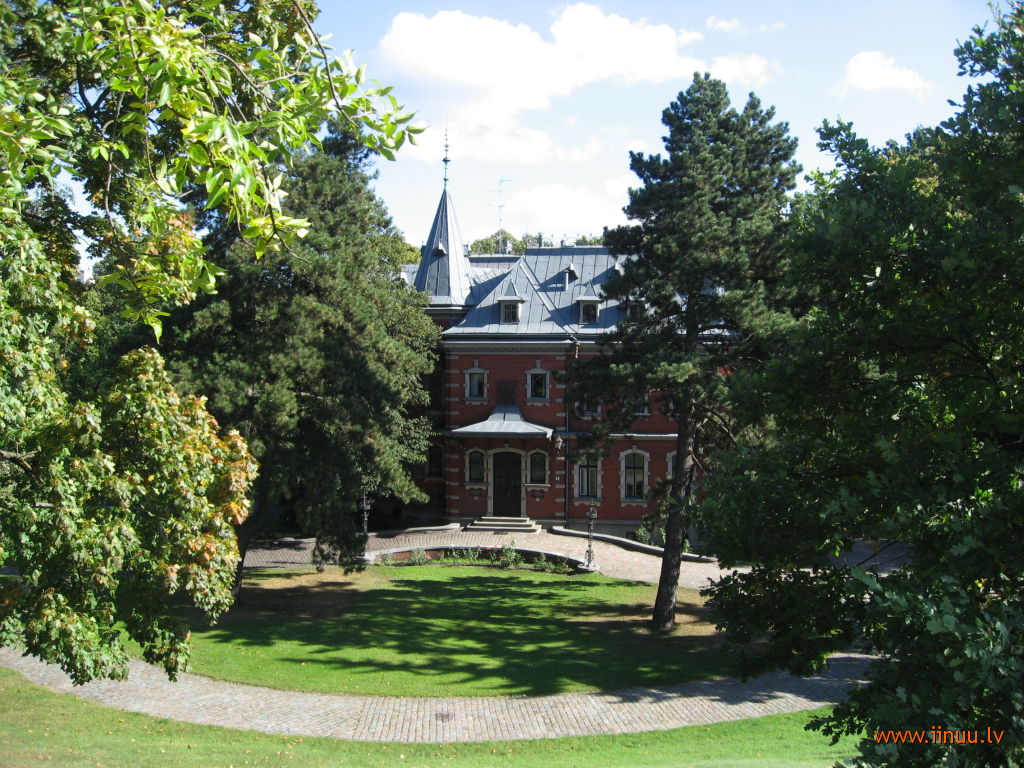
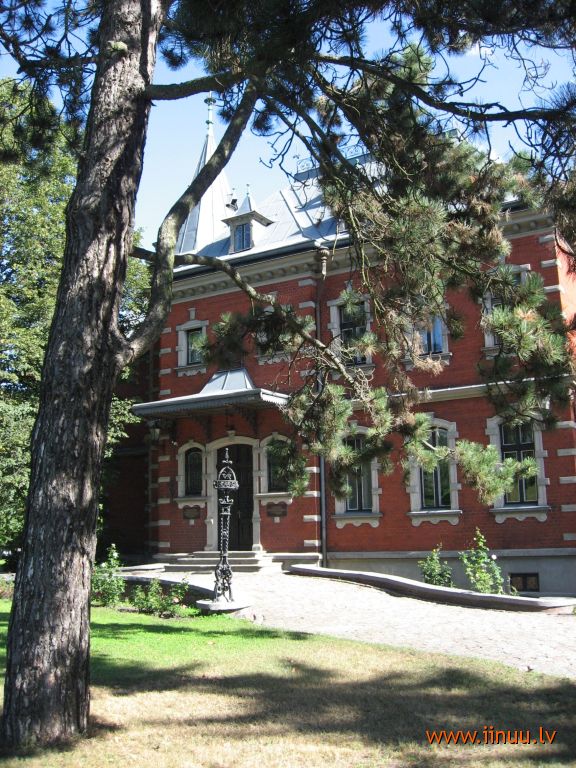
The distinctive red-brick building with its small towers and columns immediately attracts attention. In 1898, this building was constructed to a design by architect R. Hausermann and engineer F. Senberglich as the residential house of the former "Waldschlößchen" brewery owner, named "Von Dinderner". A markedly eclectic-style building constructed under the influence of German Neo-Renaissance, using red decorative bricks imported from Germany, dark grey natural slate roofing tiles, as well as other interior finishing materials. The park with its pond and artificial castle ruins around it was laid out by G. F. F. Kufalts, the chief garden architect of the City of Riga.
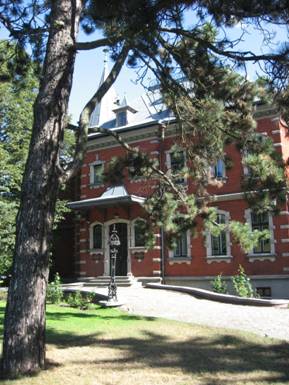
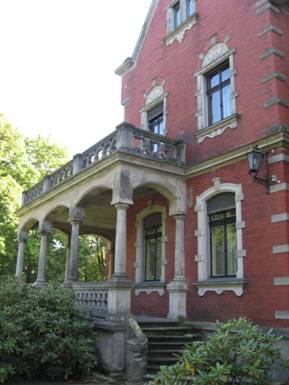
From 1936 to 1940 the building came into the ownership of the Credit Bank, and from 1937 Latvian President K. Ulmanis arranged his residence in the building, giving it the name "Dauderi". Until 1988 the building housed a kindergarten and a product division of the "Kaija" fish factory.
On 27 June 1990, the Latvian Cultural Museum "Dauderi" was opened. The museum collection consists of: numismatics, faleristics, military uniforms and accessories, judges' and city mayors' chains of office, brooches and folk costumes, works of art, books, magazines, stage design sketches for the opera productions "Judith" and "Salome", and portraits of K. Ulmanis and General J. Balodis.
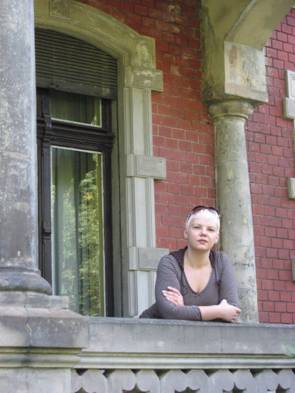
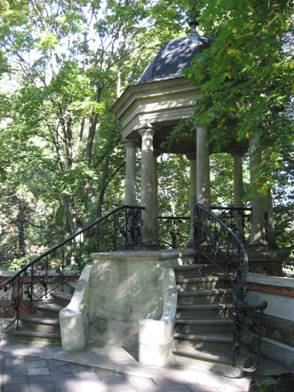
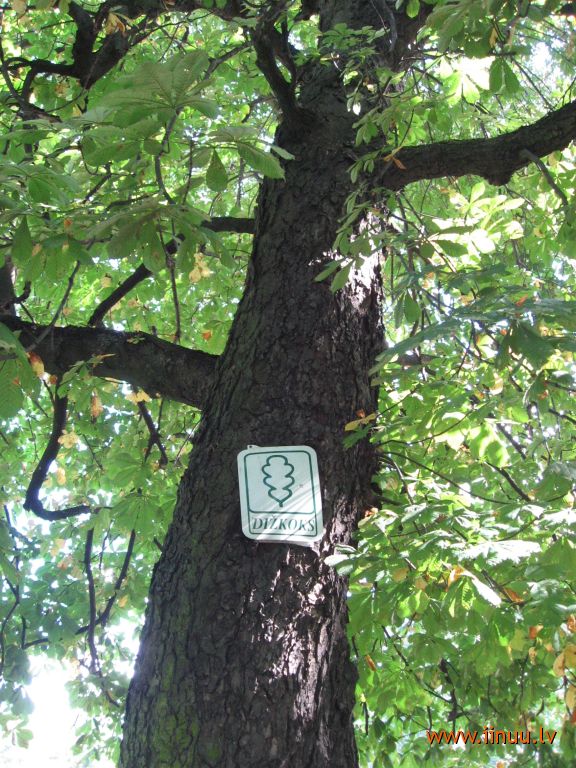
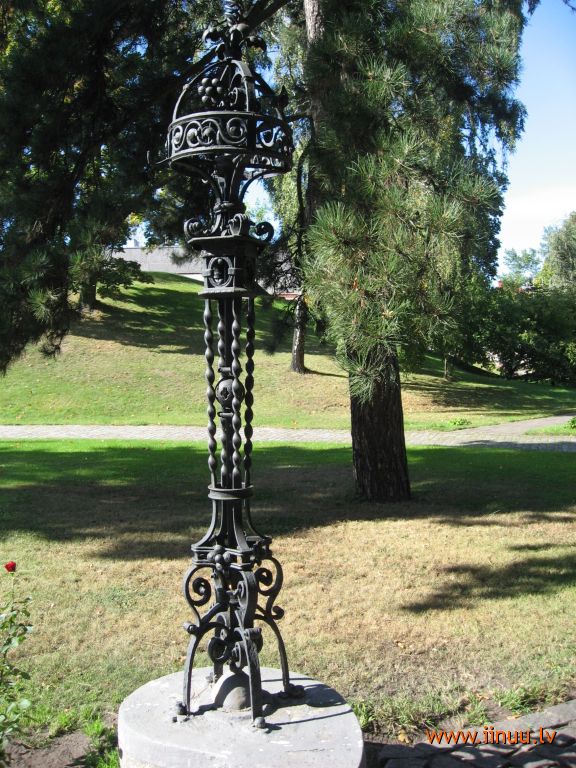
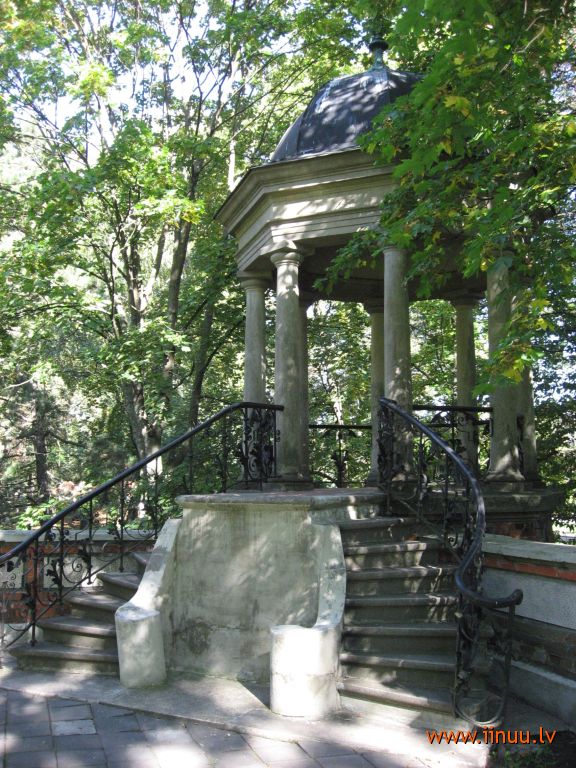
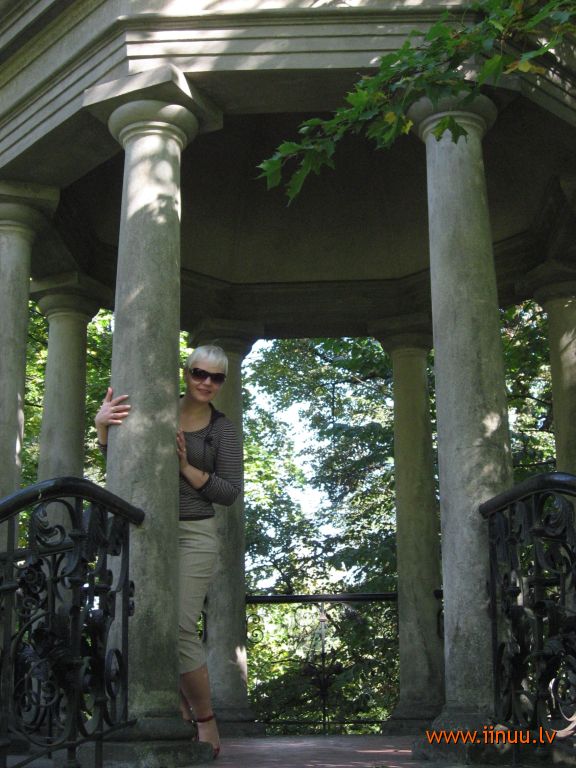
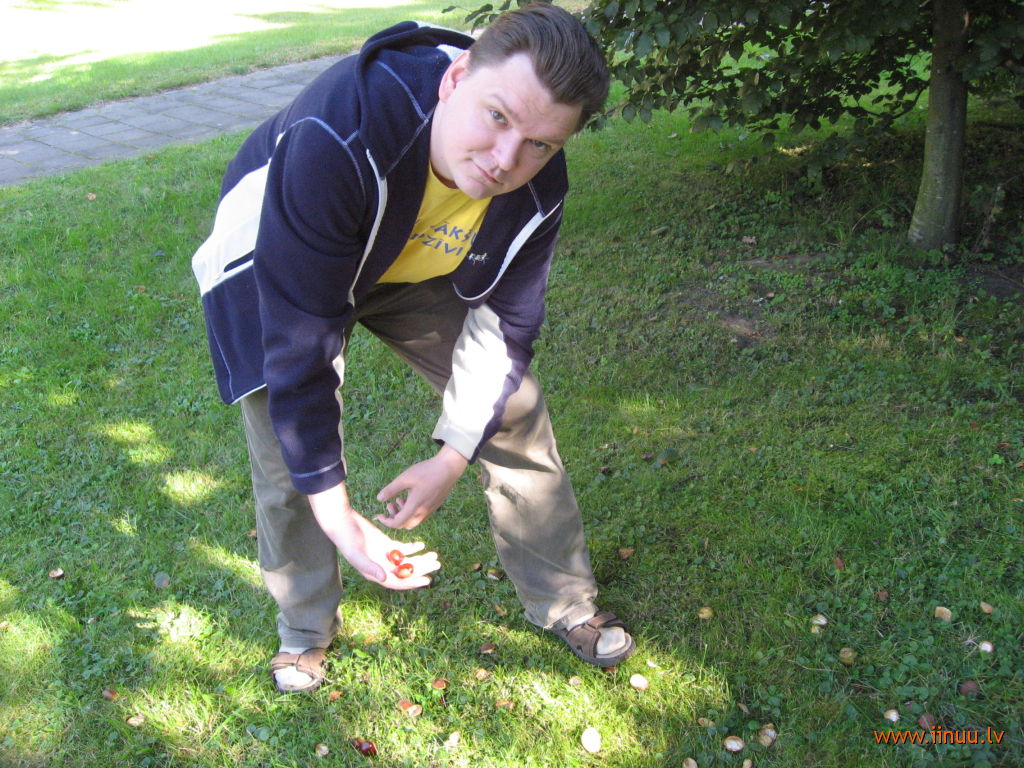
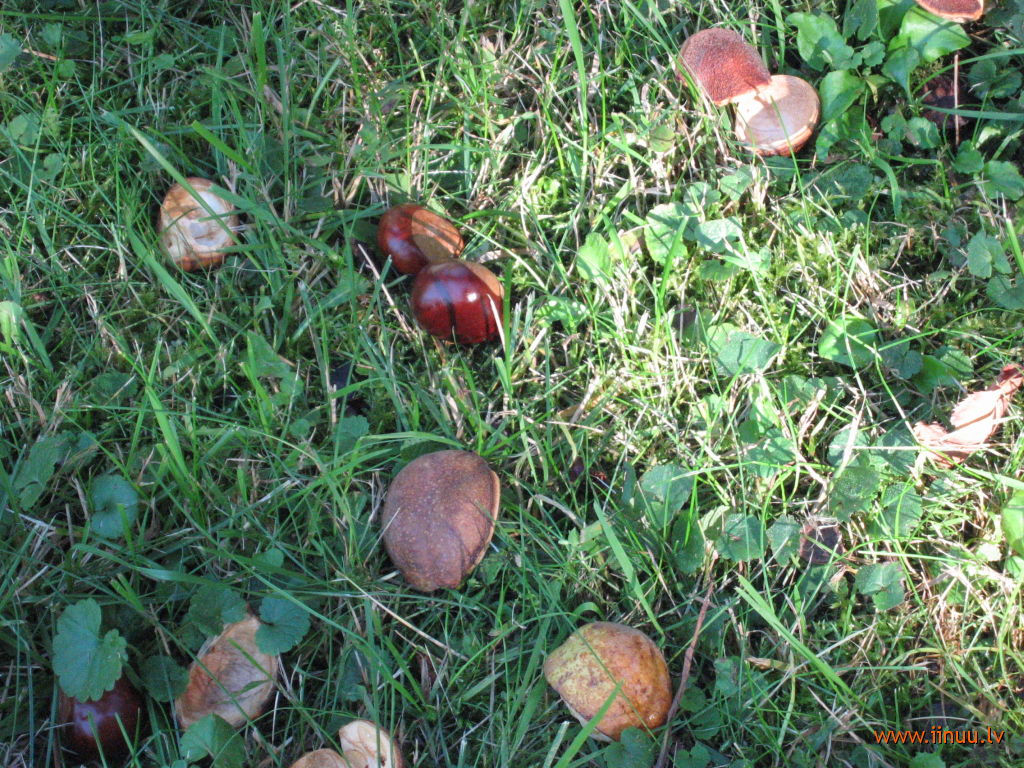
Today the museum grounds are cosy, well-kept and open for walks - also an excellent place to sit on a bench, mind the little ones, read a book, collect chestnuts fallen in the grass, take photographs, paint...
For search on Google Maps - 57°00'14.18'' N 24°07'26.37'' E
"An Institution Pleasing to God" at Tvaika Street 4
The origins of the Mental Health Agency can be traced to 1710, when Count Alexander Menshikov, 8 km from Riga, for strategic purposes ordered a hill to be raised, which was named after him Alexander Heights. It was here, on 10 May 1820, that the Livland Public Welfare Board began construction of "institutions pleasing to God", among which was also the first psychiatric hospital in the Baltic.
The building design was prepared by Livland Province architect H. F. Breitkrenz, who arranged them in the shape of the Russian letter "H". The complex of "institutions pleasing to God", including the hospital for the mentally ill, was opened on 21 September 1824. It was named Alexander Heights. Otto Huhn (1764–1832), a prominent 18th-century medical figure, was appointed director of the institution. With the opening of Alexander Heights, the hospital of the Riga Fortress Citadel ceased to exist, as all the mentally and venerally ill patients, as well as inmates of the lunatic asylum, were transferred from there to Alexander Heights.
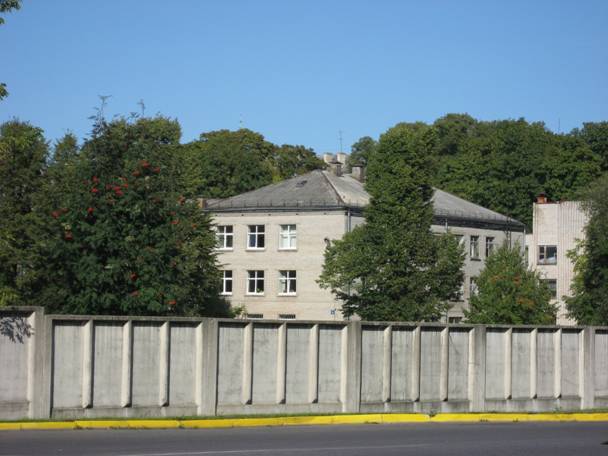
A glimpse into everyday life at "Alexander Heights - Institutions Pleasing to God" is provided by the statutes of this medical institution, which were in German and Russian:
* Idleness is not permitted in the institution, therefore it is the duty of the chief supervisor to keep all the infirm occupied to the extent of their abilities.
* Those living in one room must clean and air it in turn, make the beds and bunks, and clean the latrines;
* Visitors who come only out of curiosity were forbidden entry to the institution;
* Guards must ensure that the patients comb their hair, wash their hands and face and wear clean clothes each day;
* Corporal punishment is forbidden entirely; only one patient may be placed in one room at a time, after first removing from it all unfastened items. At ten o'clock in the evening a mattress or sack of straw, a pillow and a blanket are brought in and laid on the floor, and at five in the morning they are removed;
* The frequency or rarity of bed linen changes, the diet, the use of baths, exposure to fresh air, the type of work and activities, types of recreation, the use of corsets, confinement to a room, and the separation of incurable patients and those suffering from epilepsy depend on the doctor's judgement;
* Feldschers must carry out the doctor's orders precisely. In the doctor's absence the feldscher makes notes on changes in the patient's health condition, etc.
Also interesting are O. Huhn's views on mental illnesses and their treatment. O. Huhn believed that the causes of madness were usually pride, superstition, piety and the tendency to fall in love. As medicinal and therapeutic methods he employed emetics, hydrotherapy, mechanical restraints, confinement, strictness, intimidation and "pedagogical techniques". He used musk, henbane, smelling salts, belladonna and tartar emetic in large quantities to induce vomiting. In cases of plethora, blood was let; for hypochondriacs, powerful laxatives were given. Melancholics were treated with stretchers; for insomnia, opium and camphor were given. During fits of madness, ice, snow or a cloth soaked in cold water was applied to the head. Epilepsy was treated with iron rust mixed with sugar. An interesting method for treating alcoholism was to feed the alcoholic a piece of soap the size of a hazelnut, as well as other things the drinker found disagreeable. In this case, spiders and bedbugs in hot wine were given. Here we see the empirically grounded application of aversion therapy. It must be said that history is silent on the method's positive effects. :)
The Alexander Heights hospital served mainly as a refuge for the infirm and was a residential institution for the chronically mentally ill. The patient turnover at Alexander Heights hospital was quite low. From the opening day until 1903 (a period of 78 years), only 4,796 patients were treated at the hospital (2,730 men and 2,066 women), or 61 patients per year.
During the period of Latvian independence, the Alexander Heights hospital was overcrowded with patients. This overload was connected with the fact that orphans and the homeless were treated free of charge.
The hospital suffered severe losses during the German occupation, when more than 300 of the hospital's mentally ill patients were shot by the Germans in 1942.
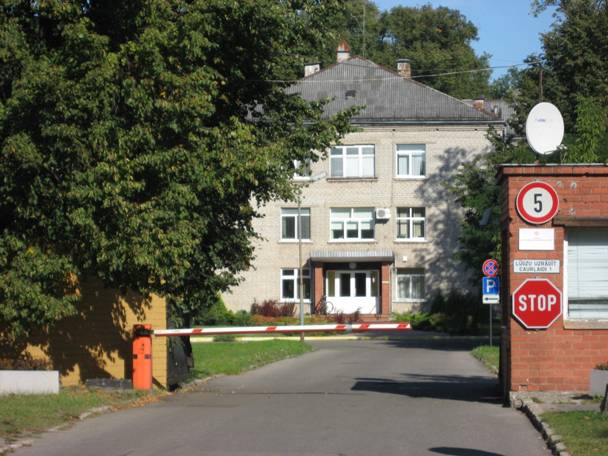
After World War II, Alexander Heights hospital was the only functioning psychiatric hospital in Riga. The institution was given a new name - the Riga Psychoneurological Hospital.
Sarkandaugava 200 and 300 Years Ago
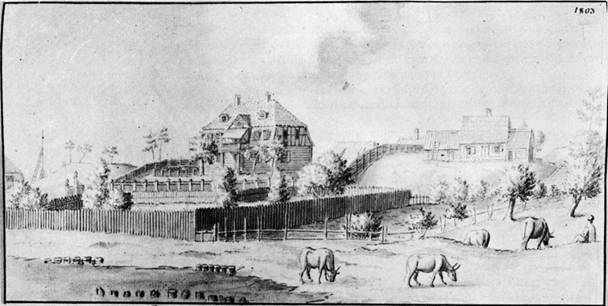
Vogt's Manor, J. K. Brotze. 1803. (now the area between Tvaika and Aptiekas Streets)
For search on Google Maps - 56°59'51.54'' N 24°07'05.50'' E
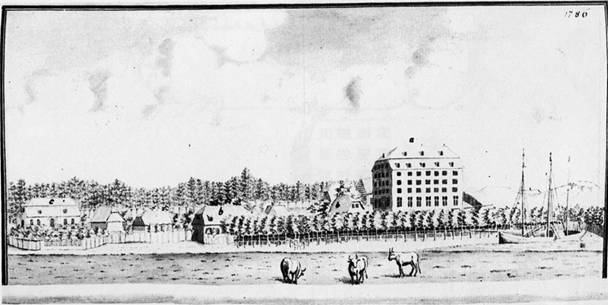
Rāve Manor - in the centre of the image; the tall building on the right - the sugar factory; building on the left - Bron's Manor. J. K. Brotze, drawing, 1786. (now the area in the bend of Tvaika and Tilta Streets)
For search on Google Maps - 56°59'41.03'' N 24°07'22.47'' E
Sources used:
http://en.wikipedia.org/wiki/Sarkandaugava
http://www3.acadlib.lv/broce/
http://www.aldaris.lv/lv/14/
http://www.citariga.lv
http://www.riga.lv/LV/Channels/About_Riga/History_of_Riga/Stories/Priekspilsetas/Sarkandaugava.htm
http://www.ambermarks.com/Kartes/Rajoni/Riga/Sarkandaugava.htm
http://www.agenda21riga.lv/webclosed/?id=300258
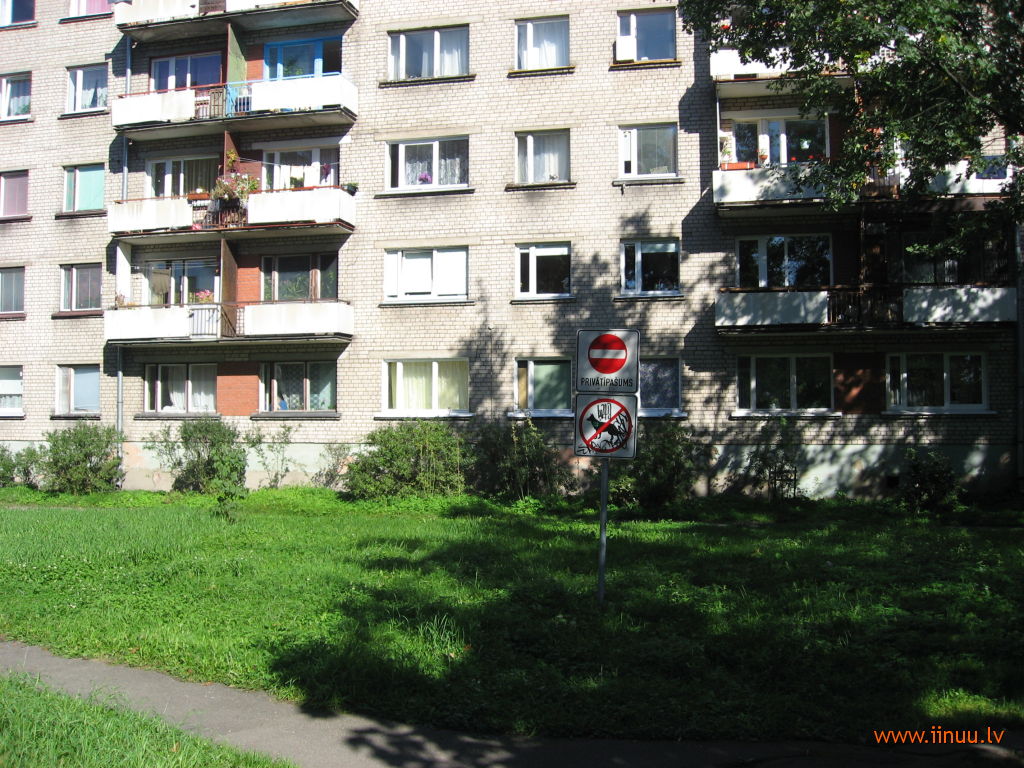
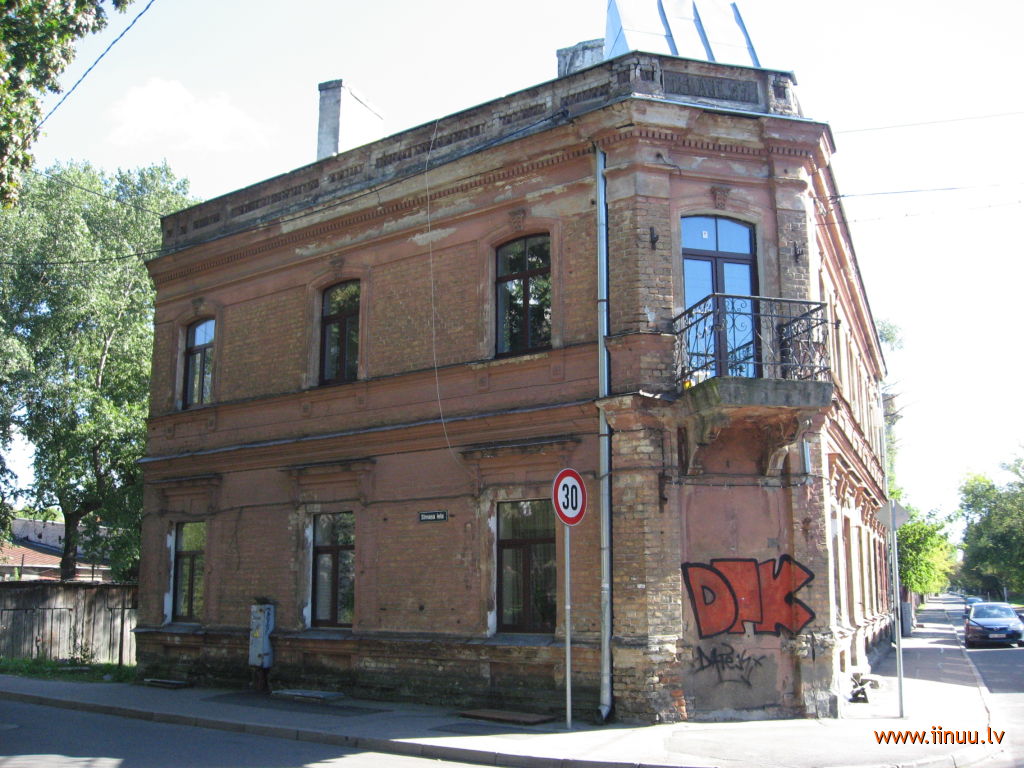
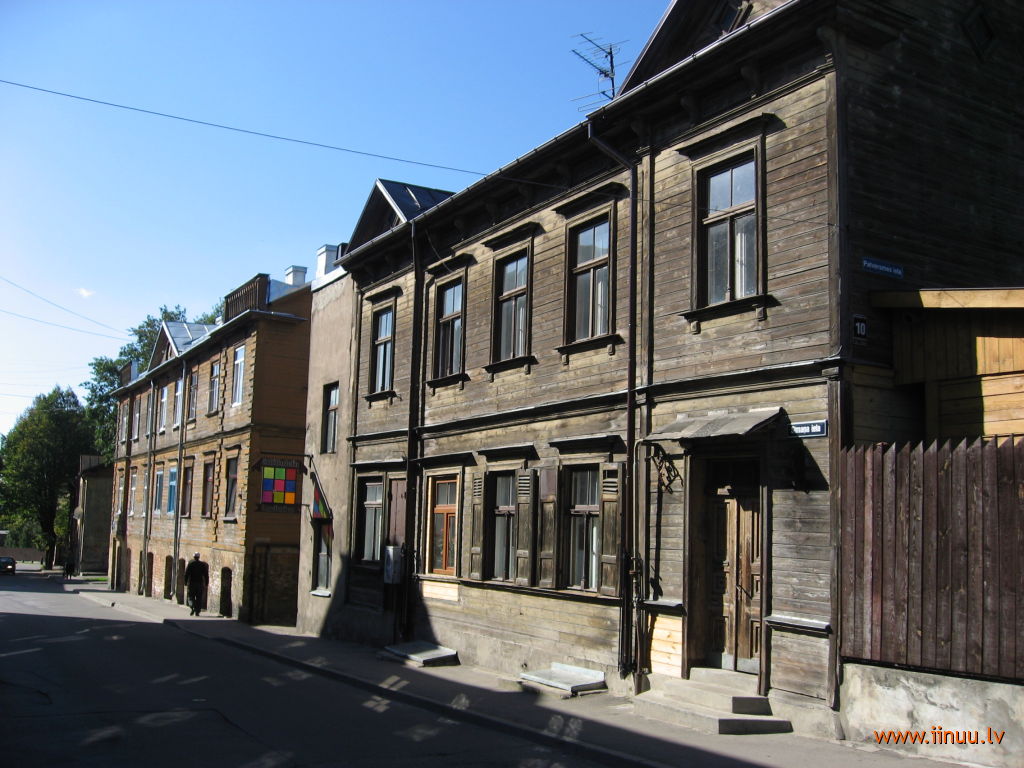
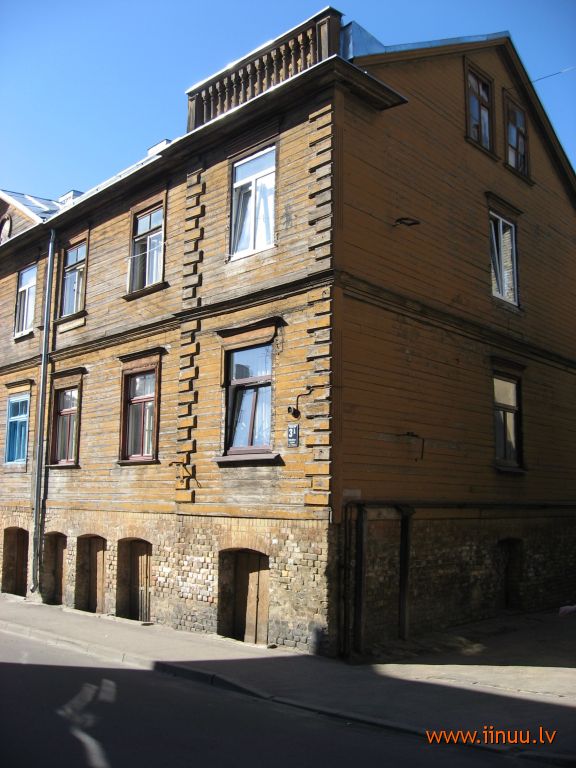
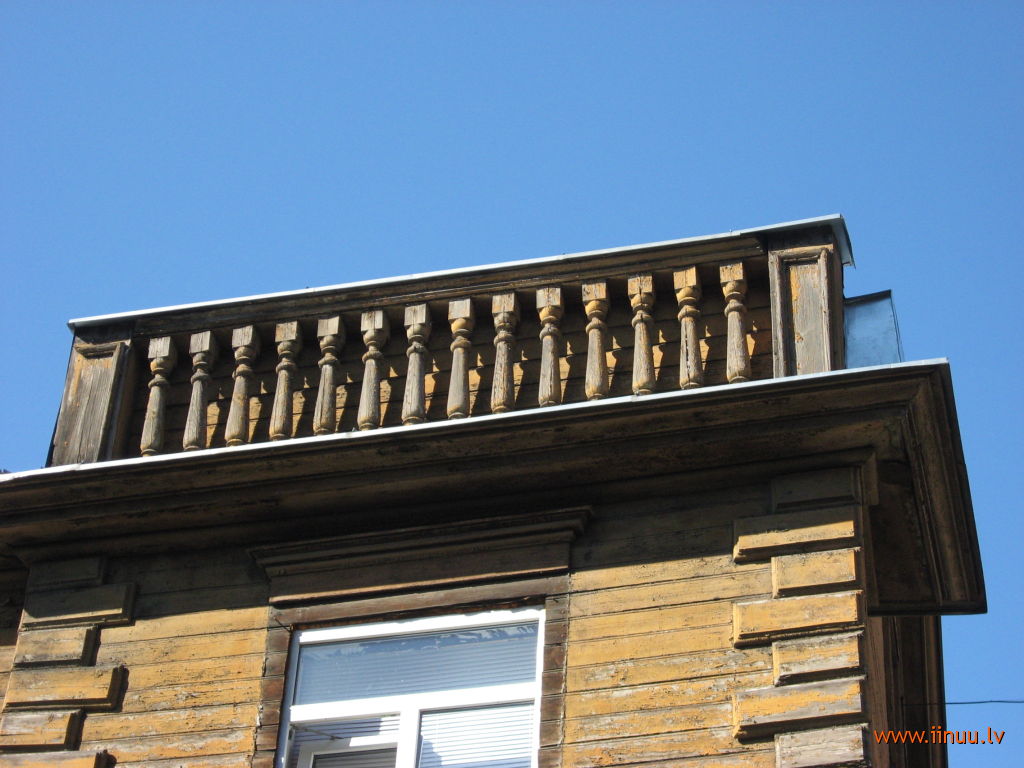
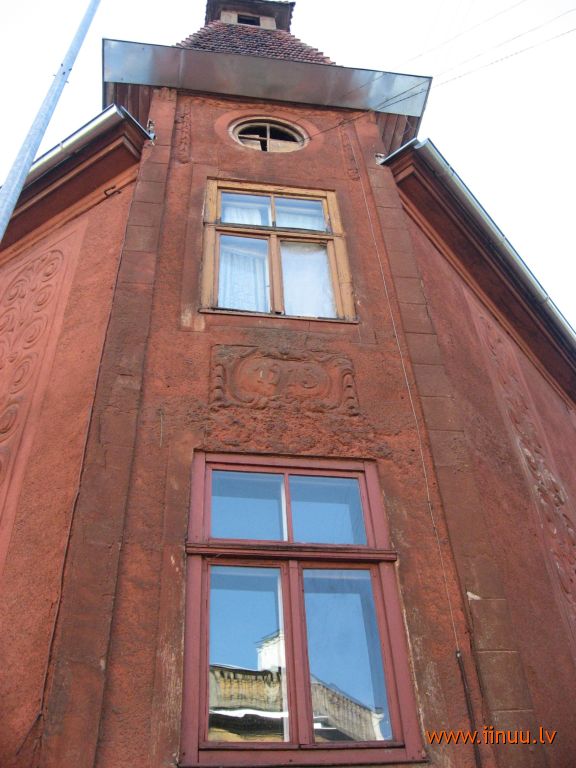
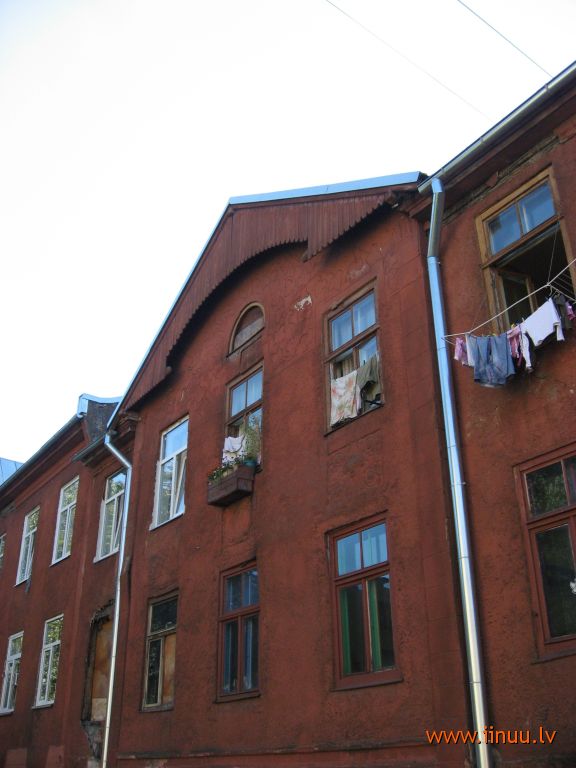
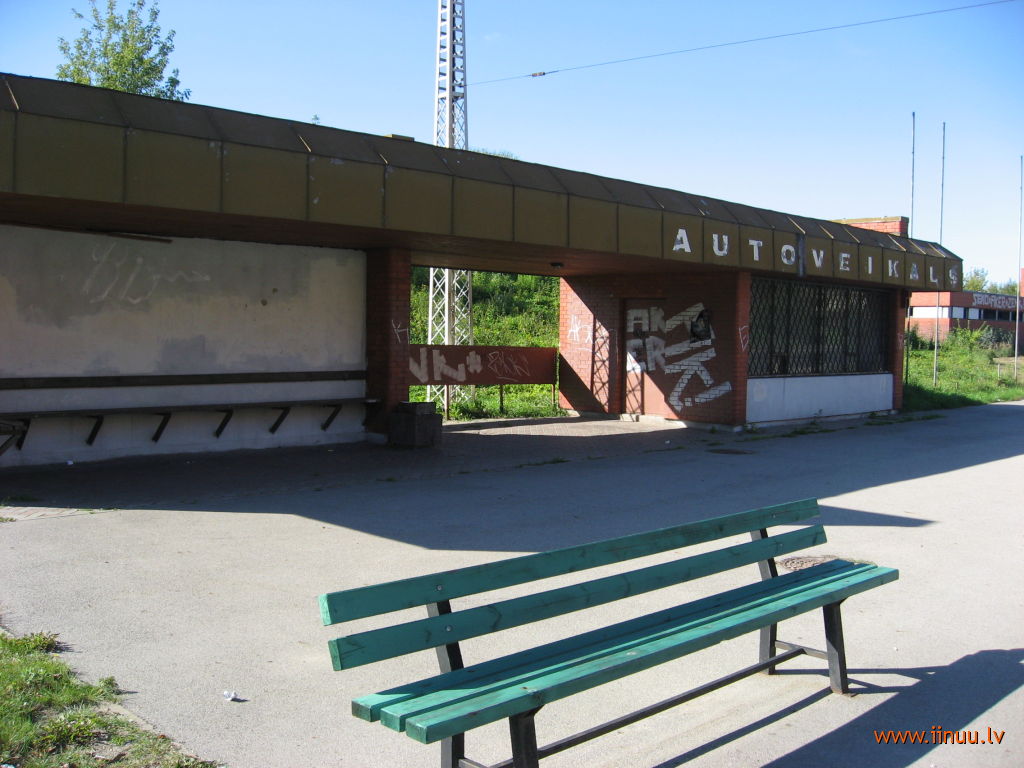
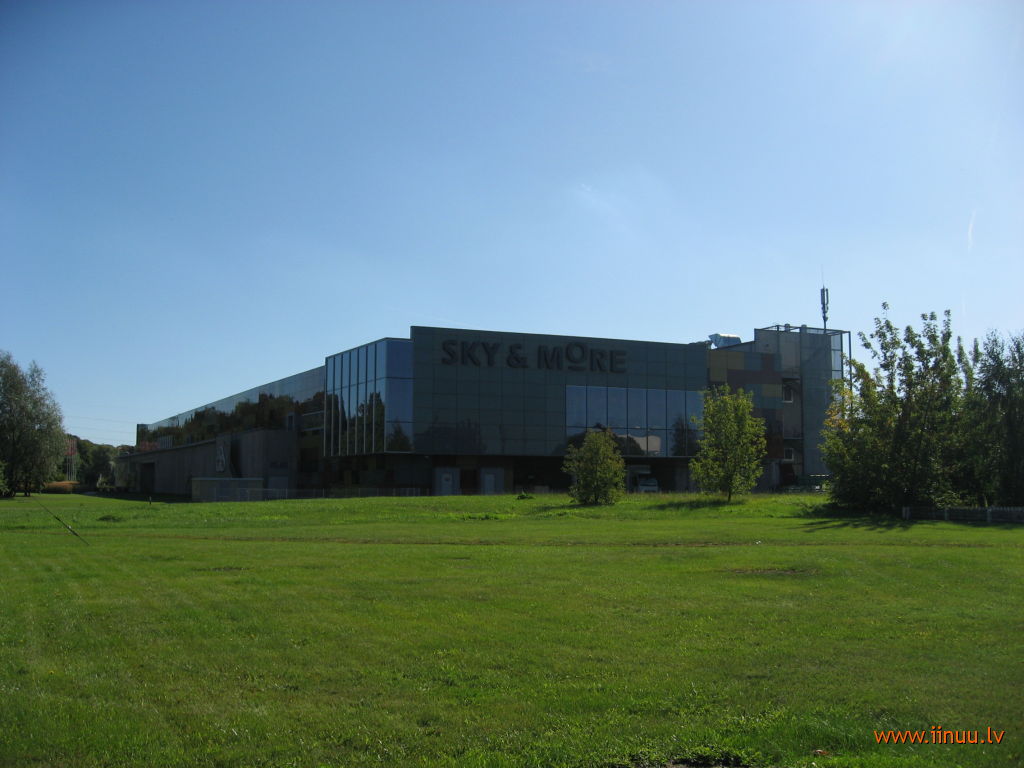
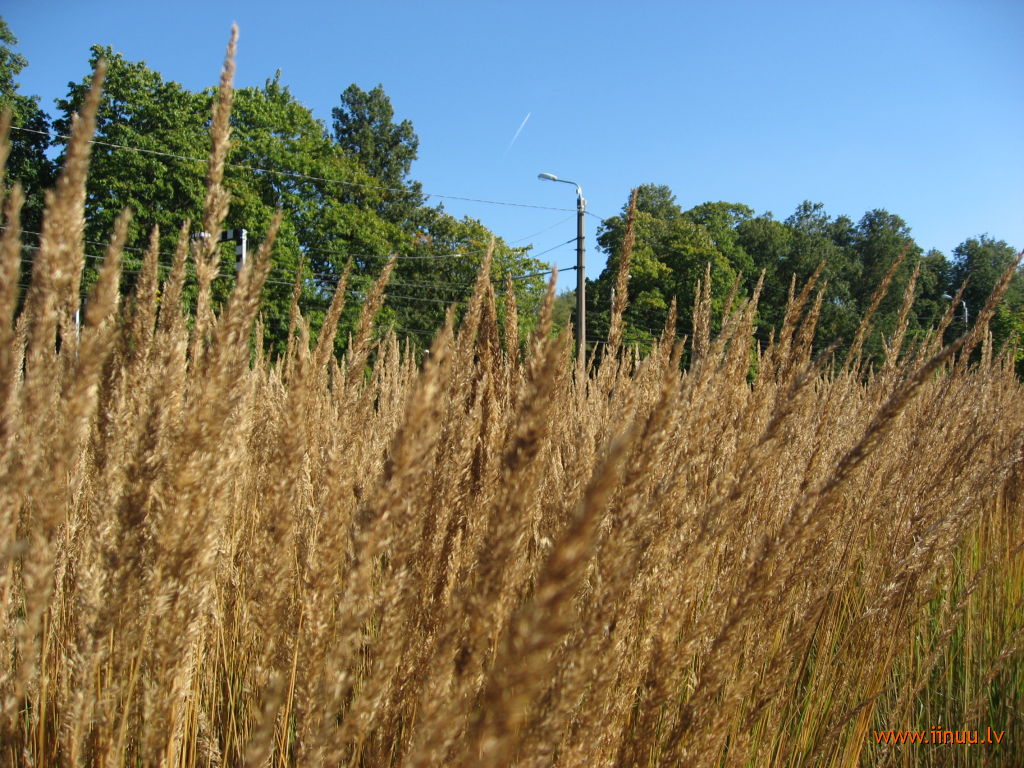
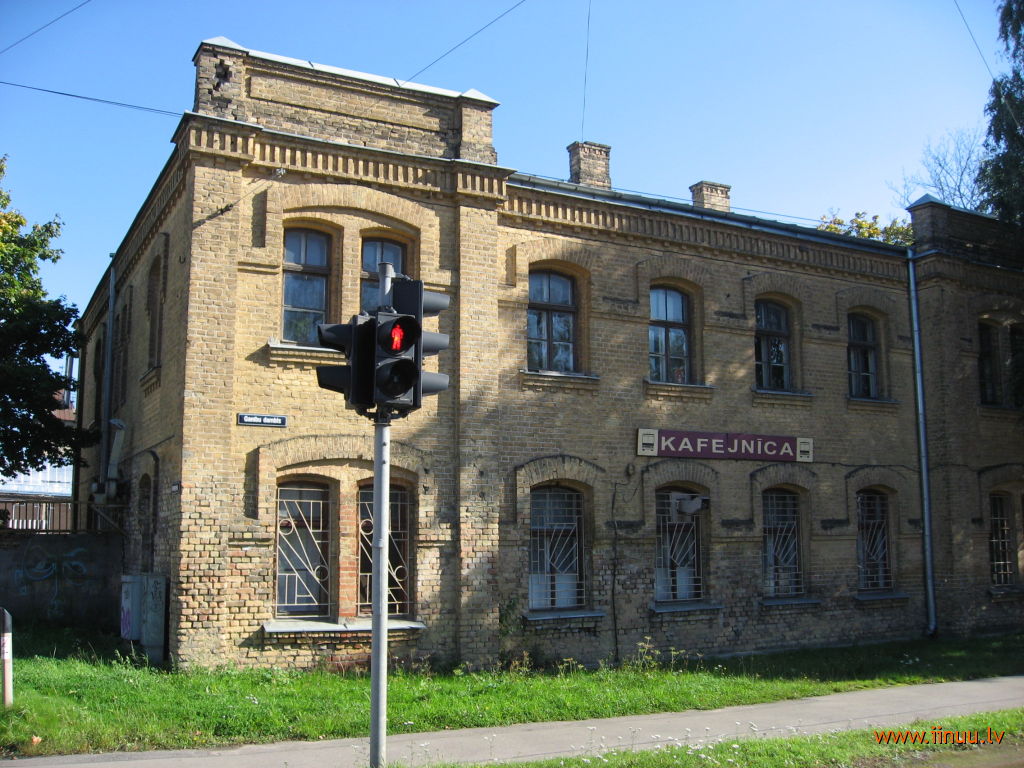
Sarkandaugava today in the photo gallery:
comments