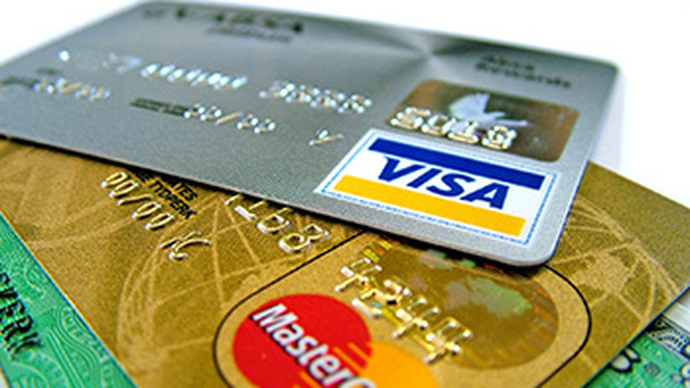
Some Nuances About Bank Card Payments
Lately, the public information space has increasingly seen cases where, for one reason or another, a payment by bank card - or merely the fact that a user holds a bank card - has managed to produce more than one surprise. Although, guided by common sense and bank advertising, the impression has formed that paying by bank card is safe, in reality, as recent events show, there is a very real possibility of ending up without money.
Lately, the public information space has increasingly seen cases where, for one reason or another, a payment by bank card - or merely the fact that a user holds a bank card - has managed to produce more than one surprise. Although, guided by common sense and bank advertising, the impression has formed that paying by bank card is safe, in reality, as recent events show, there is a very real possibility of ending up without money.
Let us assume that the average Latvian card user is a person who has one account (salary) at one bank, to which one card is attached. The financial reserves are such that it is enough from one payday to the next.
Situations:
- A shop does not accept card payment. Either it does not offer the option to pay by bank card at all, or you cannot pay by card due to a technical problem, or it does not accept a specific card or cards from a specific bank (for example, on 27 July 2013 at the Prizma supermarket it was not possible to pay with a Swedbank MasterCard specifically). Globally speaking, cases where you cannot pay by bank card "for technical reasons" are rare, but as if by punishment, it happens at the moment when, having stood in a long queue at the checkout, you are confronted with this fact.
- When paying by card, the payment amount is reserved twice [2]. Also happens rarely, most often when an error has occurred in the connection and the seller, not being certain of the transaction status, asks you to make the payment again. In these cases the situation is resolved by contacting the seller. Another story if the seller is abroad and it was a small shop whose address cannot even be found online. Either way, after a certain time - perhaps even a month - the money is debited back. This would be acceptable, were it not that the unjustifiably reserved amount is the last of one's means of subsistence.
- When paying, for example, for a Rīgas Satiksme car park, LVL 7 is reserved. The reserved amount is returned by the following day, but if LVL 7 is the only money in your account - sorry, you will eat lunch tomorrow. Moreover, the Rīgas Satiksme machine will reserve LVL 7 as many times as you attempt to start the service. Even if the attempt to start the service ends with an error message, LVL 7 will be reserved. Furthermore, the reservation period "until end of day" is a relative deadline and depends on the bank, and can theoretically last several days or even weeks. [4]
- Automatic payments [3]. On the one hand convenient, on the other one of those payment types that can produce a surprise. The nature of the service is this: when making a payment on a website, somewhere a checkbox went unnoticed - that you are not purchasing the service (mostly it is services) but subscribing to it. The payment is based on a distance contract, which makes such "no-contact" billing legal. Also a month or a year later, when you may have long forgotten about the service. In such cases the only thing you can rely on is the merchant's honesty and goodwill. The bank will not help, it will merely point to the card usage terms, which in brief state that the bank bears no responsibility for anything. Here 3D Secure will not save you either - which in Swedbank's advertising was presented as a super-secure payment feature.
- 3D Secure. A card payment mechanism that, when making a payment by bank card, requires confirmation of the transaction by entering a previously set password. What the bank does not mention is that this password will only be requested if the merchant's system supports 3D Secure. If it does not, the card number and CVV code will suffice for payment. Thus, from the moment a card is lost or stolen until the moment the cardholder notices it and blocks it by phone, all payments will be considered legal. Do not count on being able to get through to the card blocking service on the first attempt.
- Not so long ago in the recent past, payments by bank card took place by swiping the card through a card reader and the cardholder confirmed the transaction with a signature on the receipt. But then, the recent event described here [1] shows that (in the bank's view) a transaction can take place even without a signature on the receipt. In such cases, unauthorised use of the card must be reported to law enforcement authorities. Of course, everything becomes more complicated if the transaction took place somewhere abroad but you only noticed the shortfall upon returning to Latvia.
Lessons Learned:
- However much a bank may try to convince you how safe card payments are, cash can save you from unpleasant moments when it is not possible to pay by card, or at least ensure subsistence when "for technical reasons" you cannot access your money by card.
- However valuable and long-standing a bank customer you may be (at least in your imagination), Latvian banks are very reluctant to meet you halfway and resolve cases related to card payment errors. For one very simple reason: even if you turn out to be right, the bank will face no consequences for its inaction - and that, turn it as you will, is a very strong demotivator for exerting oneself and sorting anything out.
- Bank card transactions have risk components (short-term/long-term, reversible/irreversible). From a financial planning perspective, a single "risk" should not be allocated all available funds.
Other Examples:
- At a self-service petrol station in Sweden, the machine "swallowed" 100 Kronor but did not dispense fuel. It was enough to call the support number shown and provide the bank account number. And only then did the merchant investigate the case and - naturally - informed the buyer.
- A German citizen making a payment on a website that does not support 3D Secure received a text message from the bank (not from Mastercard or Visa!) asking him to confirm the transaction.
Sources:
[1] Digital Security - http://keeper.lv/2013/09/23/ciparinu-drosiba/
[2] For Some VISA Payment Cards the Amount May Be Debited Twice - http://www.diena.lv/latvija/zinas/dalai-visa-maksajumu-karsu-nauda-var-but-noskaitita-dubulta-14026184
[3] How Secure Are Online Card Payments with 3D Secure? - http://www.iinuu.lv/en/dziveszinai/der-zinat/cik-patiesiba-ir-drosi-karsu-norekini-interneta-ar-3d-secure
[4] RS Paid Parking Reserves Double the Amount from the Card - http://www.tvnet.lv/zinas/tava_balss/468329-rs_maksas_stavvieta_no_kartes_rezerve_summu_dubulta
comments