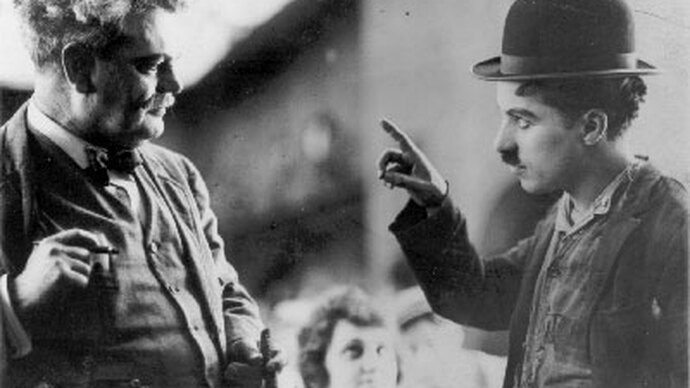
Philistinism
To a certain extent, a philistine is an asocial being who avoids involvement in public life and concentrates on their family, home, and car. They have no interest in what is happening on the planet or in their own country.
One evening I decided to ponder the topic of the philistine. Until then I had not considered that the translation of this word in Russian is бюргер, мещанин, обыватель; in English - philistine. On the topic of "philistine" in Latvian I found nothing coherent on the wider internet, so I went to review pages in Russian and English. Here are a few insights.
Strangely, the word "philistine" (Latvian: filisters, en: philistine; ru: Филистер) derives from a place name that in ancient times was located in the Near East, where the Philistines lived. The nation was large and strong, was superior in terms of military power and technological development, and was in constant conflict with the Promised Land - Israel. Wikipedia contains references indicating that these Philistines are even mentioned in the Bible, in the Old Testament. There is therefore reason to think that this nation played quite a significant role in the history of that time. [2][3]
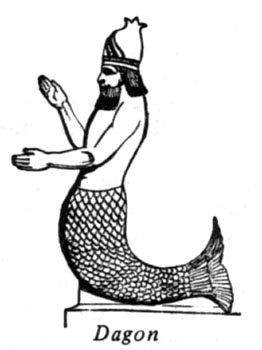 No less intriguing is the fact that the principal deity worshipped by these people was the god Dagon, who was considered the patron of agriculture and fishing. The word "dag" in Hebrew (ancient Hebrew) means fish. According to the rules of modern Hebrew, the suffix "on" indicates small size. Thus Dagon in translation means - a small fish. [4]
In Western culture the word "philistine" means a person who scorns artistic and cultural values and is obsessed with their ego - a devotee of the material cult. As capitalism formed, the philistine was quite a progressive phenomenon, as they were part of the feudal state structure that later gave rise to the bourgeoisie - an energetic group of entrepreneurs and bankers, from whose circles a notable figure would occasionally emerge. Over time, an ever-growing number of servants of the capitalist system appeared, particularly in the lower bureaucracy, who swelled with self-satisfaction and scorned spiritual values - these people also formed the prototype of the philistine. [1]
The now former Soviet Union was not, at the outset, well suited to the development of philistinism, since everything was done for the sake of some higher ideal or the good of the people. That was evidently the goal of this system and it could function as long as there were unshakeable ideals and a plan of development. Such ideals began to wobble in the 1970s. Then the floodgates were open and philistinism could develop in full force. In the West, philistinism had begun developing a hundred years earlier.
It should be noted that the opposite of the philistine is a person of personality.
One can assume that a philistine society is advantageous to post-Soviet states, as it constitutes an electorate - unorganised, with everyone for themselves and poorly able to envision the consequences of their actions (in electing one government or another).
So who is a philistine? The views of Oleg Arin [1].
- To a certain extent an asocial being, who avoids involvement in public life and concentrates on their family, home, and car. They have no interest in what is happening on the planet or in their own country.
- Apolitical, since they do not wish to be torn away from their habitual pursuits, nor do they wish to work for the benefit of society, organise anything, or defend their position.
- Uneducated or formally educated. Unable to systematically organise self-education. Preferred reading matter consists of topics unrelated to real life and analysis. Detective novels, pulp fiction.
- Lacks concrete thinking and a tendency towards analytical argumentation. In arguments uses personal or acquaintances' experience as their argument. That is, they do not distinguish between the individual and the general.
- Has no life strategy. As a result, the philistine disregards both their own and others' time. They are always late and always claim to have no time. Their favourite law is entropy.
- Usually religious. From this follows servile obedience (to authority, the government, God). Intolerant towards other (foreign) authorities.
- By nature - envious. Their envy is usually directed at material achievements. They cannot stand "know-it-alls". Sense of inferiority.
- Drawn to tabloid press. Willingly chooses an environment without "know-it-alls" and can feel part of a disorganised crowd.
- Due to the "greyness" of their thinking, form (visual, interpersonal) and appearance are very important.
[1] Обыватель и обывательщина; http://olegarin.com/olegarin/o_10.html
[2] Philistines; http://en.wikipedia.org/wiki/Philistines
[3] Филистимляне; http://ru.wikipedia.org/wiki/Филистимляне
[4] Dagon; http://en.wikipedia.org/wiki/Dagon
comments