Don't Believe a Word You Read!
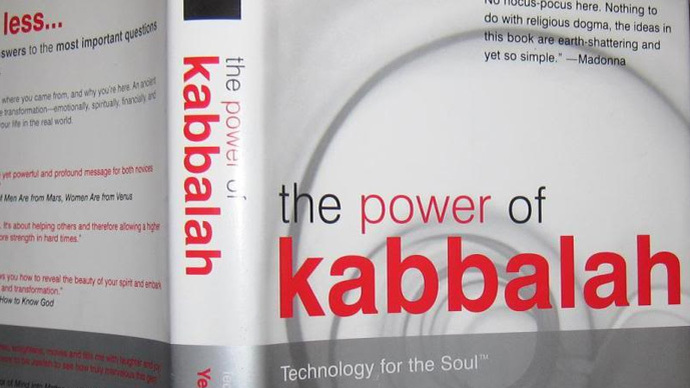
Living with full responsibility - that is perhaps the hardest of all tasks in this life. It is much easier to seek new paths to wisdom or try to change the world rather than to look inside oneself and try to change oneself. It is much easier to become an activist fighting corruption than to fight one's own egocentric impulses. This book is not light evening reading, as every page is saturated with existentialist questions and the endlessly promised revelations that only Kabbalah - and no other source - can provide.
"Don't believe a word you read! Faith will give you nothing!" - so the author announces at the very beginning of the book. Only knowledge leaves no trace of scepticism. It should be said straight away that this book is not light evening reading, as every page is somewhat exhausting with its densely packed existentialist questions and the endlessly promised revelations that only Kabbalah - and no other source - can provide.
For reference: Kabbalah (in Hebrew קבלה, in English Kabbalah) is a spiritual teaching that arose from a very ancient mystical tradition, passed down orally for thousands of years to a small number of specially chosen disciples by those versed in it. In the Hebrew language, the concept קבלה was originally understood as "delivery, reception and transmission". Over time, those who conveyed the hidden knowledge of the Jewish sacred writings (the Torah) were also called Ba'ale Ha-Kabbalah (בעלה הקבלה) or Mekuballim (מקובלים), from which words the new word "Kabbalah" gradually formed. The goal of Kabbalah study is to achieve the unity of reality in sensation and consciousness, to more deeply understand the laws of life and the world, which would allow a person, a people and humanity to correctly orient themselves in the course of phenomena. Source - http://en.wikipedia.org/wiki/Kabbalah
 Whatever the case, it is an interesting theory, worth getting to know - and perhaps for someone it will broaden their perspective and, as stated here, allow them to connect from the 1% world in which we live, which is full of chaos, pain and injustice, to the 99% world where Light is concentrated.
Below is an overview of the theory and some insights that I found engaging, reflecting the essence of Kabbalah as explained by author Yehuda Berg.
Desire is the essence of every person. We want to take and take. If appetite has a defined limit, desire does not. There will never be enough. All people share one common desire - happiness. I must admit, this is a very abstract concept, since happiness means something entirely different to each person.
A significant role and power in our lives belongs to intuition. It is precisely intuition that lets the right people into our lives and opens the right opportunities. It is the force that activates the human immune system, awakens our hopes and optimism when we rise for a new working day. The fuel that generates our inner motivation to get as much as possible from life.
According to Kabbalah, there are no sudden turns, accidents, unpleasant coincidences, random mistakes or unexpected catastrophes in life. Everything happens for a specific reason. Everything already existed before this sudden event. In nature, a tree cannot suddenly grow up in the middle of a courtyard - before that, a seed lay in the earth, germinated and developed. The syndrome of suddenness is created by the inability to see through illusions - i.e., we do not see causes, only effects. This refers to the butterfly effect - a certain order that exists within chaos.
There is the 1% world, governed by Murphy's Law - whatever can go wrong truly will go wrong; and the 99% world, which is the fulfilment of all human desires and dreams. The saddest claim running throughout the entire book is that we all live in this 1% world and only rarely manage to break through to the 99%. Of course, on the very next page one immediately wants to find the recipe for escaping the darkness and connecting to the all-encompassing light. It is not so simple, because a person must break their own nature. Whenever we feel genuine joy, we have connected to the 99% world through some action that took place in the 1% world. The moment of connection is called many things - Plato called it "divine madness", Mozart called it euphoria, Husserl called it "pure intuition", our mothers call it "mother's intuition", successful businesspeople call it "a gut instinct".
Dissatisfaction and irritation arise in people when their desires are not satisfied. But desires do not arise on their own - it is necessary for their "taste" to have been experienced at some point before. Someone living deep in the jungle, far from civilisation, will not crave a hot aromatic cup of cappuccino in the morning, because they will not know what it is or how good it tastes. The same applies to all addictions - alcohol, drugs, gambling. If the moment of pleasure had never been experienced, there would be no desire to chase after it all just to repeat it.
An interesting observation - a person who not only takes and takes but also wants to share with another will also be purposeless in their activity if there is no other side willing to receive it. Here the opposing poles are at play - masculine and feminine, which are essentially incomplete without each other. As far as is known, in Jewish culture the idea of an unmarried man or woman is not accepted.
Once the book is on the other side, the principle is finally explained - the principle by which a person can fulfil their life's purpose, their desire: one must transform from a reactive being into a proactive being. This means the voluntary halting of all our reactive impulses. The transformation formula: 1. An obstacle arises. 2. We recognise that the real enemy is my reaction, not the obstacle. 3. Stop your reaction, let the Light flow in. 4. Express your proactive action. An example was given - if someone shouts at you, then one must understand that this person is not responsible for your anger or hurt, but that this anger and hurt is the obstacle. Do not express them. The proactive action is not further explained. Only added that in the moment when we resist some reaction, we have already transformed some aspect of our self.
Several chapters follow describing how difficult it is to overcome one's reactive behaviour. I liked this example: "It is so easy to "fall in love" with a chocolate dessert from the first bite, yet almost impossible to grow accustomed to steamed broccoli even when you have been eating it regularly for several years." That is a nod to the painful topic for women, or my dieting theme. :)
The understanding of the existence and meaning of victory is created by the experience of defeat in battle with an opponent. In short, if we never lost, we could not rejoice in victories. The thoughts of the opponent (i.e., the force that prevents us from becoming proactive or connecting to the 99% world) manifest very clearly as rational, logical consciousness - the Ego. Moreover, if some thought arrives like a sudden flash of intuition or a spontaneous inspiration that for a moment takes over the whole body, then it comes from this 99% world. The greatest misfortune and mistake of humanity is that we have learned to suppress these signals or to ignore them, relying only on our common sense.
Well then, let us be proactive and fight the opponent, so that life is not one endless Groundhog Day (a reference to the American film "Groundhog Day", 1993)! A couple of subtle examples (there were also sections on resisting laziness, making judgements, self-praise, control, guilt and others).
Resisting the Ego. Being in the company of business partners where everyone is tossing around various pieces of wisdom, each trying to appear wiser than the other in expressing their views, you too feel the desire to show off, because you know the true reasons behind the matter being discussed. Resist this desire, say not a word, simply observe those around you, learn something valuable from this situation!
Resisting the feeling of shame. You have made a major or not-so-major mistake that will certainly be noticed. You blush, you are ready to crawl under the table out of shame. Resist it, embrace the humiliation, do not try to conceal it, lower your defensive barriers, make yourself vulnerable! In the end you will realise that most people did not even notice this blunder, or those who did have put it down to the inattentiveness that is natural in humans.
Living with full responsibility - that is perhaps the hardest of all tasks in this life. It is much easier to seek new paths to wisdom or try to change the world rather than to look inside oneself and try to change oneself. It is much easier to become an activist fighting corruption than to fight one's own egocentric impulses.
comments