
Out Stealing Horses
P. Petterson does not attempt to recount events, facts or his protagonist's life. Throughout the book the author conjures and describes the feelings that arose in the protagonist Trond as he endured, experienced and came to know the adult world. Flashes of memory run through the novel. And particularly important to Trond are memories of a certain summer...
In the Norwegian writer and literary critic Per Petterson's (1952) novel "Out Stealing Horses" (Riga: Zvaigzne ABC, 2012), the narrator is Trond Sander - a sixty-seven-year-old man who has settled in a lonely cottage near a river. It seems he has fled from the world, from a life that has thoroughly exhausted him, and now enjoys his solitude, relying only on his own resources to put this purchased country house in order. Behind him lies a successful career, two children raised from a first marriage, and the deaths of those close to him - his second wife and his sister.
Trond does not shy away from telling locals about his life, so that they understand he is there to stay until the very end. As he himself acknowledges - "People like to be told a thing or two, but in acceptable quantities and in a restrained, confiding tone, and then they feel they know this person, but they don't: they are acquainted with him, because they have the facts at their disposal, but not the feelings; they know nothing at all about what he is. Then people do what they can to fill the facts with their own feelings, thoughts and assumptions, and thereby compose a new life in which there is only a little of yours, and so you can be safe. No one can touch you if you don't want them to."

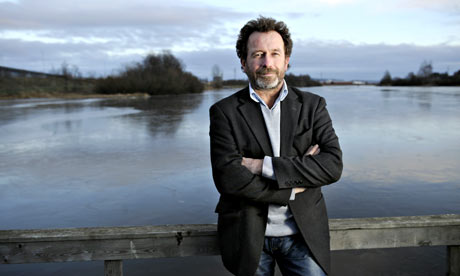
This paragraph, in my view, most directly characterises P. Petterson's writing style. He does not attempt to recount events, facts or his protagonist's life. Throughout the book the author conjures and describes the feelings that arose in the protagonist Trond as he endured, experienced and came to know the adult world. Flashes of memory run through the novel. And particularly important to Trond are memories of a certain summer which he spent with his father at a country house, before the father disappeared from his life forever. The scent, the feelings, the ache and the wisdom of that summer the protagonist has carried in his mind throughout his entire life. Now, looking back, he understands that all of it shaped him as a person.
Trond remembers little of his mother, with whom he spent practically all of his childhood in an Oslo flat, but his father's lessons from that summer are branded into his memory as if with hot iron. The protagonist remembers an episode where he was tasked with mowing the grass, including the nettles that had grown to head height. Trond mowed around them, and when his father asked why, he answered - they sting and hurt. The words and action his father then spoke and showed stayed with Trond forever. With bare hands his father pulled up the nettles and said: "You decide for yourself when it will hurt."
Reading in the novel about the sun-drenched summer, the meadow with hay rolls and bales that were not at all easy to stack, the fragrant spruce needles, the clothes saturated with sweat and resin - vivid realistic scenes of country life emerge before one's eyes. Richly blue skies, just as blue as they are for the people of that region living in Norway not far from the Swedish border. Involuntarily I see a resemblance to a sun-spoiled Latvian summer in the countryside, and nothing in the description suggests it could not be. The author's depiction of nature recalls familiar feelings from childhood. That, perhaps, is also the value of this book - feelings, experiences that come to every child upon entering the adult world, a world perceived with all the senses. So deep, sometimes, so achingly poignant.

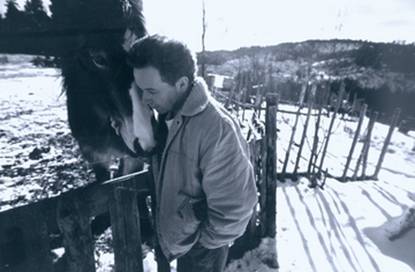
Trond Sander is currently on the threshold of the 21st century, but in his memories he lingers in the turbulent wartime years, when Norway experienced no direct combat operations but did experience unrest, German military posts and life under constant surveillance. News coming from the Swedish border region boded nothing good. The phrase that is also the book's title - "Out Stealing Horses" - as Trond later learned, came from the resistance movement in which his father had been involved. One of Trond's father's tasks was to serve as a courier, secretly crossing the Norwegian-Swedish border at night, each time carrying a different secret package.
Another lesson that Trond remembers for the rest of his life is what his father said at the station where they parted for the last time: "A person learns what life demands of them over time. You must take it as it is, and remember, and then think it over, and not forget, and not feel bitterness. Your thoughts are free." One of the messages in the novel is this wise looking back on life without bitterness, accepting old age as an inevitable stage of human life. The time that will come for each of us - and the only force to muster and discipline oneself to set the table for supper alone, to put on a clean white shirt, to attend to the ordering of the household, is our moments lived and felt to the deepest corner of the heart, preserved in memory.
The novel reads very smoothly; the language is light yet rich. In the end one must conclude that Per Petterson's "Out Stealing Horses" is like a good wine - set aside after being read, it retains its aftertaste for a long, long time. Hmm, I shall have to look for another work by this author…
comments