Easter Chronicles. Latgale
The blessing of food products also frequently defies any common sense, and from the symbolic meaning of blessing eggs and bread has long since grown into something more, because everything is stretched to the limit - kilograms of salt, rolled meat loaves, head cheese, dozens of eggs, sweets, and spirits. Never mind that the last item was acquired by rather dubious means. God will forgive everything. And will forgive indeed, if only the person is strong in spirit.
Latgale - the land of blue lakes and at the same time a keeper of contrasts, new challenges, and traditions. However much it may seem like the ultimate middle of nowhere where nothing happens, many people, both young and old, have chosen it as their own. Many, it is true, have also migrated either to larger cities, for example Riga (no one loses any sleep over that), or to England, Ireland, and other countries rich in European traditions and social benefits (about that there is loud clucking from many, many people right this instant).
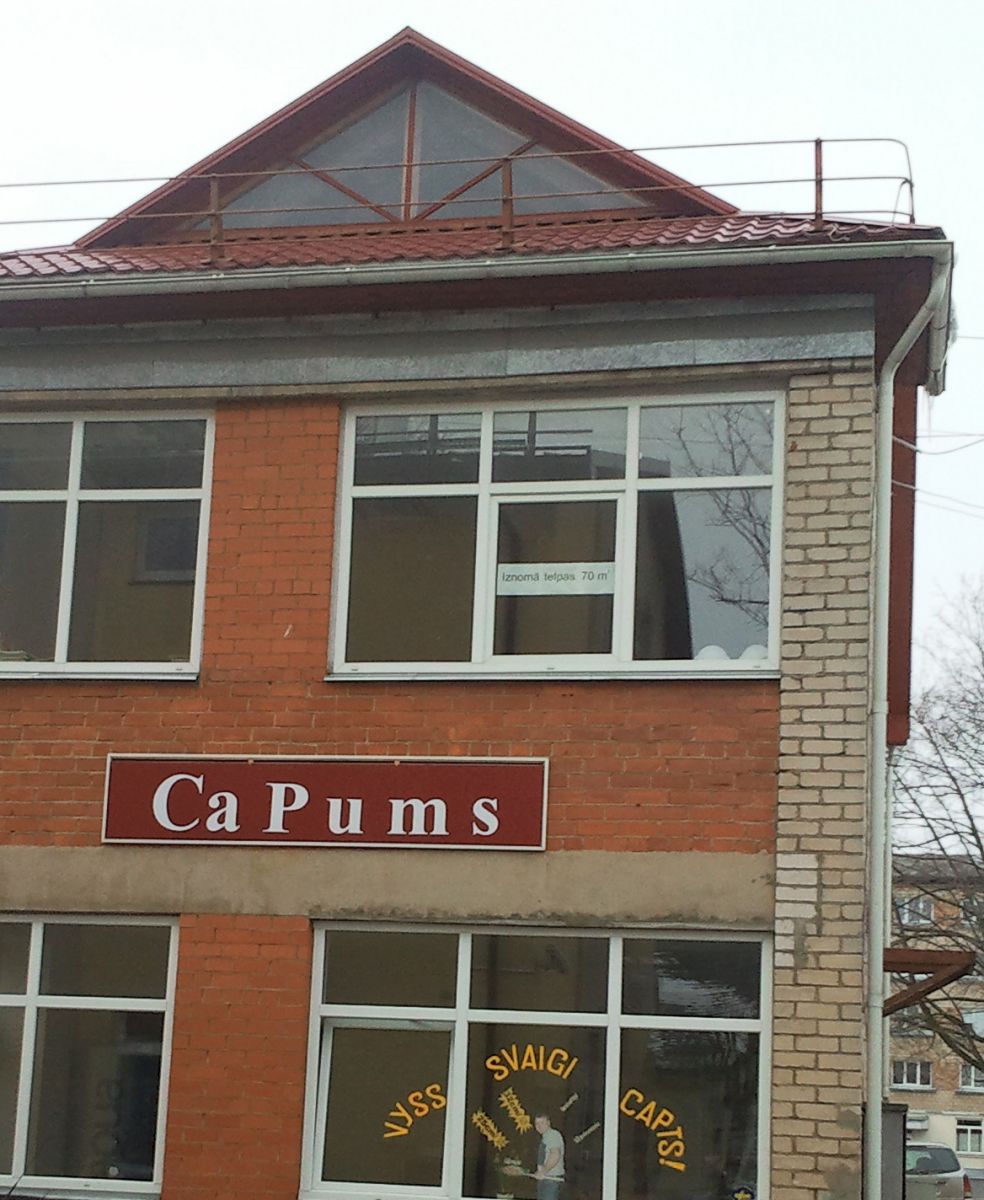
 Ludza, rich in trading traditions, will endure as long as there is something to trade. The beginnings of trade can be found in the chronicles of ancient Livonia, as the town managed to establish itself at the crossroads of important trade routes. For example, before the war 74% of the total population of Ludza were Jewish and, as witnesses of that era still in good health recount - they were wonderful traders. During the Soviet years, local peasants, having noticed the Russians' chronic inability to endure garden work, took to growing onions and gherkins and selling them at nearby cross-border town markets - in Pitalovo, Sebezh, and Pskov. Trading traditions were not undermined in the nineties either. The market for garden produce dried up, but rivers of goods began to flow from Poland and Lithuania, pushing aside local craftspeople with their handmade wares. But that too soon quietened down, and resourceful people set off in search of other revenue streams, beginning to bring in Russian goods - alcohol, creating considerable anxiety for the local "točka" businesses; cigarettes and fuel, which in turn created anxiety for the Revenue Service, because you see, the little excise duty was bypassing the till. Representatives of the local intelligentsia and Harmony Centre's most zealous activists are not above this trade either (locals gossip that even the Russian school headmistress, an HC member, makes trips to Russia). Meanwhile, the opportunity to shop well and cheaply is not passed up by police officers and border guards alike, filling their service vehicles with "left-hand" fuel but their personal vehicles with what flows from the European tap.
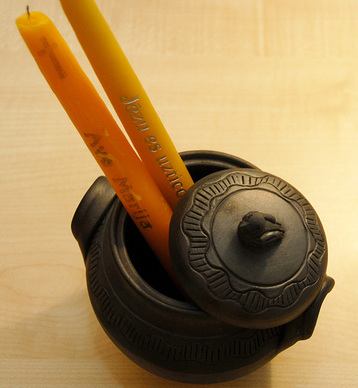
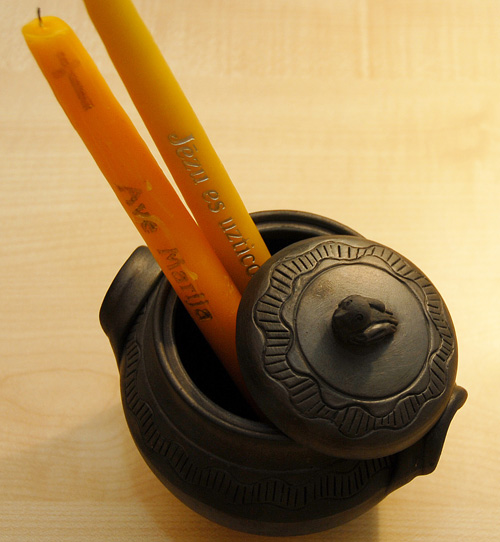
In general, trading habits in Ludza and its surroundings have changed considerably over the years. The town's market square has become oddly empty and is still inhabited, out of old habit, by the occasional aunty trading sun-bleached "rags" brought from Lithuania. In any case, purchasing farm dairy and meat products, a bundle of pussy willows, or a small bottle of birch sap will most likely not be possible. The former were driven out by the Food and Veterinary Service, and the latter will not come to wear out their shoes for a few lats. From the connections system, in a slightly transformed form, a salon culture is now developing in Latgale. For example, Rēzekne pleasantly surprised with small boutique-type shops where one could purchase Belarusian footwear, little dresses, and little coats, moreover sewn right here in Latvia. In Ludza, however, everything now happens by individual order. If you know who to ask, you can order both farm produce and moonshine (locally called šmakovka), as well as fuel from Russia, and if needed, they will also bring a cast-iron porridge pot and even sweets.
But in the political arena nothing much has changed. In the fat years, with People's Party member V. Lazovska having the say, a sports hall was built. Never mind that a school apple orchard cultivated over many years had to be levelled, but now both Russian schools each have a sports hall, while the only Latvian school is left with a sports stadium (without a surface). Being a wealthy lady, V. Lazovska also initiated the construction of a swimming pool, which, as the lean years set in, was never finished. People gossip that the lady is now in dire straits and the property accumulated while working in Ludza town council now has to be shared with the banks. But a sacred place rarely remains empty for long and it seemed outrageously bold to locals to vote the Harmony Centre people into the town council. The happiness was short-lived and the Harmony Centre mayor J. Kušča's activity was found to be unsatisfactory, and with head bowed low and tail between their legs, the Harmony Centre had no choice but to hand over the reins to the former sports school director and Catholic Church audit committee member, Polish by nationality and long-time LC/LPP member A. Gendeļa. In principle, everyone in Ludza knows one another and political affiliation merely indicates which wallet a particular individual represents.
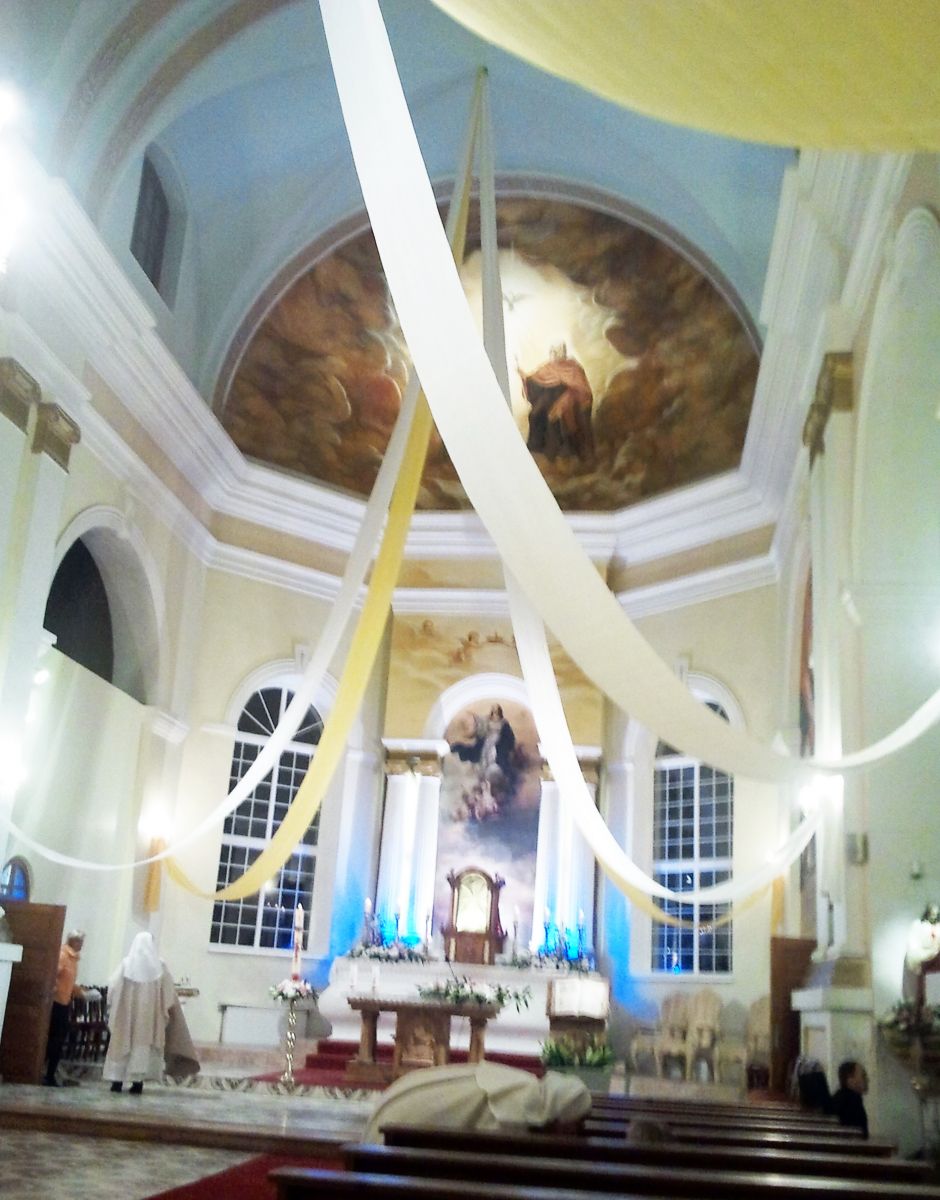
Latgale has always had strong Catholic traditions and a cemetery culture. A true Latgalian considers it their duty on feast days to go to church first before "sitting down" at the table. For example, in Kārsava the masses are shorter and more concise. In Ludza - at least three hours, but in Viļāni a full five. And the longer the service, the stronger is the male person's desire to "slip away" for a moment to meet some long-unseen acquaintance or to consult with a like-minded little group around the corner of the church about some need or gather the latest news. A noteworthy phenomenon in the Eucharist and liturgy of the church is the blessing of various objects - for example, candles, chalk, and coals - and the taking of holy water. Some more modest believer will be satisfied with a small piece of coal; some who are more spiritually impoverished will grab a whole handful and without embarrassment inquire - so what do you do with them? Equally amusing answers follow. One suggests putting them in the stove, one eating them, one feeding them to the pigs, one throwing them into the burning stove at home. There are no fewer curious incidents surrounding the taking of holy water. The blessing of food products also frequently defies any common sense, and from the symbolic meaning of blessing eggs and bread has long since grown into something more, because everything is stretched to the limit - kilograms of salt, rolled meat loaves, head cheese, dozens of eggs, sweets, and spirits. Never mind that the last item was acquired by rather dubious means. God will forgive everything. And will forgive indeed, if only the person is strong in spirit.
comments