Exhibition "Garden" at the House Pleasing to God
For four days, Building No. 5 of the Riga Psychiatry and Narcology Centre became a flowering garden where not only the residents of that building but any city dweller could seek peace and closeness with nature. Walking barefoot across the lawn, one could peek into themed rooms. Each was dedicated to some story, some human fate, some human talent, and the fragile boundary between reason and madness.
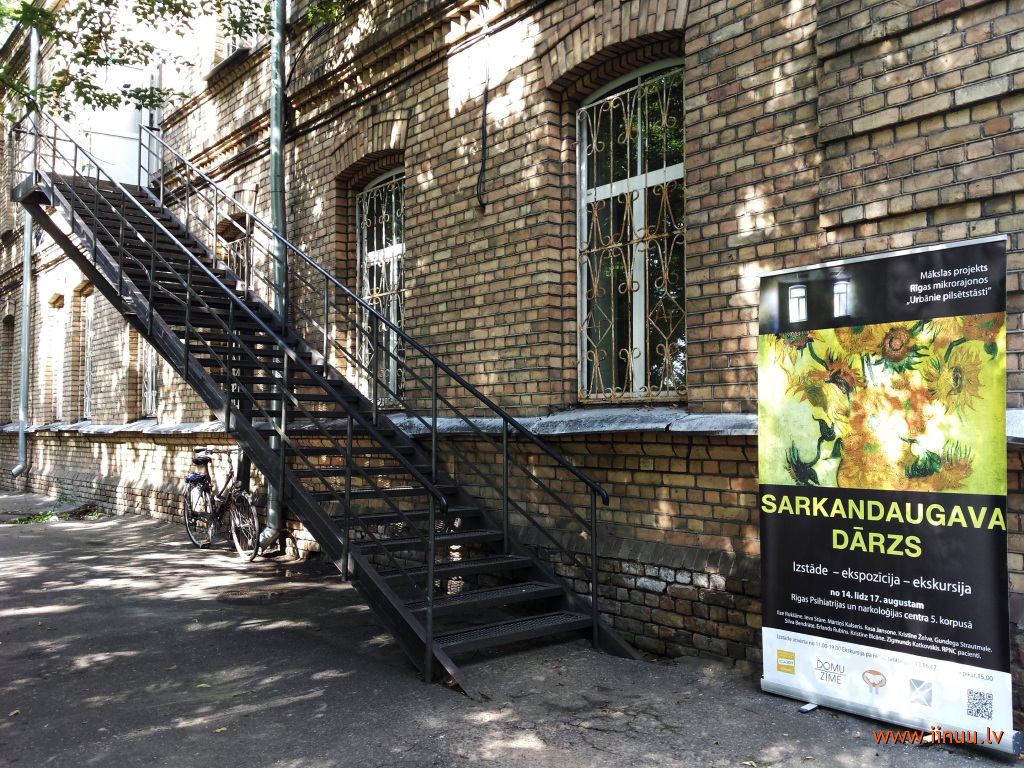
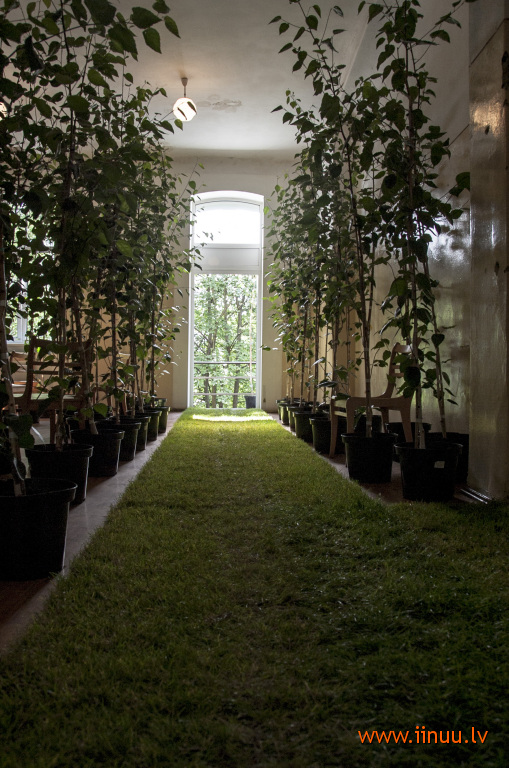
For four days, Building No. 5 of the Riga Psychiatry and Narcology Centre at Tvaika Street 2 - known in times past as the House Pleasing to God - became a flowering garden where not only the residents of that building but any city dweller could seek peace and closeness with nature. Walking barefoot across the lawn spread the full length of the long corridor, one could peek into themed rooms. Each was dedicated to some story, some human fate, some human talent, and the fragile boundary between reason and madness.
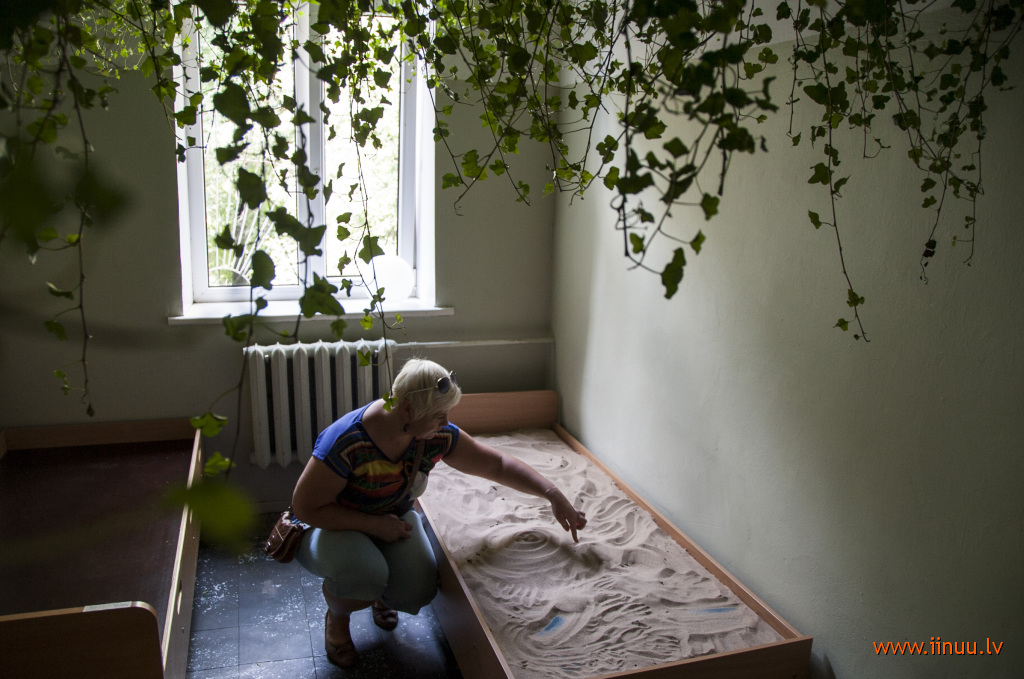
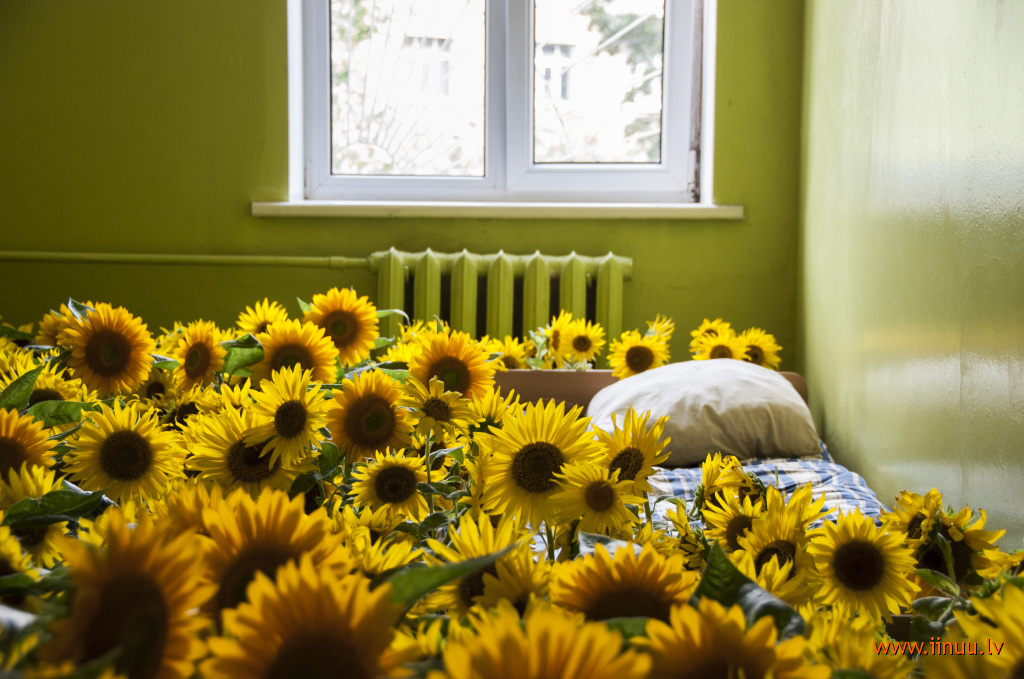
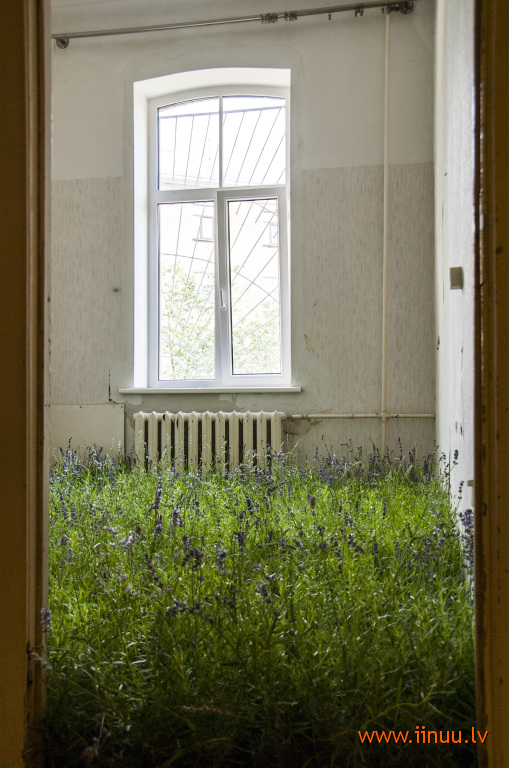
Visitors are greeted by a birch grove, where chairs are placed between the white slender trunks. In the first room one can learn about a project for a real garden on the centre's grounds, planned to be set up in the near future. Sensory therapy, a medicinal garden that will delight the eye and allow visitors to smell and touch. The entire current exhibition is also fragrant (the lavender room in particular), touchable (pebbles, pine cones, sand, grass underfoot for bare feet), and visually rewarding (the sunflower-filled Vincent Room in particular).
Public relations manager Silva Bendrāte told us that research was carried out when choosing the plants seen in the exhibition and to be planted outdoors. It turns out that butterflies - the symbol of the Riga Psychiatry and Narcology Centre and also of the soul - are most attracted to flowers in white, violet, and yellow. Nothing here is accidental. Her vision: "that in time this becomes a harmonious, restorative environment for patients and medical staff alike, and a welcoming place for everyone who passes through the gates."
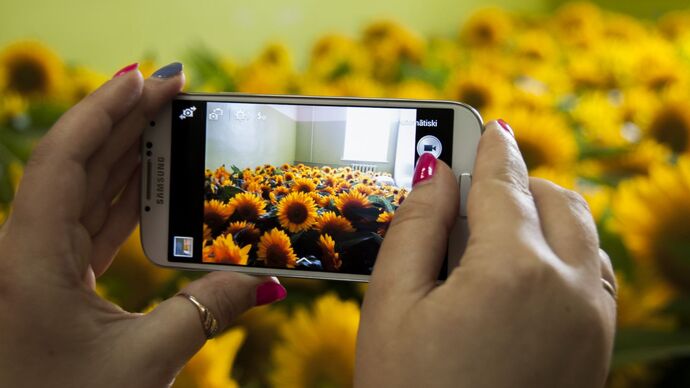
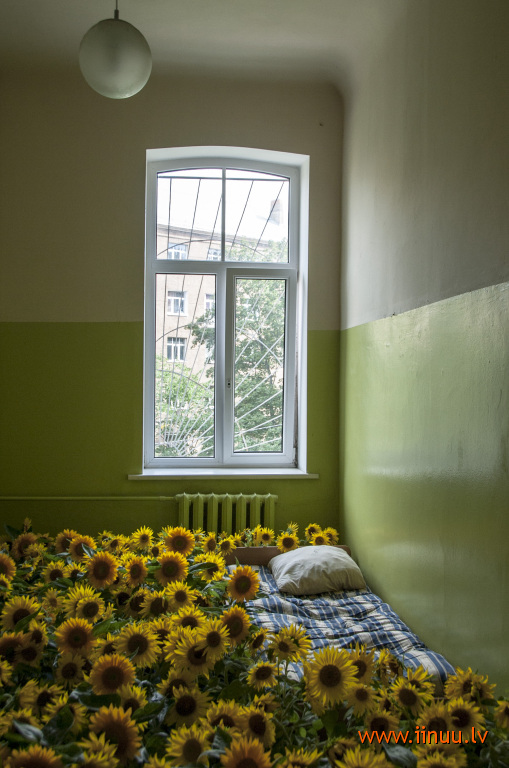
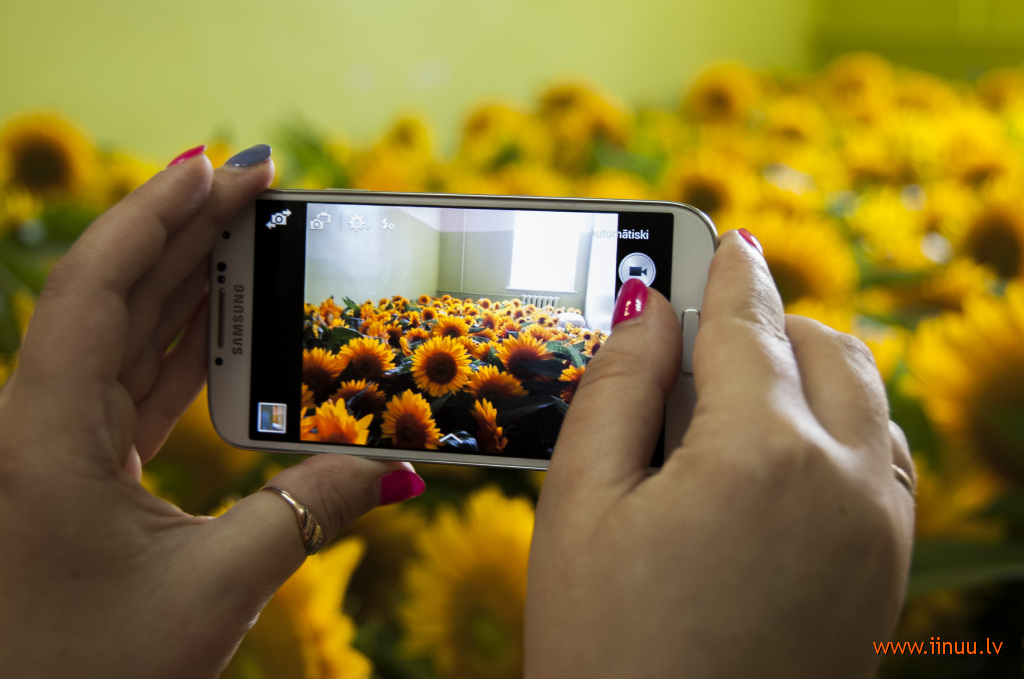
Many, myself included, stop in genuine delight at Vincent's Room (created by Ieva Stūre), which contains a bed while the remaining space is filled with dozens of yellow sunflowers. More than a few visitors lean over to touch a flower petal - they really are real!
You will already have guessed that the room is named after the Dutch post-impressionist painter Vincent van Gogh, whose works are characterised by an excessive use of solar yellow. The genius and personal tragedy of the artist in the highest degree - he lived in poverty, sold only one work during his lifetime, gained worldwide fame after his death, worked madly hard (leaving around 1,700 paintings), did not spare his health, drank absinthe, struggled with mental illness (in 1889 voluntarily entering Saint Paul's asylum for the mentally ill in Saint-Rémy, Provence, where he spent 12 months without ceasing to paint), and ended his life by suicide.
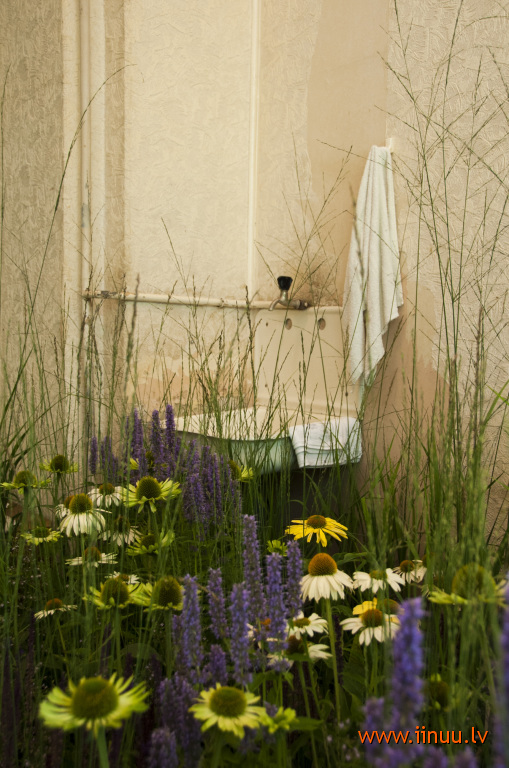
A little further along on the opposite side, an entire meadow has blossomed in the room with white, violet, and yellow flowers and simple meadow grasses. Walking along the path through the middle of this meadow, the walls with the old sink and tap or the bulletin board seem out of place here - not the other way around. The beautifully grass-grown room is self-sufficient; it needs no particular story.
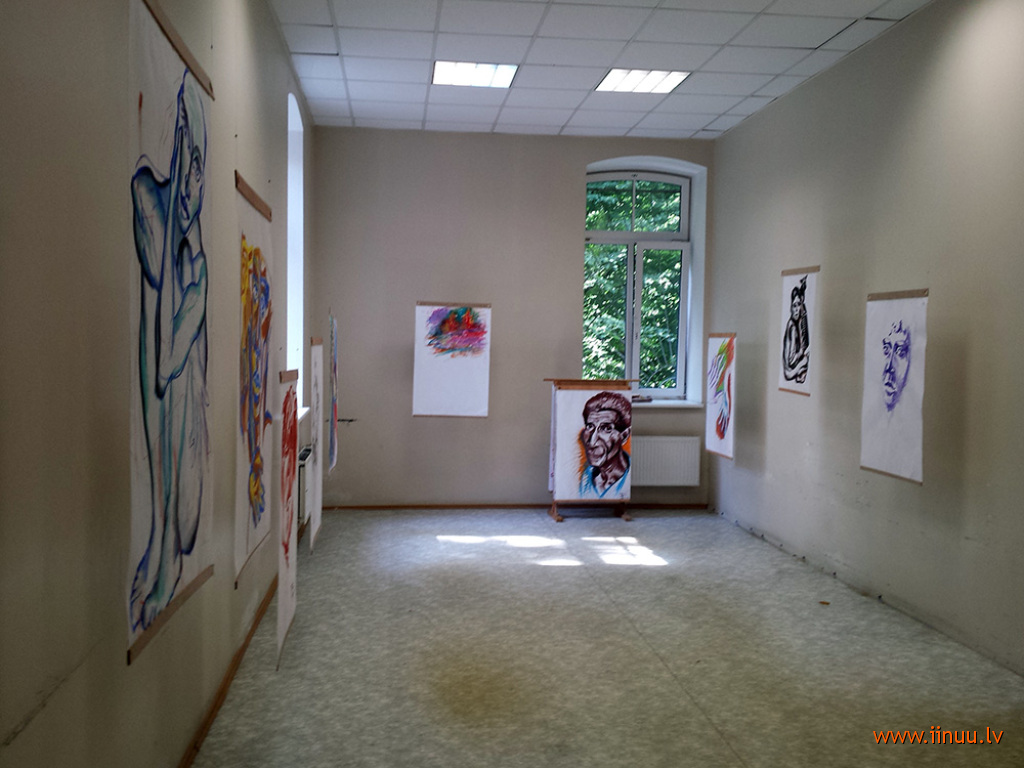
Other rooms display works by the centre's patients. Particularly talented drawings in Room E. I do not know who the author is - it is not indicated (on the works only an E is scrawled as a signature). Sunlight streams through the room's window, and it seems like a modest exhibition hall - only the slices of bread placed on the windowsill on top of a small pile of old magazines testify that visual expression is the daily bread for the person who drew these; not drawing is not an option.
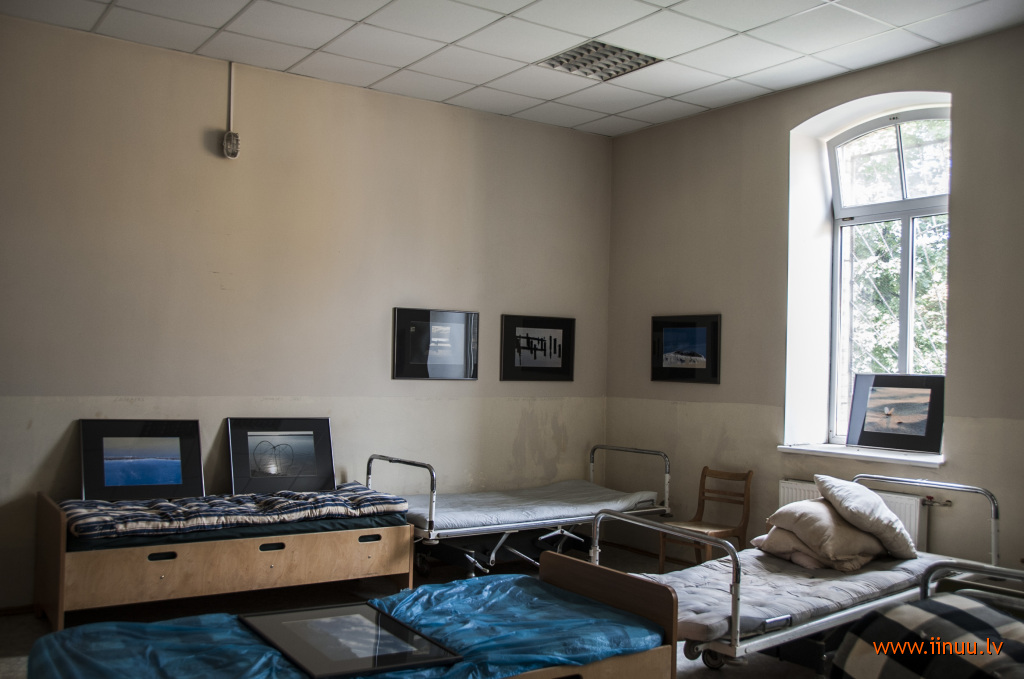
Deeper in - the Sea Room, or a dream of the sea - a joint work by two authors (Ieva Stūre and Zigmunds Katkovskis). Framed photographs of water are arranged on hospital beds with metal grid headboards and old striped mattresses. The works were created between 2008 and 2010 and found their connection through correspondence online over more than two years. "The sea is not merely a material substance. The presence of the sea is easy to feel even when you are not physically there - in moments when life requires you to be elsewhere. The sea is peace and harmony, magnificence and strength. It is a place to regain one's balance."
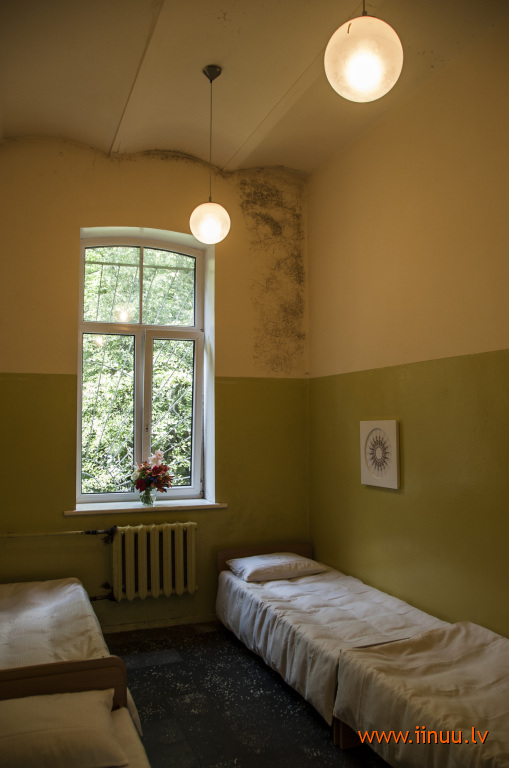
In the Lace Room (by Gundega Strautmane), i.e. Ward 5, there are four white-covered beds, two on each side; on the windowsill a magnificent bunch of flowers, and by each bed a coded message - a quote from the Holy Scriptures. Each dot combination (a, c, and b-code) corresponds to one specific letter. Perhaps the most assiduous visitor, using the decipherment sheet attached to the door of the adjacent room, could actually read it. But most are pleased with the colourful yarn pattern rather than the message itself. The person always in a hurry does not delve deeper, looks and moves on, as if chasing time - as if one could race against time.
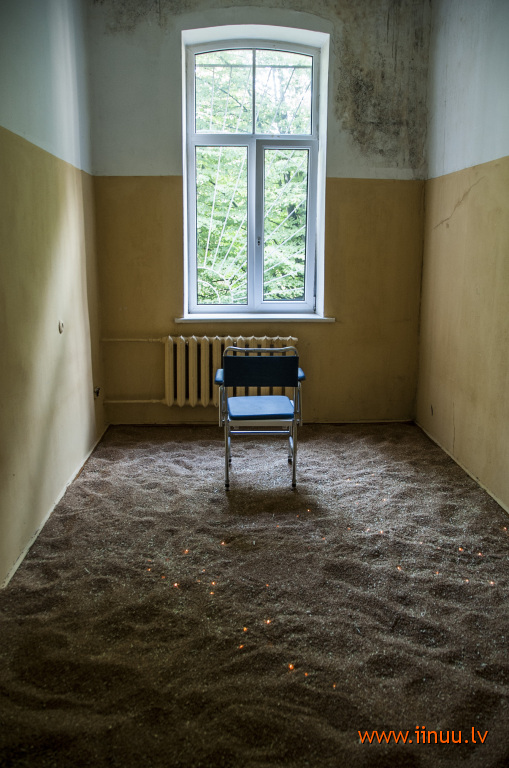
The floor of Cousin's Room (by Kristīne Bicāne) is strewn with grain; lights glimmer among them from time to time, while in the middle a chair stands alone, angular, facing the window. A dedication to a 32-year-old man who spends around half of each year in this hospital.
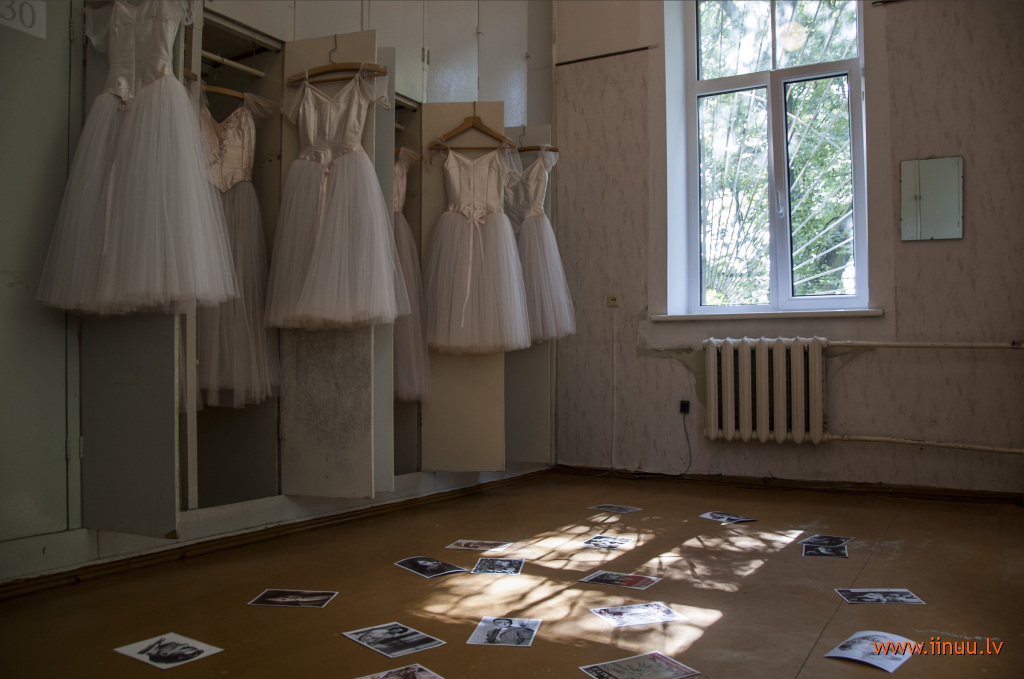
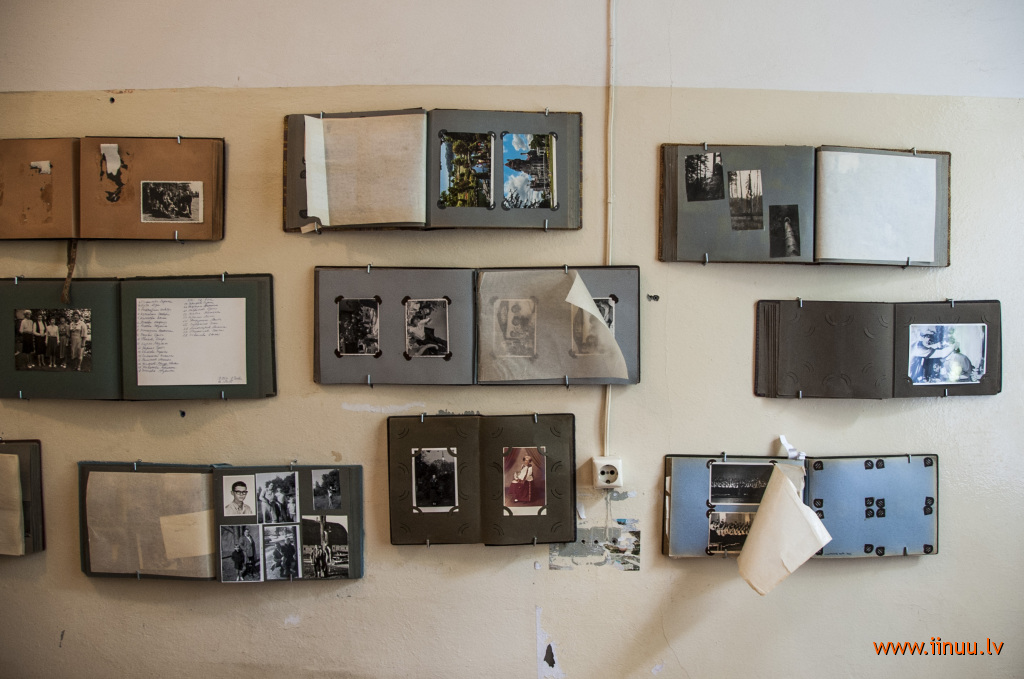
Album Room (by Rasa Jansone) - old albums are fastened to one wall (purchased at antique shops for 3 EUR apiece, found in one abandoned flat), and on the opposite wall - a portrait. Each album was carefully assembled by someone, who arranged the photographs and attentively fixed the corner mounts. Each album is someone's life story, told exactly as the person who arranged it wished to tell it. Well, an outsider can disturb this order, because there are no connections, no memories, no feelings - only black-and-white, faded images. One can only surmise, only guess, only conjure a subjective story.
There are more rooms, but that is enough for now. Despite the all-encompassing presence of nature, the hospital's old, heavy walls and their characteristic smell do their work. The feelings are intensified by the patients who, in small groups accompanied by their "caregiver", visit the exhibition. You suddenly feel how lucky you are that you are not imprisoned in a world of madness that another cannot reach from the outside, cannot understand, cannot accept. Undoubtedly, among these people there are many talented, even brilliant, individuals - but happy? Ah well, happiness is a relative concept, different for everyone.
comments