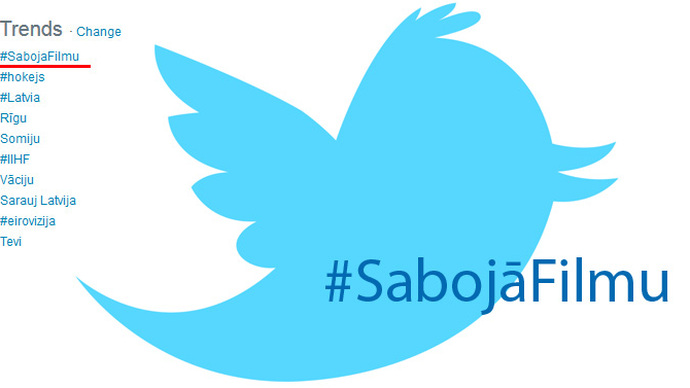
As it turned out, the Twitter community took to this bit of fun - or Twitter flashmob - quite eagerly, resulting in the creation of several hundred altered movie titles. Some witty, some funny, some not so amusing.
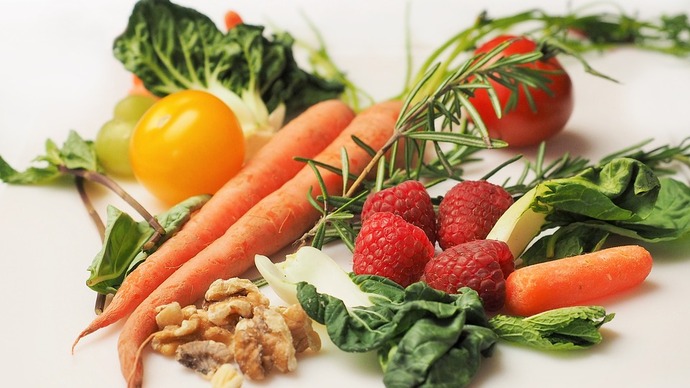
Different countries have each approached this important matter in their own way, according to their understanding of how the end of the world will actually unfold. For example, the Russian kit indirectly contains ingredients intended for "Plan B", the Mexican kit places the emphasis on a special knife, and by contrast, the Latvian kit is oriented towards eating and waiting.
Here are a few more apt sayings for the "Seriously Joking" section, which I stumbled upon by chance while leafing through old magazines. Some, it seems, could not be put more aptly. So, enjoy! ;)
Since time immemorial, when the harvest was gathered and the Apjumības harvest festival was celebrated, when the days grew shorter and the evenings longer, large Latvian families would pass the time by the light of pine-splinter torches solving riddles. Sharp wits, ingenuity, and powers of observation were put to use. And how many of the answers to these riddles do you know?
Historically, a tax was the way in which the inhabitants of a land, village, or kingdom could participate in governance and even earn the right to live behind a wall - which in turn meant security. As a result of war or other upheavals, the state could demand higher tax payments. Since monetary circulation was not popular in ancient times, people paid however they could - through corvée labour, payment in grain, or military service.
From a polite phrase, you can infer the mood of the person asking. For example, "How's it coming [work]?" suggests that the questioner still can't decide whether to begin some process; while the laconic "How's it going?" is nothing other than a wish to pass the conversational baton to someone else - or simply having nothing to say.
Using online machine translators doesn't always yield a precise translation of a given word, phrase, or text fragment - but sometimes the results are quite amusing. For example, "Kalvītis" in Google Translate comes out as Хеллоуин (Halloween), the word "saimniece" (hostess) as "любовница" (mistress), and "lopu vagons" (cattle wagon) as "серийный автомобиль" (serial car).
In the mornings, traditionally leafing through the press, I have for some time been making a point of reading the last page of the newspaper Diena, where Egīls Zirnis jokes. As a result, a number of fine sayings have accumulated - sayings that on reading make you want to smile at yourself, at life in general, and at life in Latvia. Here I have collected some excerpts from "Zirnis Jokes" that seemed truly witty and have stuck in the memory.





.jpg?w=690&mode=16x9|crop)