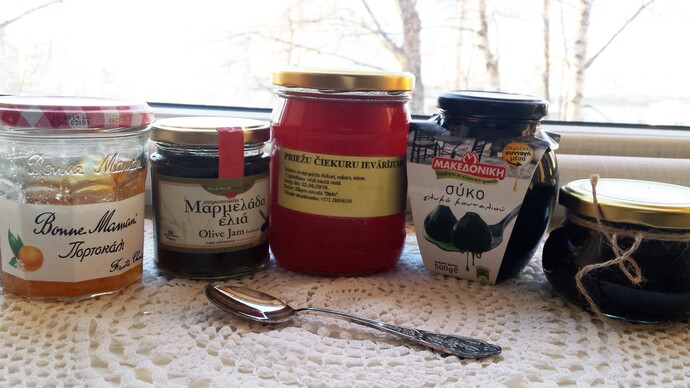
Tasting of Non-Traditional Jams
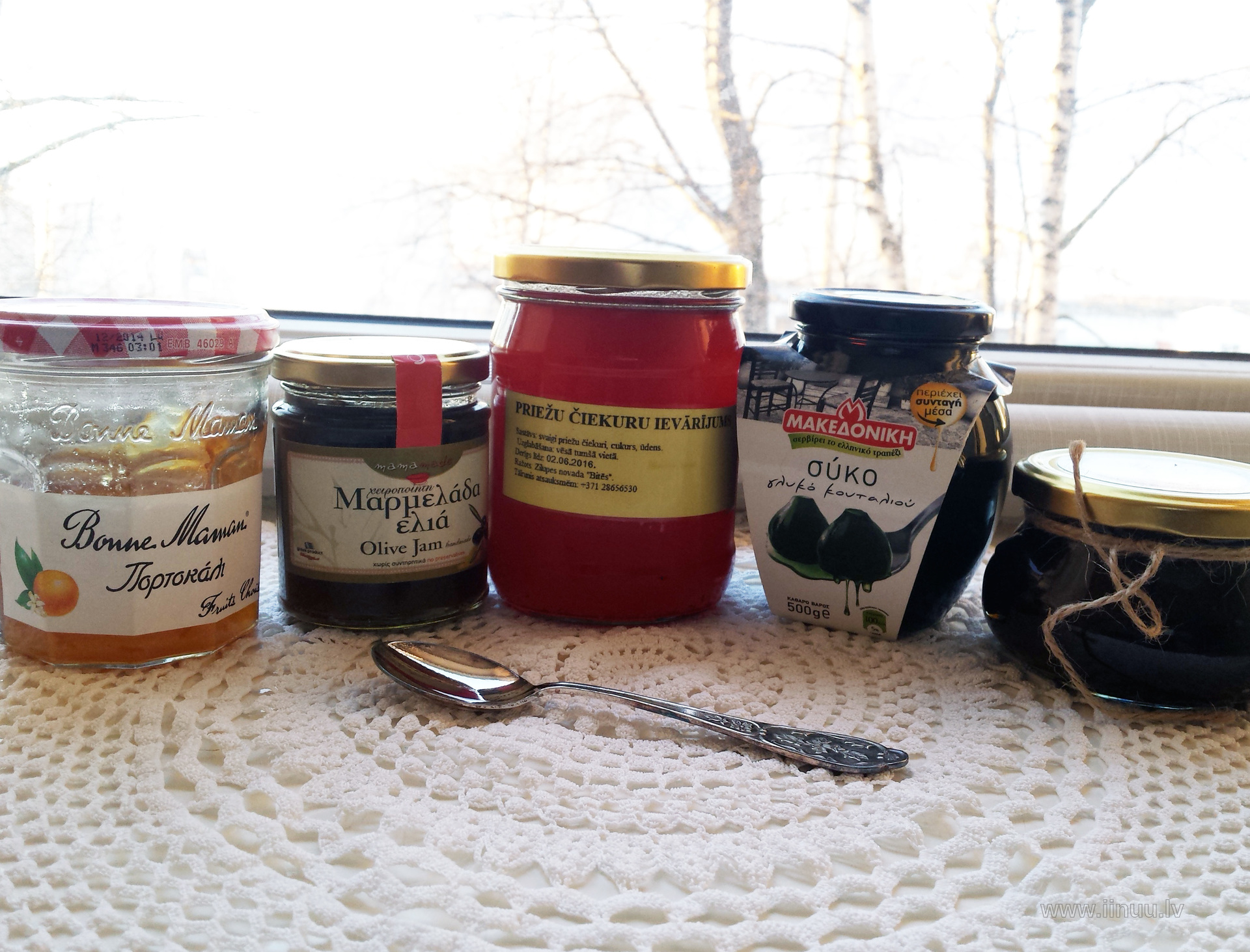
Alongside the jars of strawberry, cherry, and apple jam that Mum had carefully prepared from her own garden, I found a few that had been received as gifts or brought back from travels, as they had seemed exotic enough to warrant it. So at a home gathering I decided to organise a little attraction: tasting and rating less traditional jams together with the guests.
Five people took part in the tasting - Anda, Jānis, Linda, Ēriks, and Inga - and the tasting materials also consisted of five items. Well, the belly pleasures worthy of Karlsson himself could begin! All ratings are subjective and make no claim to expert opinion.
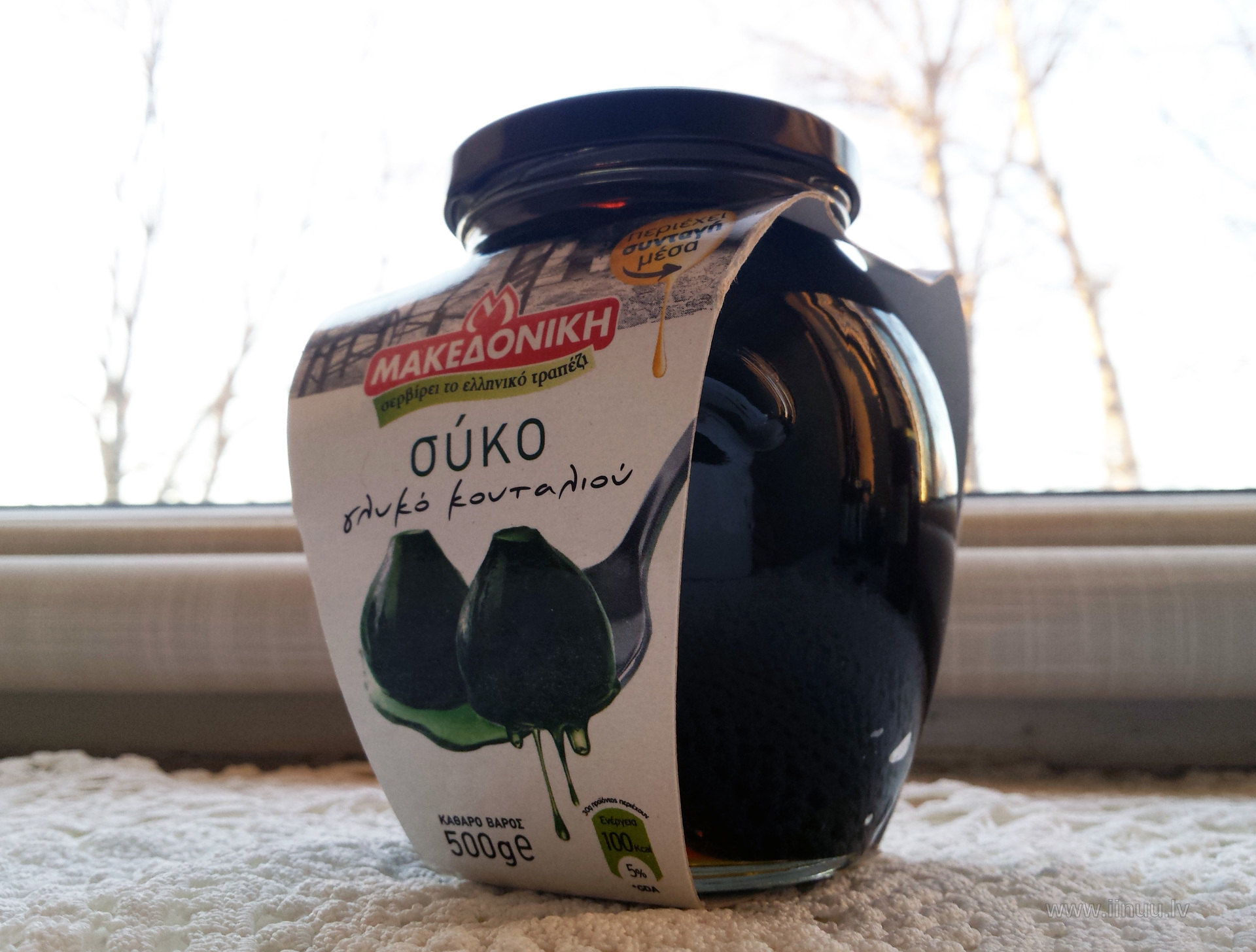
Fig Jam (Greece)
A: This could more aptly be called a compote rather than a jam - whole figs in syrup.
J: Extraordinarily sweet, too sweet.
L: First association - tastes of dates rather than figs. Not a single seed. It would be lovely with plain vanilla ice cream, plombir ice cream.
Ē: Hmm, reminds me of pear, but without any distinct texture.
I: Very sweet - I need to drink water on top of it or I won't be able to taste any of the other jams.
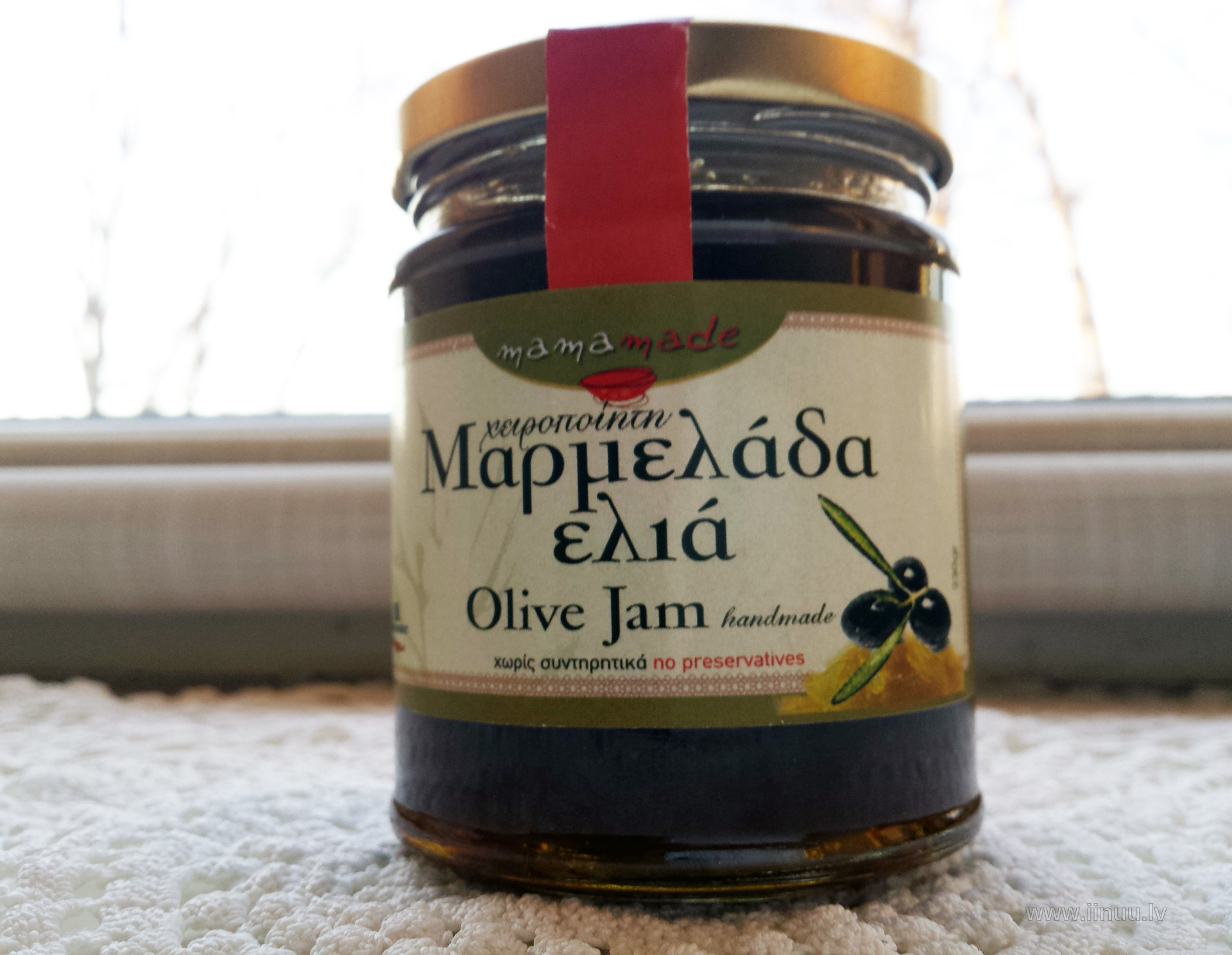
Olive Jam (Greece)
A: An oiliness is detectable. It's as if honey were in there too. Might go well with a hard cheese.
J: Yes, an oily aftertaste. Maybe worth trying with meat?!
L: Some tartness is detectable - as if there were lemon zest. Not with cheese or meat, but with something sour added it would work - pineapple, for instance. Could be put on top of redcurrant jelly.
Ē: Association - the smell of an old worm-eaten drawer. :) Would work with a quark dessert.
I: A very distinctive smell when you open the lid, which fades over time. A subtle texture is detectable; sweet enough that you wouldn't snack on it by itself.
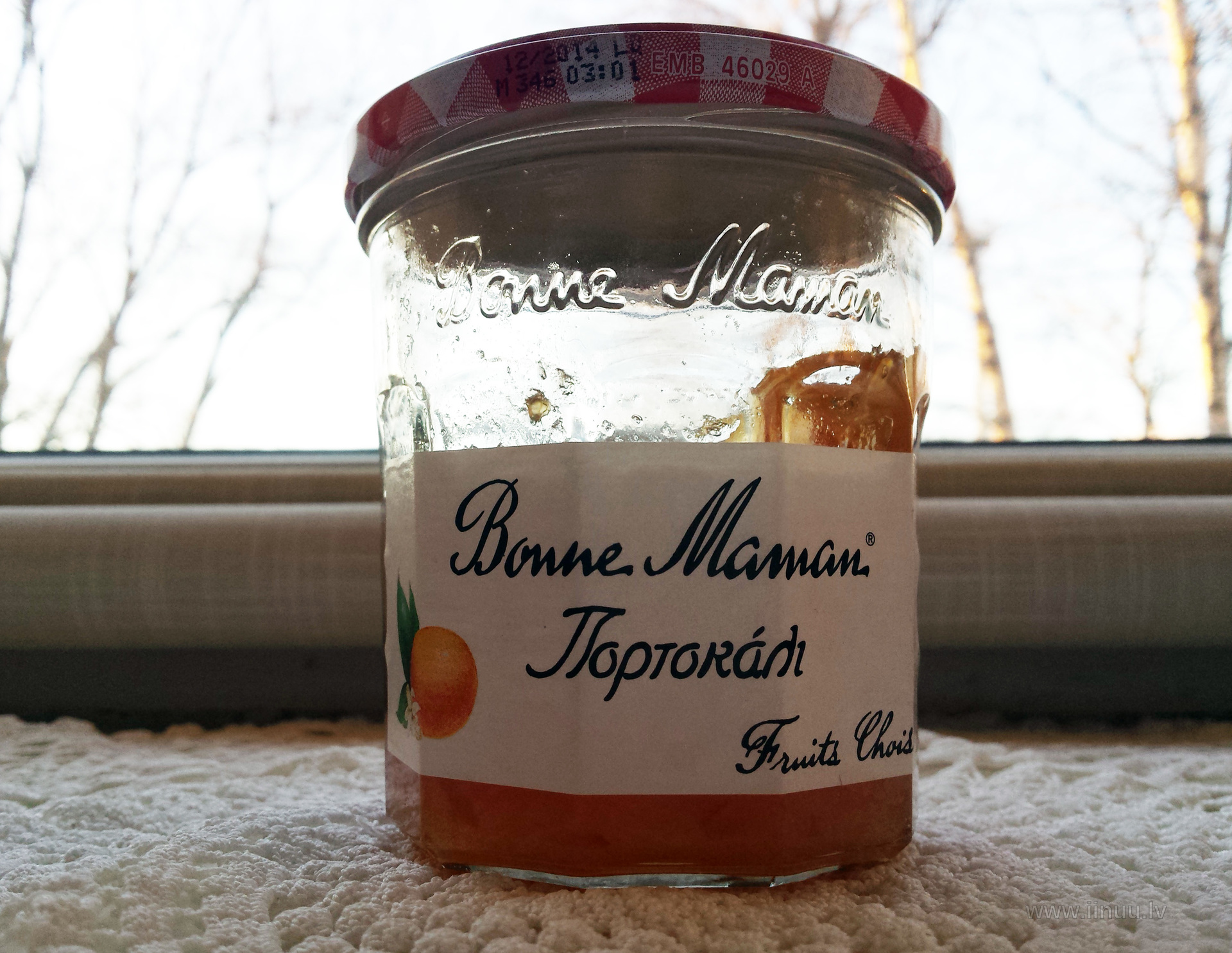
Orange Marmalade (France)
A: Lovely, doesn't cloy, traditional. I've heard of a recipe where you put blue cheese and a spoonful of jam on a slice of sourdough bread and bake it in the oven like a hot toast.
J: Well-balanced sweetness. First place by a wide margin over the previously tasted jams.
L: A pleasant sharpness from the orange peel. You could even snack on it by itself, without anything else.
Ē: A more familiar flavour - more of a marmalade than a jam. Could imagine it on ordinary dark rye bread.
I: A classic: croissant, orange marmalade, coffee, morning in Paris.
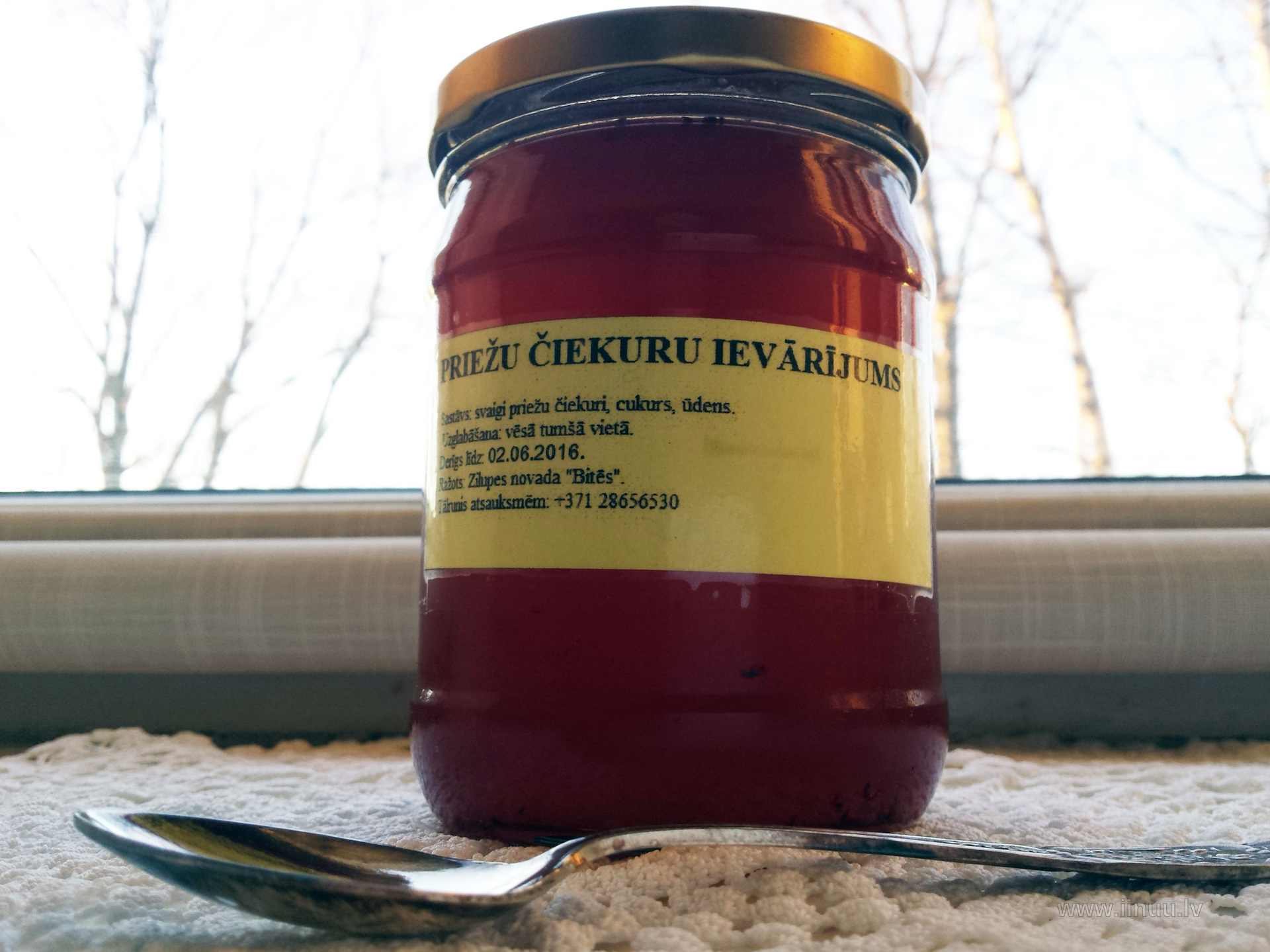
Pine Cone Jam (Latvia)
A: Hmm, if this were a blind tasting, I wouldn't be able to say what it actually is - I can't detect any particular aroma. Too runny for a jam.
J: Calls for something more pungent, stronger - the flavour is muted, though the pine cone scent is detectable. Extraordinarily diluted.
L: Smells of resin. Watery - more like a thin syrup than a jam, even though the label says "jam". Would be lovely with hot tea. Maybe a splash of lemon or quince could be added.
Ē: Sugar water - the pine cone is barely detectable, perhaps only in the finish.
I: A strong pine scent when you open it, which fades over time. Intended specifically for the winter season, to ward off germs. Genuinely, unexpectedly runny. Maybe it gets thicker over time?!
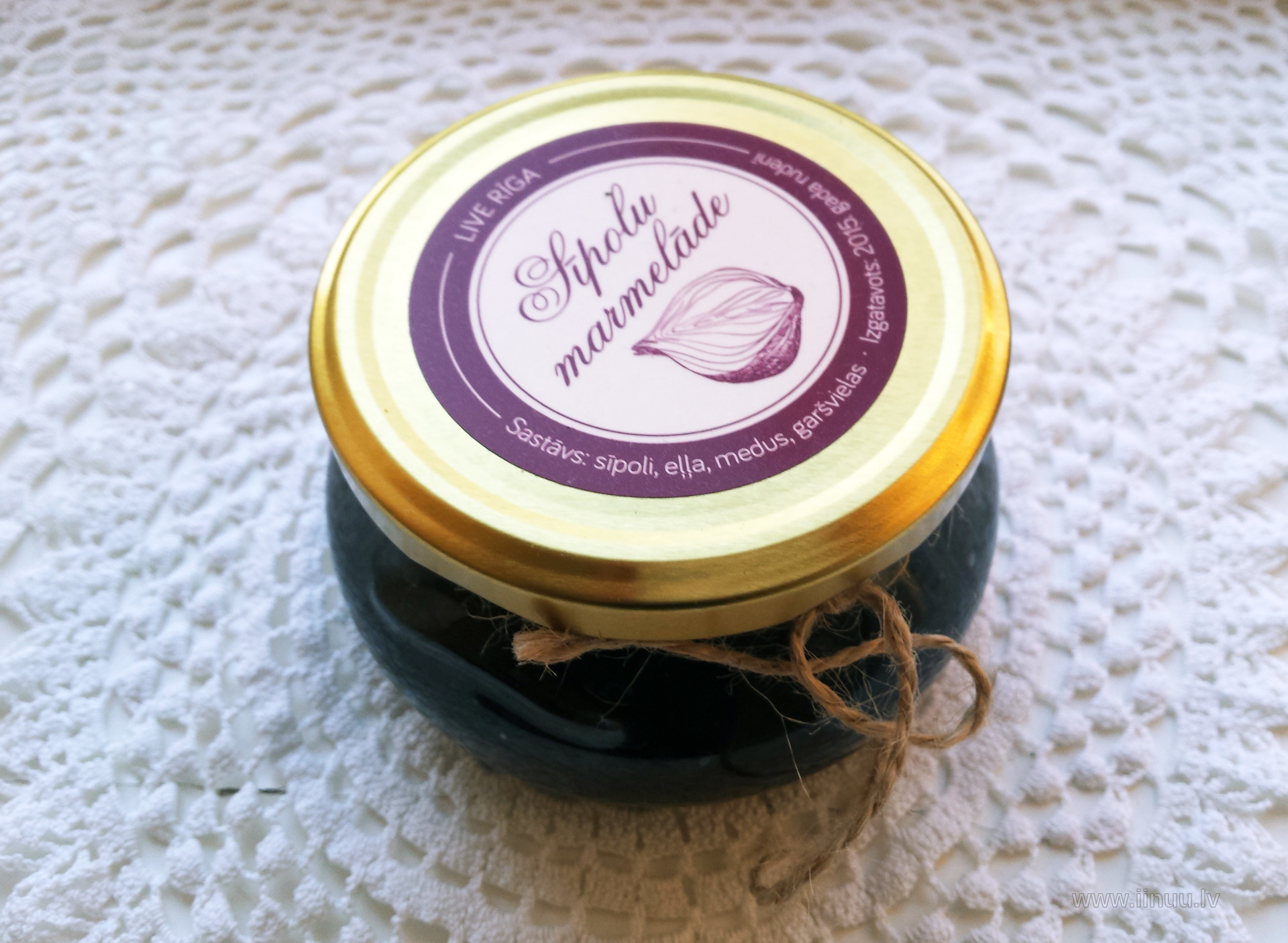
Onion Marmalade (Latvia)
A: I sometimes make something like this myself. On a toast with grated hard cheese - ideal. But this one, it must be said, is not sufficiently braised - undercooked onions, long and stringy.
J: Doesn't taste of anything at all - I certainly wouldn't eat this of my own accord.
L: It looks like worm broth - are we allowed not to eat it? :) Maybe a piece of bread might help it go down. Could try adding it to braised cabbage when cooking.
Ē: Too much onion detectable, barely edible. Only with bread - certainly not on its own.
I: Distinctly reminiscent of fried onions lightly glazed with sugar in a pan, rather than a cooked jam. Not particularly special.
The orange marmalade was declared the majority favourite - familiar, traditional, and delicious enough. The fig jam came second; third place went to the olive jam. The least loved turned out to be the onion - though possibly due to the way it was made. We collectively concluded that it is always good to explore new flavours, and that another tasting should be organised, with everyone bringing something unusual.
comments