One Thought - One Sentence
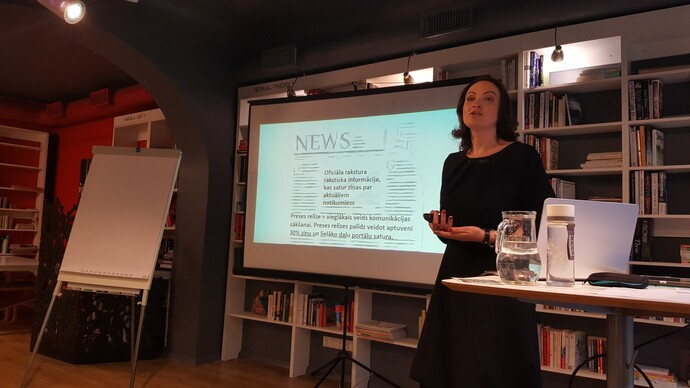
In press release texts, clarity is more important than creativity - so says Aiga Veckalne, expert in Latvian language and business communication etiquette. On the afternoon of 25 October, her masterclass on writing effective press releases and correct use of the Latvian language was held at Birojnīca in Berga Bazārs.
Some time ago a friend called me and asked: "Listen, Inga, you send emails to clients so often and handle business correspondence - you'll surely know: does a comma go after the phrase 'Ar cieņu' [Yours sincerely] at the end of a letter?" I was momentarily flustered, but then replied fairly confidently: "Well, of course it does! That's how I write it too - Ar cieņu, Inga. A logical pause and separation of the courtesy phrase from the signature that follows, with all the contact information." "Hmm, strange," my friend drew out. "I do the same, but a colleague here insists that according to the canons of Latvian business language, no comma is needed."
Well, after Aiga's seminar I was able to confirm 100% that I had been doing it wrong for several years in a row. After the phrase "Ar cieņu" NO comma should be placed. This and many other tips I learned in three hours - although, to be honest, I had come specifically to hear about press releases, so that I could write them in a way that any media outlet would take and publish with relish.
On Press Releases
Below I have summarised the insights from Aiga's presentation that seemed very useful and worth bearing in mind when writing and sending press releases to the media:
- Press releases help form approximately 30% of news stories and most of the content on news portals. They are like a company's business card, creating an impression of the sender's professionalism.
- Press releases must be tailored to the specific news item and medium. A business newspaper will require one type of headline and a different density of facts and figures; a news portal another. A trade journal can afford to use specific terminology and professional jargon, since industry colleagues will understand. Entertainment portals, on the other hand, love photos of celebrities - photos and more photos.
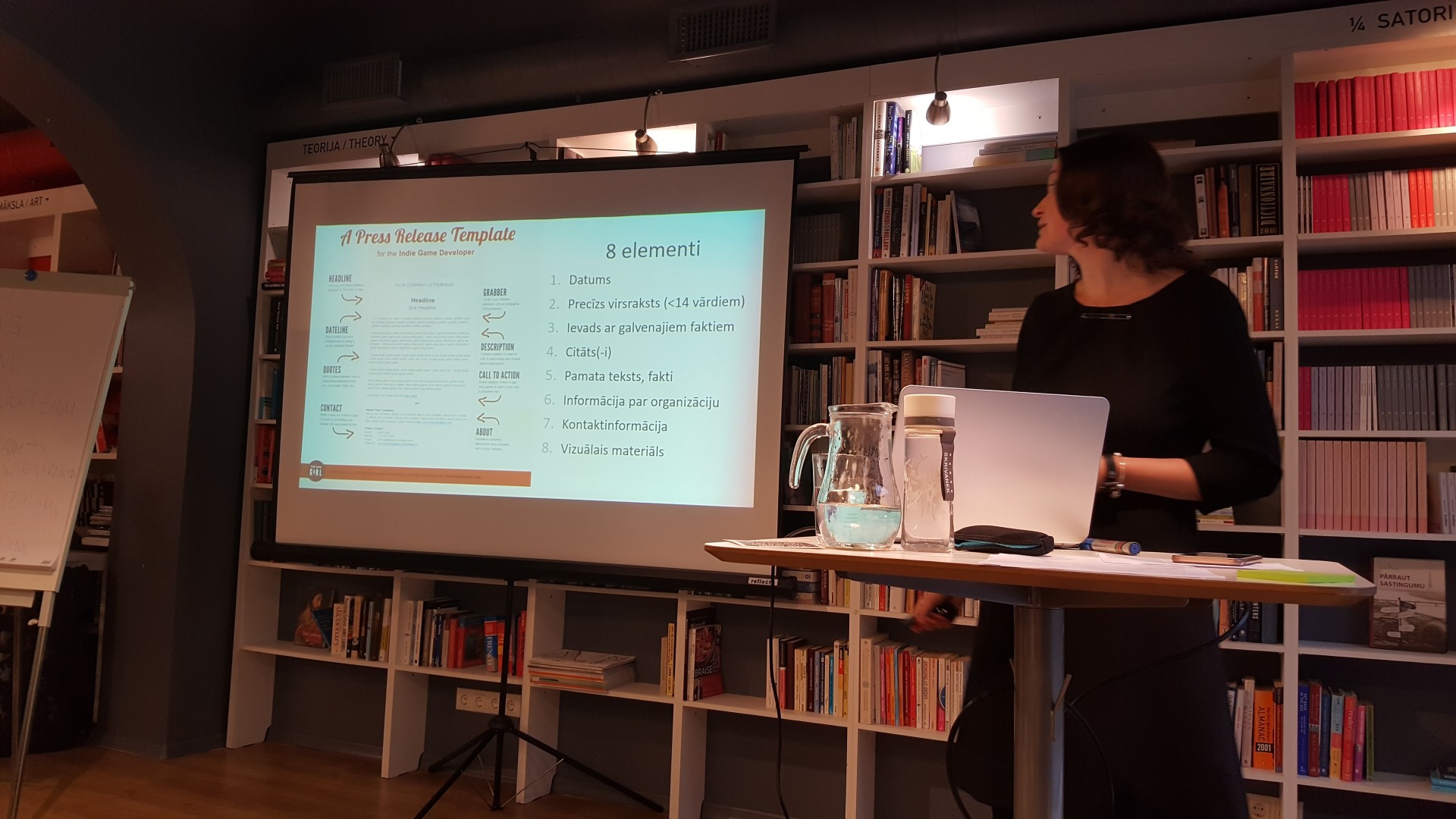
- When structuring a release, use the inverted pyramid. The widest end - a punchy lead text, written observing the 5W+H principle: who? does what? where? when? how? why? This is followed by your story about the event or company news. At the end - background information (about the company, the author, the event organisers, the survey) and contact information in case the media representative has further questions.
- Length: headline - ideally 7–8 words (up to 14 words, no more); lead text - 20–35 words; body text - 2–3 paragraphs, up to 50 words and 4 sentences each; the release itself - one A4 page, no more.
- Avoid the passive voice - not "was opened" but "opened". Likewise, use active verbs as much as possible; this gives the text dynamism.
- Visual material (images, photographs, infographics) should always be included. Quotes are also desirable. They are also the best way to embed the company name, the commenter's title, first and last name, and a fact that cannot be "cut out" - since media generally do not censor quotes.
On Correct Latvian Language
- Numbers up to 10 are written in words.
- Use commas, use them correctly - they can save lives! "Ejam ēst, Muri!" ["Let's go eat, Muris!"] vs. "Ejam, ēst Muri!" ["Let's go eat Muris!"]
- "Lūdzu" in different contexts can be a verb ("lūdzu atbildēt" - "I ask you to reply") or an interjection ("lūdzu, atbildiet" - "please, reply"). In the first case, no comma; in the second - with a comma.
- "Mājaslapa" not "mājas lapa", when referring to a web page.
- Let us try to avoid redundancy, for example: darba kolēģis > kolēģis; līdzdalība > dalība; paldies jums > paldies; maija mēnesis > maijs; Rīgas pilsēta > Rīga, etc.
Words we often spell incorrectly (incorrect > correct):
patreiz > pašreiz
atvilkne > atvilktne
dzelzsceļš > dzelzceļš
kartiņa > kartīte
lenta > lente
dizaineris > dizainers
albūms > albums
zin > zina
ģērbonis > ģerbonis
želantīns > želatīns
datubāžu > datubāzu
finansu > finanšu
tūkstots > tūkstotis
tiko > tikko
tai pat > tajā pašā
ananāss > ananass
bulciņa > (smalk)maizīte
balzāms > balzams
cukīnī > cukīni
plombe > plomba
tādejādi > tādējādi
džinsas > džinsi
adresu > adrešu
labaratorija > laboratorija
aboniments > abonements
intraverts > introverts
pazvanīt > piezvanīt
grillēt > grilēt
Online resources for correct Latvian:
- tezaurs.lv - electronic dictionary;
- termini.lza.lv - academic term database;
- iate.europa.eu - European Interactive Terminology Database;
- @papildu.papildus - Facebook profile;
- @AldisLauzis - linguist's Twitter profile;
- vardotaja.blogspot.com - Vārdotāja blog.
Thank you, Aiga, for the masterclass - it IS useful!
comments