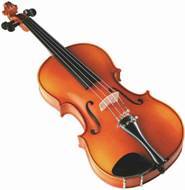
About Violins
An acquaintance of mine once said that the violin is an instrument that can simultaneously be both joyful and sad. In any case, it is an ambiguous instrument. Is there a greater nightmare than scales played on a violin (and played "dirtily" at that)? And is there a greater pleasure than listening to Vivaldi or a Hungarian Rhapsody?
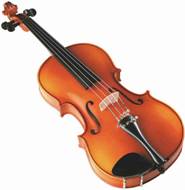 An acquaintance of mine once said that the violin is an instrument that can simultaneously be both joyful and sad. In any case, it is an ambiguous instrument. Is there a greater nightmare than scales played on a violin (and played "dirtily" at that)? And is there a greater pleasure than listening to Vivaldi or a Hungarian Rhapsody?
Like many stringed instruments, the origins of the violin are also to be found in Eastern lands. Only around the 16th century did it make its way to Europe, to Italy.
The first documented violin is considered to have been made by Andrea Amati in 1555. It was a 4-string violin. The instrument rapidly became popular, primarily among street musicians.
Later this craft was taken over by the Guarneri and Stradivari families. Both were Andrea's students, for what it's worth :)
Violin makers were called Luthiers, which apparently derives from the French word "lute", meaning a stringed instrument. I should note that I am not aware of a similar specific designation for violin makers in other languages (Latvian, Russian).
The Violin and Its Sizes
The word "violin" derives from the Latin word "vitula", meaning a stringed instrument. In English, alongside the word "violin", the word "fiddle" is also used. Whereas violin denotes a specific instrument, fiddle can denote any instrument similar to a violin - from the Byzantine lyre to the classical violin.
In other languages:
Latvian - Vijole;
English - Violin or Fiddle;
German - Violine or Geige;
French - Violon;
Italian - Violino;
and the crown of them all is in Russian - Скрипка, which is said to be - смычковый струнный музыкальный инструмент высокого регистра :)
It is generally accepted that violin lessons begin from a very young age - 5 to 6 years old. I have no idea how it worked in 16th-century Italy and France, but nowadays violins come in various sizes.
The largest is called 4/4, which is approximately 58.5 cm long. The smallest is 1/16, which is 35.5 cm.
And that's not the end of it. There is also a 1/32 violin, played at age 2. Thank God my parents knew nothing of such things.
http://www.youtube.com/watch?v=4g5Q1p6C7ho
Vanessa-Mae plays Bach's Partitia in E
http://www.youtube.com/watch?v=C01QUSEONOg
3 years old violinist (vivaldi)
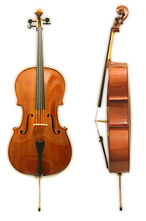
The violin family consists of:
 |
 |
 |
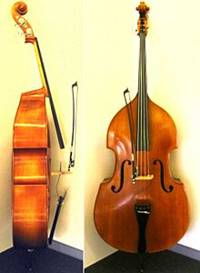 |
| 1. Violin | 2. Viola (it: Viola) | 3. Cello | 4. Double Bass |
Violins Are Made in Latvia Too!
As far as I know, there are approximately 4 known masters in Latvia who are primarily engaged in the restoration and repair of stringed musical instruments. It is not known whether they also construct new instruments.
It turns out there is a very talented violin maker (luthier) who, alongside violin maintenance and repair work, also makes new instruments - Ingars Rancēvičs. Ingars makes stringed musical instruments to order as well.
The full range of services, as well as information about the master himself, can be found here - www.vijoles.lv
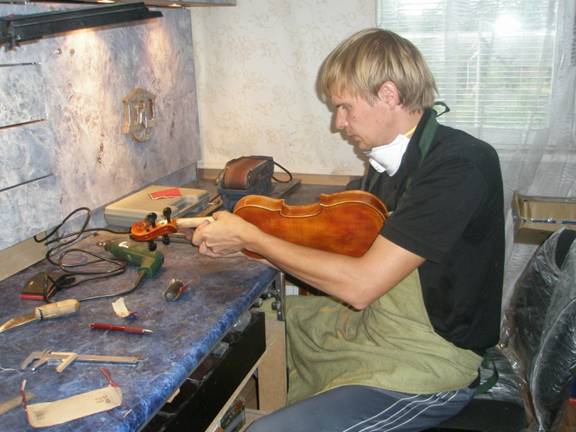
This is how a violin is made. A handmade musical instrument.
Sources:
http://en.wikipedia.org/wiki/Violin
http://www.liis.lv/muzika/instrumenti/soi.php
comments