Autumn Poets - November - Vācietis
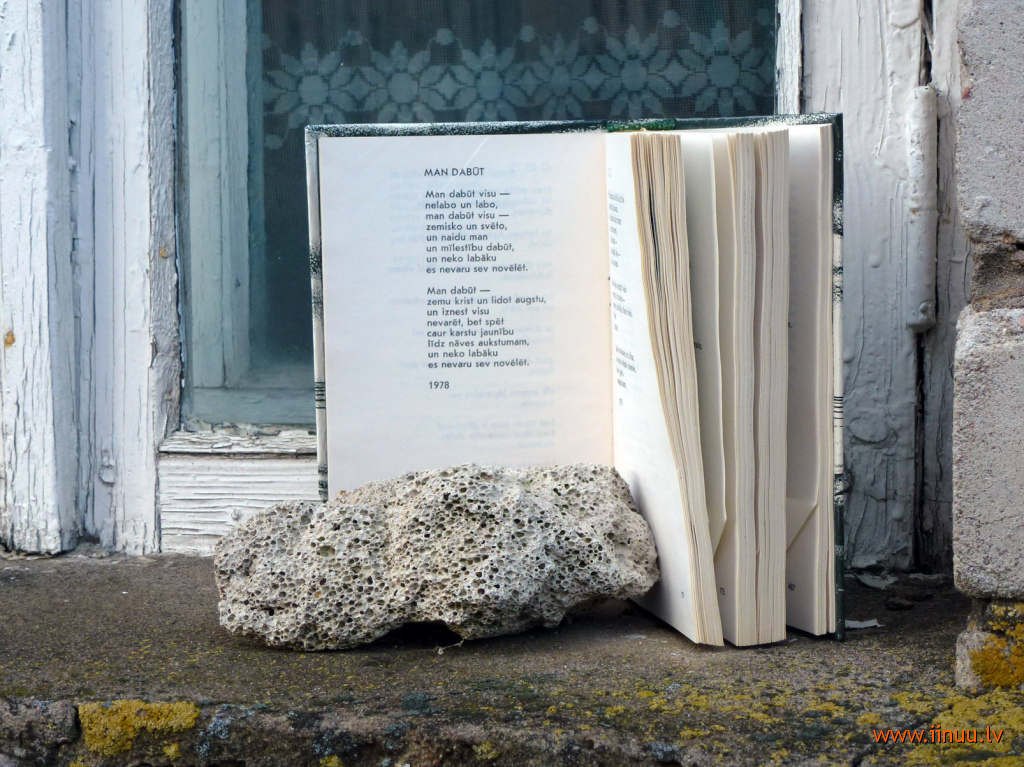
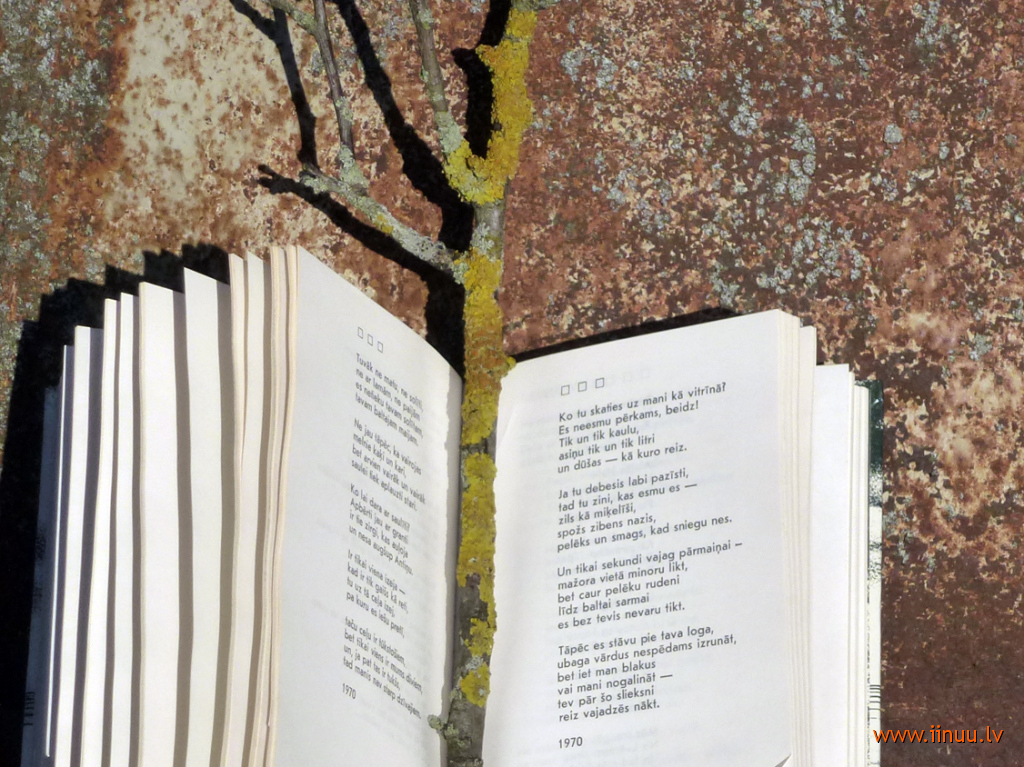
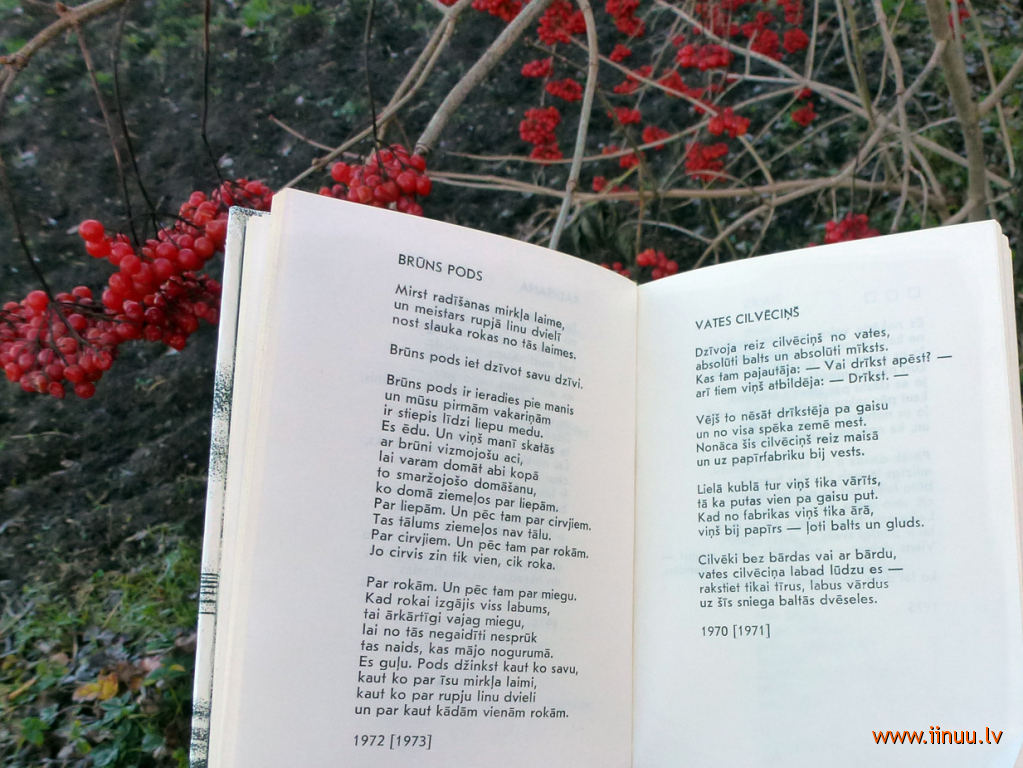
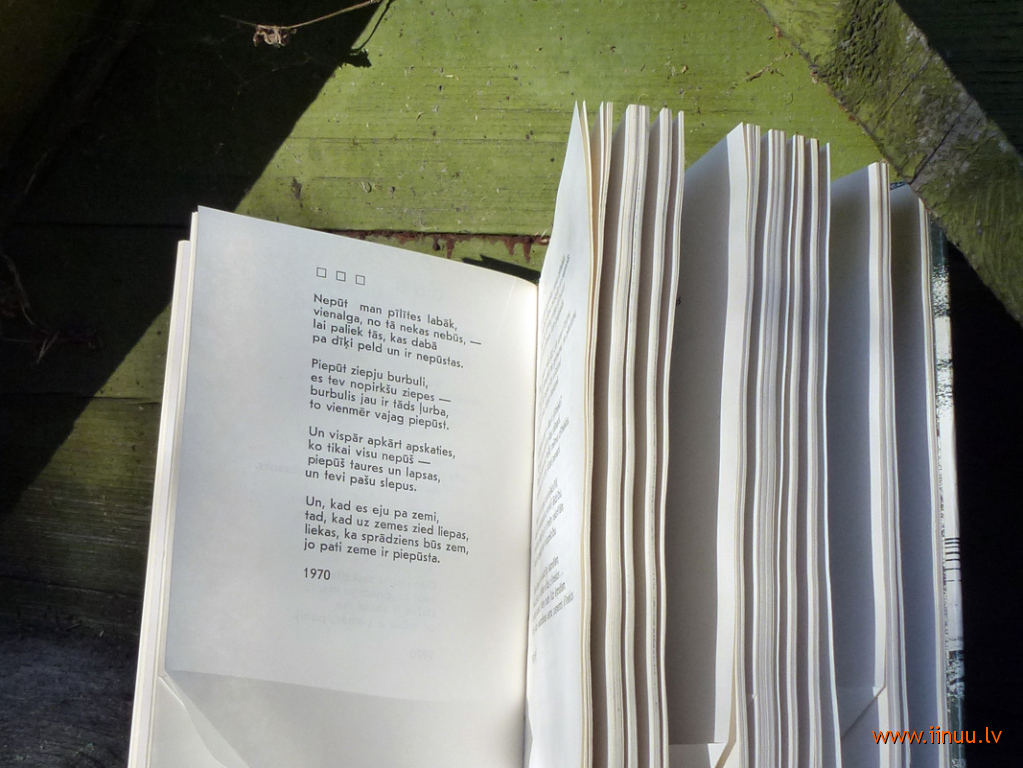
We read Vācietis' poetry not by cosily curling up on a sofa (as with Čaks), but by going outdoors in autumn, sitting down on grass already covered in frost, feeling the already sharp north wind on our cheeks, lingering in the dim yet lovely autumn sunlight like a mother's caress. I invite you to do the same!
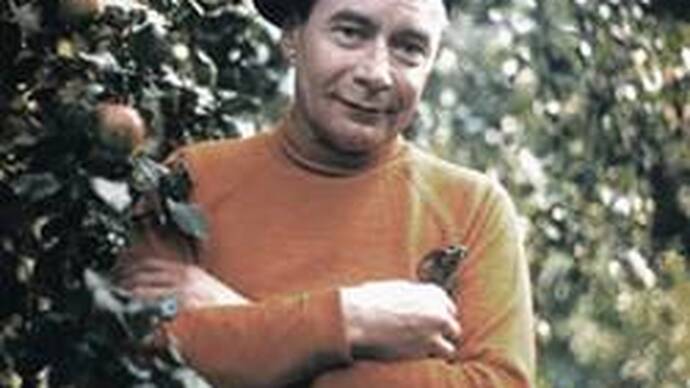
In November Vācietis came to us - as truthful in poetry as the conscience of an era, as deep as anthracite. Without a pseudonym, without a pose, an ordinary Soviet man in a raincoat and beret - but was he ordinary. To be extraordinary at that time was especially difficult. But he was - one Don Quixote out in the open field, wherever mills are to be found. This year Vācietis was honoured especially, with several articles in the press and concerts, one of which even fell on 13 November and coincided with the opening of the Daile Music House on Krišjāņa Barona Street in place of the former Daile cinema.
Ojārs Vācietis was born on 13 November 1933 in northern Vidzeme, Latvia, on the border with Estonia, and died on 28 November 1983 in Riga, Soviet Union.
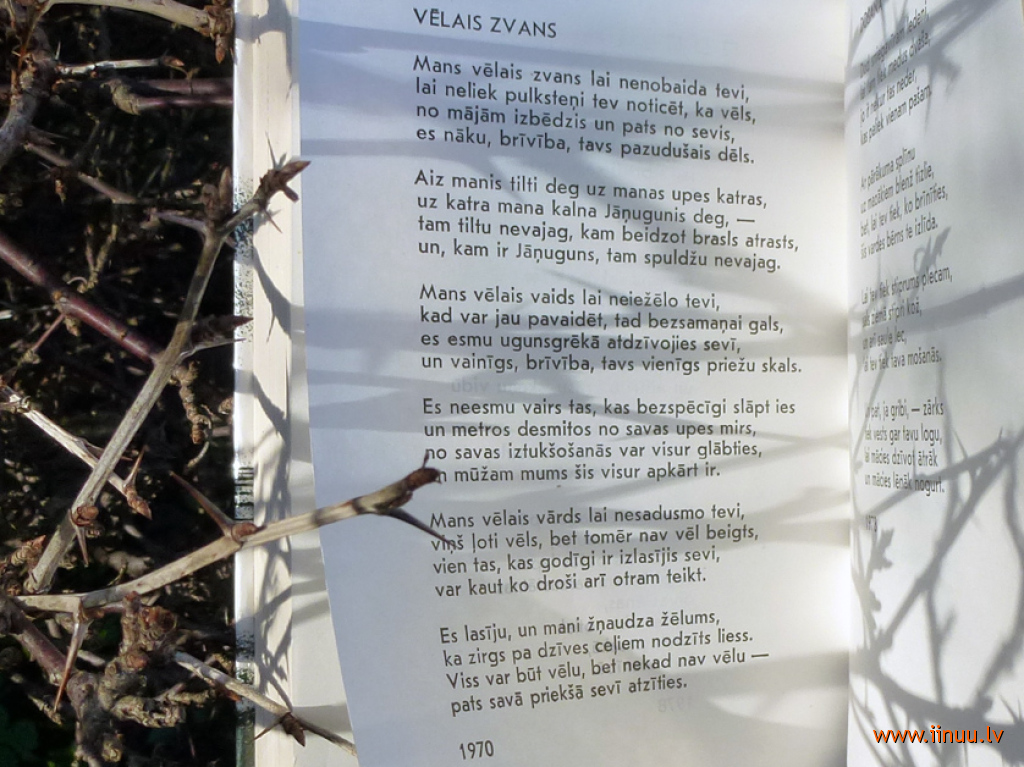
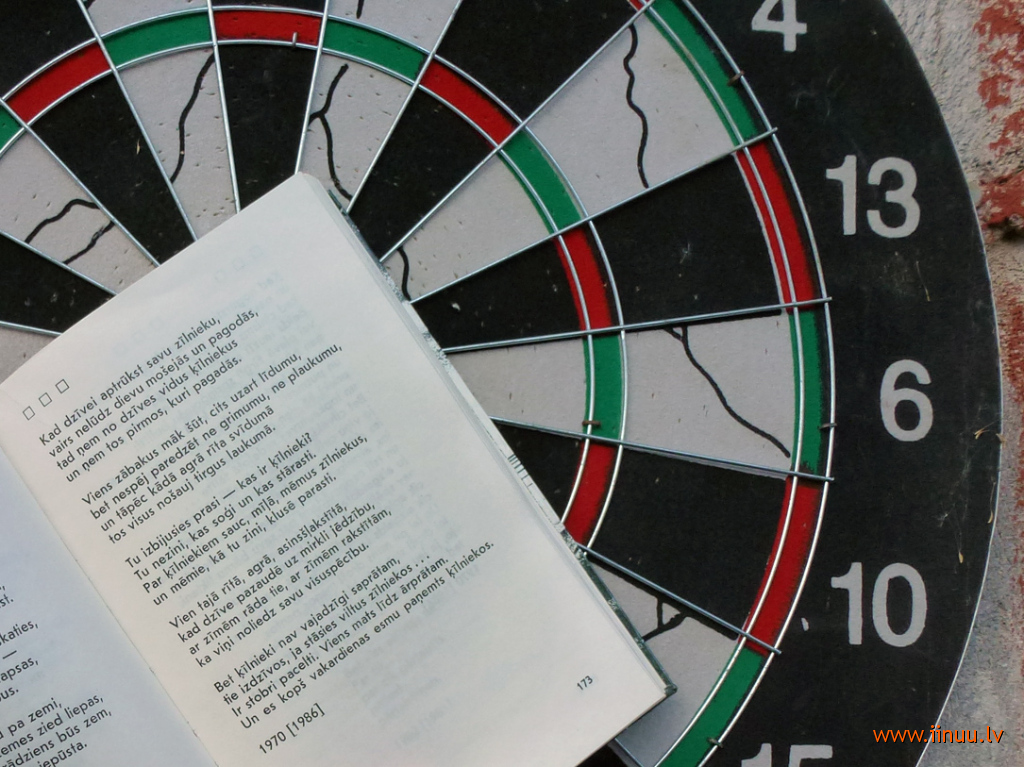
When life runs out of its own soothsayers,
no longer prays to god in mosques and pagodas,
then it takes hostages from life's midst
and takes those first who happen to be there.
I believe that every place and house carries its own energy. The story of Vācietis' Riga home is special, and so I include below the description I found. Visiting it today one can sense the house's unusual peace, grown from years of accumulated experience and the energy of people rich in spirit.
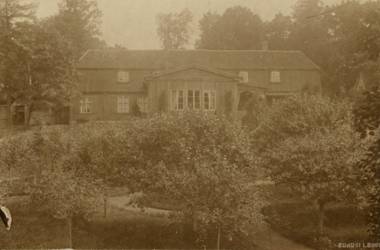
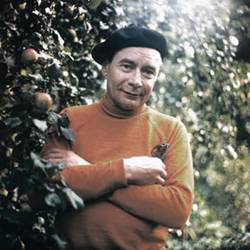
Photo [1] from zudusilatvija.lv, the very beginning of the last century. "Villa Robinson", built in the second half of the 18th century at 13 L. Altonavas Street (now 19 Ojāra Vācieša Street), was named after its former owner, the English director of the Riga–Daugavpils railway, H. Robinson, who purchased the building in 1858. An earlier owner was the merchant J. H. Schroeder, during whose time the building was known as "Schroeder's Manor"; even earlier there was a tavern and hotel called "Jerusalem". At the beginning of the 20th century the plot owner was K. Haberkorn; in the 1930s the owner was V. Staņislavskis - the representative in Latvia of the "Hudor" artificial irrigation equipment (the plot also housed a demonstration ground for the equipment). In the 1920s, E. Bosh's photography studio operated in the building. At the turn of the 1920s–30s, the actor and writer Arveds Mihelsons (the father of Rutks) and his wife, actress Otīlija Mihelsone-Ķirkuma, lived there; in the early 1930s, the writer and journalist Ernests Arnis-Runcis; from 1960 to 1983, the poet Ojārs Vācietis. The building now houses the Ojārs Vācietis Memorial Museum. [2] Photo from vaciesamuzejs.asp.lv
We read Vācietis' poetry not by cosily curling up on a sofa (as with Čaks), but by going outdoors in autumn, sitting down on grass already covered in frost, feeling the already sharp north wind on our cheeks, lingering in the dim yet lovely autumn sunlight like a mother's caress. I invite you to do the same!
Poems from: Ojārs Vācietis, Ex Libris - Riga: Liesma, 1988
comments