Radiation from Mobile Phones and Smartphones
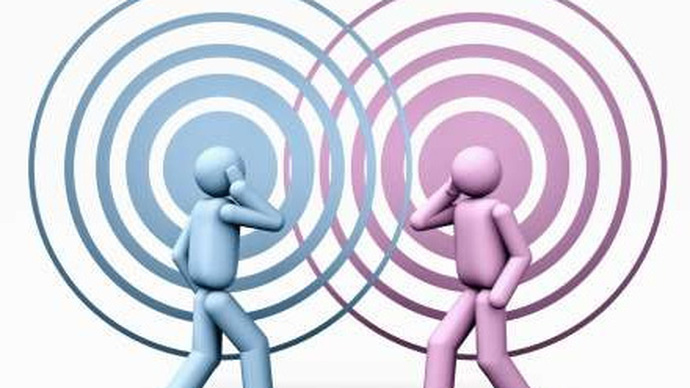
Any electronic device, including a mobile phone, emits electromagnetic radiation. Unlike other devices, however, a phone is often kept close to the body - carried in a pocket, pressed firmly to the ear during calls. This has led many to wonder how harmful - or perhaps harmless - mobile communication devices actually are.
Any electronic device, including a mobile phone, emits electromagnetic radiation. Unlike other devices, however, a phone is often kept close to the body - carried in a pocket, pressed firmly to the ear during calls. This has led many to wonder how harmful - or perhaps harmless - mobile communication devices actually are. Scientists conducting methodologically different studies have reached varying conclusions, and it seems that irrefutable proof that device use is harmful does not exist. There are known individual court rulings (mainly in the US) where the court, after weighing the collected evidence, ruled that mobile phone use had specifically caused the worsening of one disease or another. The most frequently cited illness is cancer, which is, it must be said, a very serious health threat.
A partial link has been established between attention deficit disorder (ADHD) in children and phone use by the mother during pregnancy. Phone use may cause memory impairment, sleep disturbances and headaches in children. No less interesting is a conclusion by paediatric doctors that excessive and regular use of touchscreen devices by very young children can cause finger and spinal deformities - though this is admittedly related to repetitive actions and the posture in which the child uses such devices.
Without taking sides either way, it is important to understand that:
- the mobile phone industry makes great efforts to refute, using scientific methods, concerns about the harmfulness of mobile phones;
- in the few cases where US courts ruled in favour of the injured party, the mobile device had been used for an excessively long time - for example, eight hours, five working days per week.
Specific Absorption Rate (SAR)
The specific absorption rate (SAR) has regulatory limits: in the US the permitted value is 1.6 W/kg, in Europe, including Latvia - 2 W/kg. The methodology differs between the US and Europe, so it cannot be claimed that US permitted limits are less harmful than European ones.
A website where you can check the SAR level for your phone model:
http://sarshield.com/radiation-chart/
A few examples:
iPhone 5s - 1.0 W/kg,
Gigabyte Aku a1 - 0.338 W/kg.
Samsung Galaxy S4 - 0.28 W/kg
About Mobile Phone and Smartphone Radiation
The good news is that radiation intensity is not constant. The greatest radiation is emitted at the moment the device needs to communicate with a mobile tower. Once such a connection is established, the intensity is regulated depending on signal strength and communication quality. As a result, if the tower is nearby, radiation during a call can be very negligible. On the other hand, if a call takes place indoors in a location where signal attenuation occurs (rus - затухание), the tower may require the device to transmit at full power.
In addition to the GSM transmitter, smartphones also contain Wi-Fi and Bluetooth transmitters.
Myths and Truths
Why does your head get warm during a call?
In reality, during a call - given the intensive data exchange - it is the phone that heats up, not your head. Moreover, since the phone is held in the palm during a call, heat dissipation worsens. It is roughly the same as holding a clothes iron up to your ear.
There is also a physical basis for why your head does not heat up from the electromagnetic radiation emitted. Let us assume the phone transmits at 0.25 W. In 1 hour, the energy released is 150 J. This amount of energy is sufficient to heat 35.82 grams of water by one degree. Assuming the head is equivalent to 4 litres of water, it would warm by no more than 0.01 degrees in an hour.
Searching for a network uses a lot of energy
The good news is that the phone does not transmit at full power to attract the attention of a cell tower. Instead, the phone "listens" in search of a tower. Once the tower's signal is received, it attempts to establish communication. It is true, however, that if the tower is not the right one or the signal is weak, this action is considerably more intensive than when communication with the tower has already been established. In places where there is no signal at all (underground), the phone's transmitter emits nothing.
Stickers that protect against "harmful" radiation
A myth. Even placing a phone in a sealed metal tin with a tiny hole, radio waves would still be able to escape or even establish a connection with a tower. It must therefore be understood that radiation exists. From a physics standpoint there is no rational explanation for such stickers - but if one approaches the matter from an esoteric perspective, one might as well wear a tin foil hat in the hope that it will somehow protect one's head from radio wave radiation.
Sources:
[1] http://en.wikipedia.org/wiki/Mobile_phone_radiation_and_health
[2] http://habrahabr.ru/company/beeline/blog/202216/
comments