With this article about Juris Pabērzs (1891–1961), one of the writers of the Latgalian national awakening, I begin a series of articles about Latgalian poets and their works.
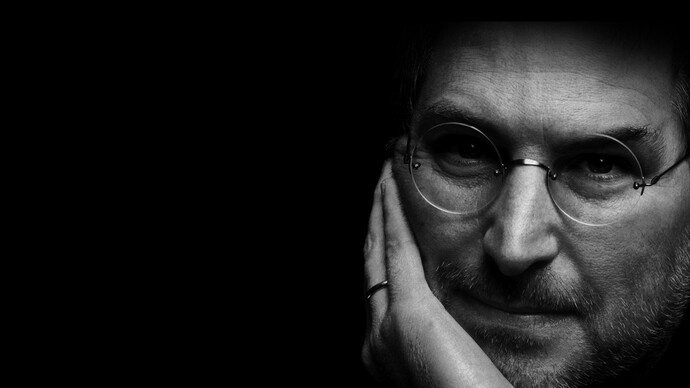
The quotations examined in the book help to better understand Steve Jobs's personality and lead to the conclusion that as a young man he was far more "airy" and inclined towards changing the world, while as he approached the twilight of his life he realised the world is far more resistant to change and turned his attention to the fundamental values of life.
The book emphasises throughout that developing correct diction must be attended to from earliest childhood - neither rushing the child's voice development process nor encouraging the adoption of incorrect pronunciation patterns. With adults it is harder, as we do not need to learn to speak anew, but rather to break speech habits formed over years. And oh, how difficult that is!
If one imagines the mood created by Čaks's poetry, for some reason an autumn evening on the streets of Riga immediately comes to mind. Wet cobblestones, puddles reflecting something yellow - the moon, lamplight or a maple leaf. Yet leafing through books of verse, autumn as such is rarely mentioned in any poem. Be that as it may, let us commemorate Čaks on his 110th birthday by rereading a few poems about autumn that have come to hand.
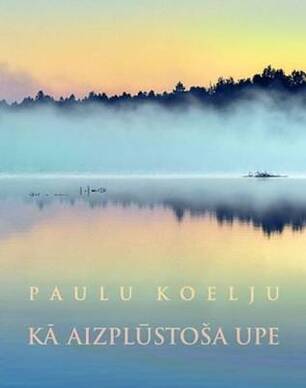
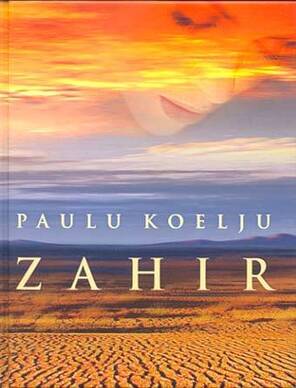
It is a collection of individual stories, each based on some observation, insight or reflection. Reading it, I noticed that the stories included in the book also appear as fragments incorporated into Paulo Coelho's novels, including the recently published "Aleph".
The recently published Latvian edition of Paulo Coelho's book "Aleph" (2011) is the author's message about the relativity of time, for everything is happening right now - there is no past, nor a predetermined future. Essentially the entire central idea is expressed in the book's very title. The Aleph is a point where absolutely everything exists simultaneously in one place.
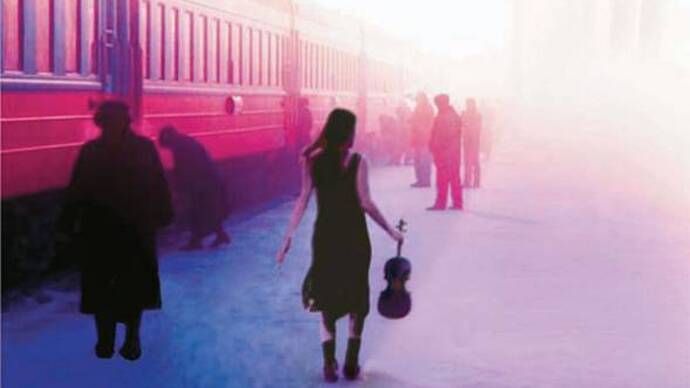
The plot of the book is built around Matilda's retrospective look at a life that has been filled with pain and loneliness. It seems she herself consciously chose this difficult path, for otherwise the life her parents were prepared to provide for her in her youth could have been quite orderly and peaceful. The dominant feeling when reading the book is sadness...
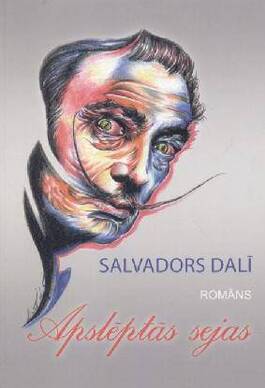
I have just read the only novel by the Catalan artist and Surrealist Salvador Dalí, "Hidden Faces" (published in Latvian, 2011). He "paints" every smallest detail in nature, in the expressions of a human face, in associations and in the waking dreams characteristic of the author, using a fine, high-quality brush (so as not to smudge).
A year ago, when I purchased this book by Radislav Gandapas, it never even occurred to me that this year I would have the good fortune to attend a training session led by him in Moscow. Back then it was the book's subtitle that spoke to me - "Ten chapters on how to gain and provide maximum pleasure and delight when speaking in public"; now I was fascinated by the author's ability to hold an entire audience at the peak of interest for a whole day.
One wants to read books when feeling a little lonely and sad. A conversation arises with the characters the author has created, a conversation with the angel and the demon within oneself. Another insight: we do not truly choose books - they choose us. The right book arrives like a sign, like an answer to your questions, arrives at the right moment when you can devote enough attention to it.