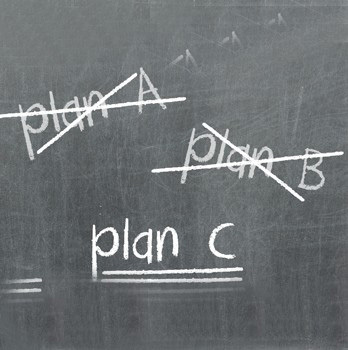
Riga City Council's Non-Plan for Air Pollution Control
Although the Riga City Council's environmental department, judging by its employees' statements, bears no responsibility for air quality and has no obligation to monitor or do anything in this area, the European Commission's threatening finger and MEPRD's persistent urging has nevertheless prompted A. Kļaviņš to reluctantly set about an action programme.
Although the Riga City Council's environmental department, judging by its employees' statements, bears no responsibility for air quality and has no obligation to monitor or do anything in this area, the European Commission's threatening finger (with a fine of 300,000 EUR/day) and the Ministry of Environmental Protection and Regional Development's persistent urging has prompted A. Kļaviņš (incidentally a member of the Green Party) to reluctantly set about an action programme. Kļaviņš, of course, does not consider that the environmental department should be doing this, and has therefore commissioned SIA Vides konsultāciju birojs (Environmental Consulting Bureau) for a symbolic fee (~4,000 lats?).
The most lamentable thing is that there is in reality no plan for how to limit air pollution. Alongside quite utopian ideas - such as introducing a congestion charge for entering central Riga or moving everyone to electric vehicles - there is a compilation of what individual entities, the so-called companies, could (would want to) do for the good of the matter. Which, of course, does not impose an obligation on them to act in this way.
However, the main culprit has been identified - road transport. The idea of informing the public about the actual state of the environment struck the environmental specialists present, for some reason, as laughable and unserious, but an interesting fact "slipped out": B.L.B Baltic Terminal, without much fuss, had apparently quietly dismantled the air monitoring station on its territory, thereby freeing itself from the obligation to develop and coordinate a pollution (and henceforth also odour) reduction plan. This fact was received with a certain relief by the Riga City Council environmental department's chief specialist D. Danilāne, who added: "No data, no problems." Thereby hinting that the problem is in reality not the pollution, but rather that those wretched air monitoring stations are showing something "of the kind" that the European Commission doesn't like.
From these statements, the guidelines of the action programme crystallised: on Valdemāra Street, the road section where the air monitoring station is located could be wet-swept more frequently; on Tvaika Street, one should try to persuade the oil terminals to conduct their business when the wind is not blowing in the direction of the monitoring station. In principle, this also applies only to T2 Terminal (the former Man-Tess), since the others, being located further away, cannot have either the odour or the pollution "pinned" on them. Especially since the most intensive loading operations (and stench) begin immediately after the State Environmental Service's working hours end and conclude shortly before they begin.
But returning to the action plan. In broad strokes, everything that came to mind has been thrown in, with an approximate estimate of what benefit a particular activity could bring. No one intends to monitor the plan's implementation, unless after 2015 there will be a reason for everyone to gather together again and once more throw up their hands and murmur: "somehow it didn't work out". It goes without saying that the planned activities have no priorities. A. Kļaviņš's approach is simple - whoever gets the money will do it.
Then, to the improvised podium came Jānis Kleperis (yet another environmental specialist of the environmental department) and in a brief but comprehensive presentation shared some statistics. In 2009, air pollution decreased (in the colourful presentation bar falling only a millimetre short of the limit value), but not because of any reduction in driving due to the crisis, but rather because of the Southern Bridge! Also in 2012, everything is "fine and dandy" - well, there were some benzene limit exceedances, but nothing particularly significant. The Ministry of Environmental Protection and Regional Development representative D. Ozola pointed out that looking at current data for this year, 2013 limit exceedances will occur, to which A. Kļaviņš in his customary manner brushed off: "never mind, never mind", the year isn't over yet.
I don't know how conversations with the European Commission on environmental matters proceed, but it does rather seem that the Commission's promised fine for Riga will come after all.
Sources:
Updated Riga City Air Quality Improvement Action Programme 2014–2015 - http://mvd.riga.lv/uploads/videgaiss/rigas_gaisa_piesarnojuma_ricibu_aktualizacija.pdf
National Report on Environmental Conditions - 2008–2011 - http://www2.meteo.lv/varam/gaisa_pies/gaispies_32.php
comments