Climbing the Moon and Walking the Treetops in Lithuania
The idea of driving to Lithuania and walking through a forest 20–30 metres above ground had been on our minds since last year, when the Anykščiai Treetop Walking Path was discovered. But this path was only one of eight interesting natural and man-made attractions on this trip.
The idea of driving to Lithuania and walking through a forest 20–30 metres above ground had been on our minds since last year, when the Anykščiai Treetop Walking Path was discovered. Reading the evocative descriptions in the media, one could not help but recall scenes from the film The Twilight, where the main character takes his beloved for a walk through the treetops, from which a fantastic view of the Canadian forests unfolds.
So yesterday we found the time for the trip in a small group of 12 people, organised by Zaiga from Uzzini, iepazīsti. But the Anykščiai Treetop Walking Path was only one of eight interesting natural and man-made attractions on this trip.
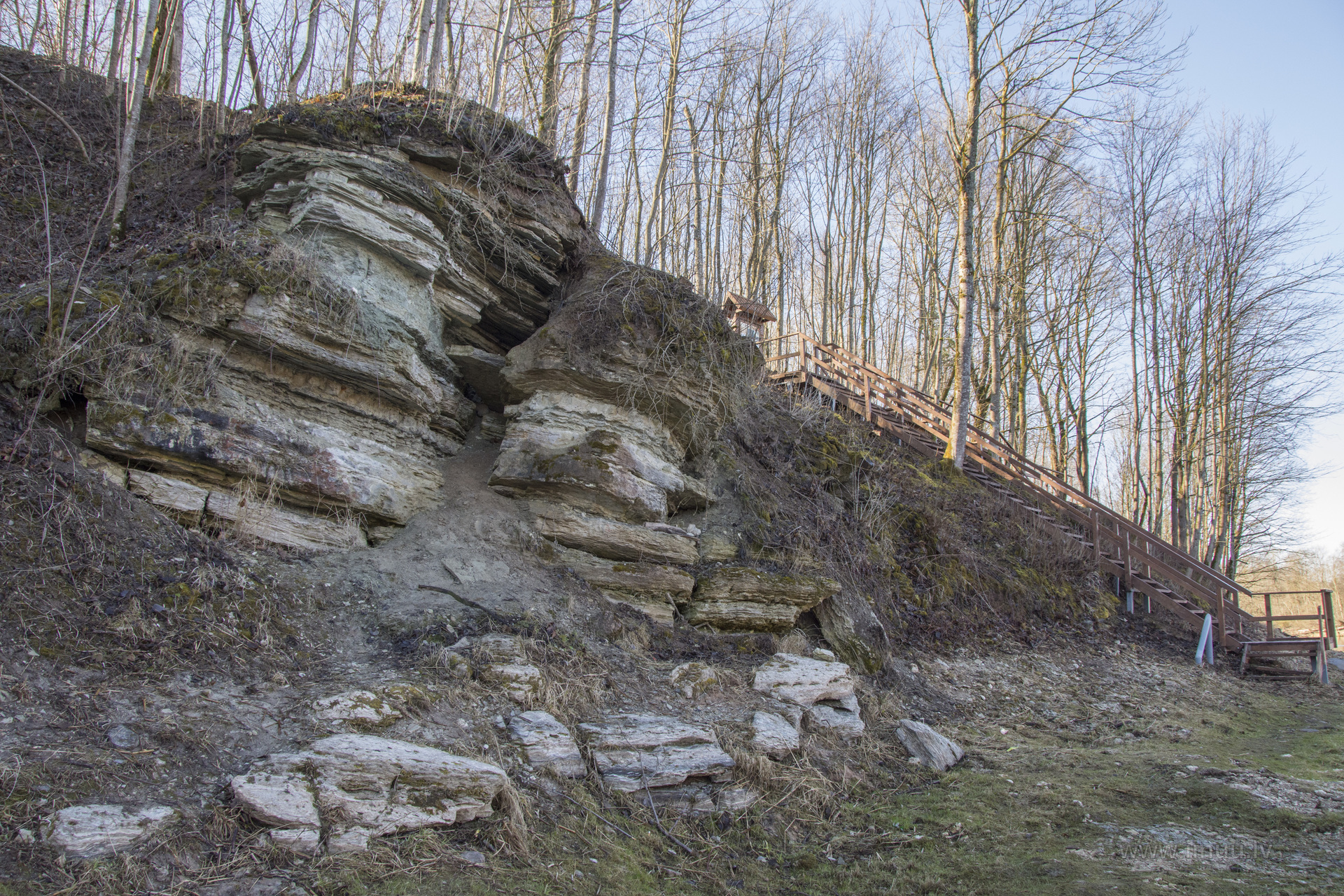
Velniapilio Cave and the Muoriškiai Outcrop
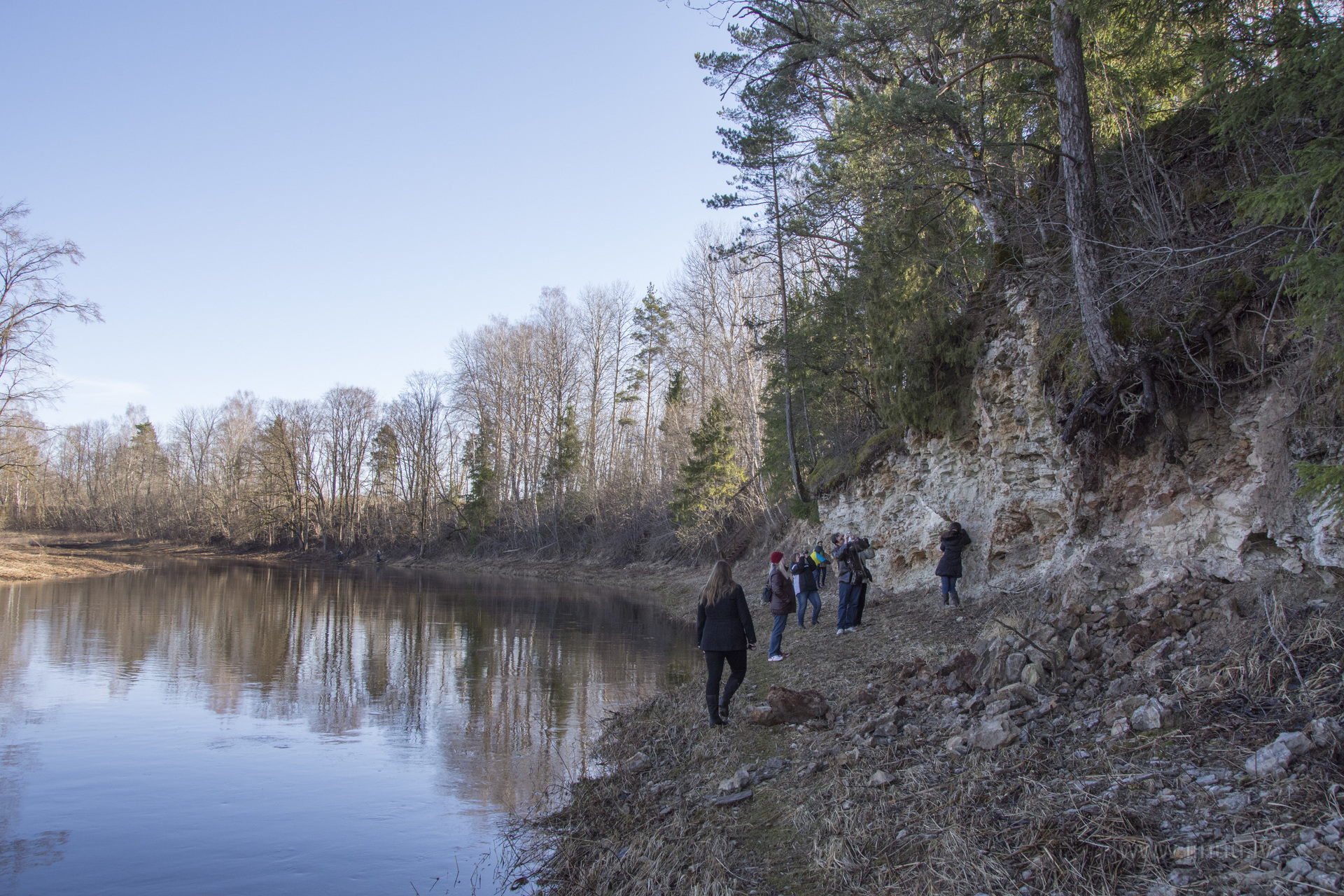
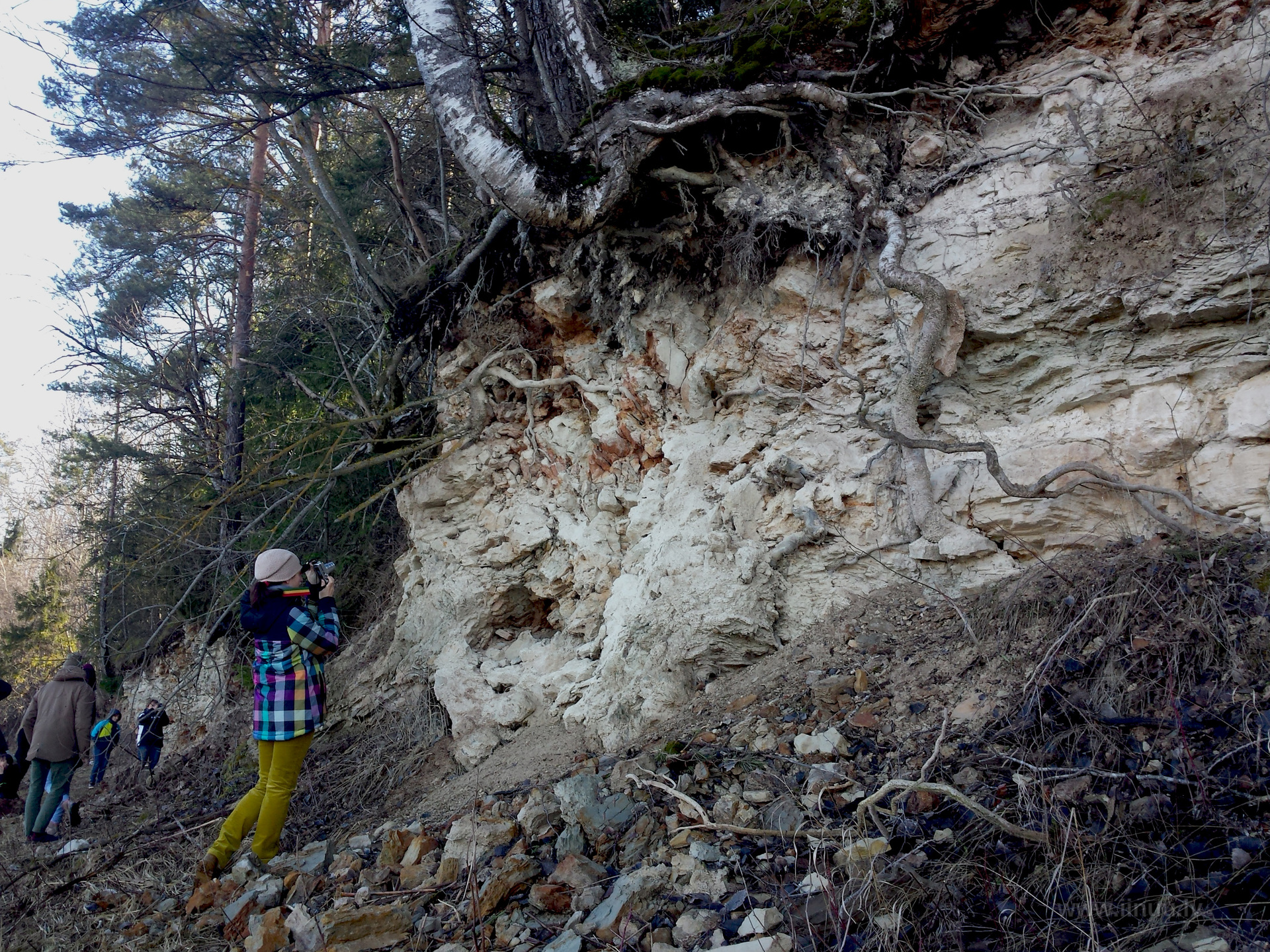
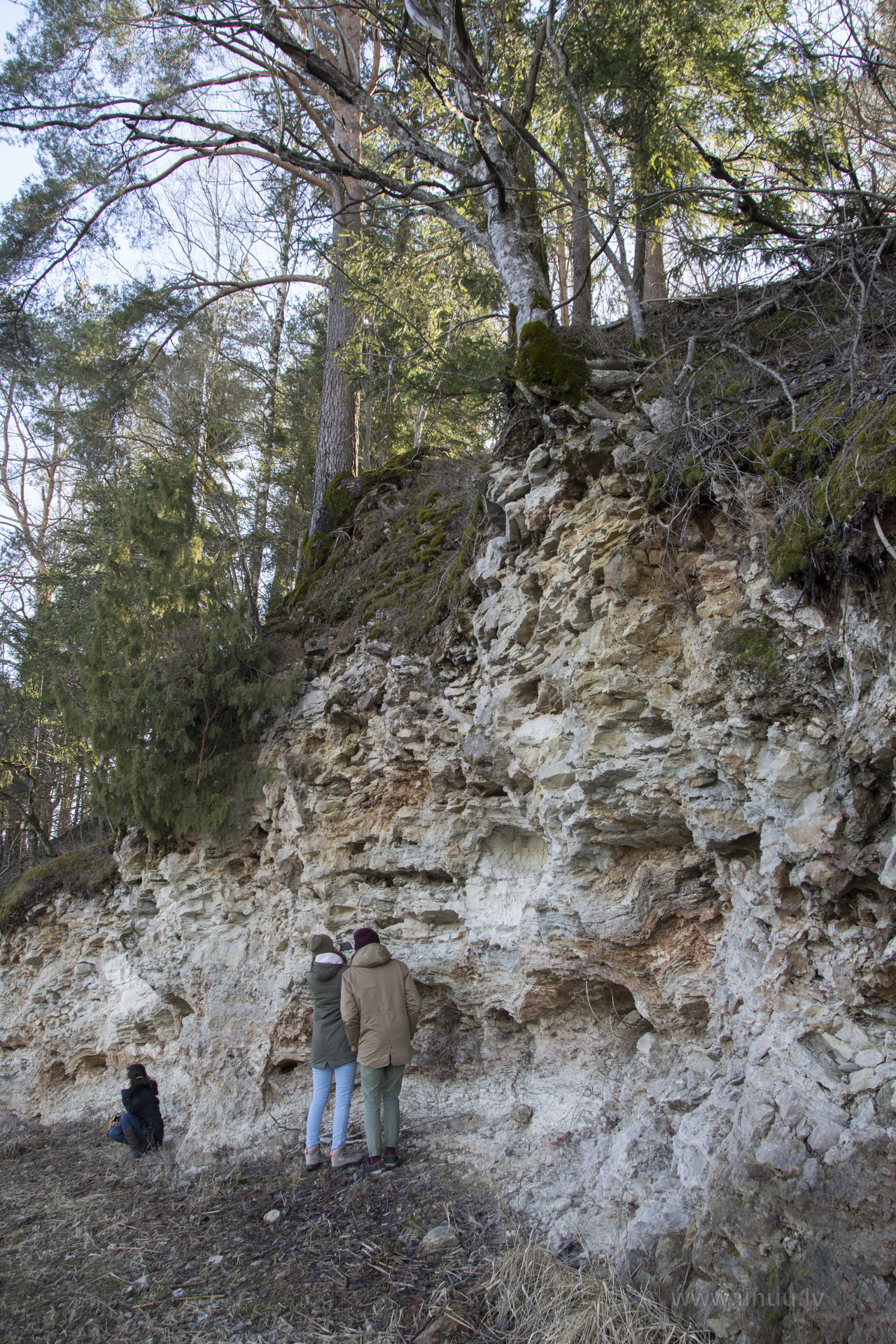
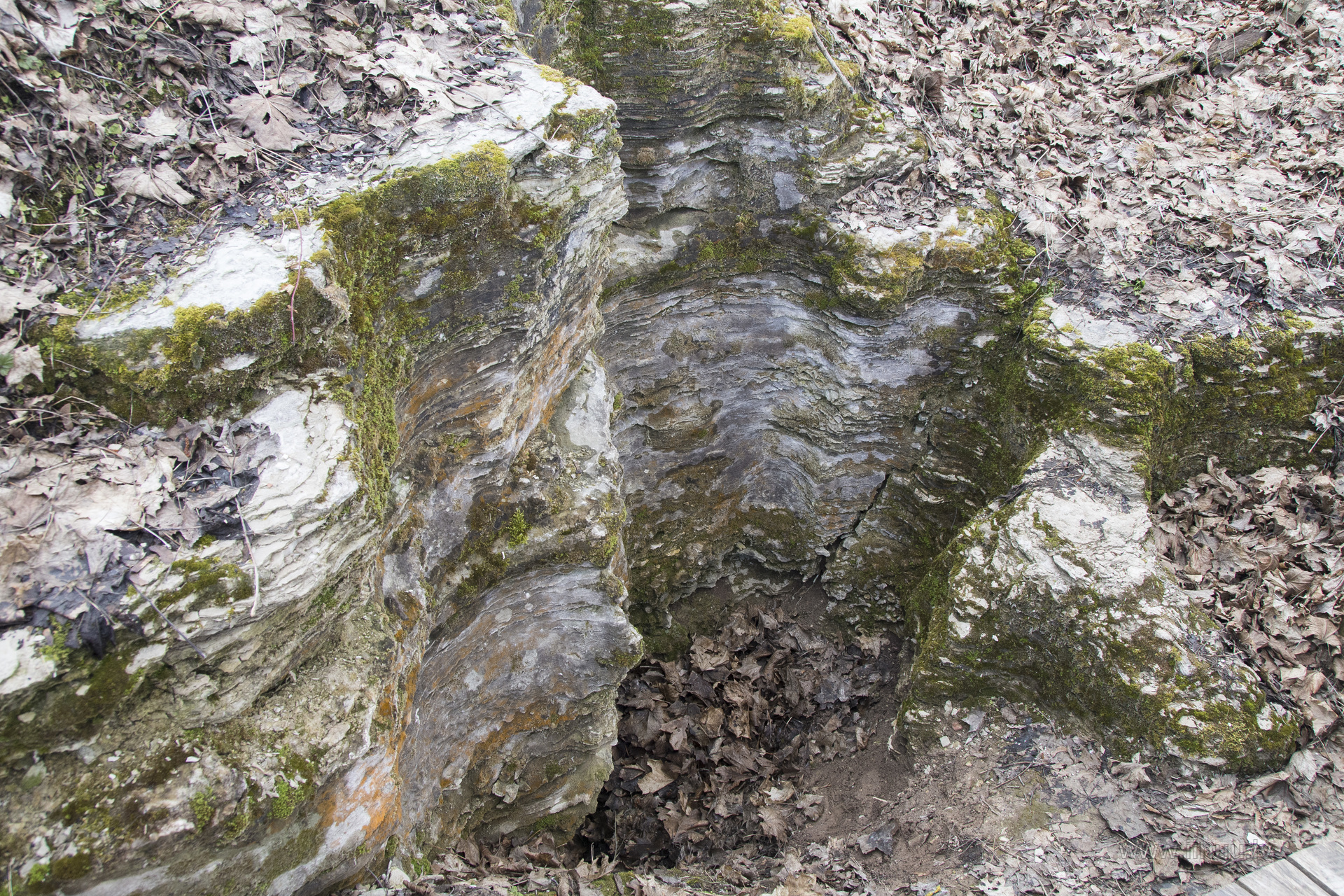
After about an hour's drive from Rīga, immediately after crossing the Latvian–Lithuanian border - or more precisely the Mēmele River border - at Skaistkalne, we visited the first two natural sites: the Velniapilio Cave with its dolomite/gypsum outcrop, and the Muoriškiai outcrop.
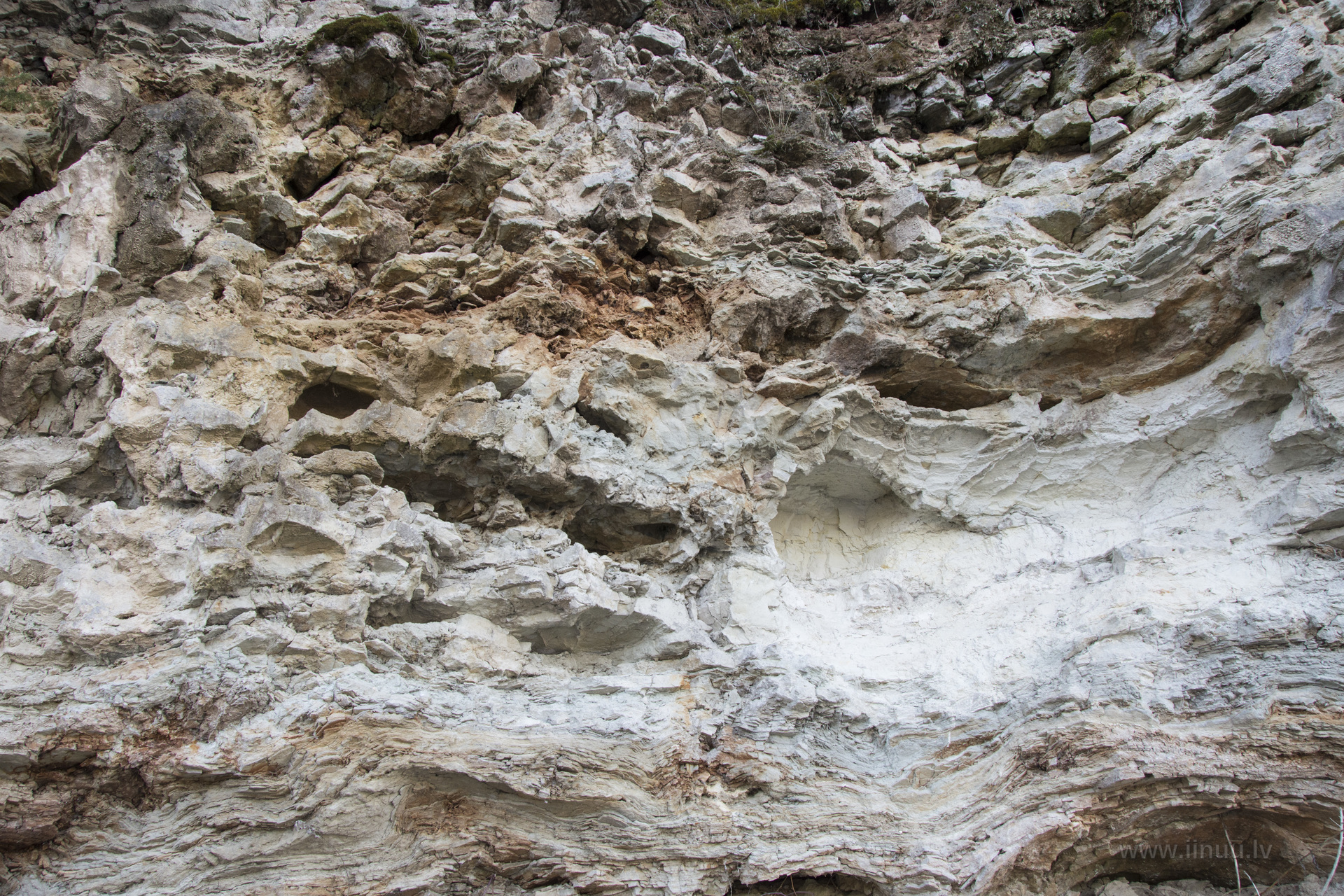
We walked along the very banks of the Mēmele River, which was quite lively this spring season. On one side a dolomite wall with hollows, in tones from beige to vivid rust, with tree root systems laid bare to the eye, slippery soil and wooden steps in the early morning; on the other side a view over the Latvian bank.
Anykščiai Treetop Walking Path
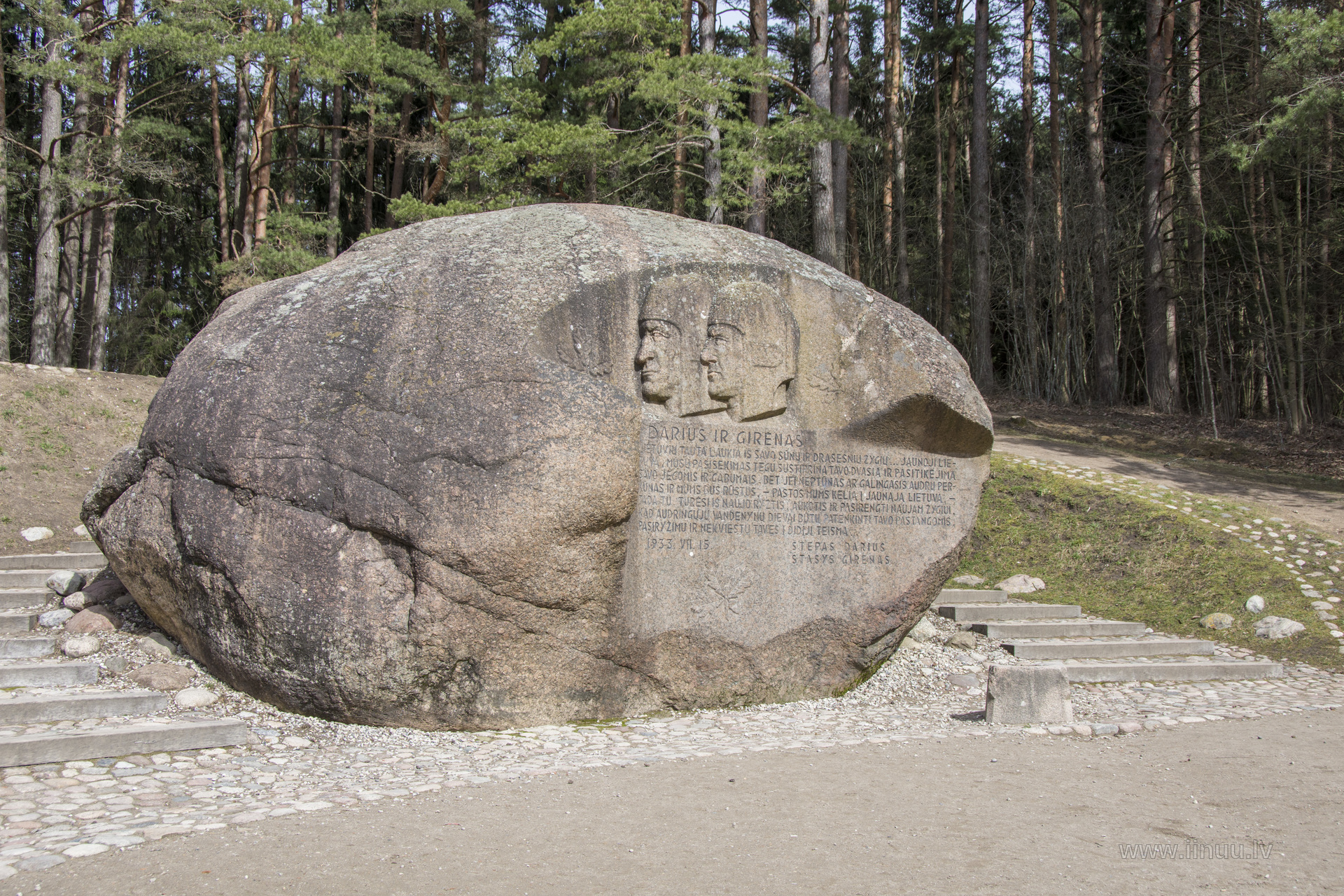
A longer (~2 h) drive followed to Anykščiai, where we passed Lithuania's second largest boulder, Puntukas, and of course walked the treetop path. Below is an information centre with materials, souvenirs, and the opportunity to buy coffee, a pastry, or a mini šakotis for 3 EUR.
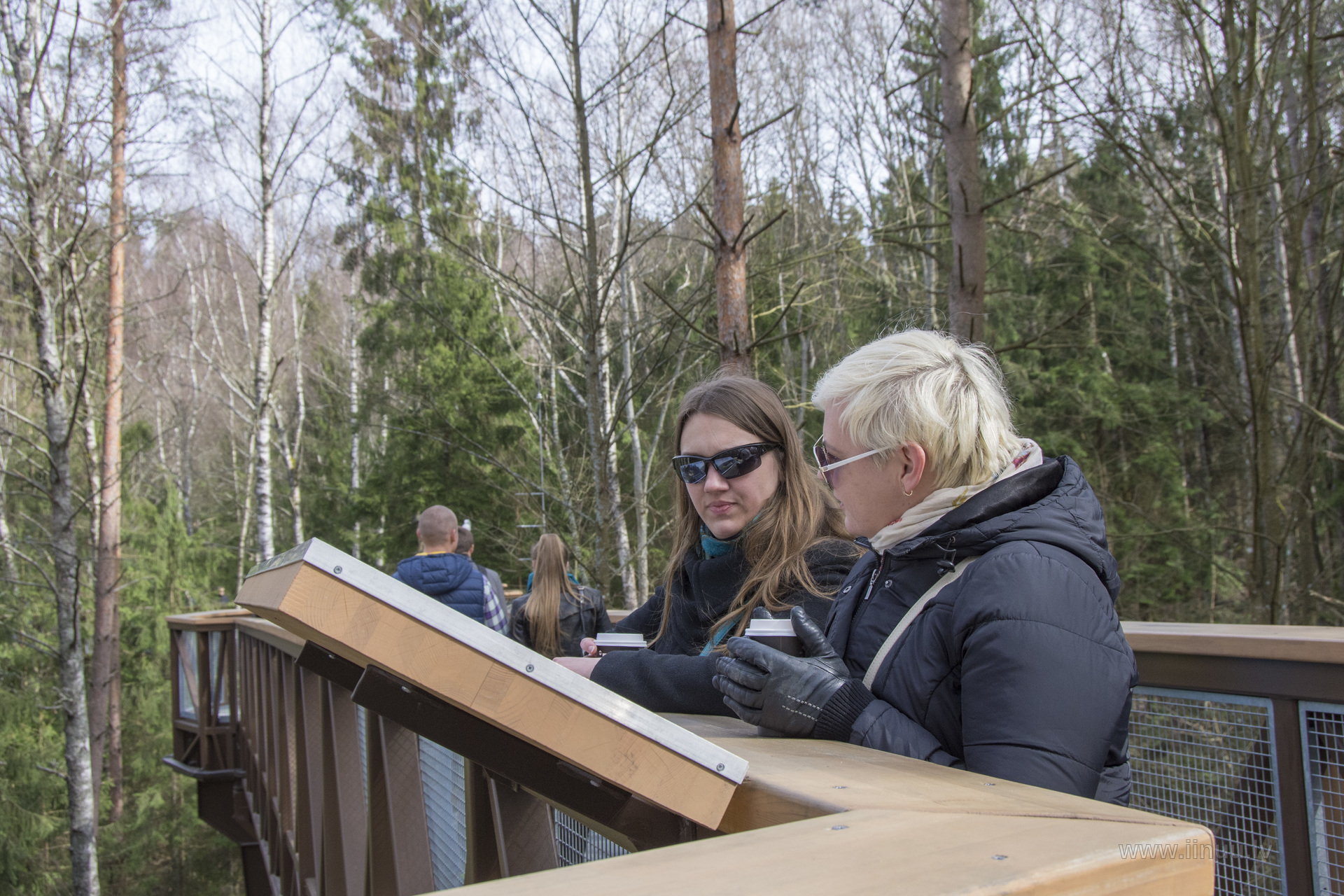
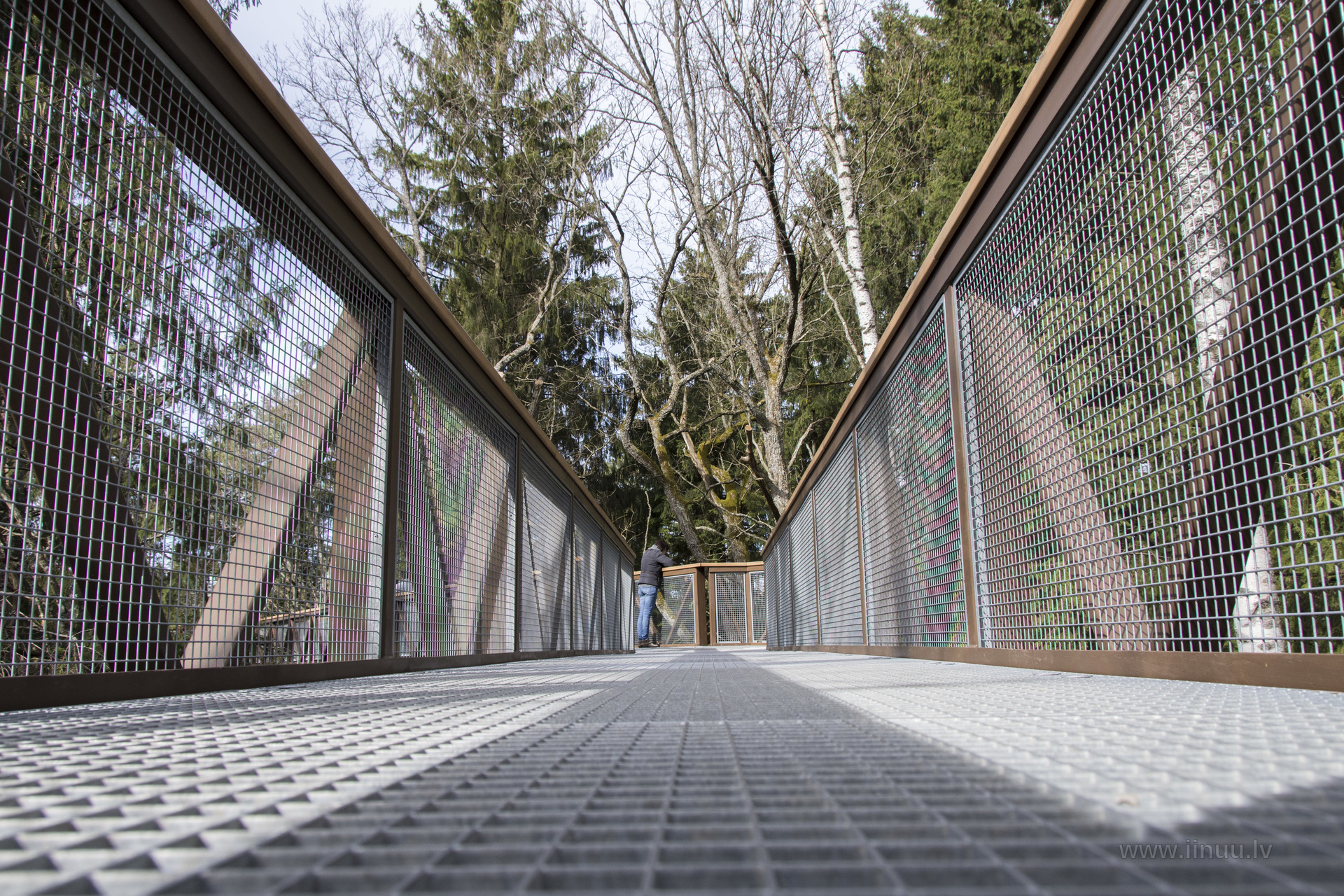
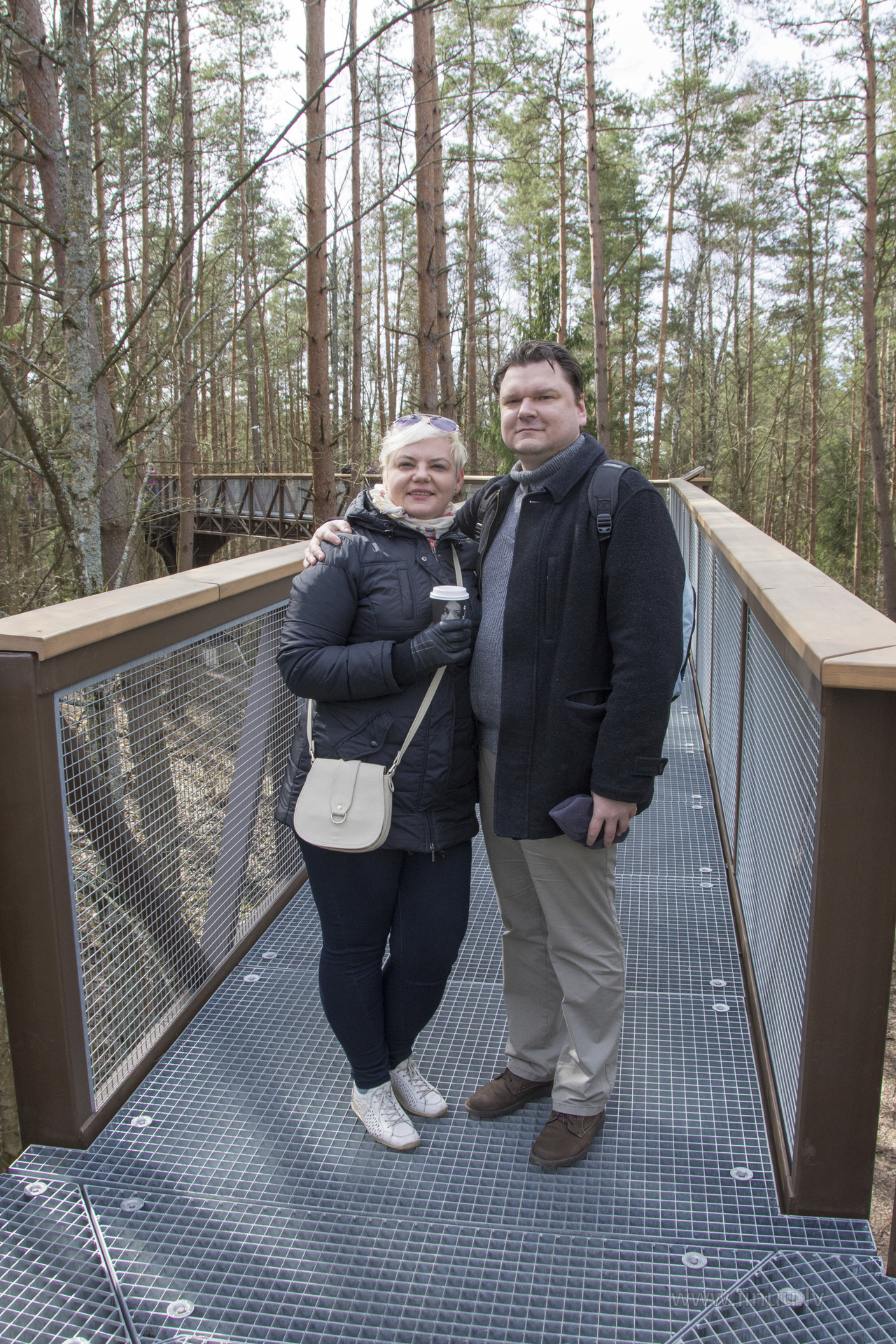
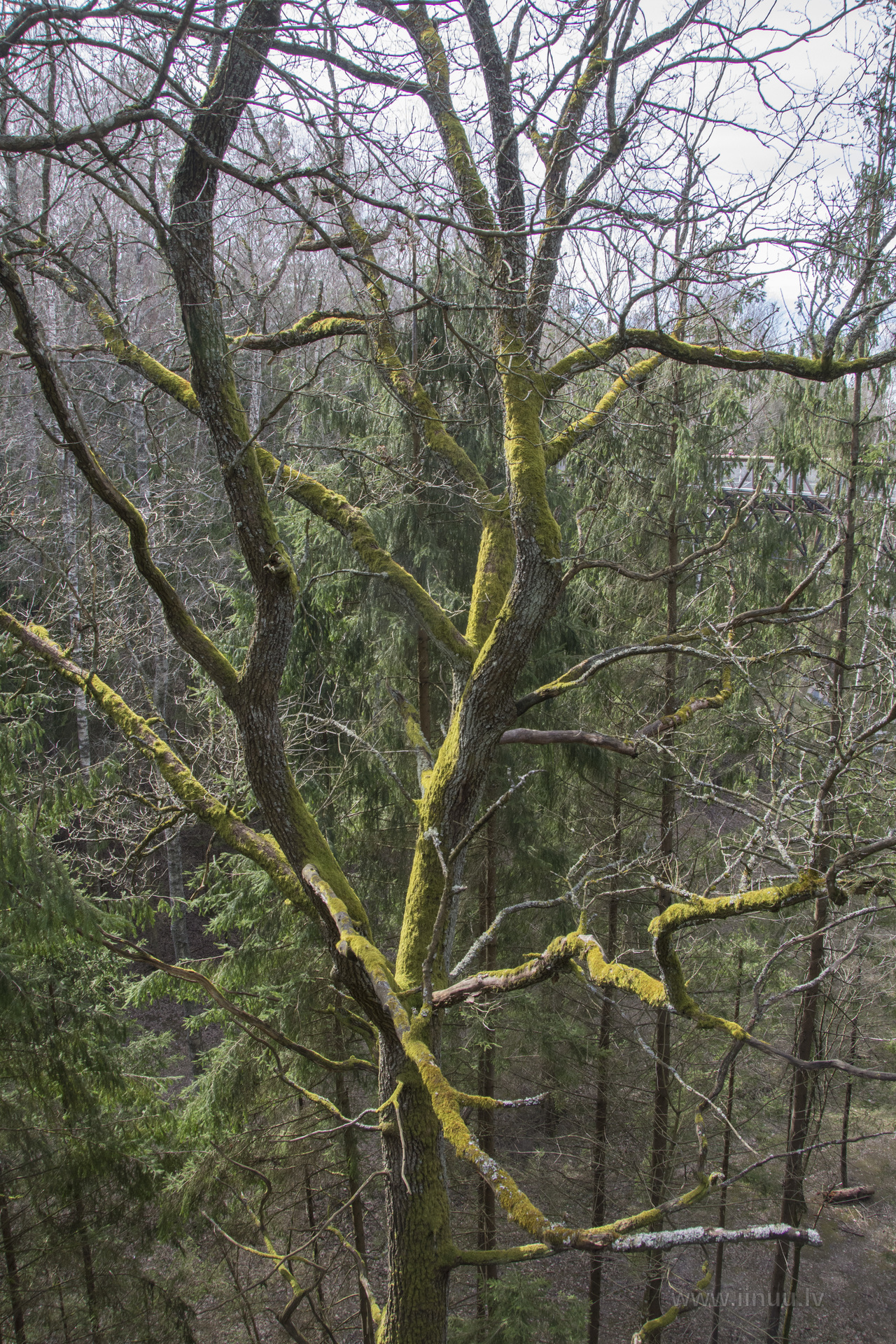
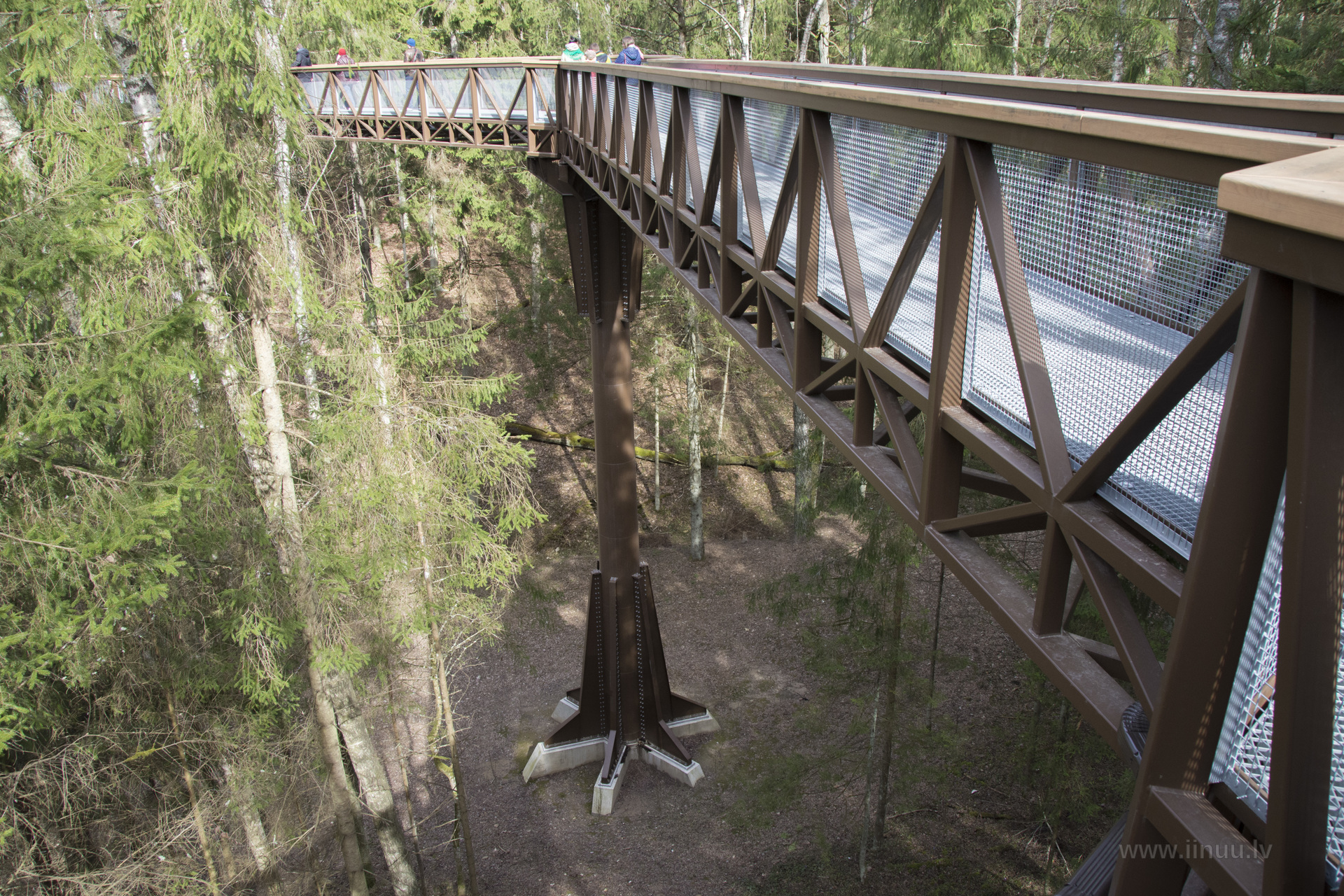
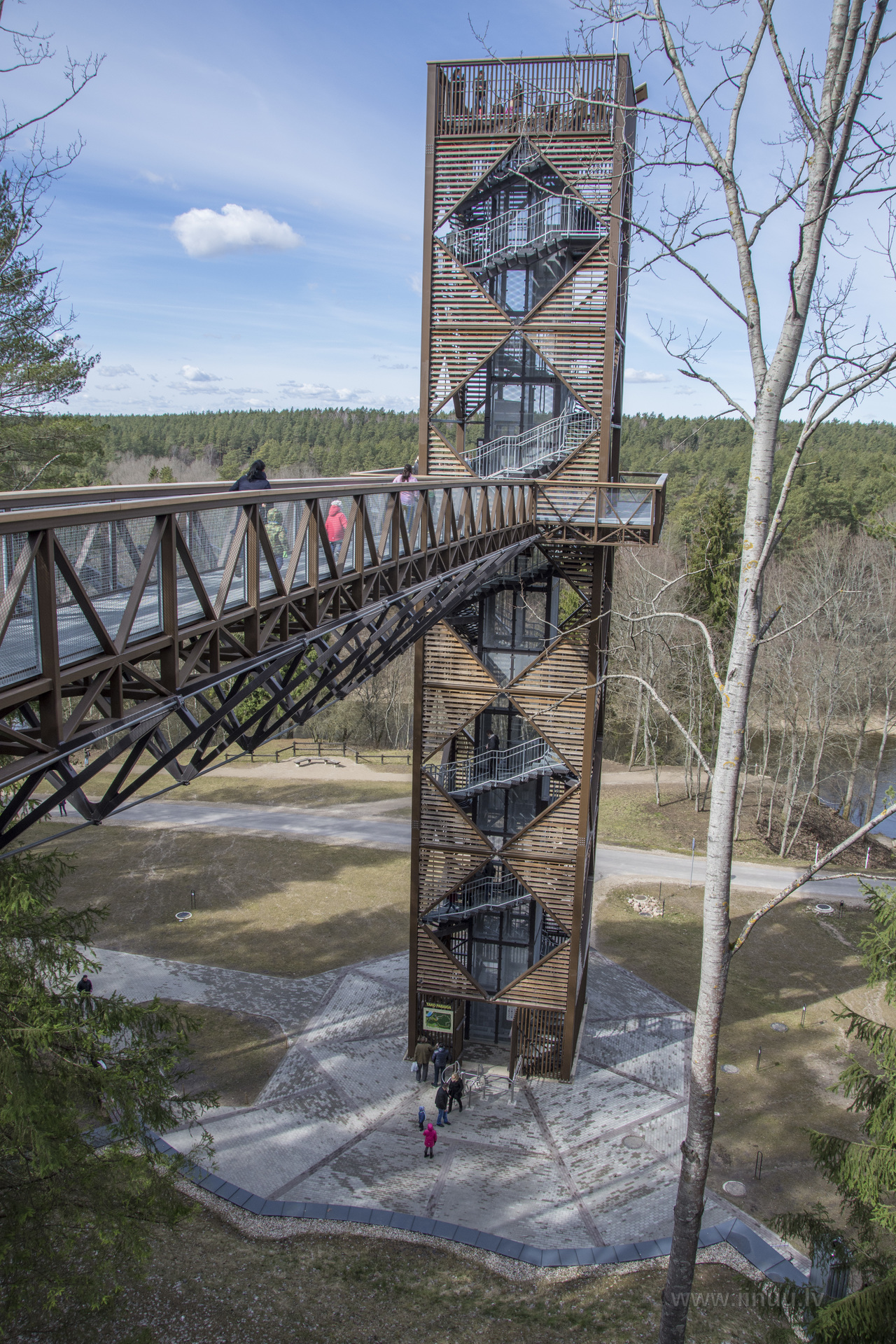
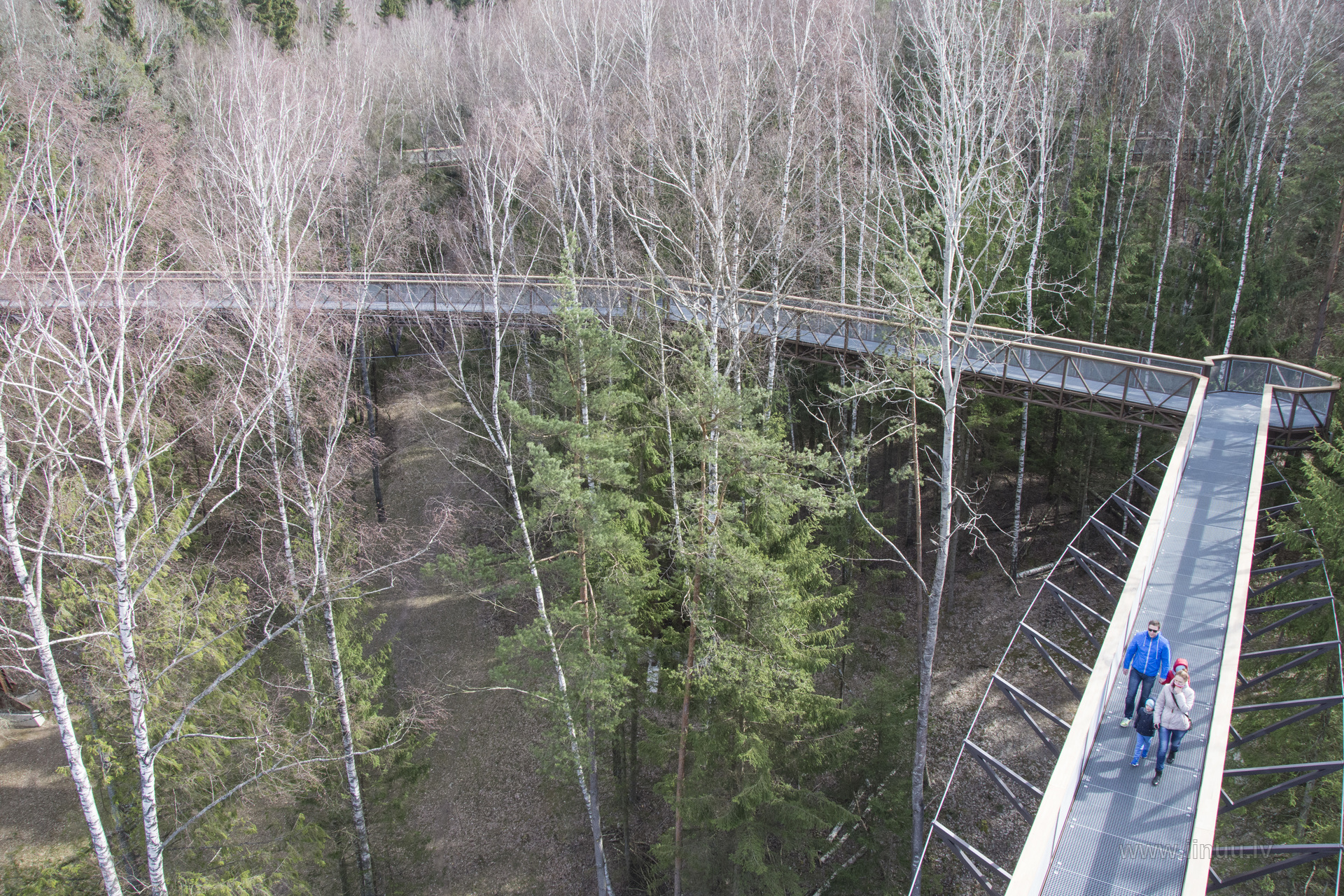
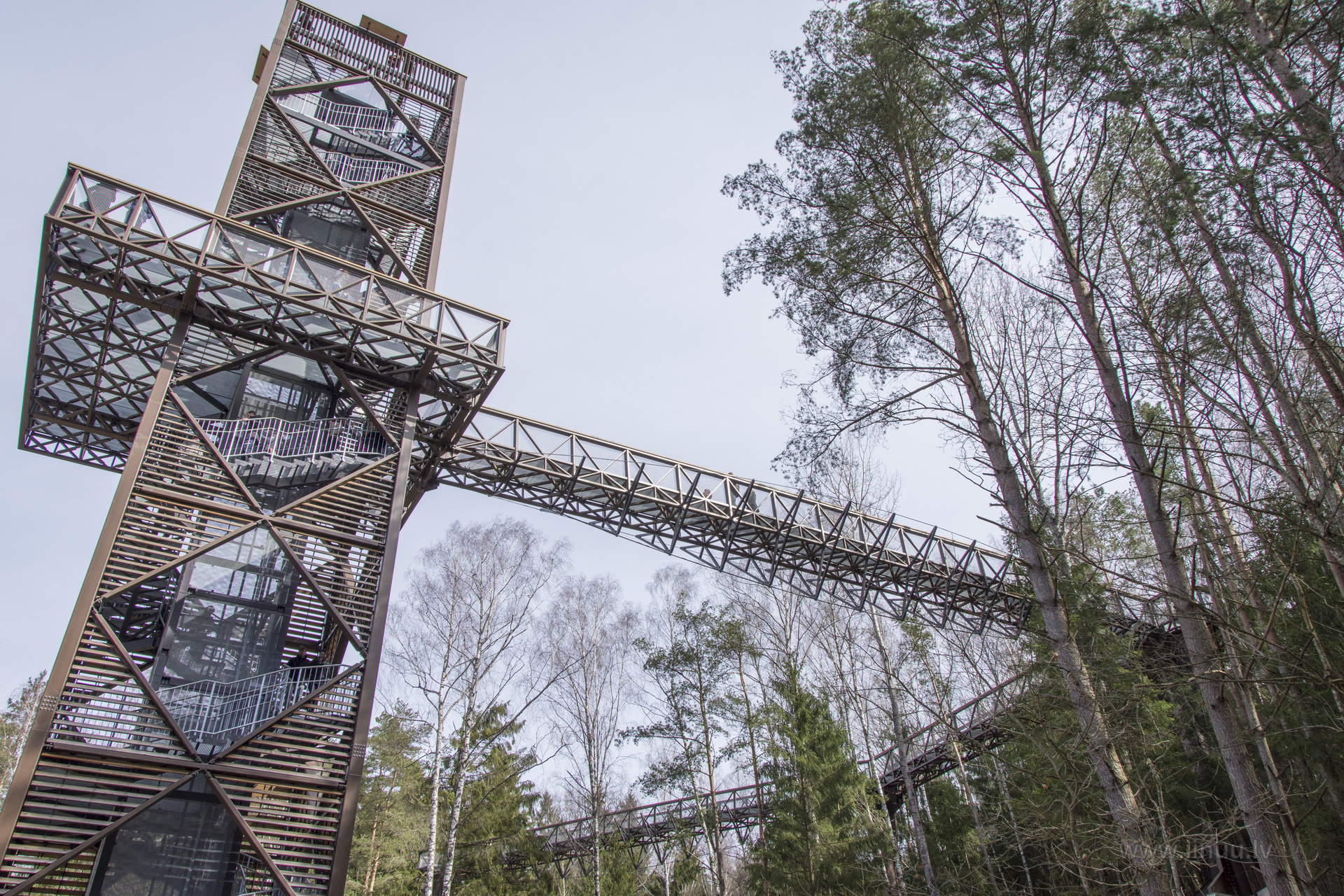
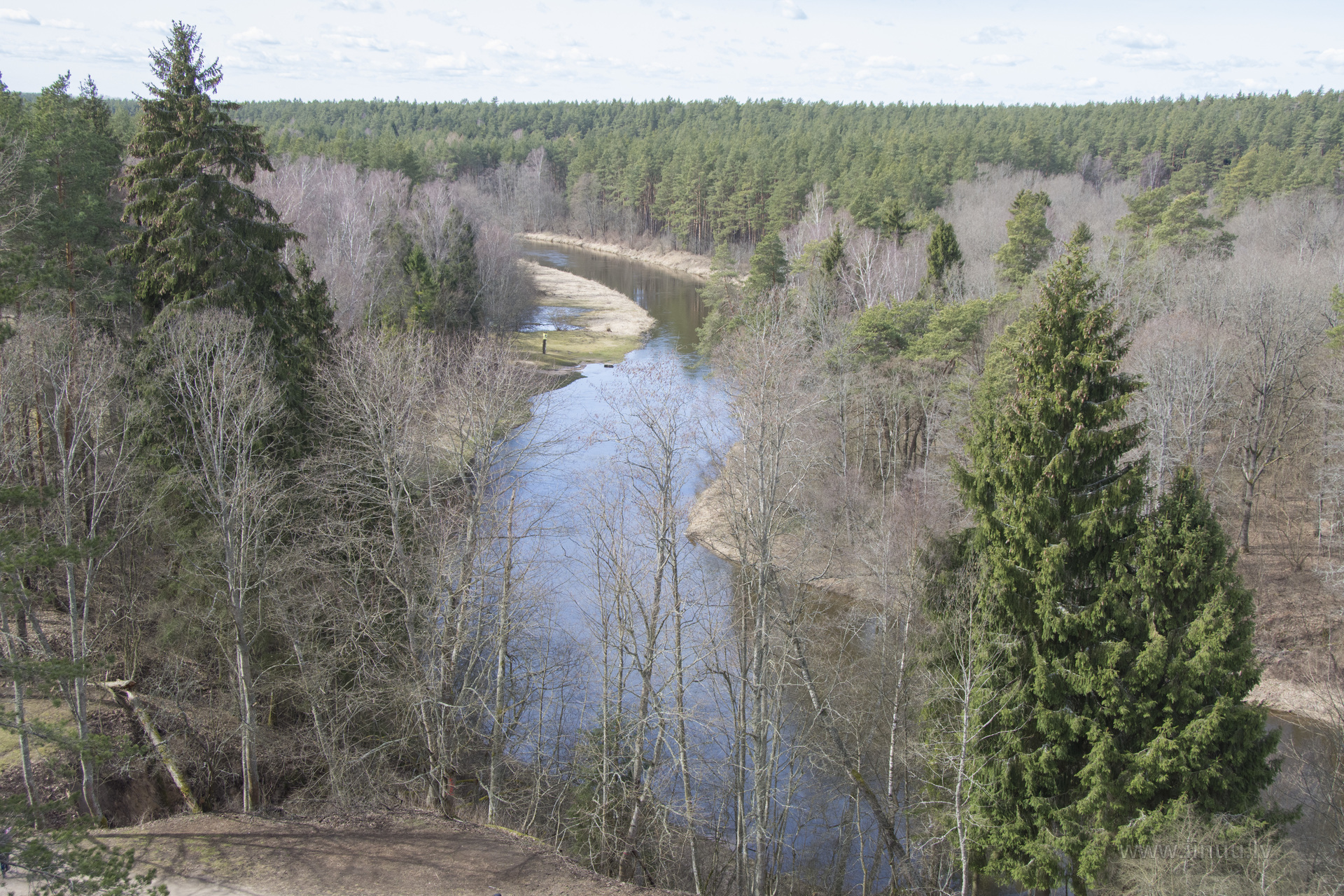
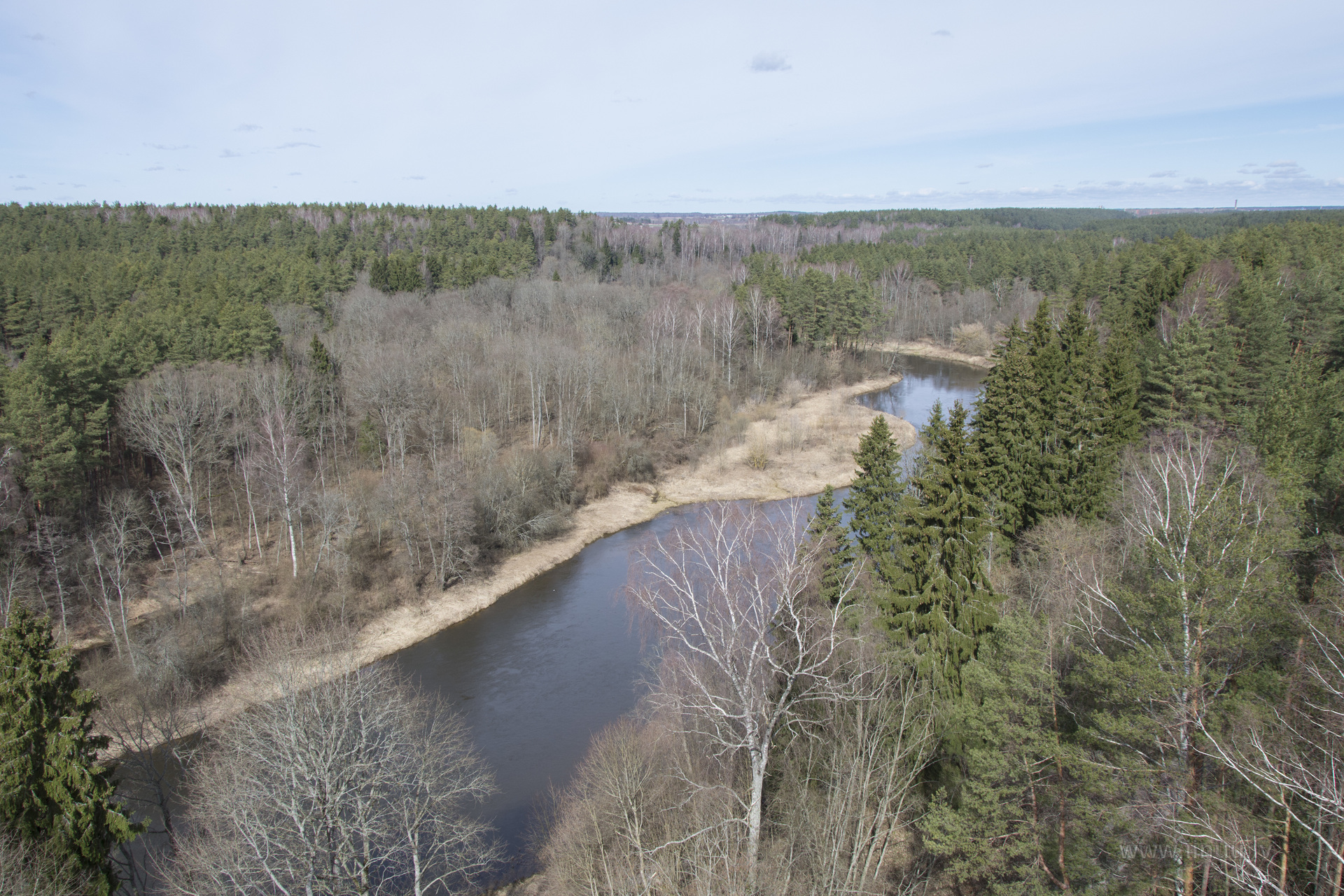
The sky bridge is only ~300 m long but sits 21 m above the ground. It rests on substantial iron posts and the floor and steps are made of fine metal grating. The bridge winds along past several tree trunks (not quite through the very tops). At the end of the path, on the river side, rises a 35 m observation tower from which one can study the near and distant surroundings in more detail.
A fear of heights did not strike for even a moment here. We strolled in a relaxed manner, sipping coffee and discussing the town of Anykščiai itself and its surroundings. Apparently there is also an Angel Museum here, ancient winemaking traditions, a Narrow-Gauge Railway Museum, St. Matthew's Church with a viewing platform, a sledging run, and much more - all of which prompted the thought that one ought to come back here.
Šeiminiškėliai Hill Fort
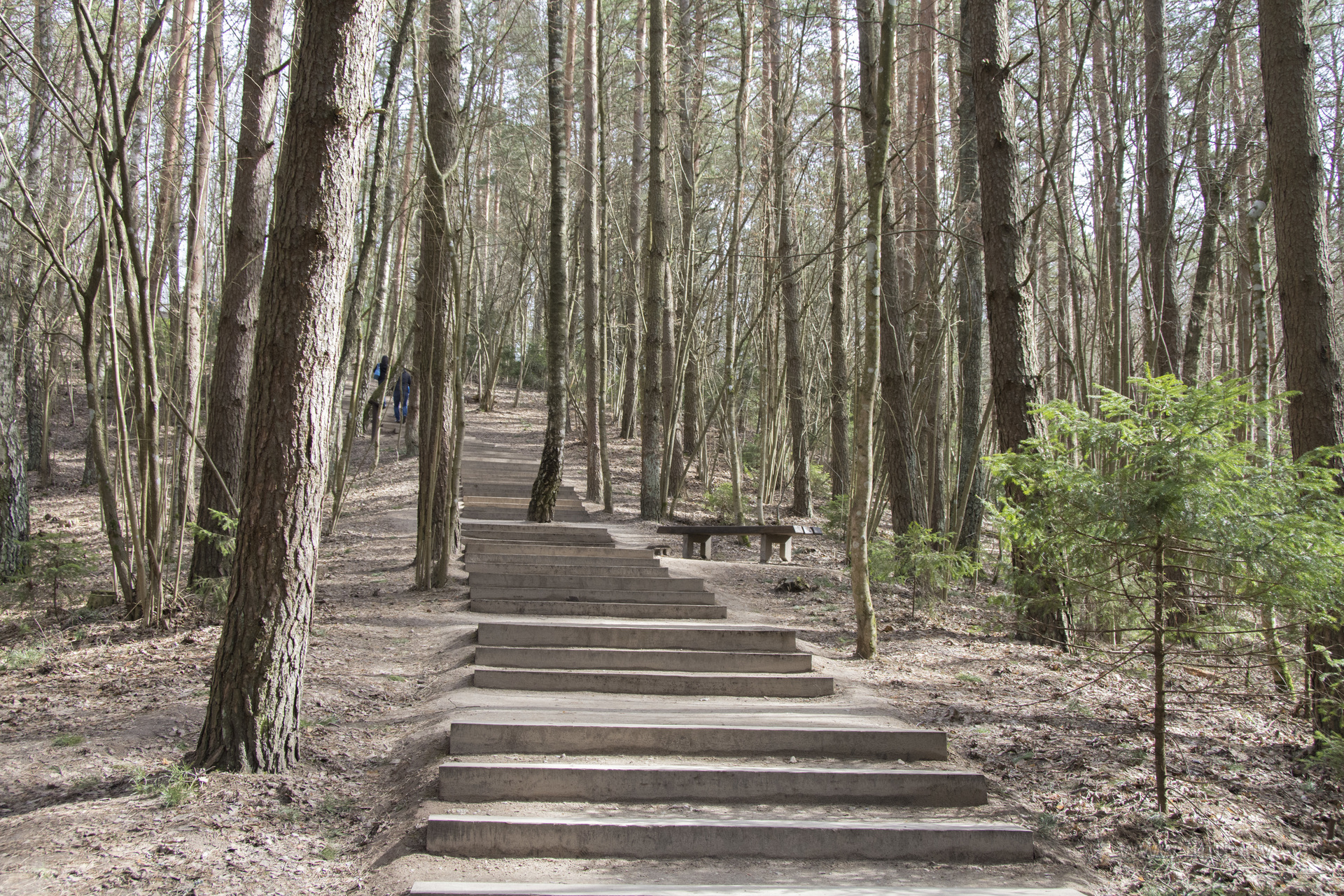
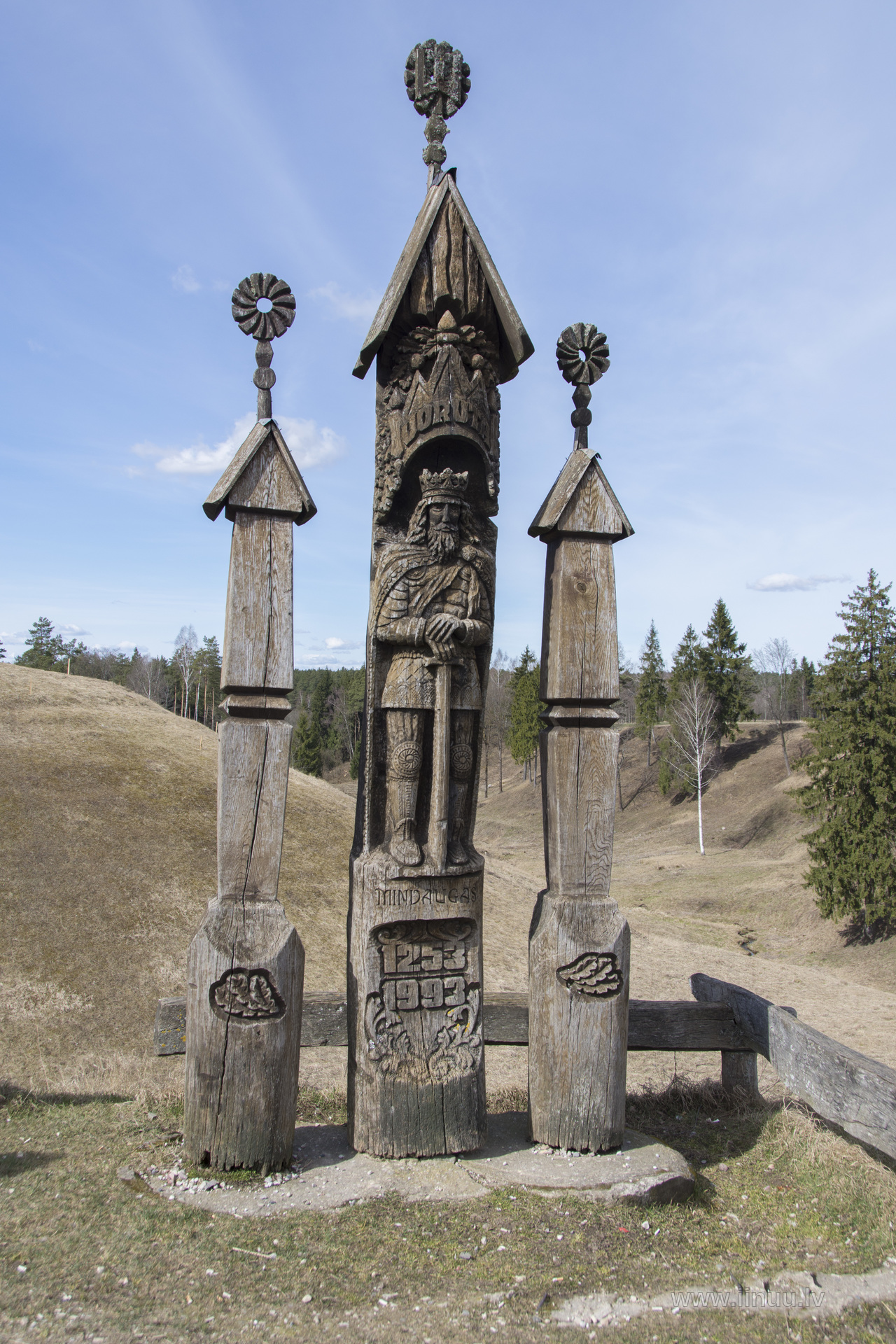
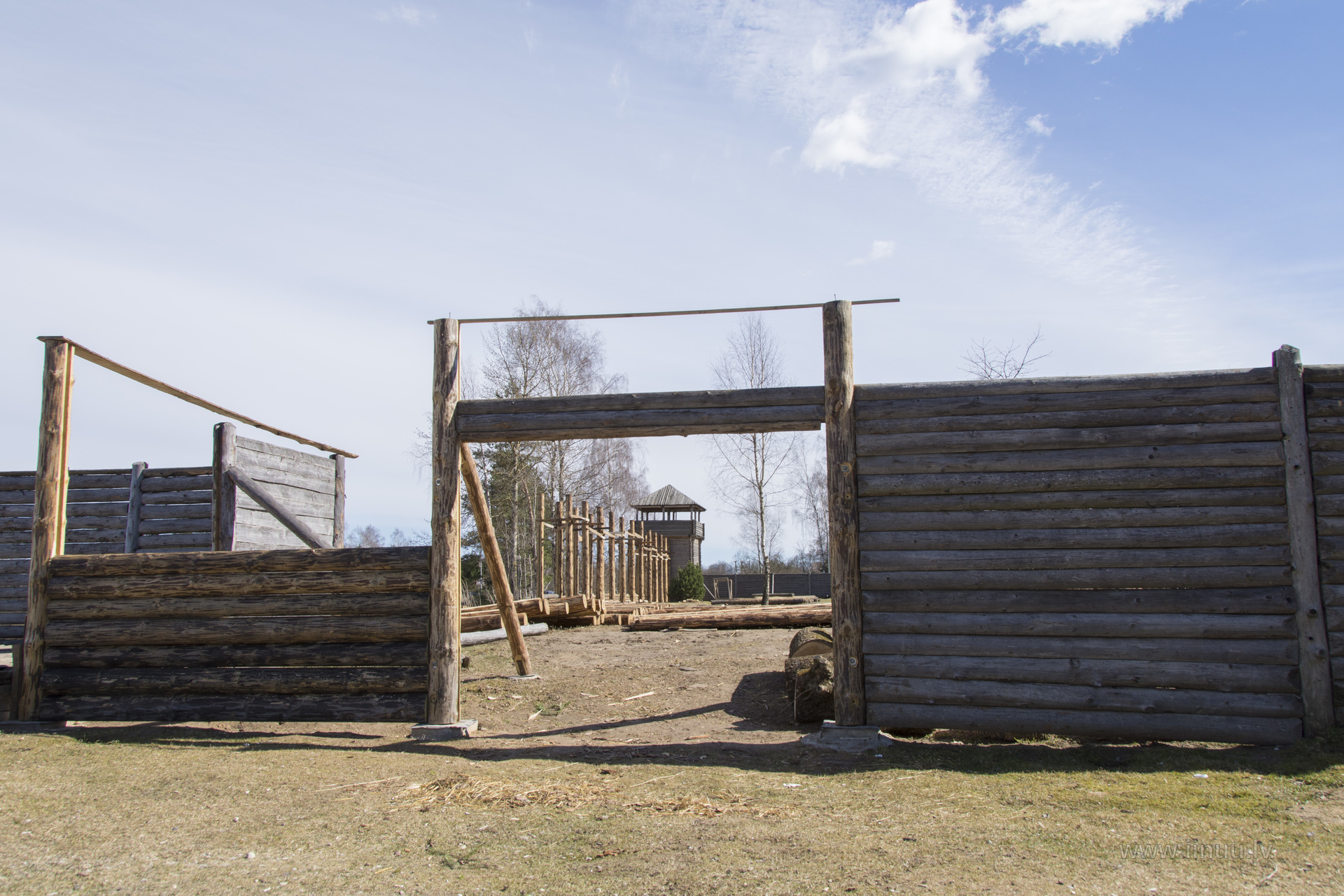
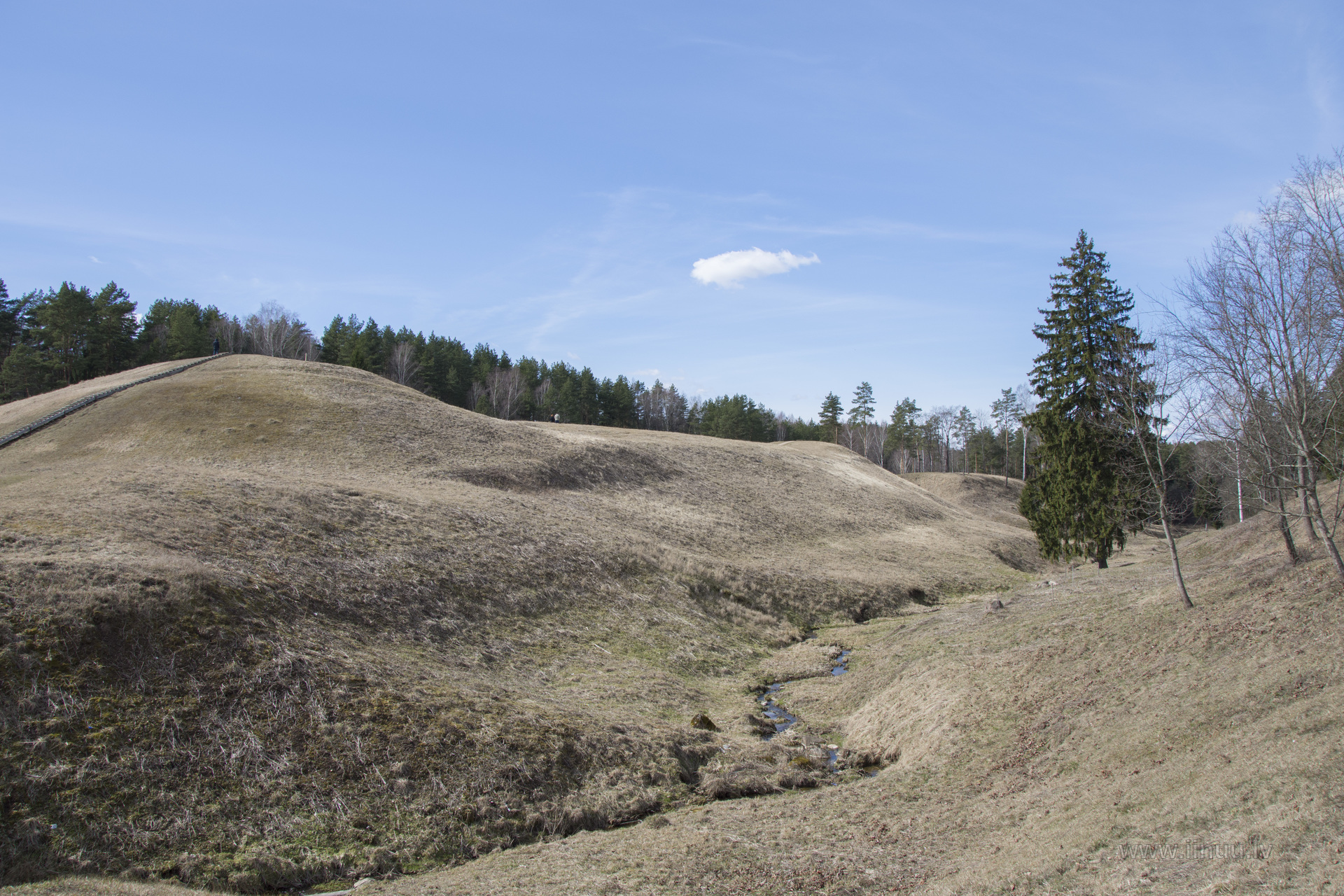
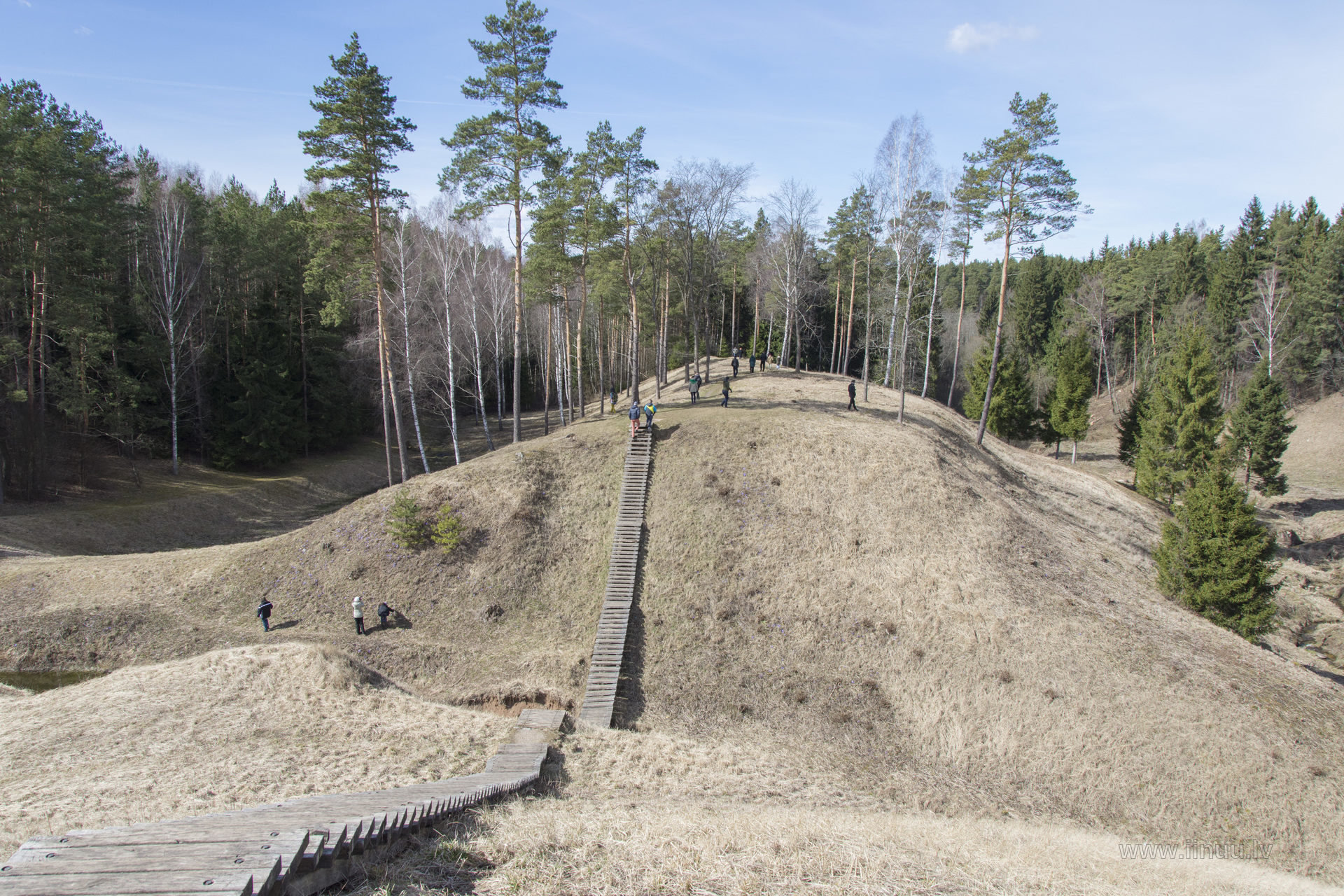
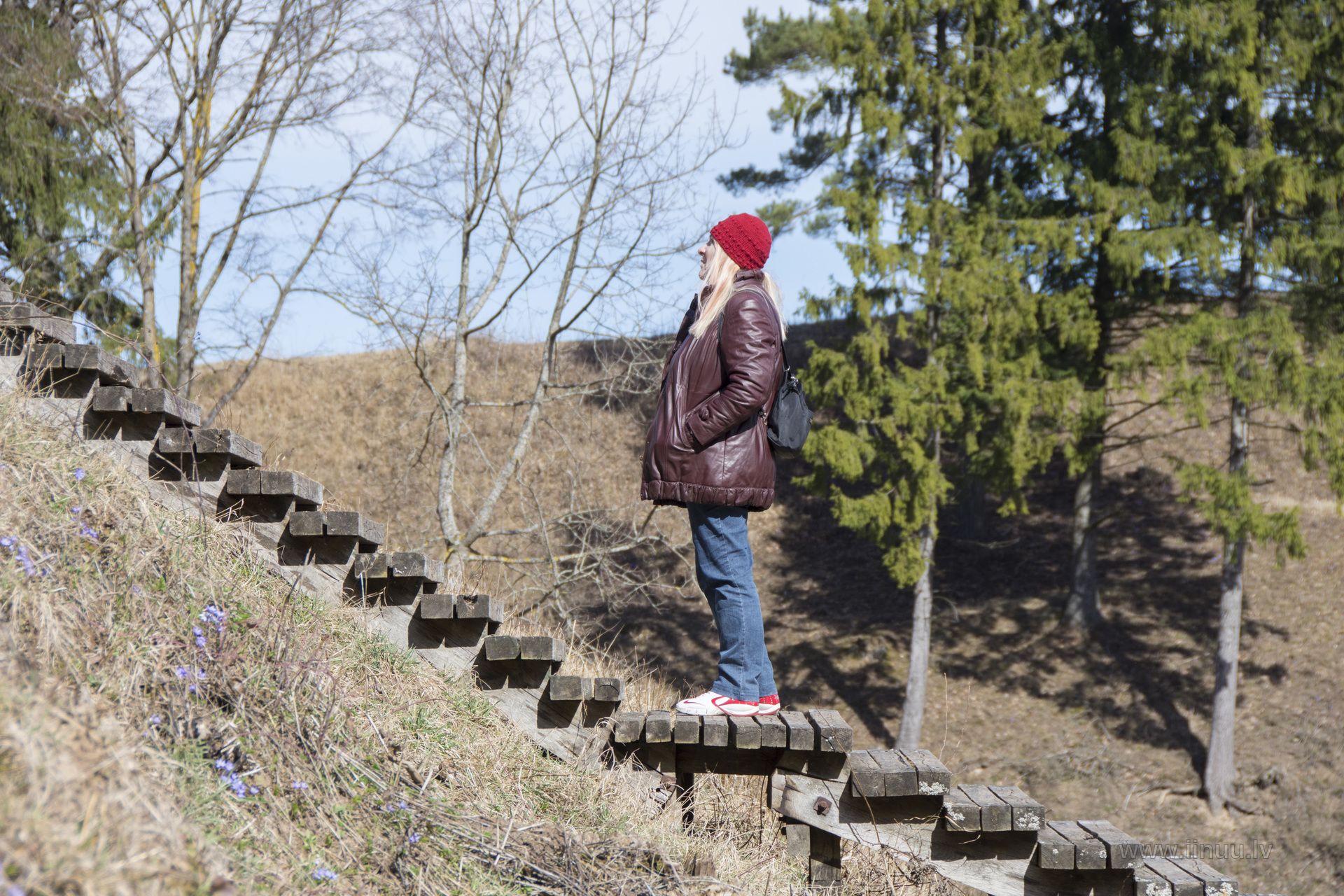
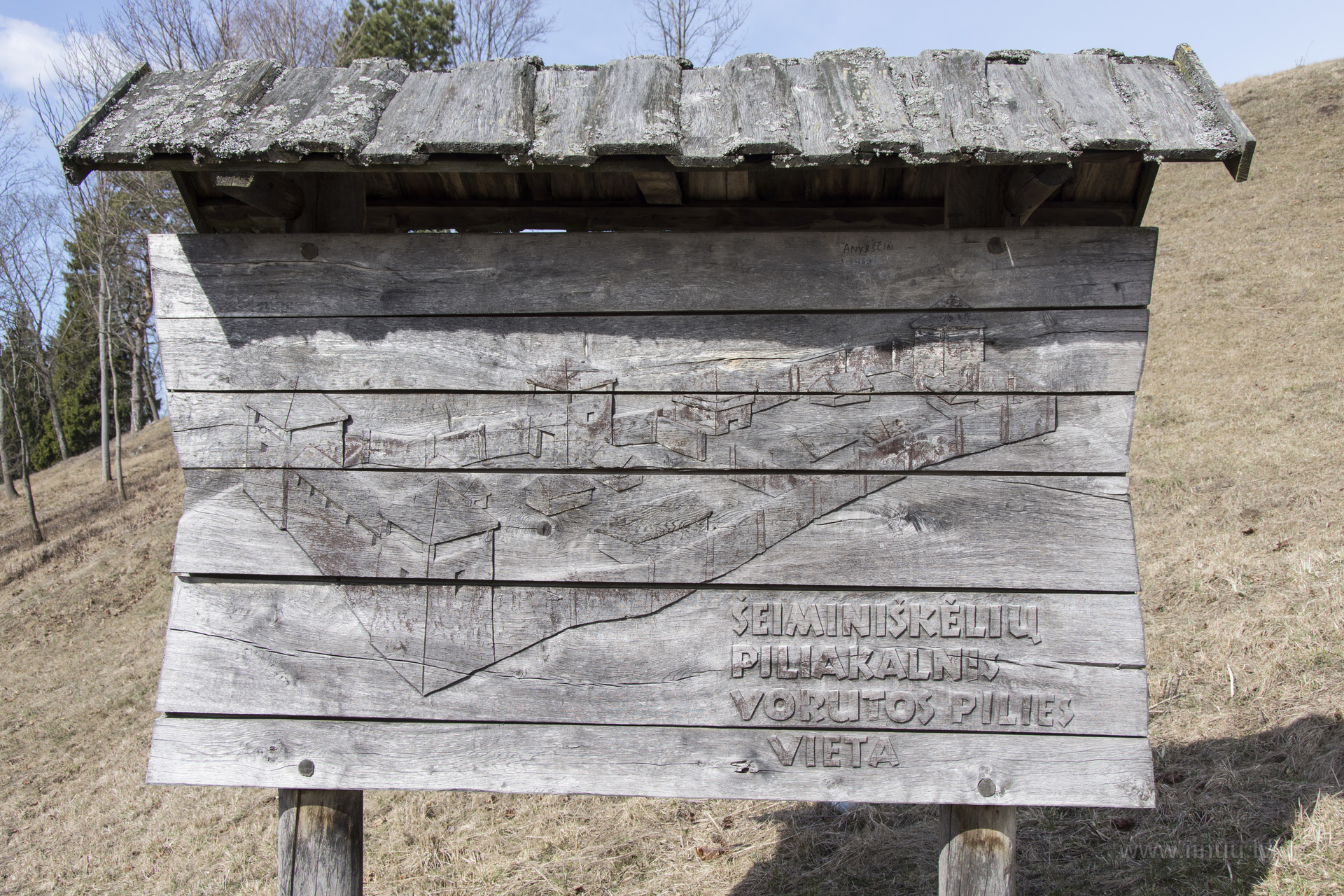
Not far from Anykščiai is the Šeiminiškėliai Hill Fort, where in ancient times stood King Mindaugas's palace, which is now being rebuilt in wood right on the adjacent site. The hills are quite steep with long multi-step staircases going down and up, then down again and up again. An excellent cardio workout.
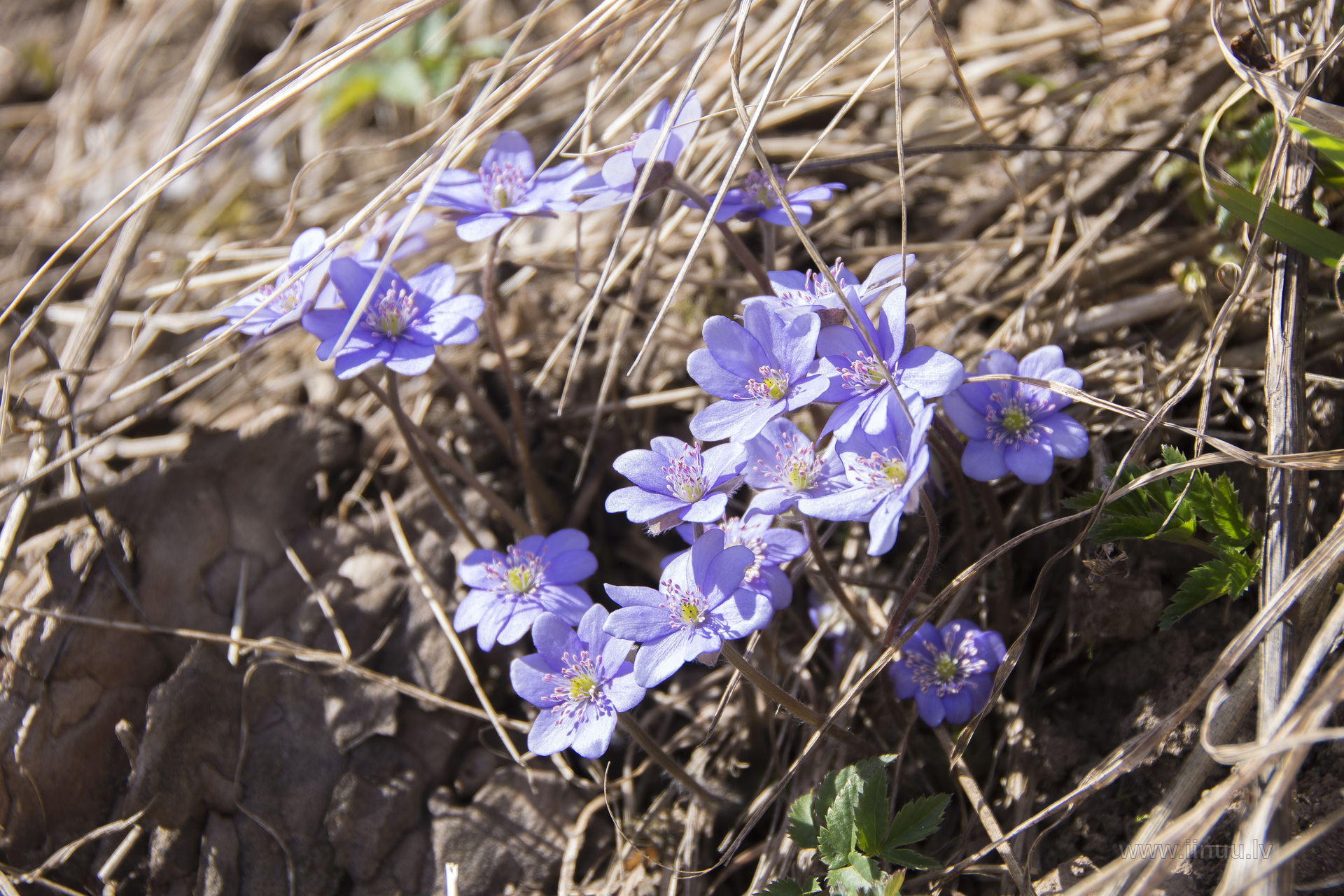
But the climb was worth it, because on the far side of the hill fort, on the sunlit slope of the next ridge, the entire hillside was scattered with tiny blue hepatica flowers. A magnificent sight. Bees and we with our cameras hummed around them.
Lithuania's Longest Pedestrian Bridge in Biržai
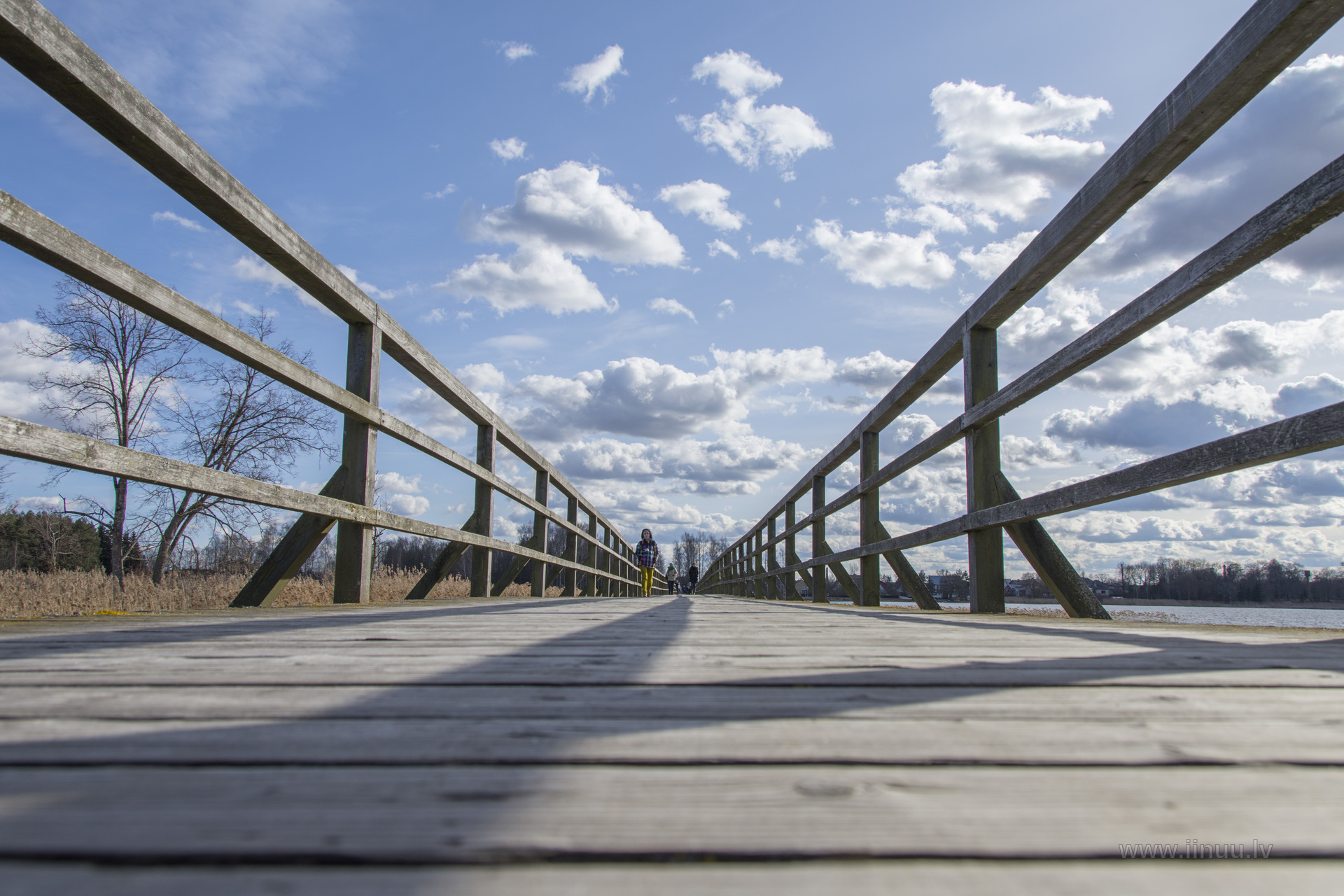
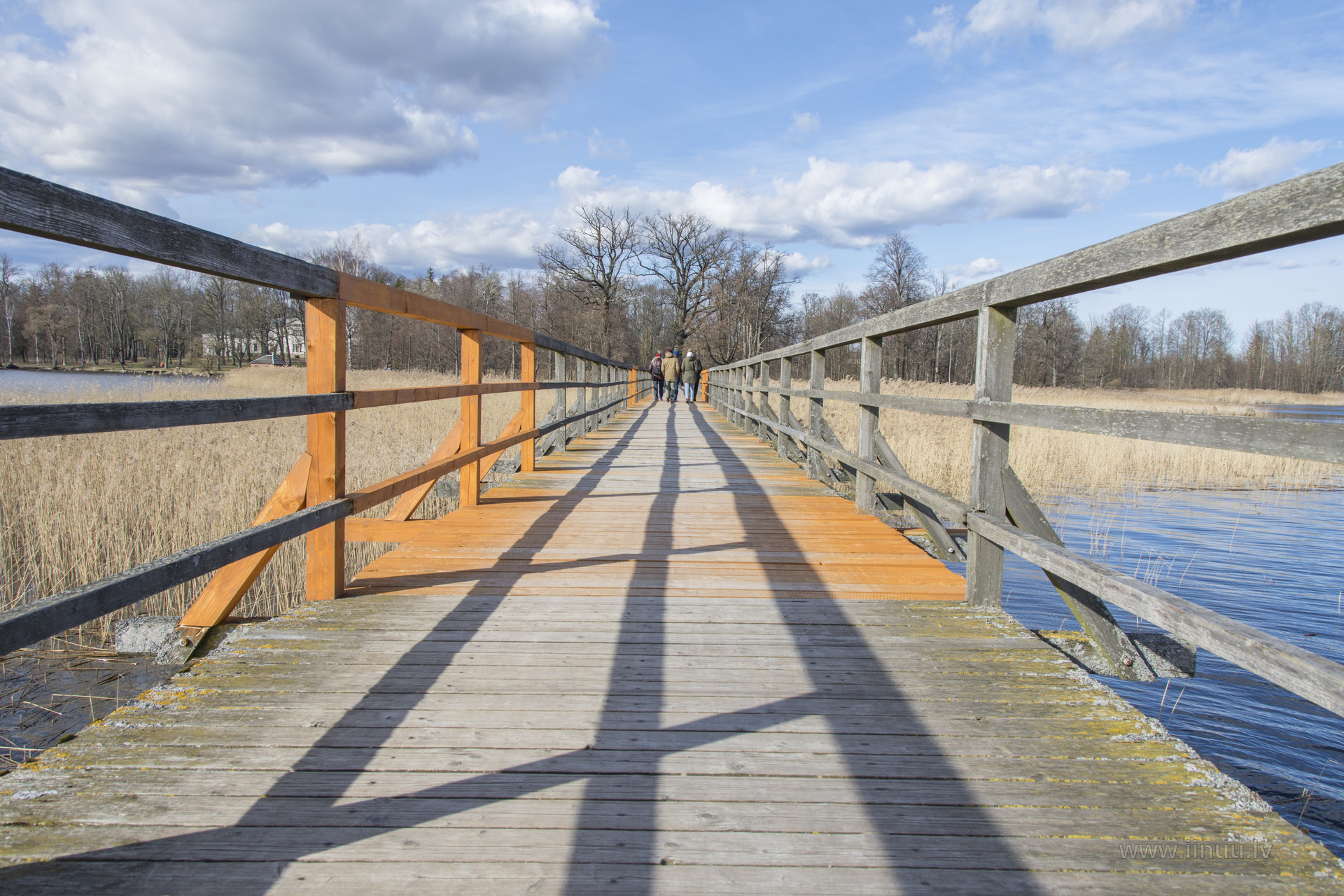
Another longer drive (~1.5 h) now back in the direction of Latvia, to Biržai. Here we crossed the artificially created Širvėnas Lake, which was formed by joining and damming what were once two rivers. The total length of the bridge is 525 m.
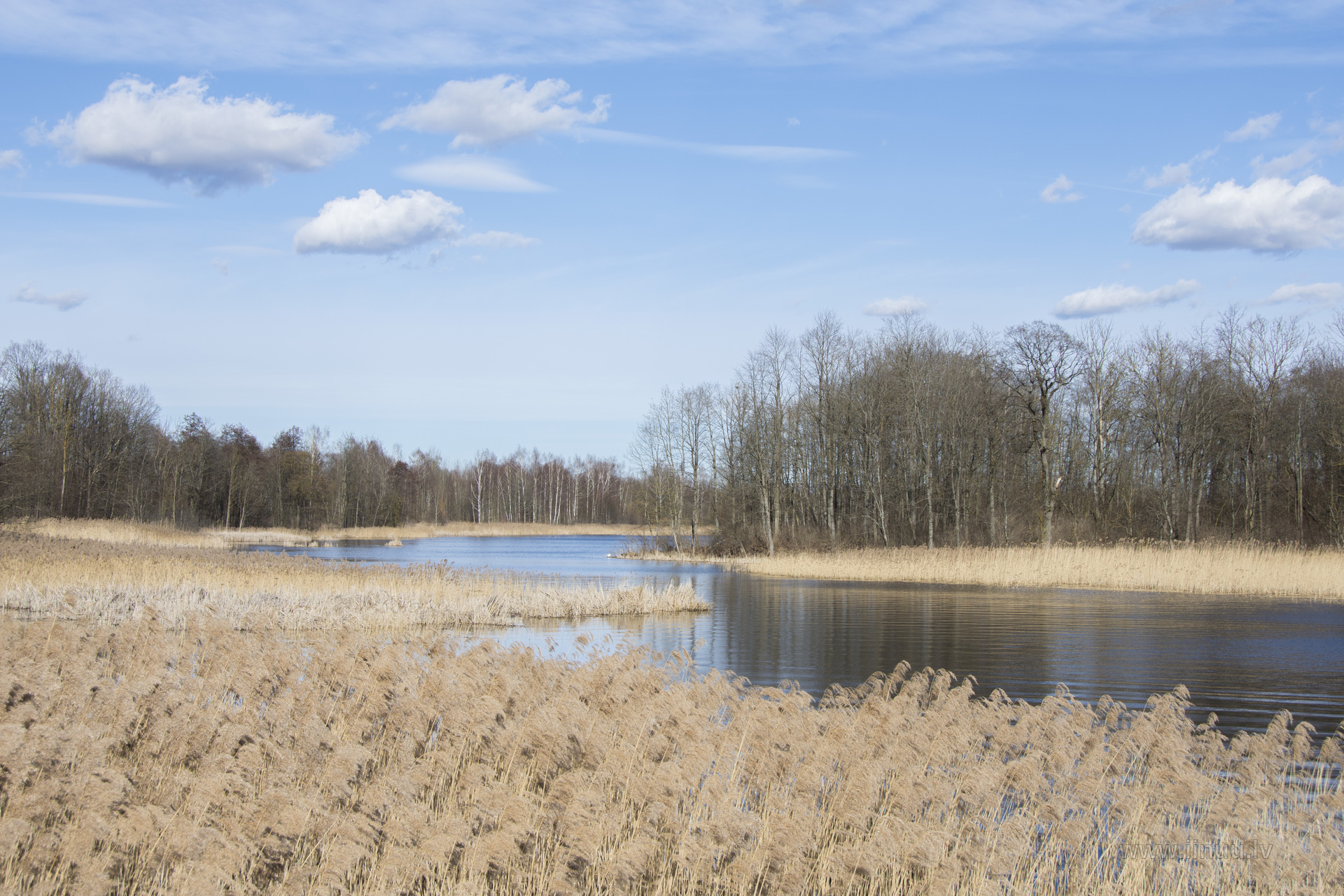
Although the sun had been generous with us all day, the wind over the lake was quite bracing. We had to pull up our hoods and wrap ourselves in scarves. The view, however, was a delight - an all-encompassing blueness, the yellowing reed stems, the white silhouettes of swans in the bays of the lake, wooden planks underfoot and sturdy wooden railings along the sides.
Astravo Manor
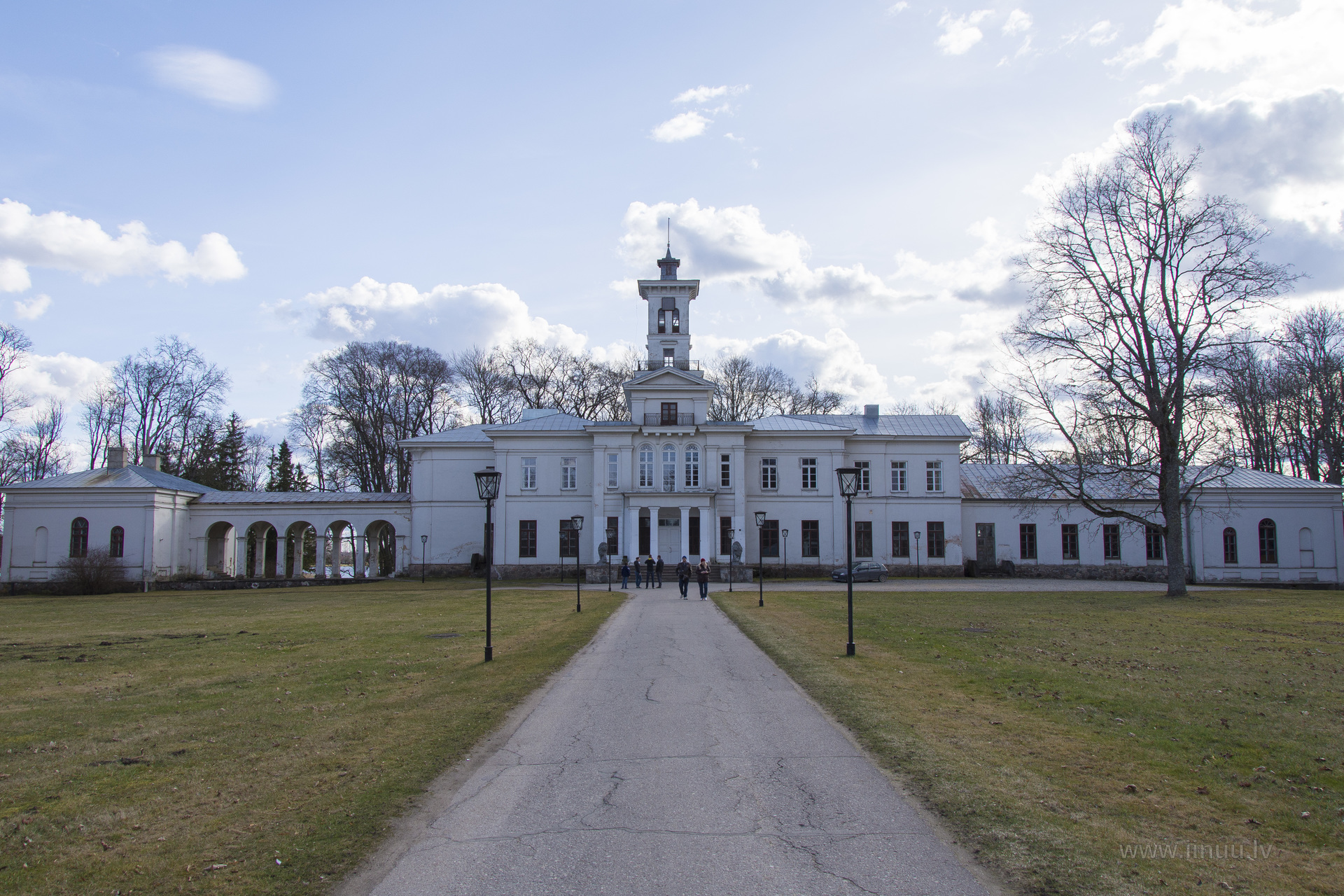
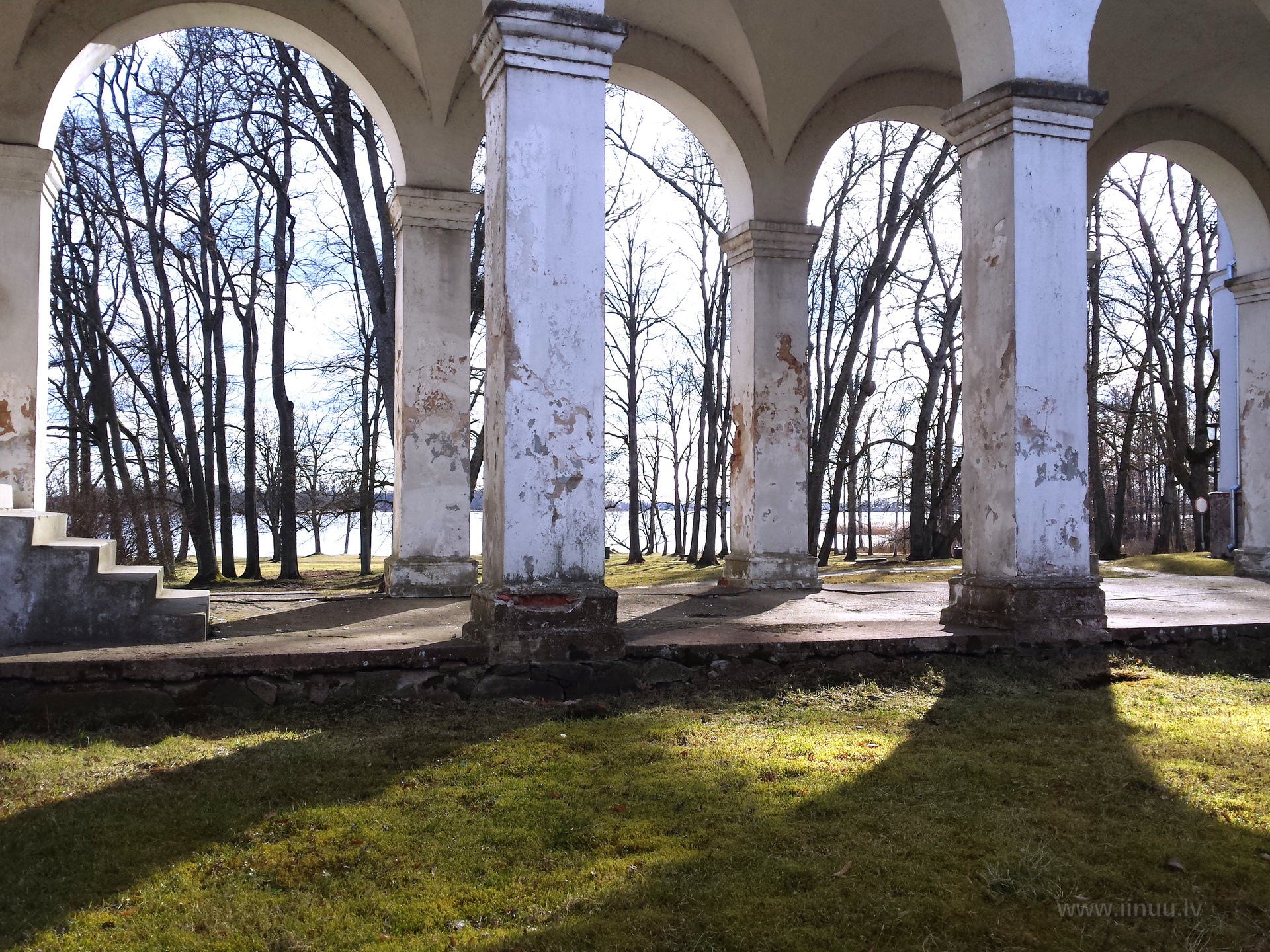
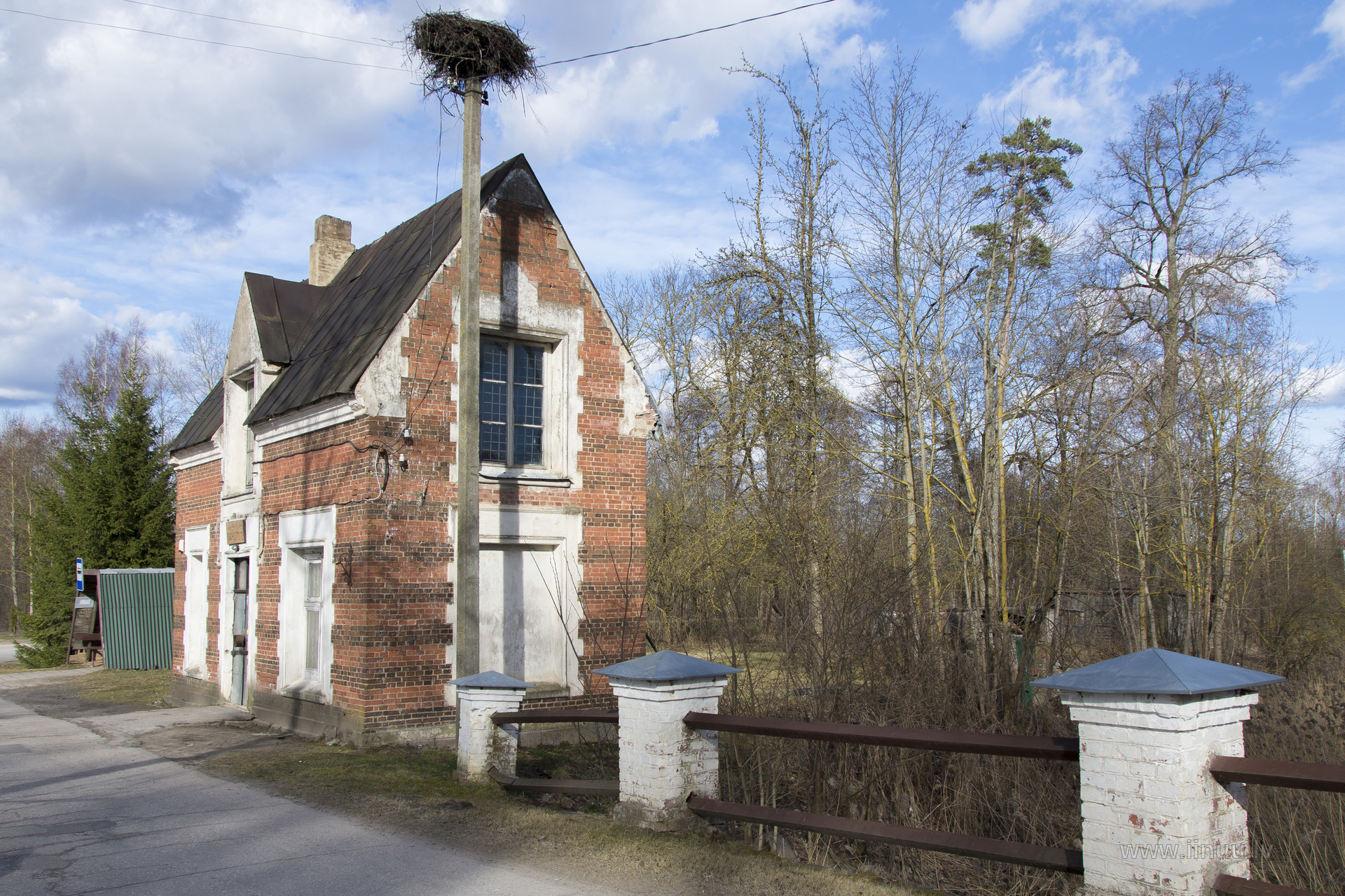
On the far bank of Širvėnas Lake we arrived at the white old yet still impressively majestic Astravo Manor building.
Later, from the website of the Biržai Tourism Information Centre, I learned the following:
In 1811 the prince Dominikas Radvilas sold the Biržai lands to Count Mykolas Tiškevičius, though only in 1844, when the long legal dispute ended, was the purchase recognised as belonging to the Tiškevičius family. In 1862 the counts built a two-storey manor with a viewing tower in Astravo. The manor building in the Italian villa style is one of the finest Romantic-period manor residences in Lithuania.
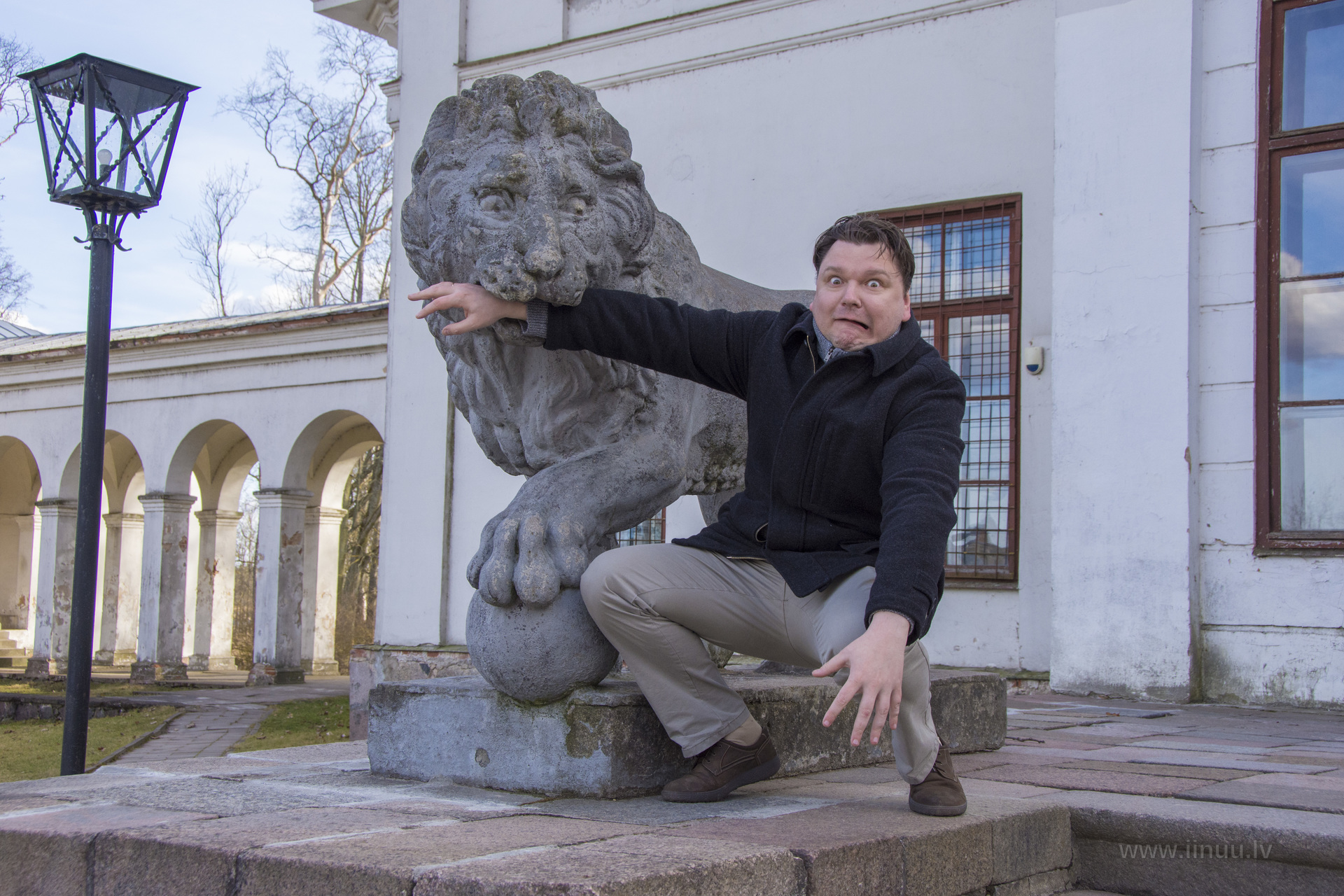
At the entrance to the manor stood two cast-iron lions brought from St. Petersburg, which in 1938 were donated as a gift to the garden of the Vytautas the Great War Museum in Kaunas. Astravo Manor is now adorned with copies of the lions, cast in concrete.
In 1924 a dairy was established at Astravo Manor, later a sack, rope, and cordage factory, and in 1930 a linen fabric factory "Siūlas," which continues to operate today. From 1956 to 1965 Astravo Manor was restored and part of the park was tidied up; in 1987 the manor outbuildings and the pedestrian bridge over the lake connecting it with the town of Biržai were renovated.
Karst Sinkholes
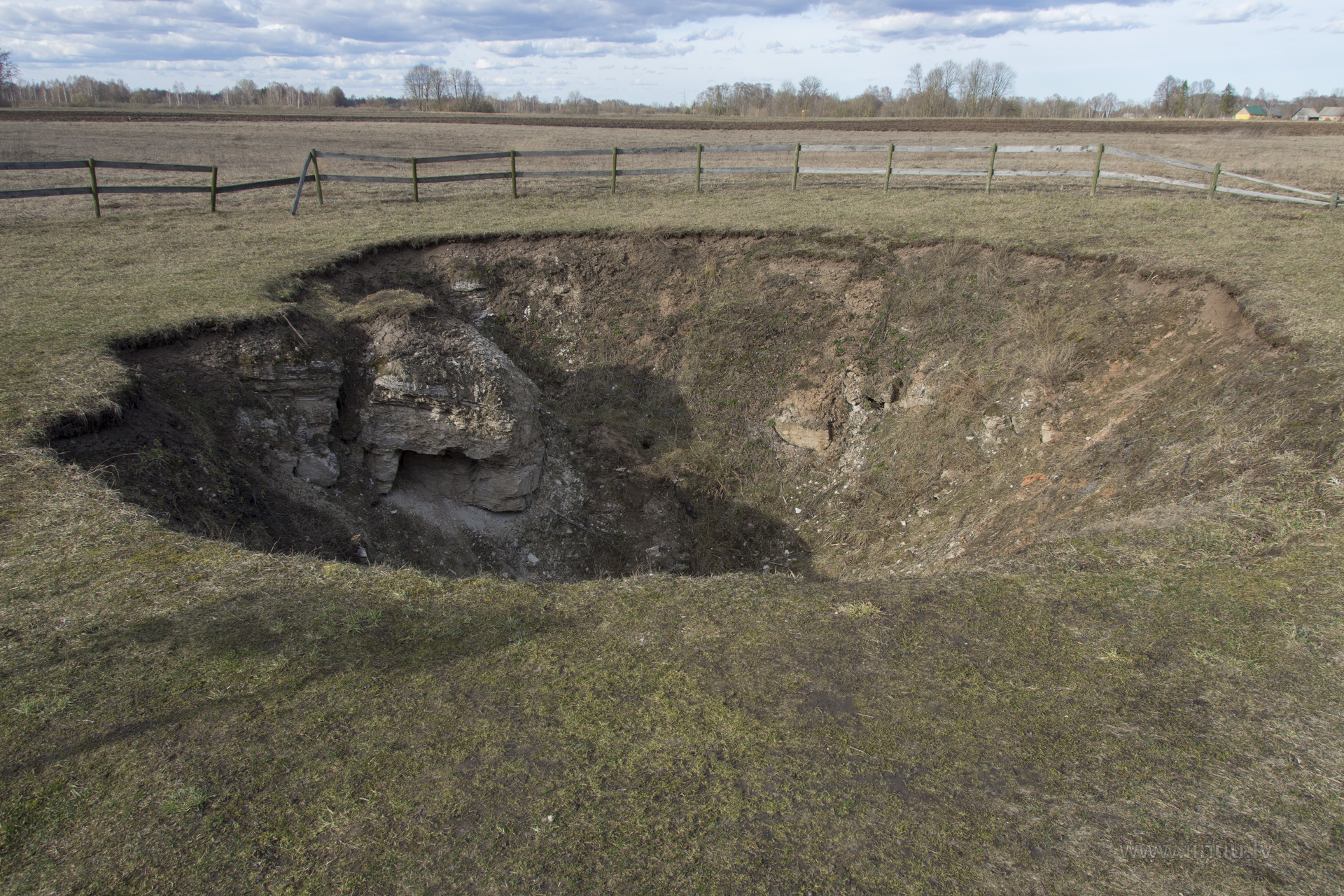
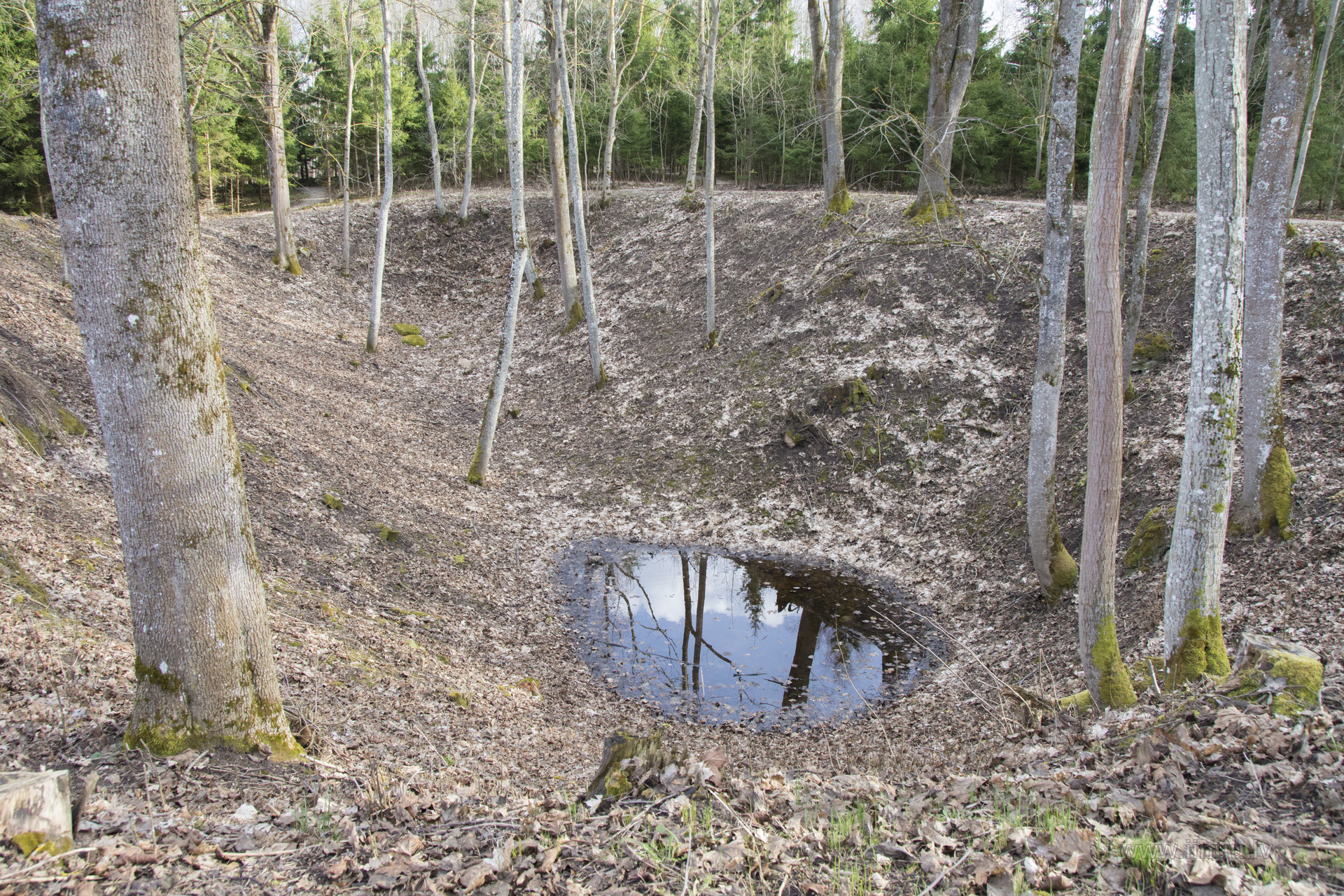
The Biržai region is justifiably called the land of sinking ground. Across the region some 6,500 karst sinkholes have been counted, more than a few of which reach 20–30 m in diameter and 8–11 m in depth.
We walked along the geological trail past larger and smaller, older and more recent karst sinkholes. Trees and shrubs gradually colonise the unusual ground depressions over time; in some, water accumulates. It is difficult to imagine how people sleep peacefully or farm the land in this region.
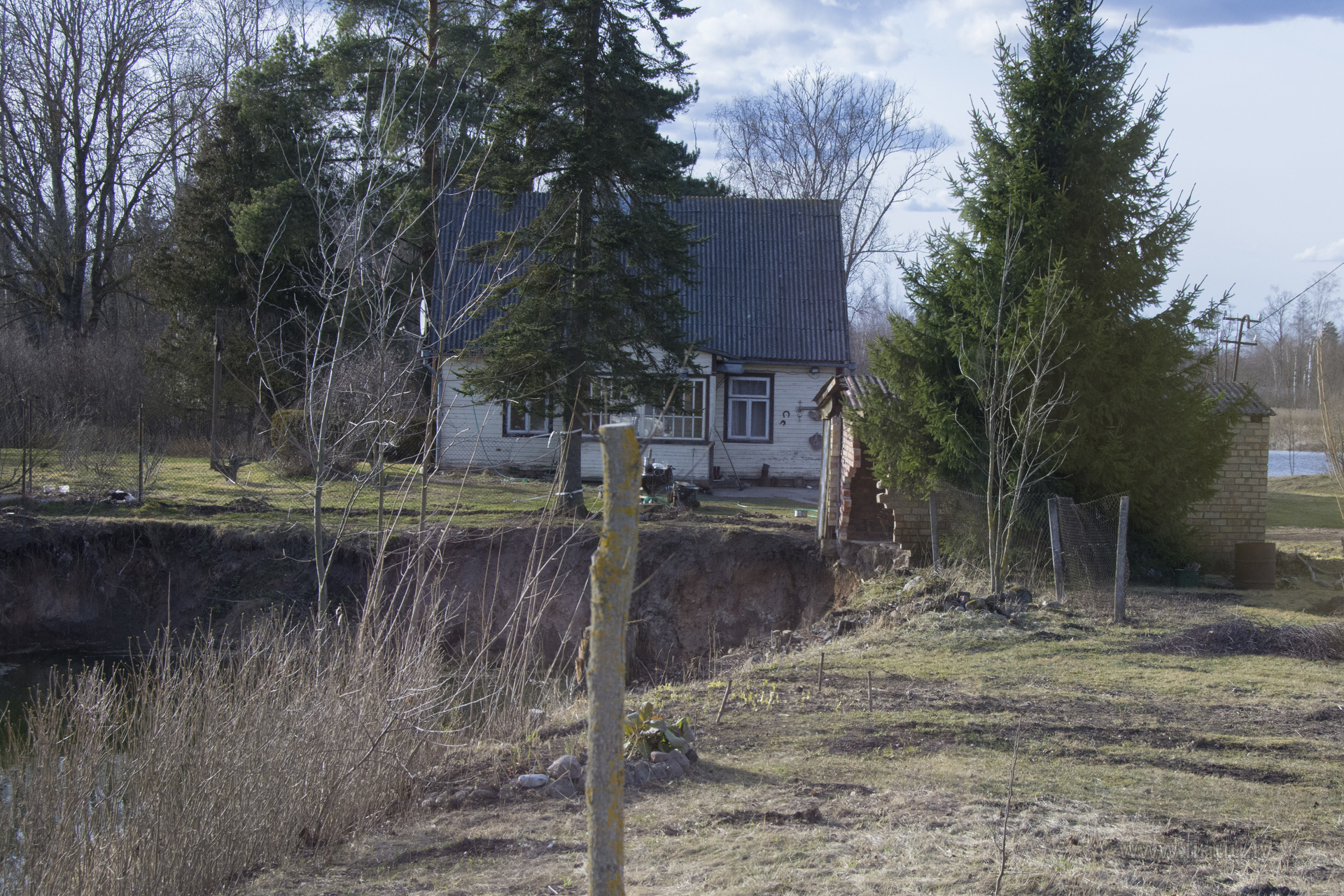
True stories followed - here someone's cow disappeared underground, there half a shed. The latter we could verify with our own eyes: a farmyard, a house, and a shed half-sunken beside a large hole in the ground.
Kirkilai Karst Lakes and Observation Tower
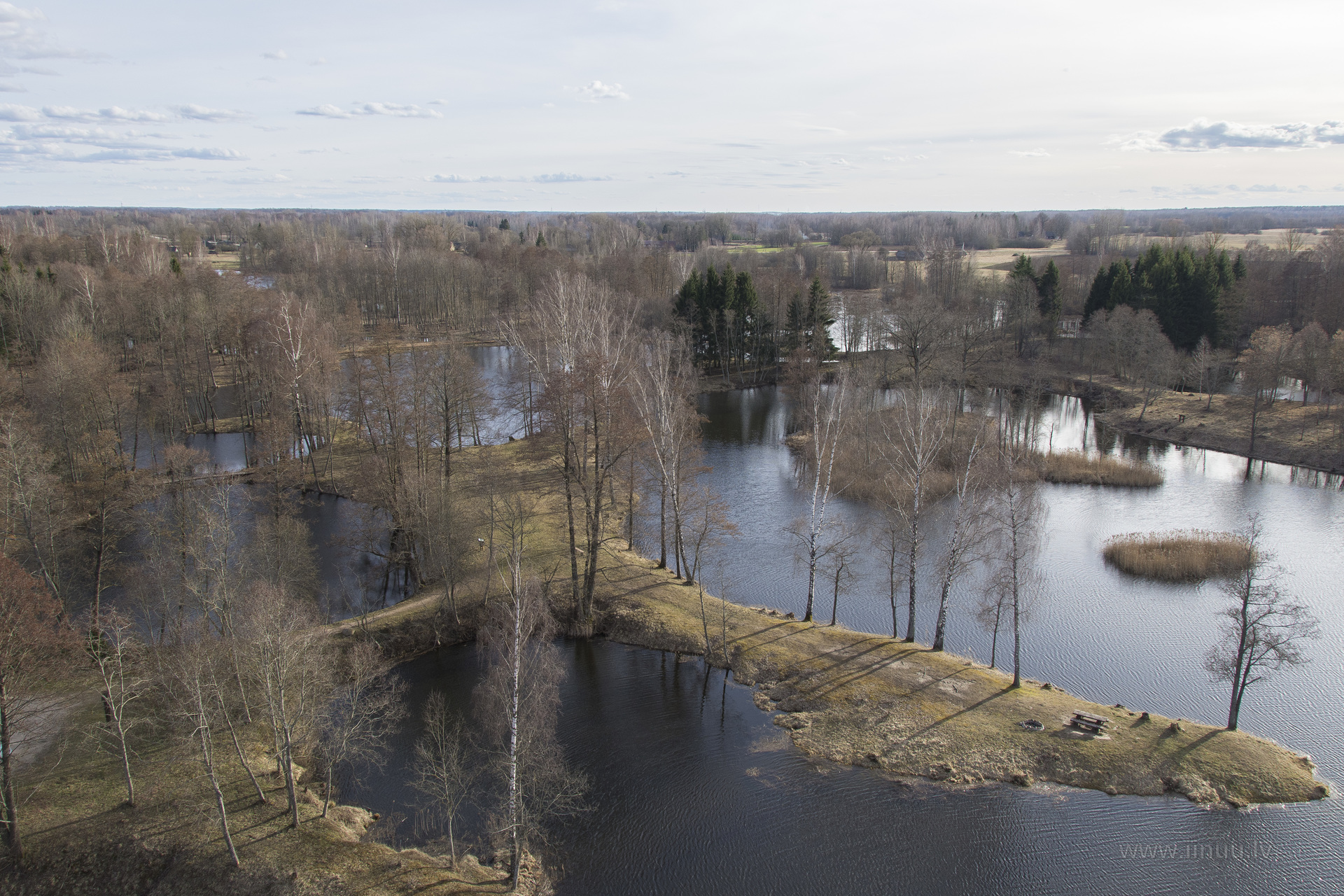
In some of the karst sinkholes lakes have now formed - or even entire lake systems, as is the case with the Kirkilai Karst Lakes.
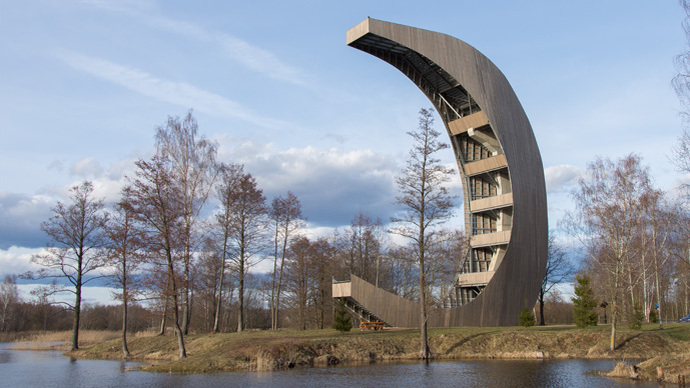
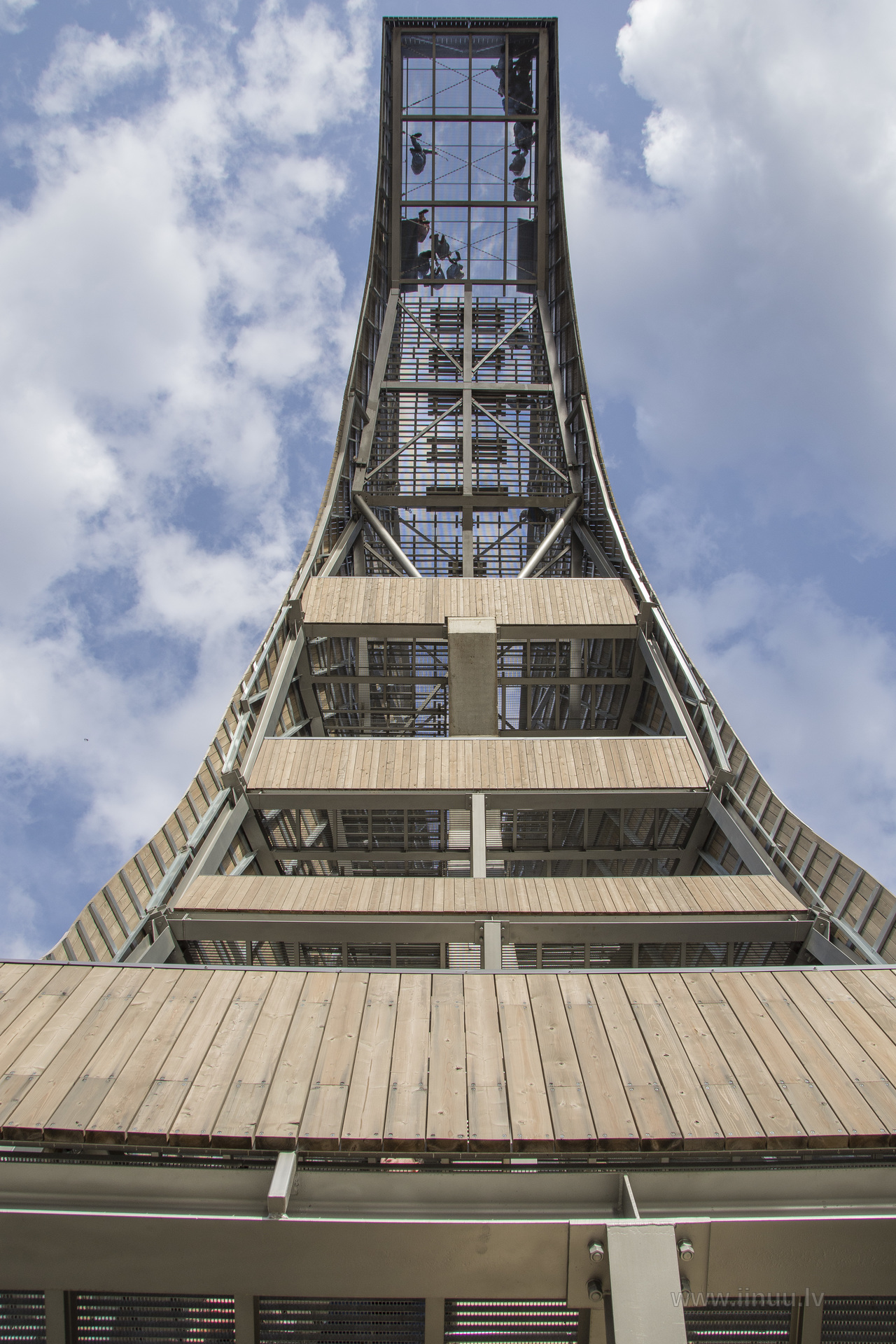
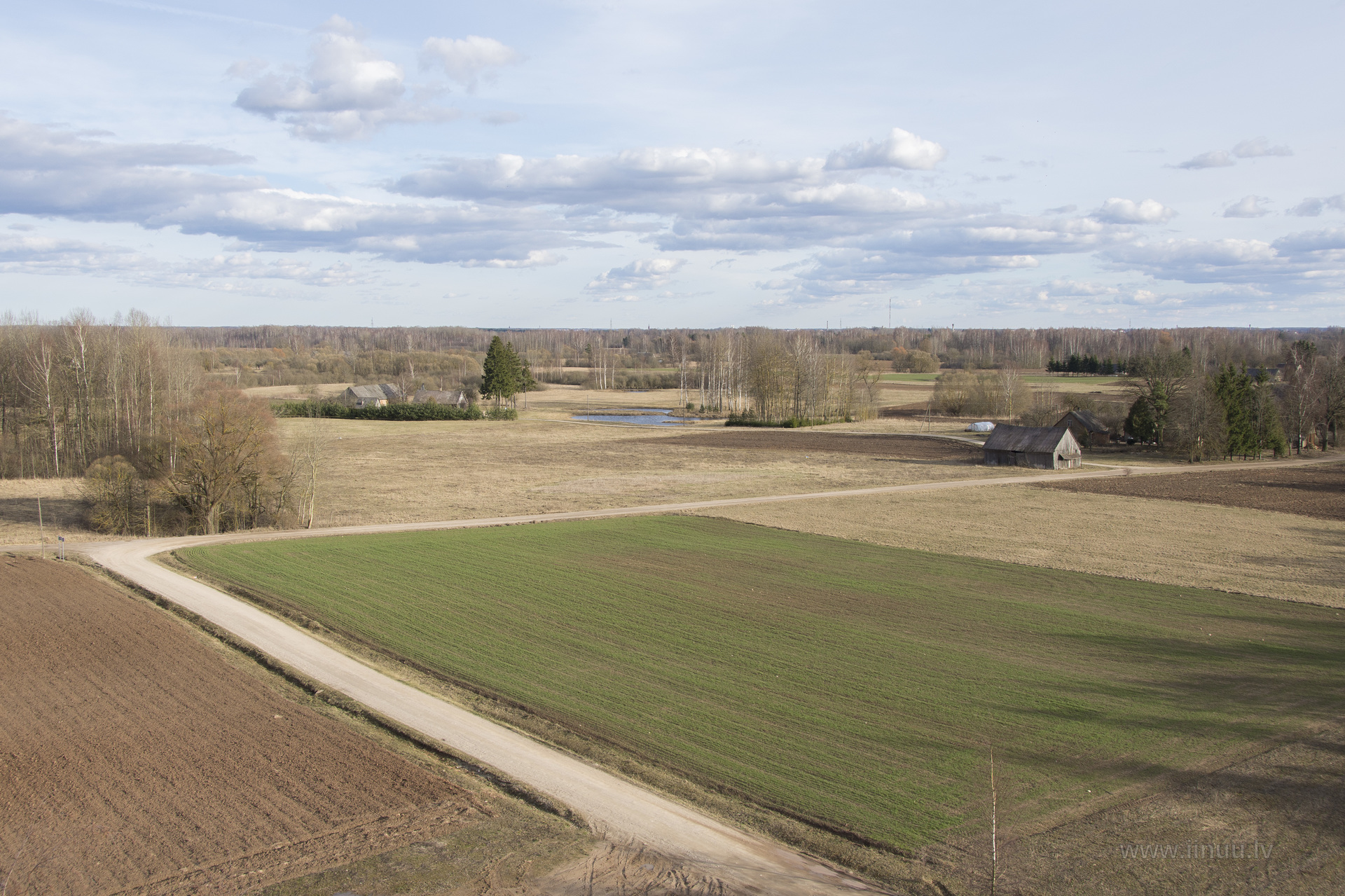
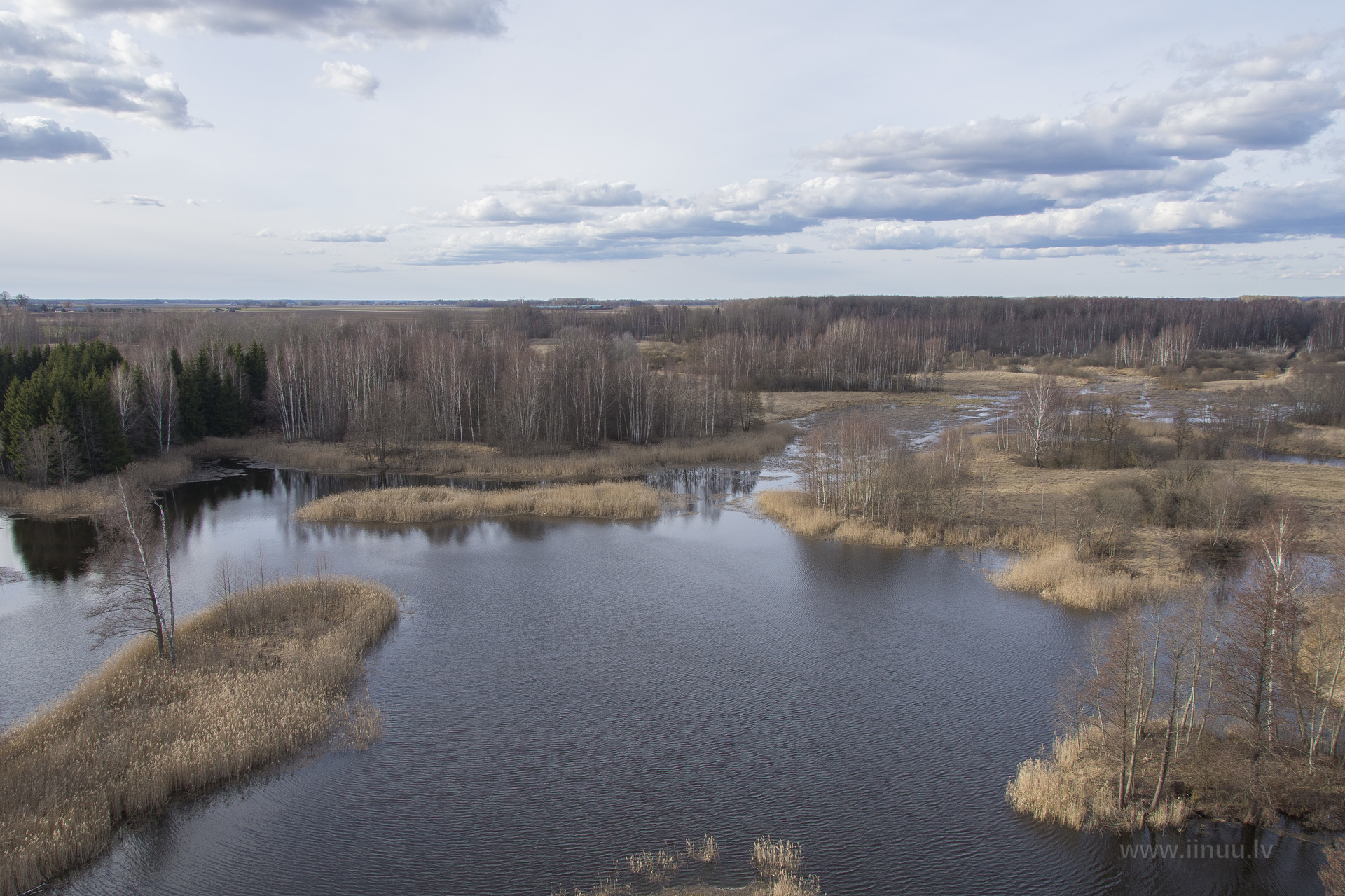
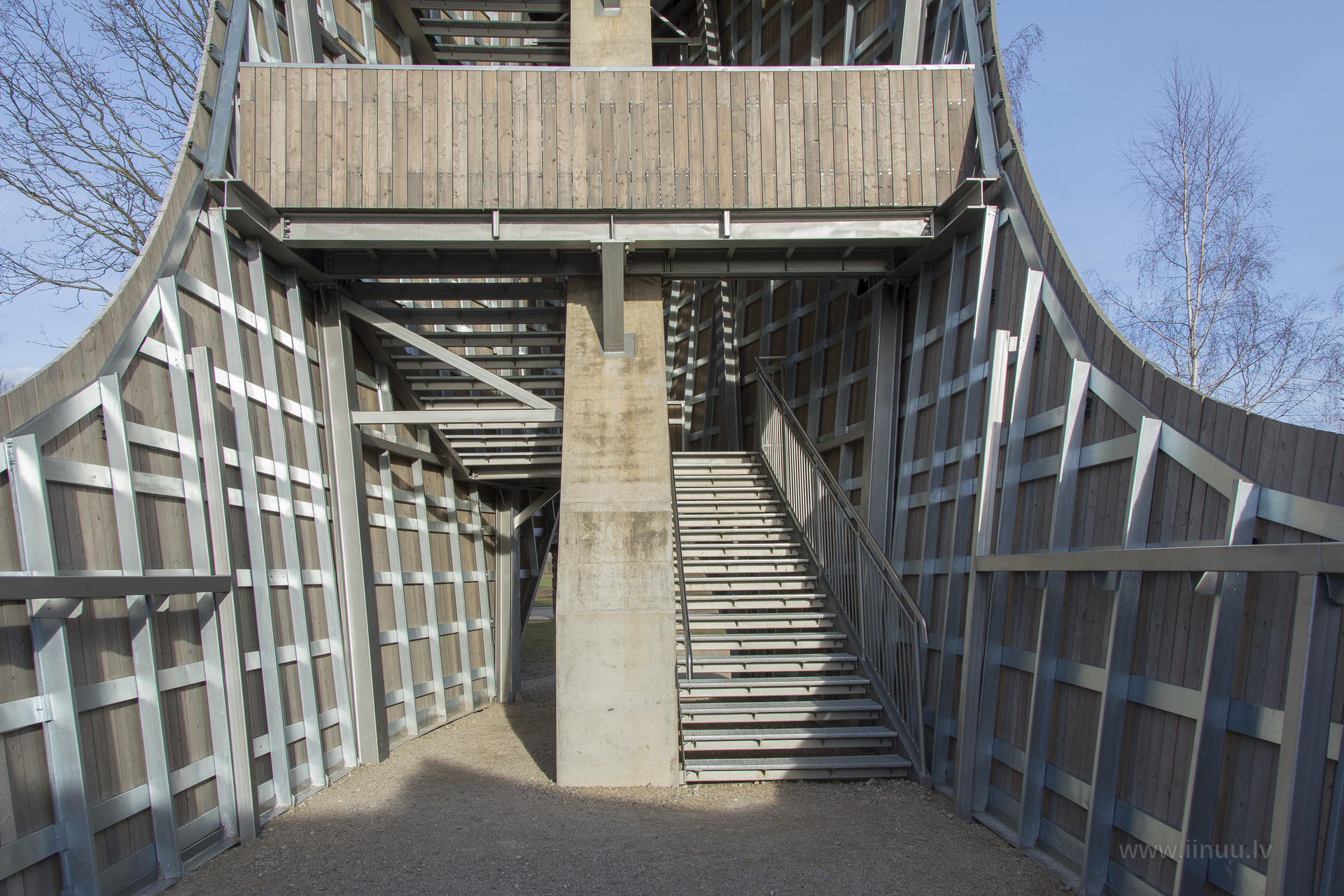
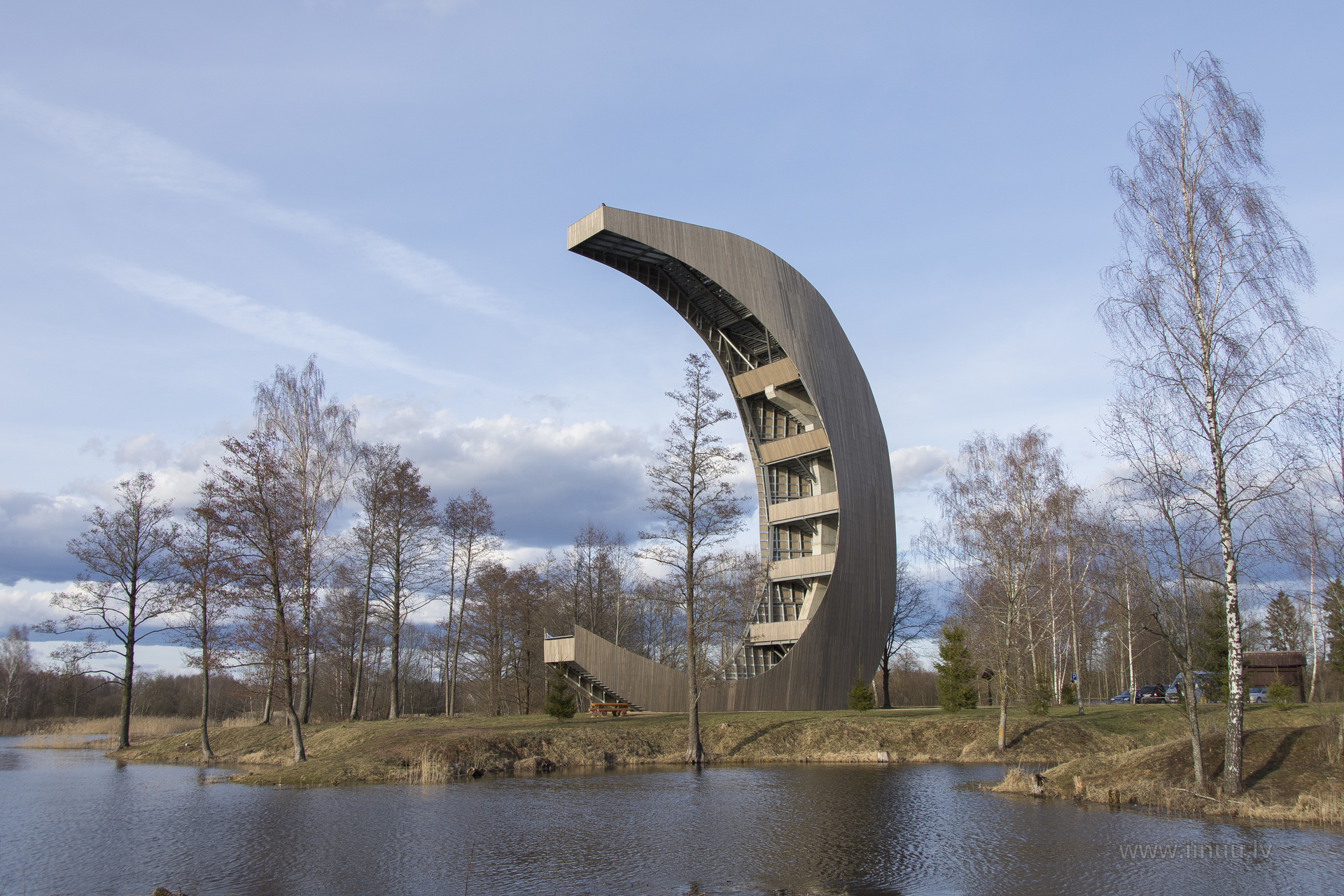
Against this backdrop stands a most extraordinary 32 m observation tower in the shape of a crescent moon, from which a breathtaking view of the surroundings opens. As we approached by minibus, the surreal moon shape made it hard to believe one's eyes. A moment later we were already climbing towards the upper tip of the crescent.
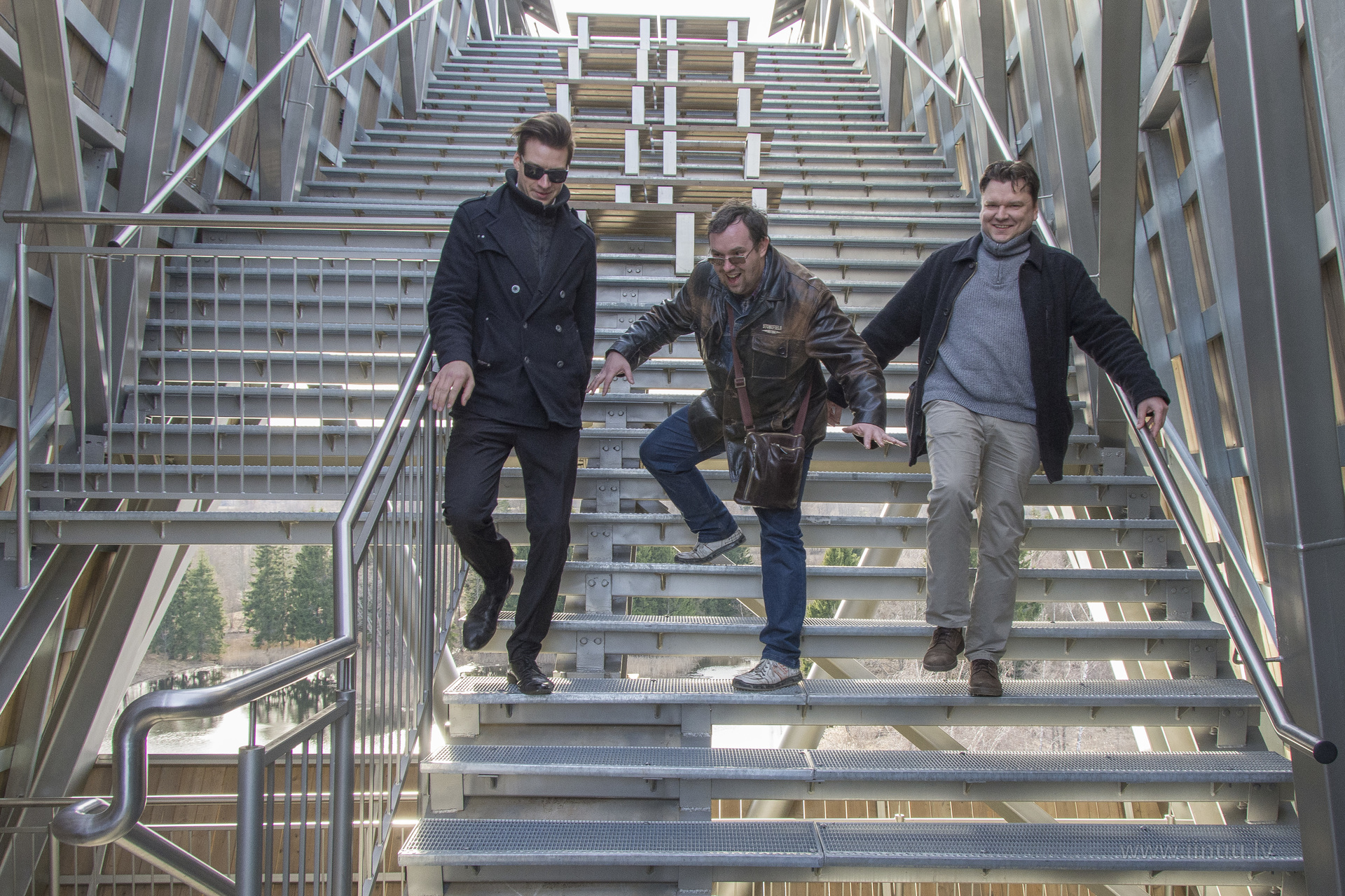
The ascent on the metal grid steps was not difficult - rather, it was intriguing and breathtaking with excitement. When you reach the very top platform - the crescent's horn, overhanging a good distance above the ground with a clearly visible-through floor - it becomes distinctly unnerving. Feelings and the survival instinct within you struggle with the pragmatic mind reasoning that nothing bad can happen - look how new the structure is, look how large the bolts and how massive the construction.
A peppering note is added by the fairly strong wind at the upper levels of the tower, which causes the structure to vibrate naturally and slightly, combined with the previously heard stories about sinkholes and the realisation that you are beside one of the largest karst sinkholes, which is still changing.
The moon silhouette and its colouring fit beautifully into the surrounding landscape. This observation tower too only opened last year, yet it seems as if some giant had come and placed it there in time immemorial, for people to one day discover it and believe in the fairy tale.
What We Enjoyed and Found Positively Surprising
- Free car parks and toilets at all the attractions (one would wish to see such a tourism policy in Latvia someday)
- The Anykščiai Treetop Path admission for a token fee - just 1 EUR per person; moreover, no one checked tickets when we went through
- The sense of no hurry and complete freedom, as this was not a traditional tour where the guide or group leader is constantly rushing everyone to keep to the schedule
Lithuania Trip Route
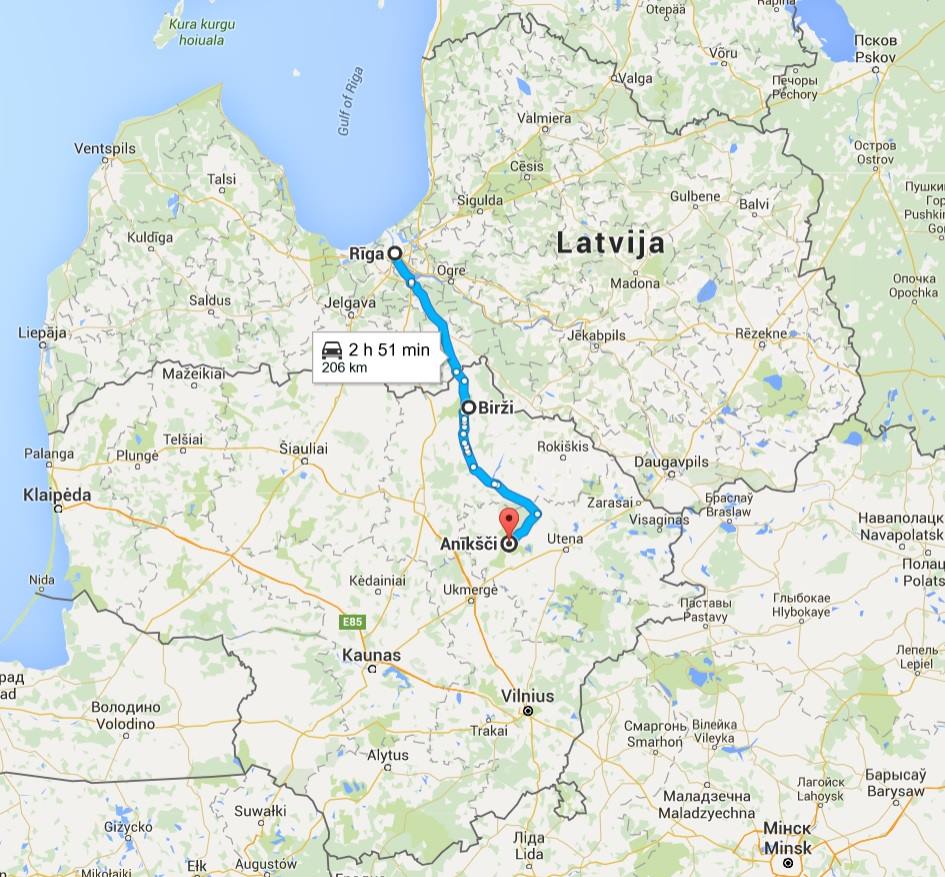
I will take the liberty of sharing the map that Zaiga sent before the trip, so that travellers have a rough idea of where we went. It must be said: a fantastically spent day in the fresh air with a great deal of useful, but not fact-overloaded, information. I recommend experiencing it in your own car with family or friends, or by signing up for such a small-group excursion. Learn and discover! ;)
comments