Portugal Part 2 - Nazaré, Alcobaça, Óbidos, Sintra
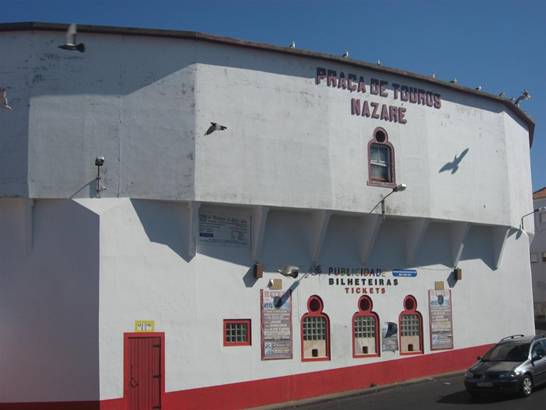
In Nazaré we also noticed the arena and ticket booths for bullfights. In Portugal the corrida is not as bloody as in Spain, because the bull is not killed but stunned with colourful spears thrust into its neck, and the matador brings it to its knees. Bulls are specially bred for the fights to reach 300 kg. The original corrida can only be seen in Spain's Andalusia region. There the bull is exhausted and killed by thrusting in a sword. The crowd shouts - Veronica! - demanding the animal's death.
October 2008
All these populated places are situated along the Atlantic coast.
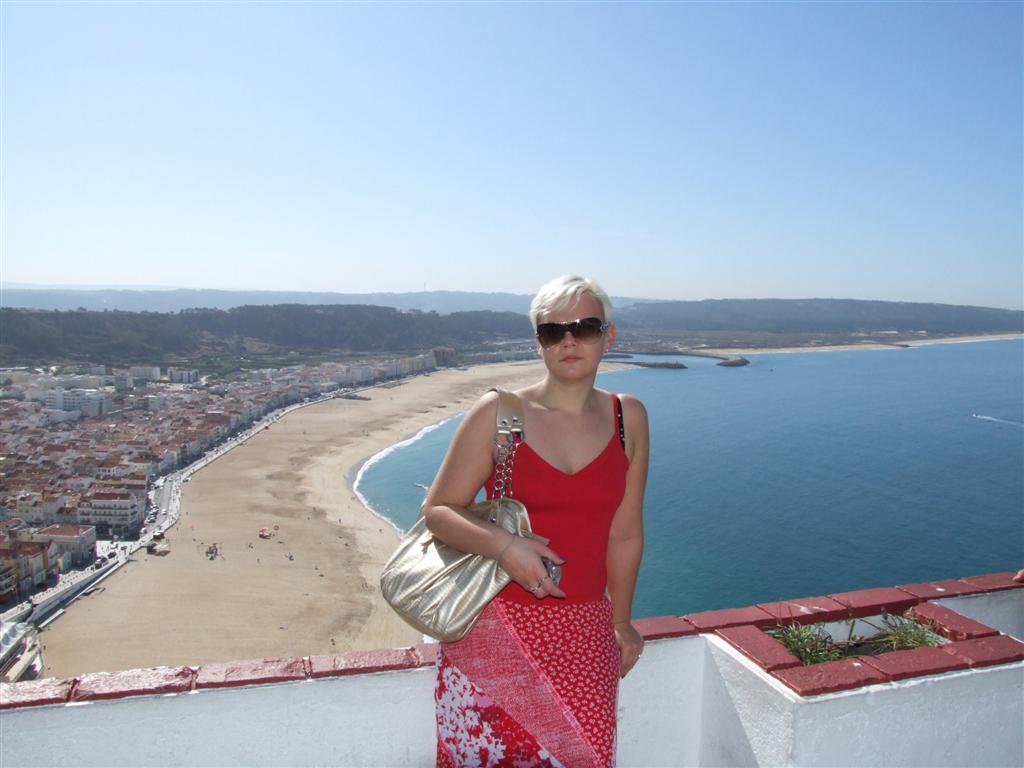
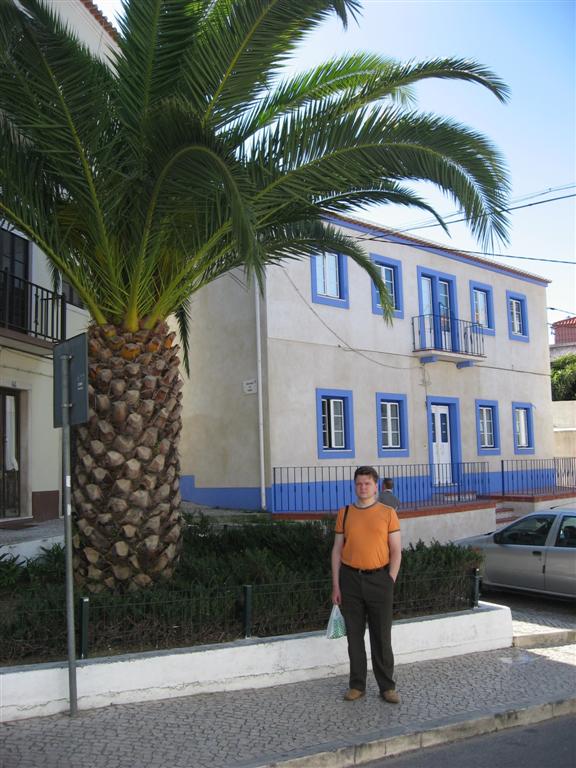
The first stop - NAZARÉ - a little town which is as if divided into two parts: one is located on a hill, the other - down by the ocean. Typical white buildings with orangeish tiled roofs.
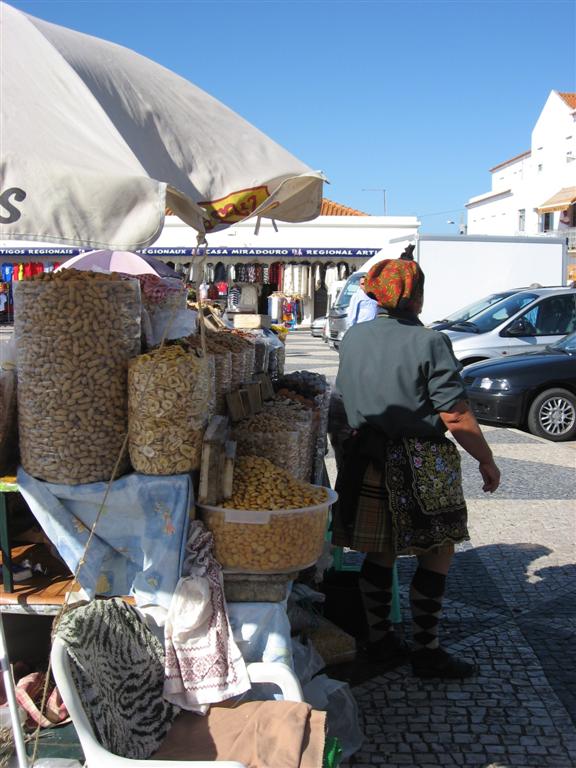
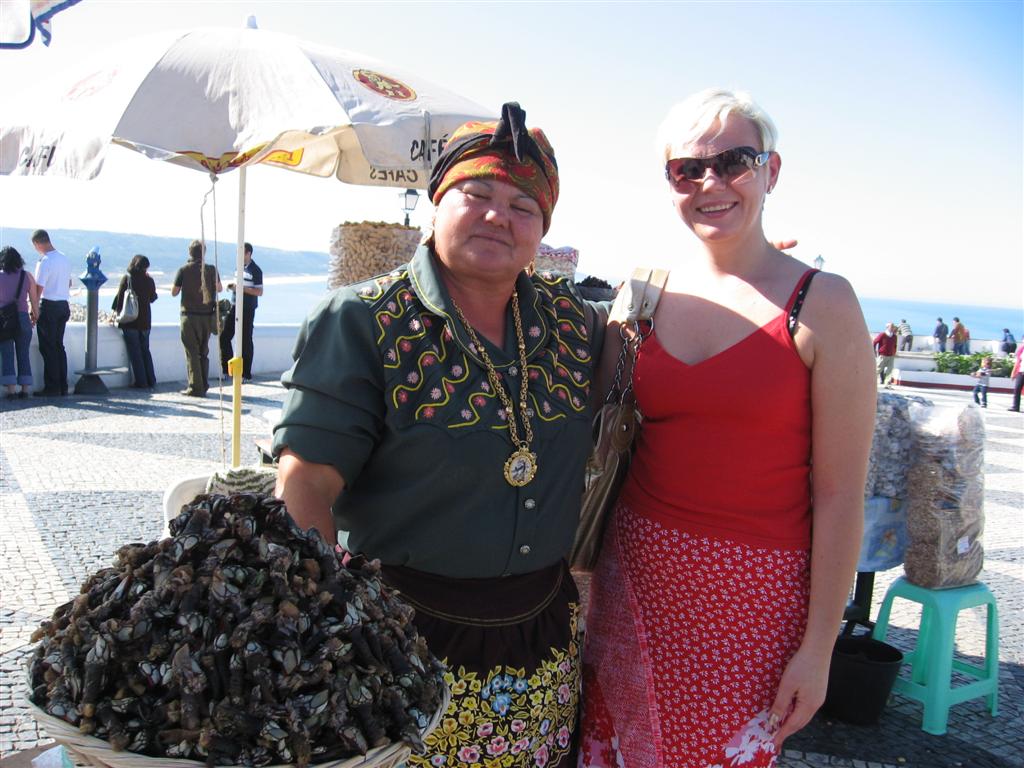
A market square with vendors in national costumes, a wide selection of various nuts and dried seafood. We tasted the wonders seen in the image too, but remained none the wiser - what exactly was it? From the vendor's half-Portuguese, half-English explanation - sea fish or sell fish or something of the sort ...
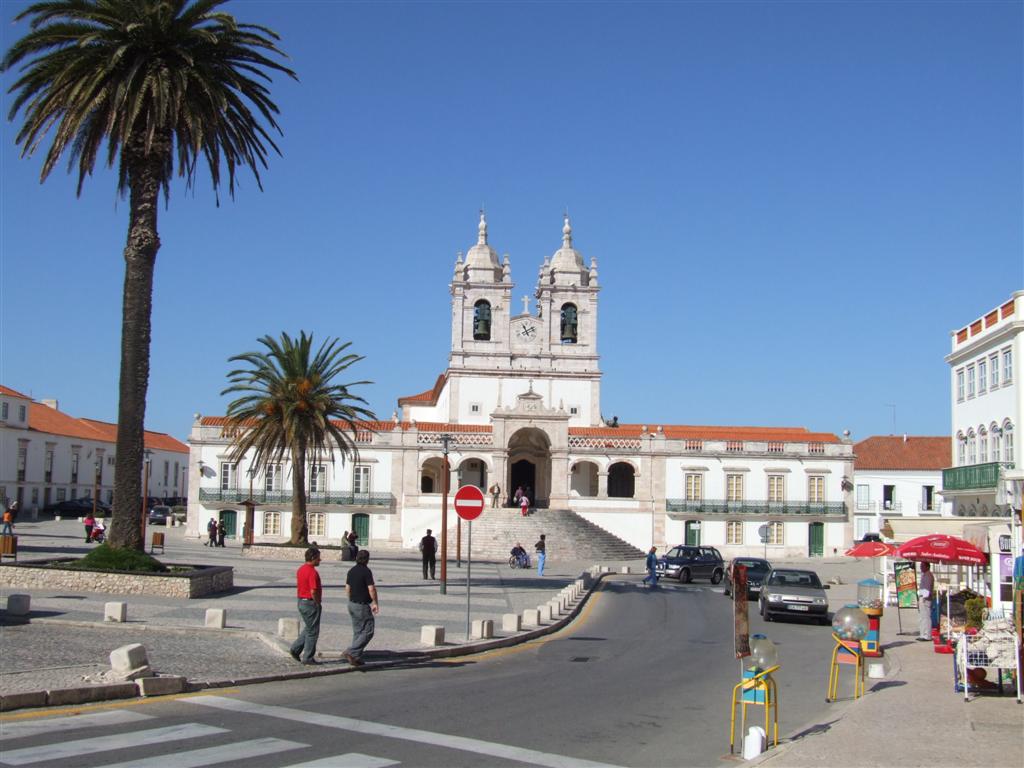
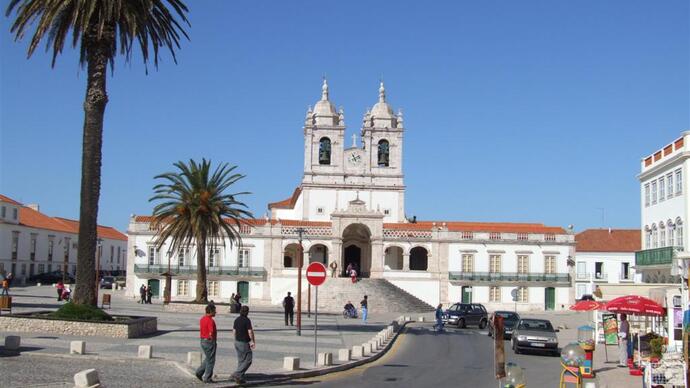
At the edge of the square, a Catholic church with distinctive stone steps.
In Nazaré we also noticed the arena and ticket booths for bullfights. In Portugal the corrida is not as bloody as in Spain, because the bull is not killed but stunned with colourful spears thrust into its neck, and the matador brings it to its knees. Bulls are specially bred for the fights to reach 300 kg. The original corrida can only be seen in Spain's Andalusia region. There the bull is exhausted and killed by thrusting in a sword. The crowd shouts - Veronica! - demanding the animal's death.
A Spanish joke: Pedro walks into a tavern and orders his favourite delicacy - bull's testicles, prepared from a bull killed in the corrida. The waiter brings a large plate with the prepared dish. Pedro eats up and thanks the owner. The next day he walks into the restaurant again and orders the same thing. This time the waiter brings a small plate with small testicles. Pedro asks - why so? The waiter replies - today the matador had bad luck! :)
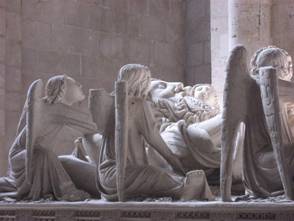
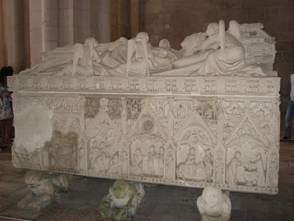
ALCOBAÇA is notable for a church where Portugal's "Romeo and Juliet" - Pedro and Inés - are buried.
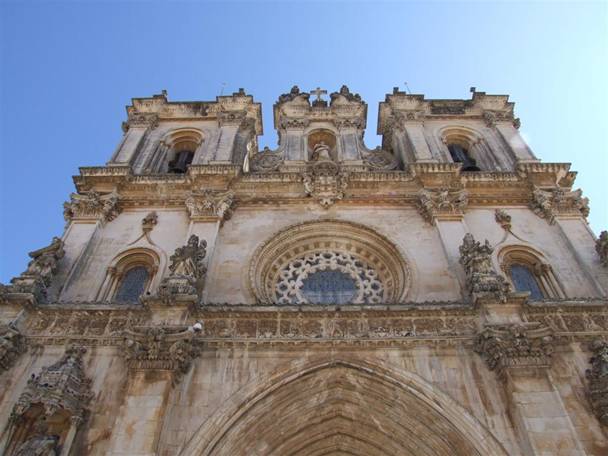
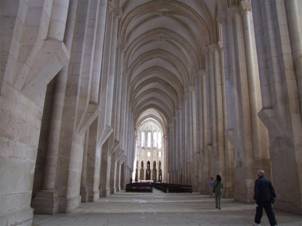
The story is as follows - the ruler Pedro, after the death of his first wife Constança in childbirth, secretly married Inés, who was of lower social standing. When Pedro had to set off on a military campaign the day after the wedding, on returning he found that the nobles had killed Inés and buried her outside the city walls. Pedro ordered the body to be exhumed, seated on the throne - thereby making everyone acknowledge her as ruler - and ordered all the nobles to go in turn and kiss her hand. Those who refused were sentenced to death. Later Inés was buried according to all proper customs in a stone sarcophagus in this church. Some years later Pedro was also buried in this church.
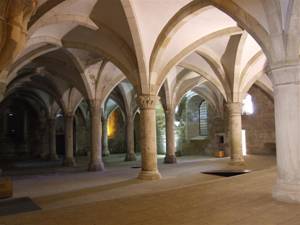
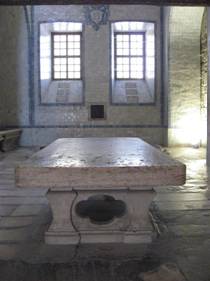
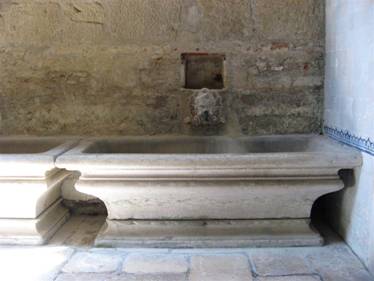
Inside the church one can view a dining room that was very progressive for ancient times, with sturdy stone tables, a grandiose heating system, and baths for washing dishes.
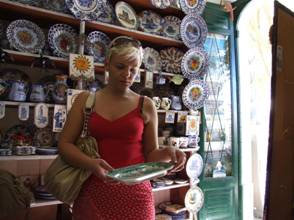
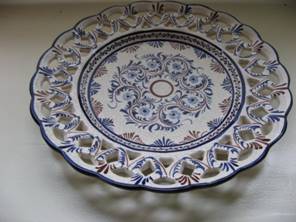
In Alcobaça one could buy hand-painted colourful plates (10–40 EUR), also decorative tiles.
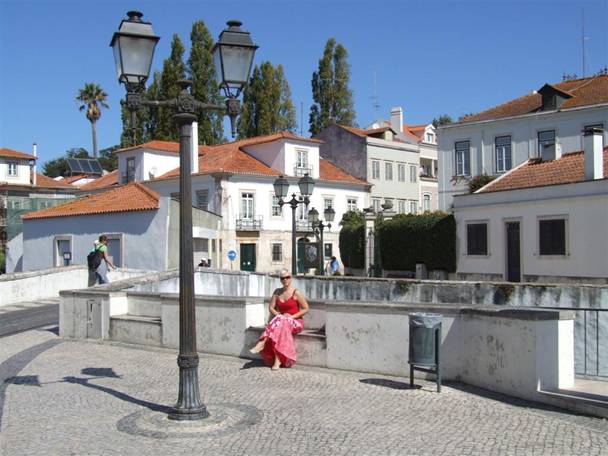
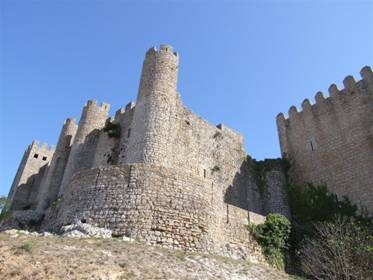
ÓBIDOS - a small, splendid little town encircled by a stone defensive wall. One can walk around the entire town along the top of the wall.
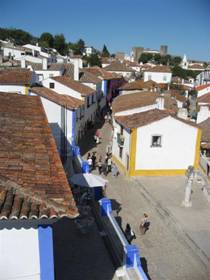
In this town one can buy the original ginja - a cherry spirit infusion (starting from 12 EUR per bottle). Before buying one can taste it first from the vendors, though for a fee - ginja in a chocolate cup 1 EUR, in a clay cup 1.50 EUR.
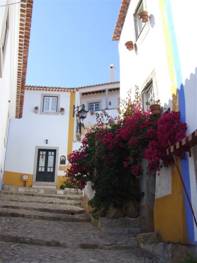
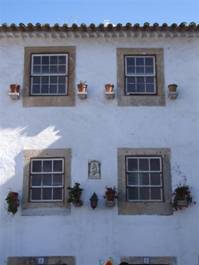
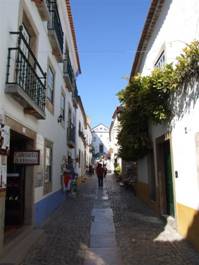
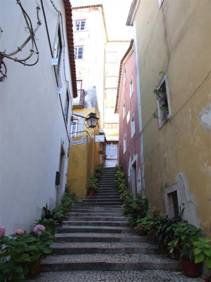
SINTRA - similar to Óbidos, to see the town one must climb uphill winding through the narrow, cobblestone-paved lanes.
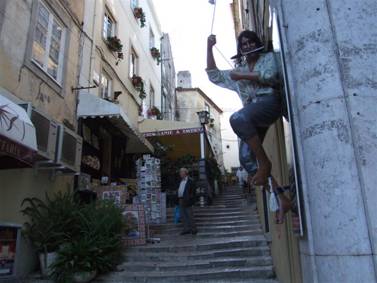
Not far from the town lies Cabo da Roca - the westernmost point of Europe, but that is already a separate story.
comments