An Event with the Hashtag #BaznicuNakts
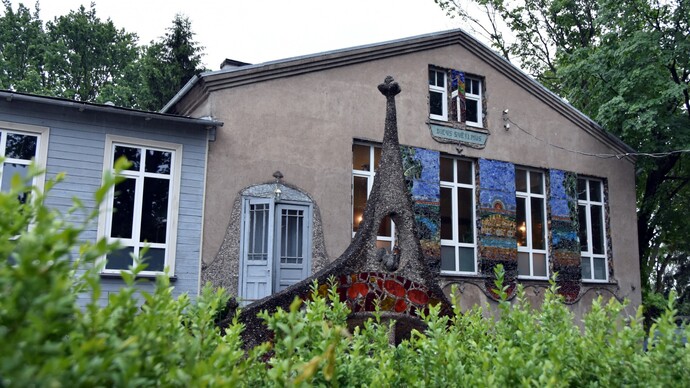
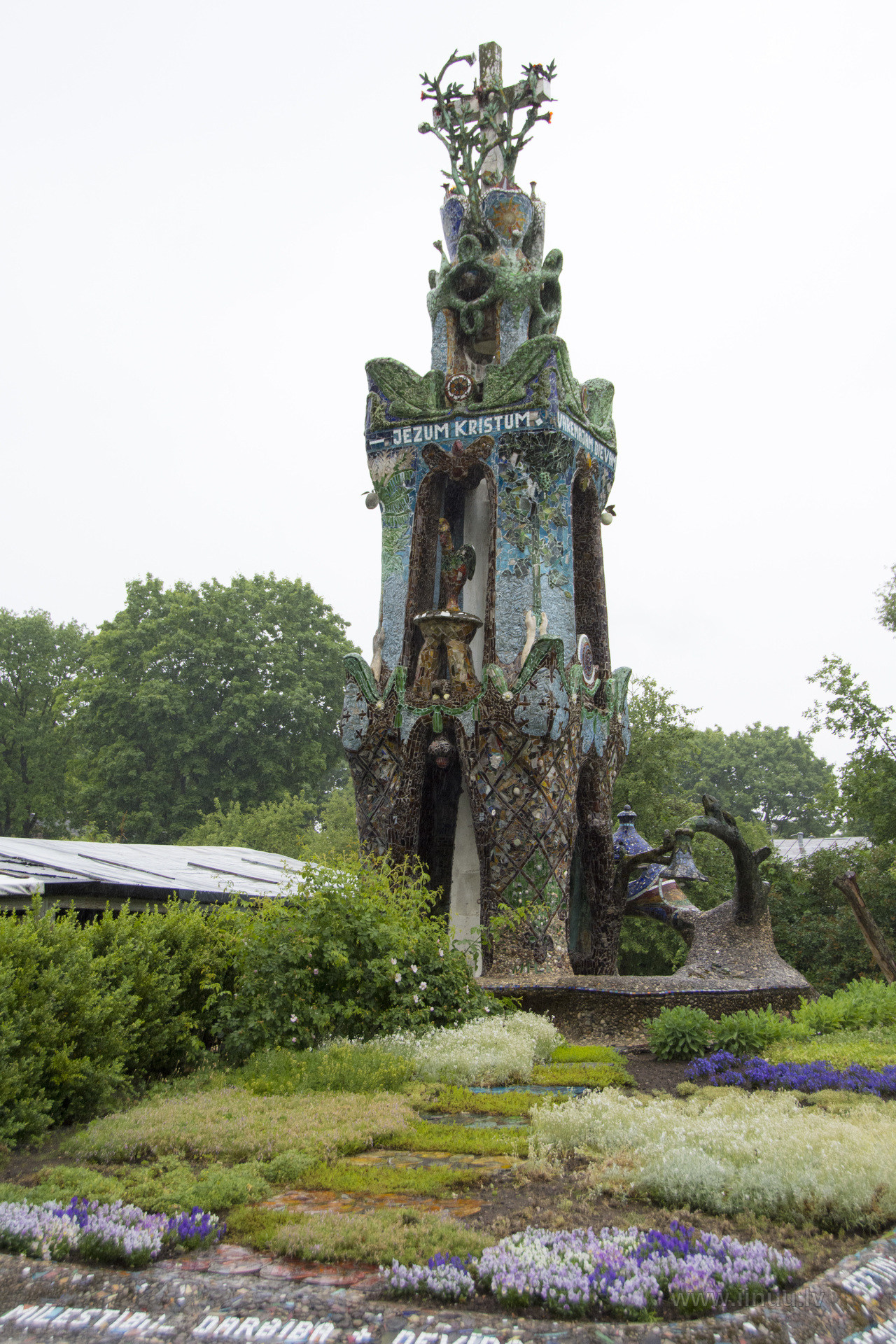
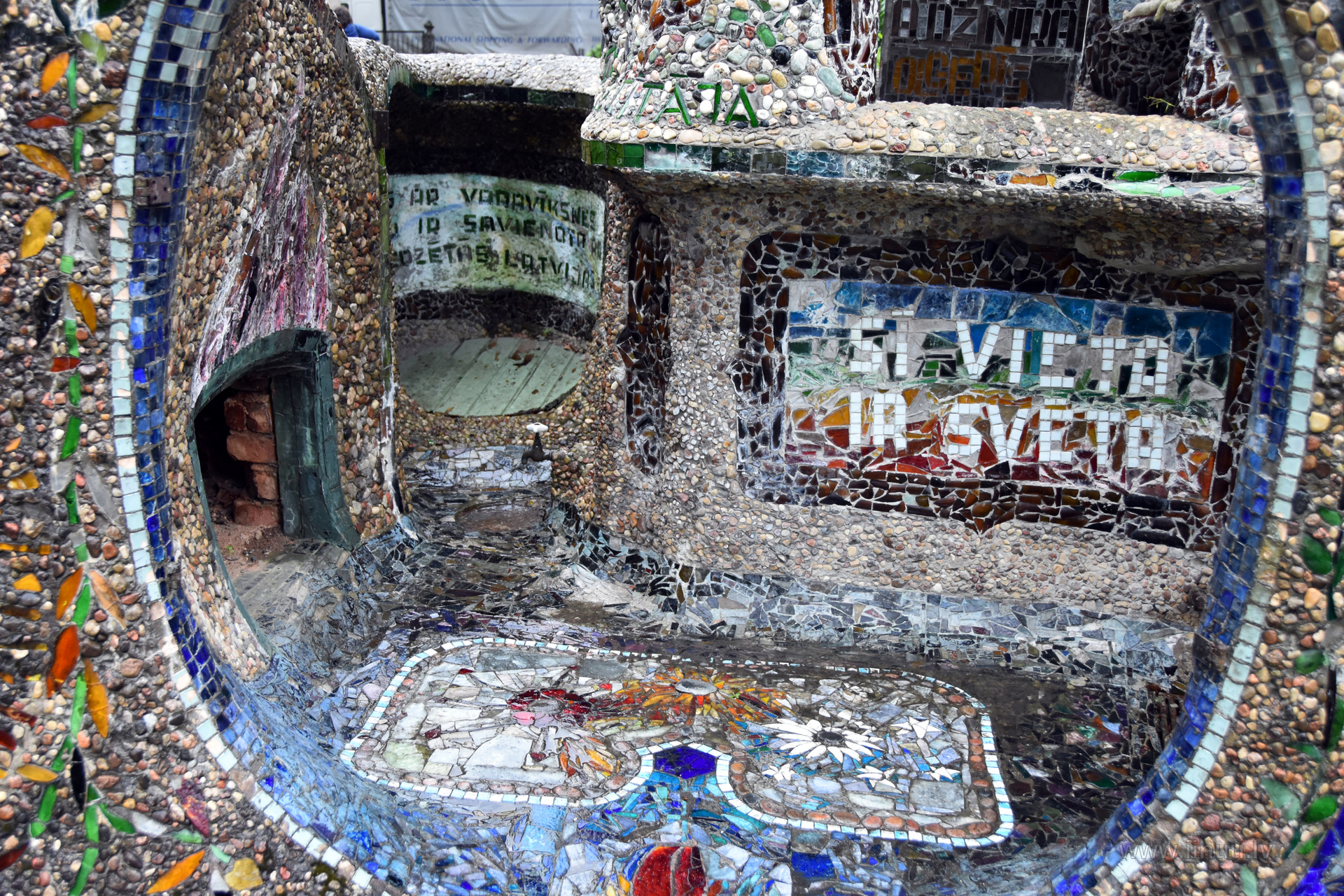
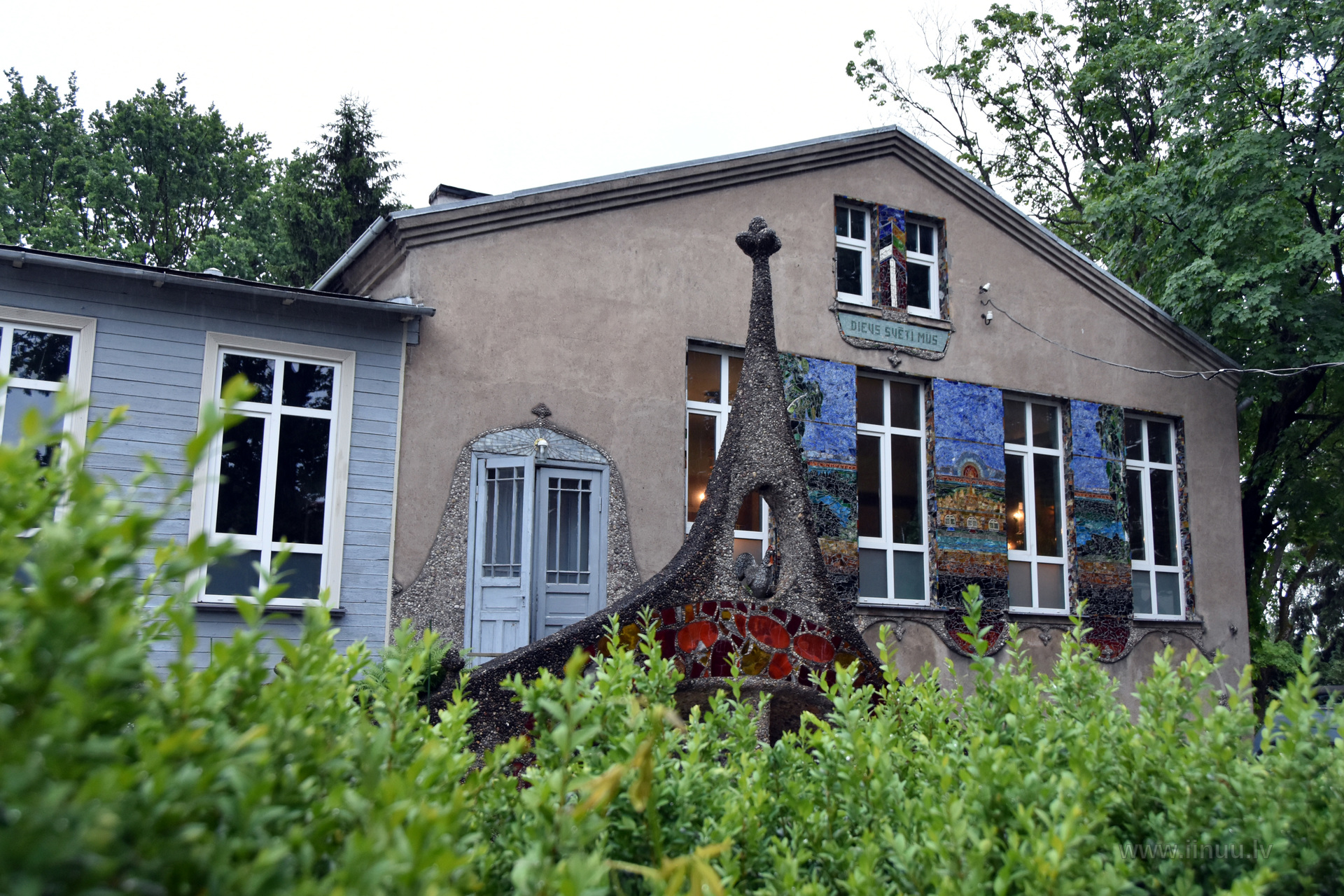
I had always wondered, driving past, what that interesting building was, whose garden and very facade reminded me of Gaudí's artistic masterpieces in the Barcelona park - mosaics of small colourful tiles and pebbles, sculptures, ornate benches and pathways. As it turns out, it's a church.
The rainy Friday evening was not exactly inviting for a walk, but we nonetheless pulled ourselves together and visited two churches or congregation houses that we had at some point driven past in our daily lives.
Misiones Evangelical Lutheran Church in Čiekurkalns
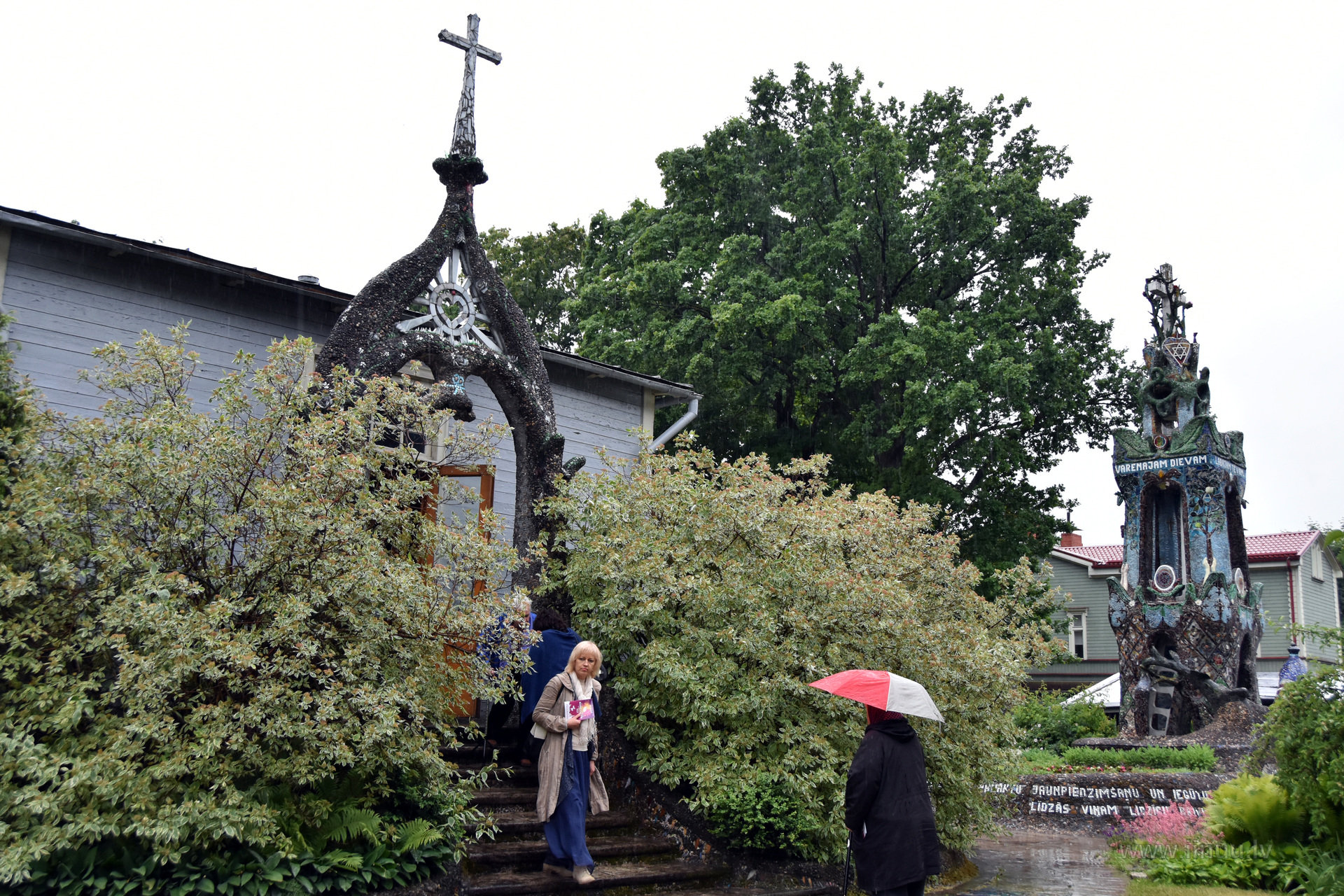
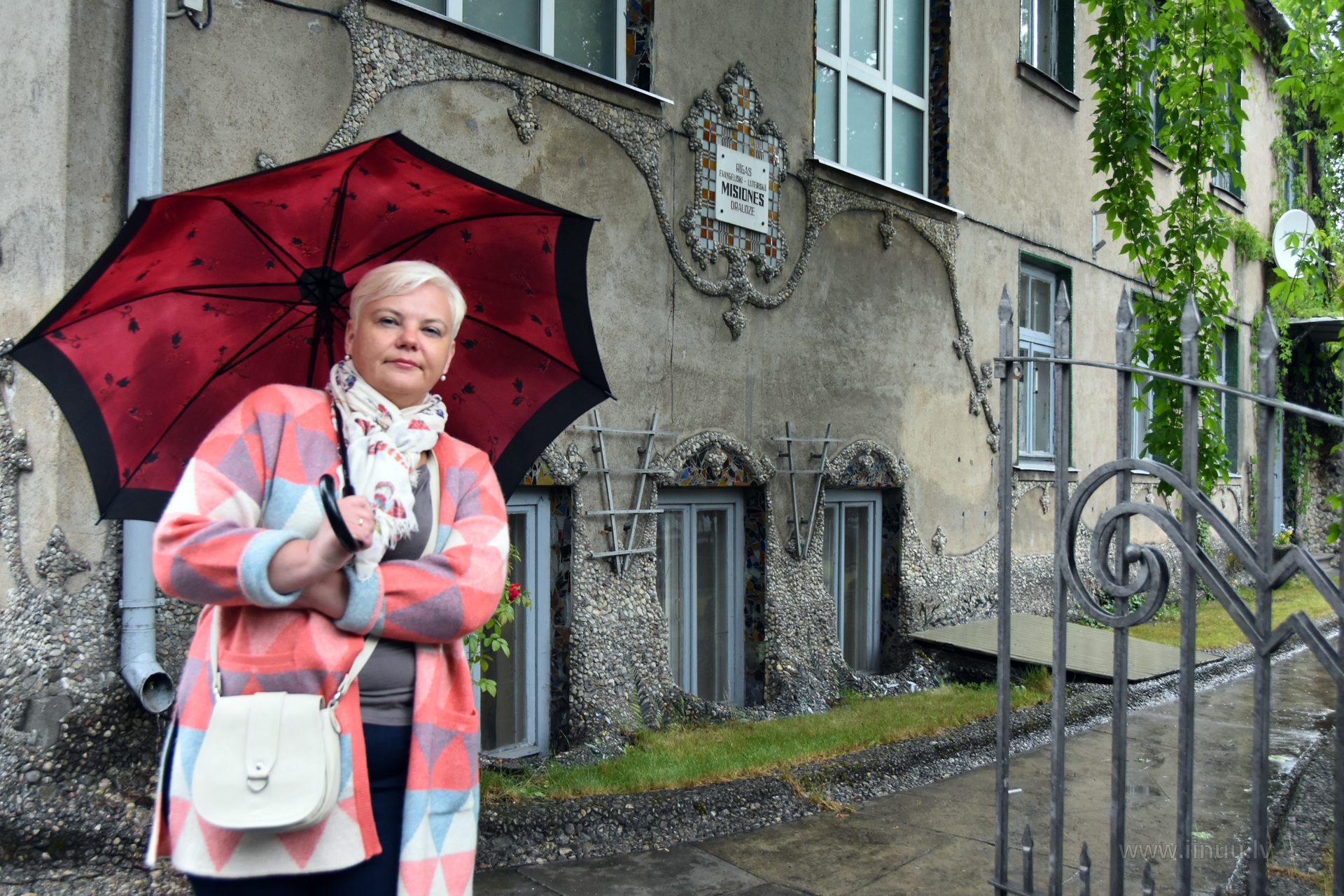
The location is comparatively out of the way - Čiekurkalns 1st Line - a narrow one-way lane where, unlike central Riga, it is nonetheless possible to find a parking space. I had always wondered, driving past, what that interesting building was, whose garden and very facade reminded me of Gaudí's artistic masterpieces in the Barcelona park - mosaics of small colourful tiles and pebbles, sculptures, ornate benches and pathways. As it turns out, it's a church.
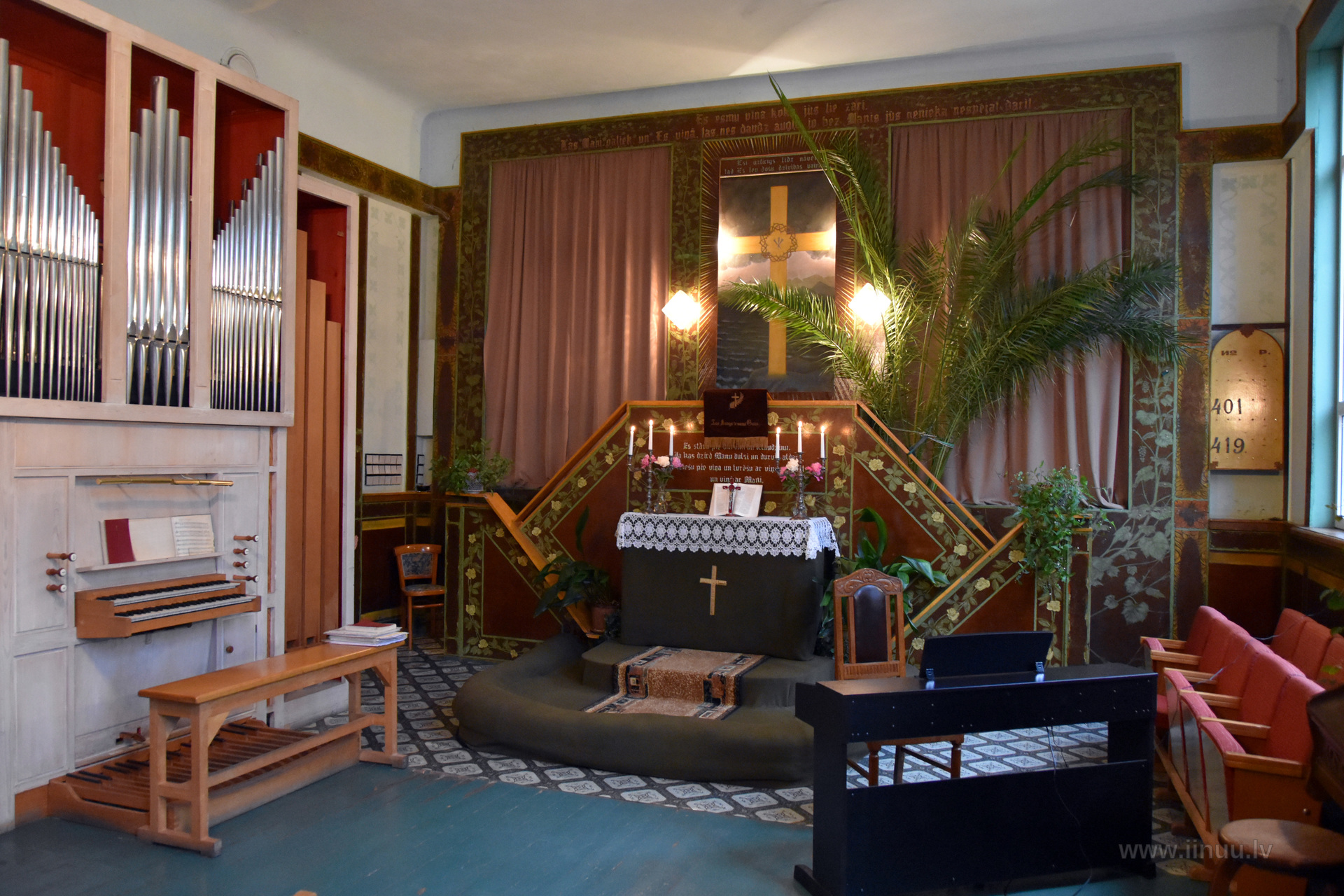
The entrance to the building is not easy to identify, unlike classical churches. Climbing a small flight of steps, past a rooster pedestal, through glazed wooden doors, you find yourself in an ancient-feeling space surrounded by Latvian ornamental and nature motifs. Were it not for the fairly large Christian cross drawn in the place of an altar, one might think this was some nature-deity worshipping congregation.
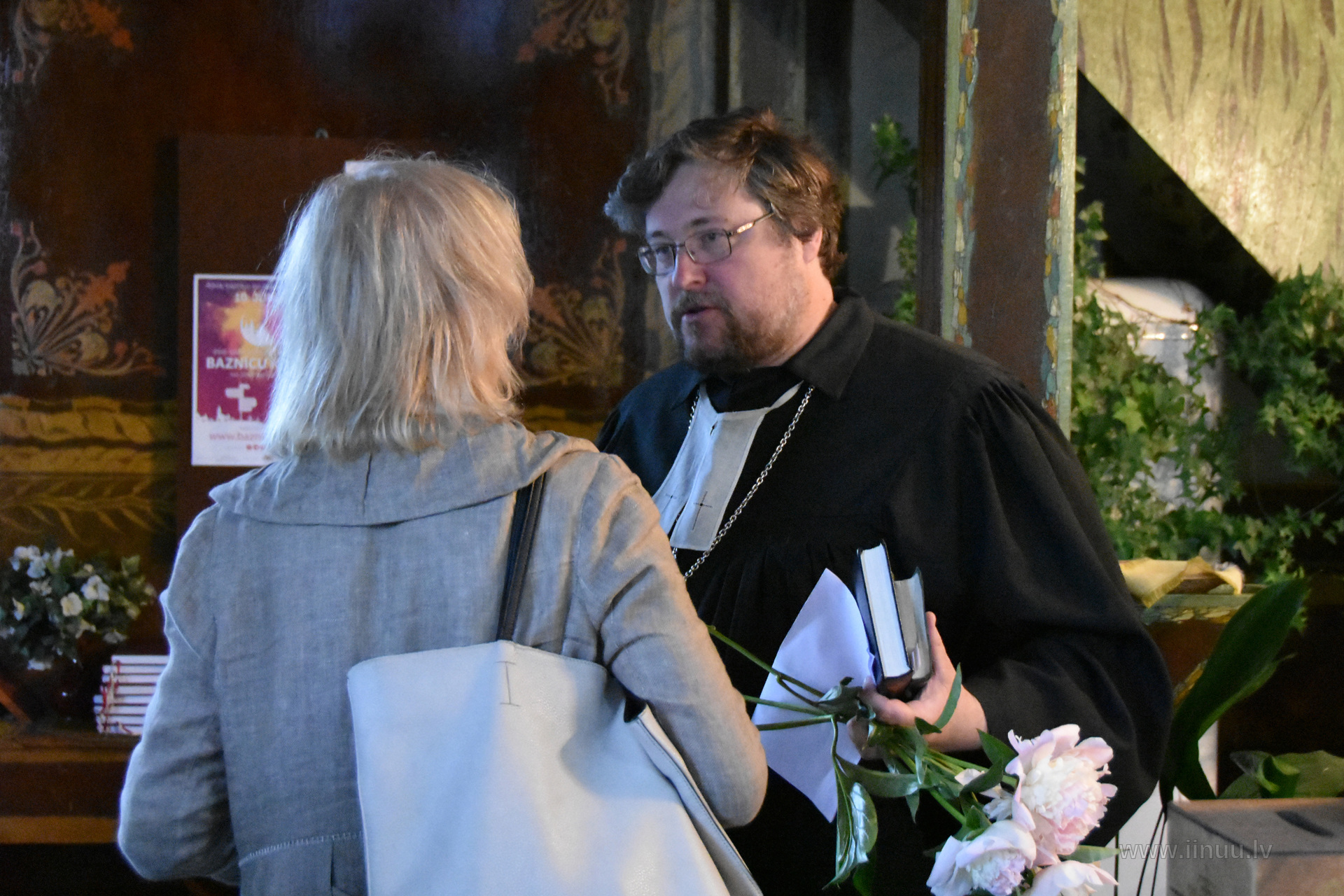
Thanks to Pastor Artis Burovs's account, we briefly learned the history of the Misiones congregation house. The church was built and opened during Latvia's first period of independence in 1928. The Misiones congregation society had been founded in 1921 by Arnolds Vilciņš, with the aim of uniting Latvians living in Russia who had at that time returned to live in Latvia.
Oļģerts Miķelsons - the Latvian Gaudí
But this fantastic stone garden was created over 30 years (begun in the 1970s) by the former civil engineer and congregation deacon Oļģerts Miķelsons, who is now around 90 years old and is in hospital due to health problems. He is a very interesting personality.
During the Soviet era, he incorporated the flags of the three independent republics - Estonia, Latvia, Lithuania - into the building's facade, which fortunately went unnoticed at the time and remain in their place to this day. In the final Soviet years, Oļģerts Miķelsons, cross and Bible in hand, led demonstrations against the occupying military at the Zvārde military training ground. It was also in this Misiones congregation house that the flag of the Environmental Protection Club was consecrated.
Very little or practically no information about Oļģerts Miķelsons's own outlook on life and reflections is to be found on the internet, unlike the Catalan artist Gaudí, about whose life philosophy quite a lot has been written. I came across a small quotation on the om.vera.lv website, which appears to have been created as Oļģerts Miķelsons's homepage, but for now with sparse material. I allowed myself to copy the author's quotation, which at least gives a small glimpse into his personality:
Everything new interests me; the old I keep mainly as an anchor point, so that the new does not fly off into unreachable distances. [...] What interests me is not so much some finished creation made by human hands, but mainly the process of how it came to be. Of the arts, the closest to me is painting, with which I myself was diligently engaged in my time, even organising painting exhibitions; but closer still to my heart stands music, and when its turn came, I composed one sacred choral song after another. In truth I did not compose them, but only wrote down what I heard from my Inner Self. They have a distinctly melodious melodic line, for which reason our congregation's choir conductor called them sacred hits. Half of these approximately 70 songs also have my own words, dedicated mostly to my female friends, but of course also to my beloved God and Father in Jesus Christ. But in closing this account, I must bear witness that my entire life is One Great GOD'S GRACE.
Also surprising is the small number of followers of the congregation's Facebook page (at the time of writing, only 85), where its administrators tirelessly post the most current information - genuinely quite interesting, with quality photographs from their beautiful garden: https://www.facebook.com/misionesbaznica/
Church Night Concert at Misiones Congregation
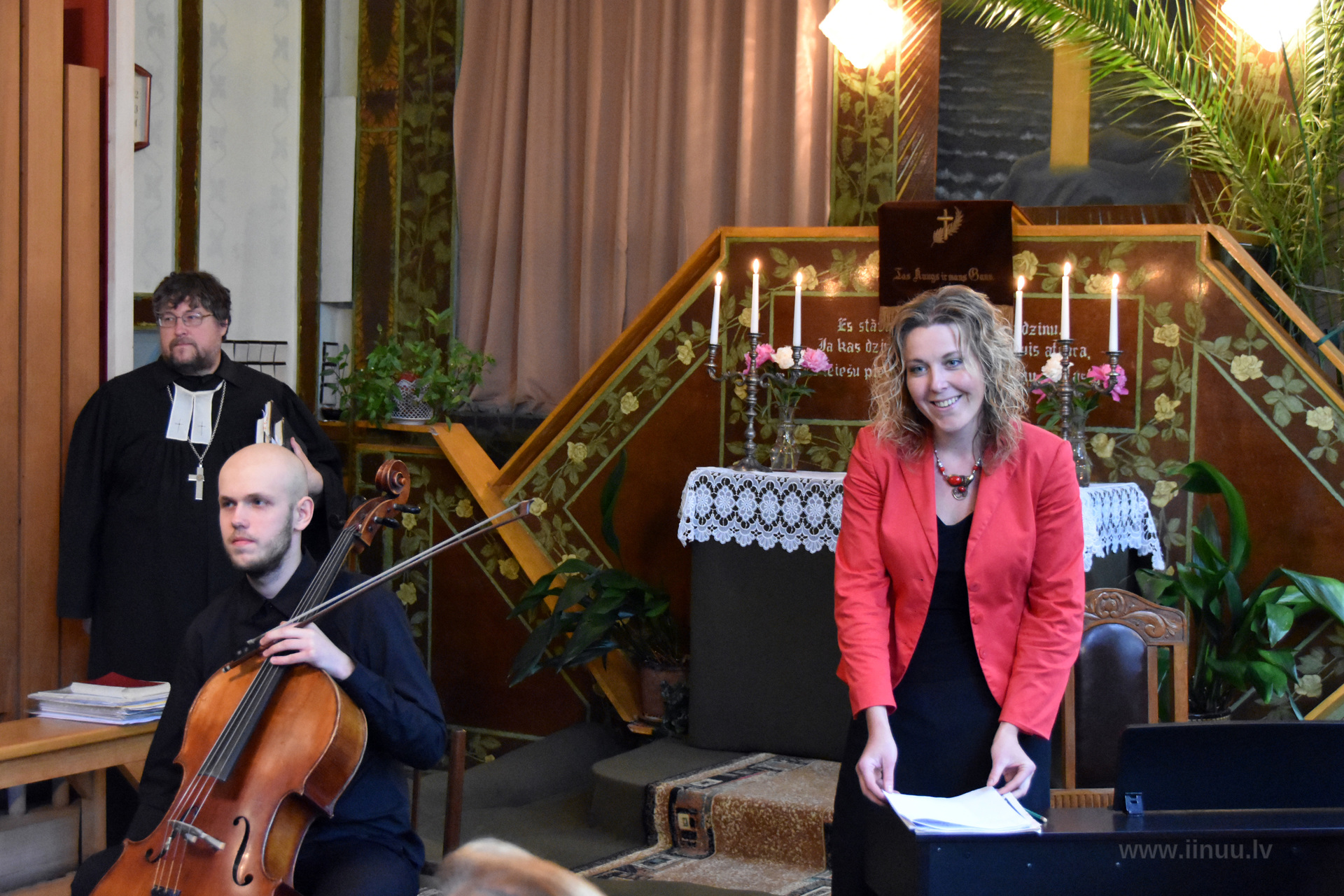
Admittedly, we only listened to the first part of the concert, where Lelde Tīrele (piano) and Krišjānis Gaiķis (cello) performed works by Robert Schumann and Pyotr Tchaikovsky. Below, a small glimpse of the sonic refreshment received after an intense working week:
Golgotha Baptist Church
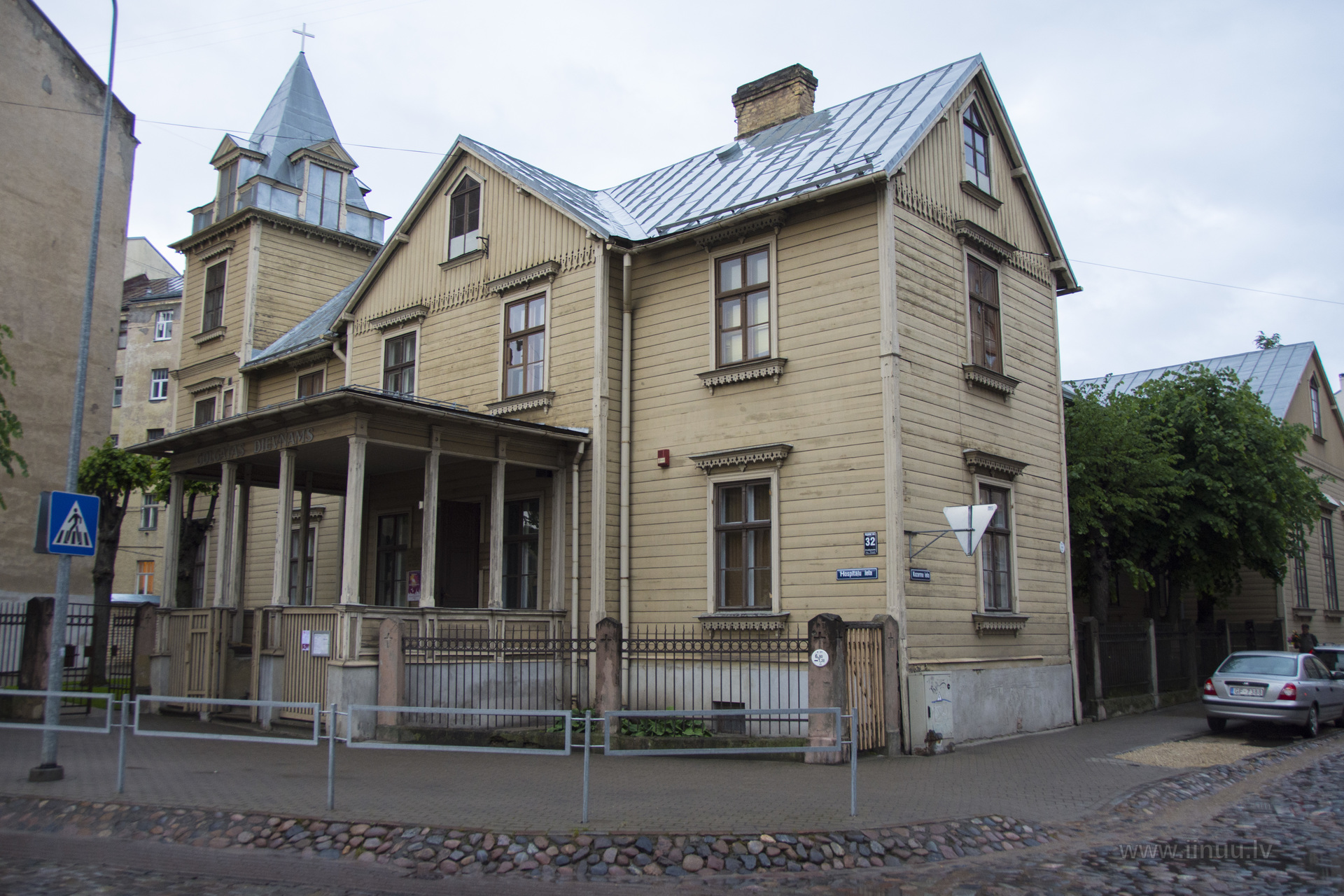
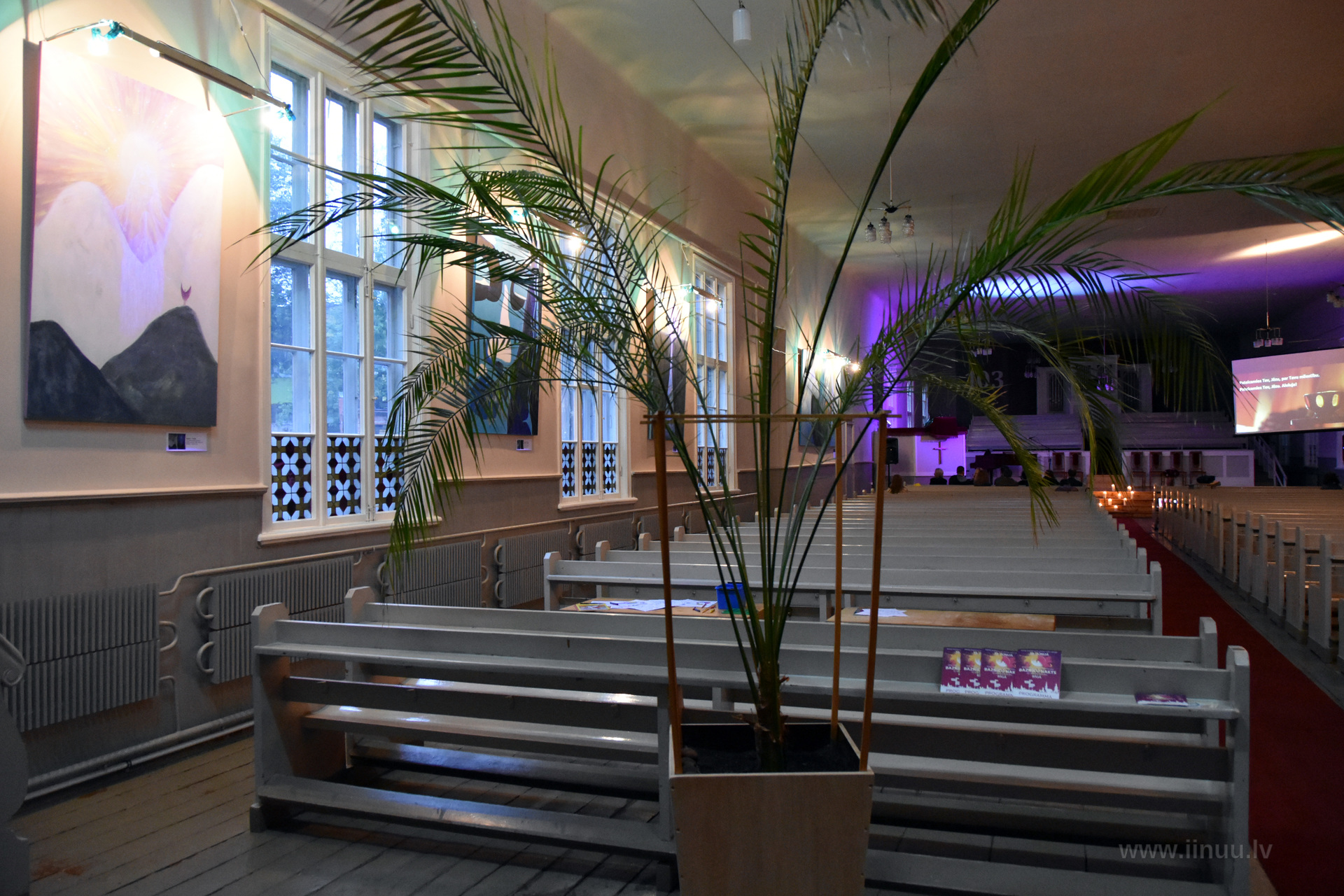
Our second stop on the Church Night journey was the Brasa neighbourhood and the Baptist congregation house on Hospitāļu Street. If the first church was small but almost full of visitors, this house was large and sparsely attended on this particular evening. But a fairly talkative pastor of the Russian congregation welcomed us (they share the space, it turns out - a Latvian Baptist congregation and a Russian Baptist congregation - yet another phenomenon of small Latvia, where any opportunity to divide something is taken).
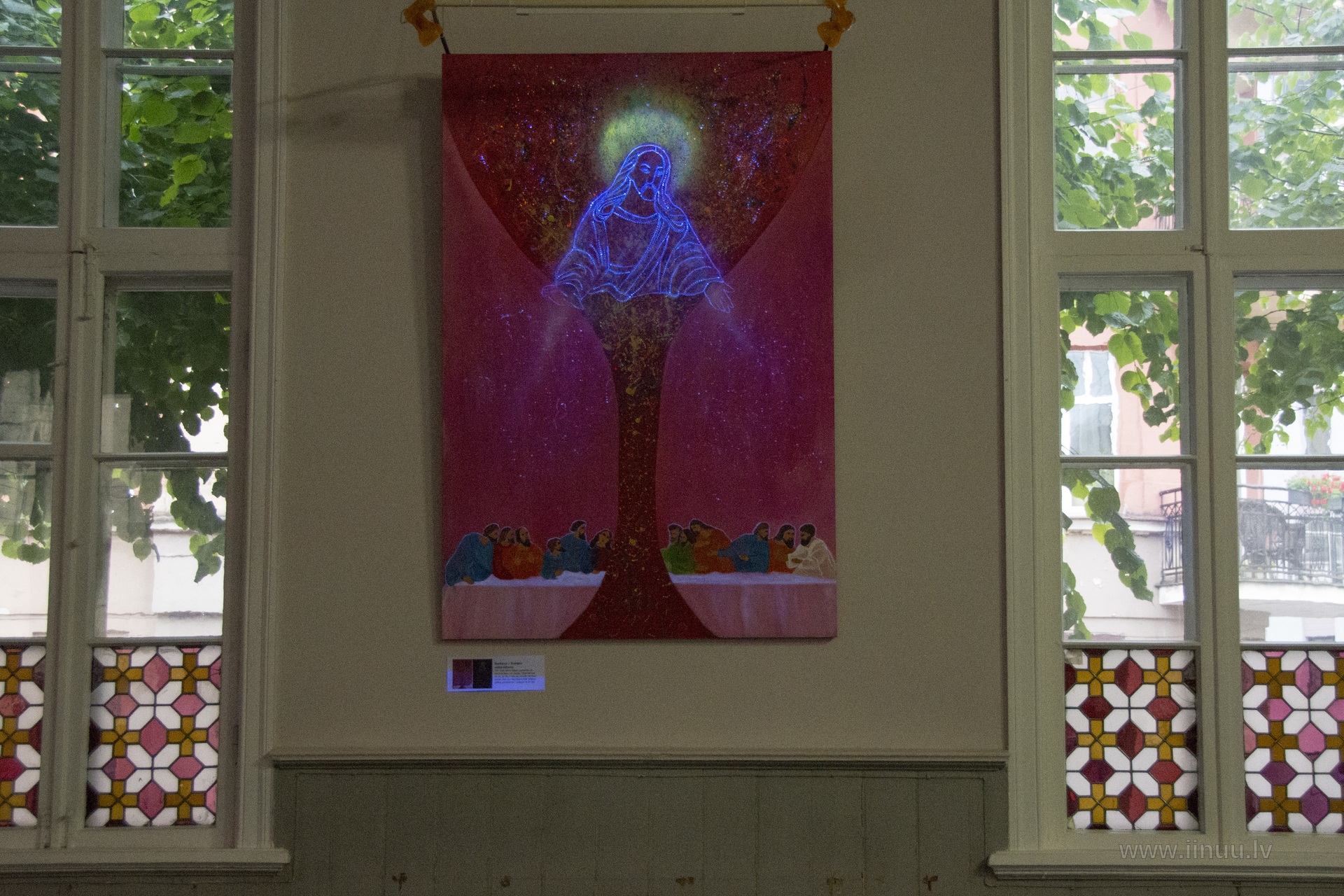
What struck me most in this house was Ivita Skudiķe's series of seven large-format luminescent paintings "Covenant in Rainbow Colours", which created a certain effect of divine presence - figures that seemed to emerge from the painting as the lighting changed. The first work, "Faith" - mountains, above whose peaks an angel bathed in bluish light appears as a reflection of a figure standing at the mountaintop.
You are the light of the world. A city on a hill cannot be hidden. (Mt. 5:14)
Hashtag
A digression. The Church Night content creators use the Latvian word "tēmturis" for hashtag, which does sound very Latvian. I was not used to it, as I myself use "mirkļbirka". I looked it up in the Academic Terms Database - it turns out the recommended variant is "atsauces tags" (hmm, sounds like a half-translation). Well, yet another new word for linguists to debate.
comments