How to Shop in Istanbul
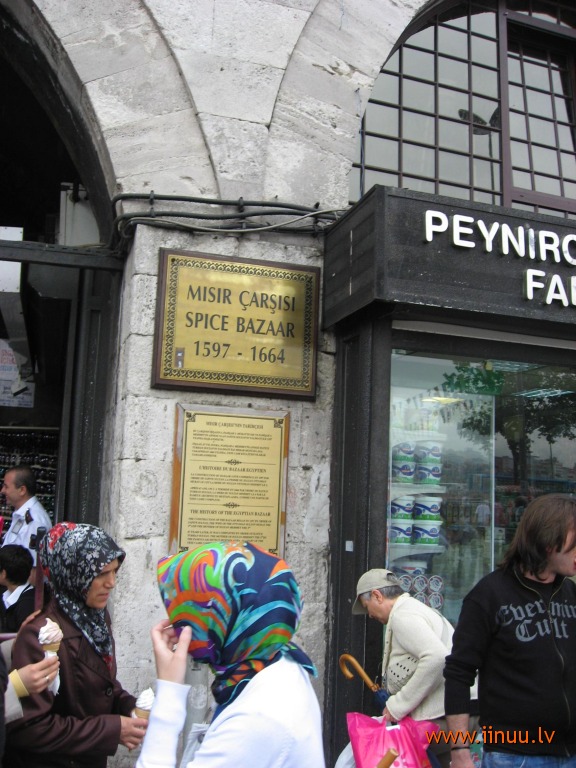
It is often said that for a Turk, trading is one popular national sport - this summer we were convinced of it one hundred percent. We visited and shopped at two markets in Istanbul - the Grand Bazaar and the Spice Market (Egyptian Bazaar).
It is often said that for a Turk, trading is one popular national sport - this summer we were convinced of it one hundred percent. We visited and shopped at two markets in Istanbul - the Grand Bazaar and the Spice Market (Egyptian Bazaar).
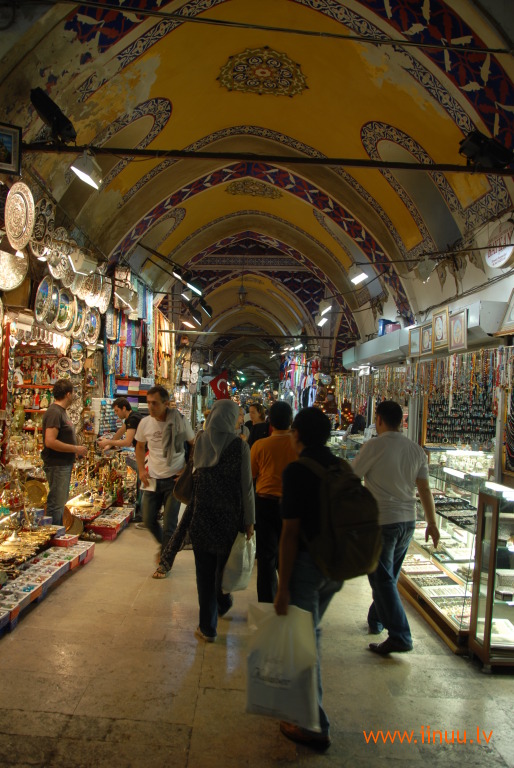
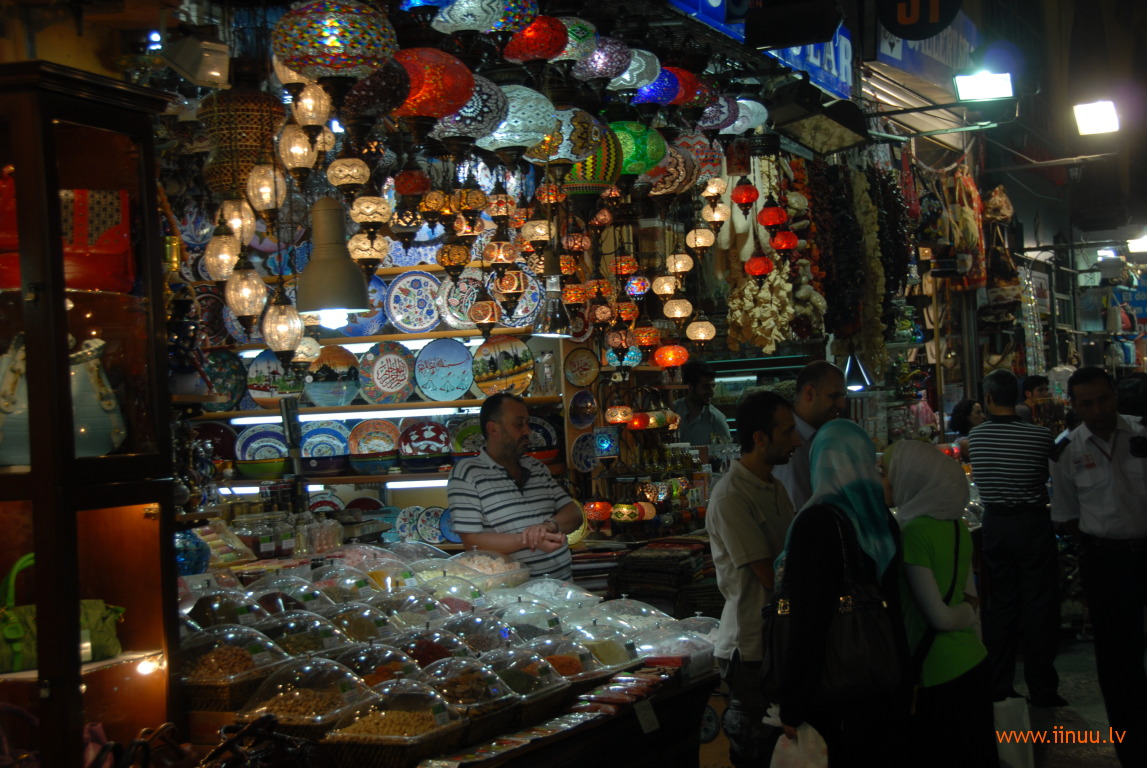
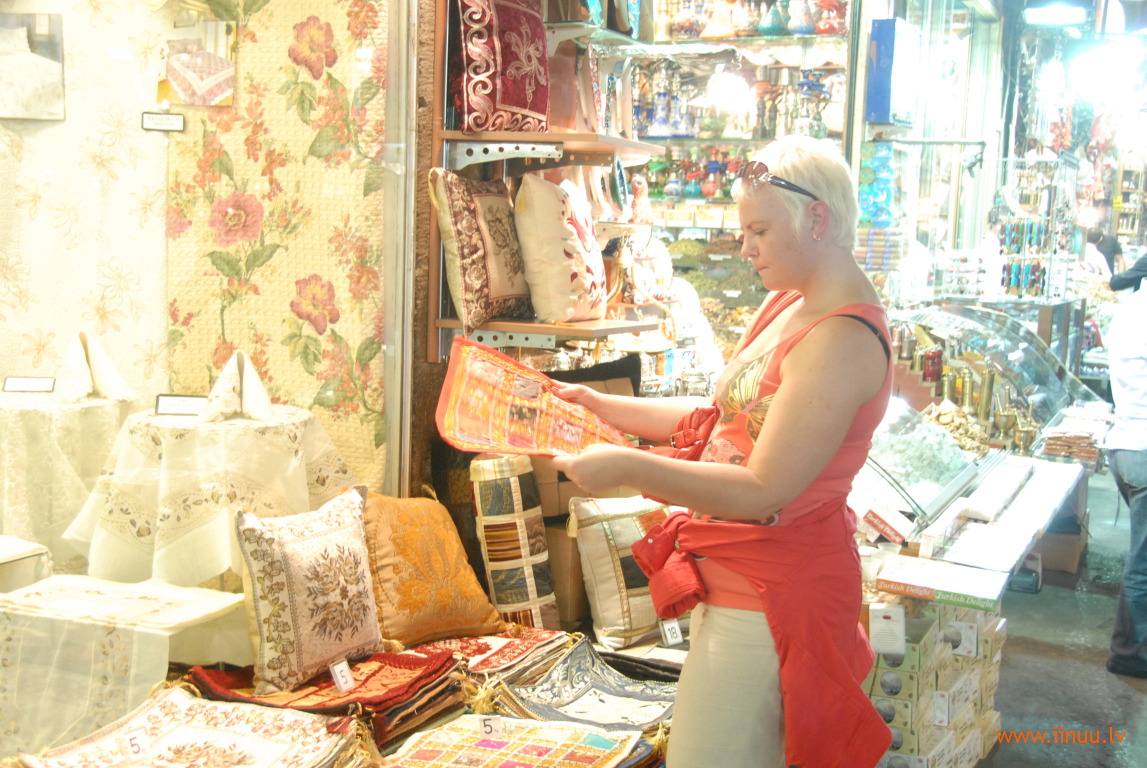
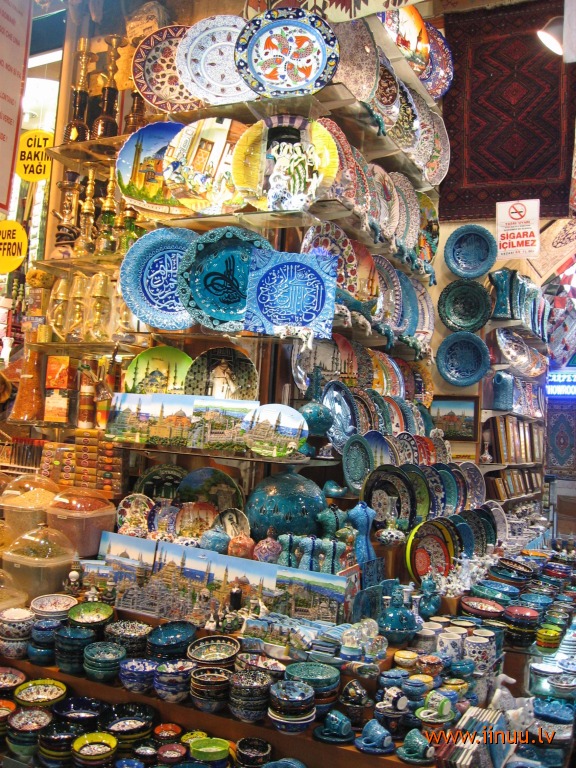
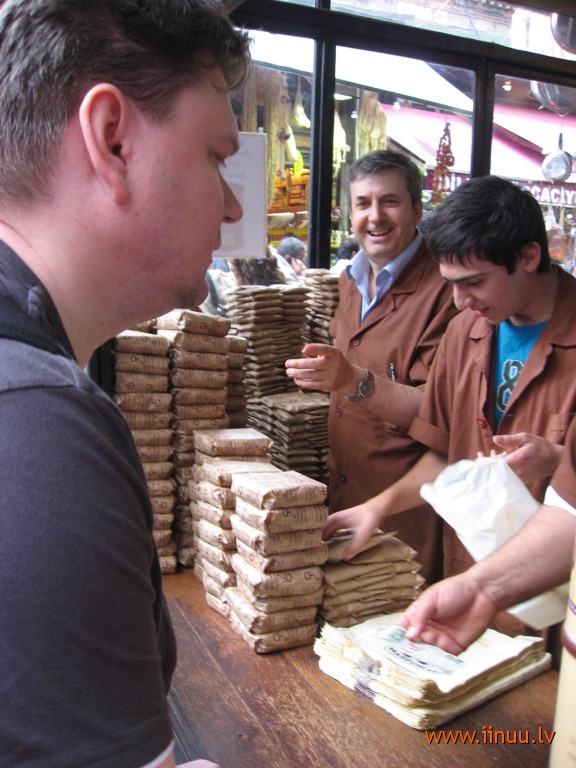
The first of them - the Grand Bazaar - is sheer madness: lanes covered by painted vaulted ceilings stretching across several city blocks, thousands of shops that shimmer in every possible colour, goods displayed across countless levels, chatty vendors (100% men) who call after you in English and Russian, inviting you in so they can immediately set about "processing" you.
It is a polished ritual:
• first step, luring the buyer in;
• second, "weighing up" the buyer by eye and with questions - what is your name? and where are you from? - that is, from how wealthy a country and how financially capable;
• third step, quoting a disproportionately high price (according to their view, though to us Latvians hardened by Latvian prices it does not seem like much) and impatiently waiting for you to start haggling - something like "how expensive!" - and naming a price two, three, or five times lower;
• fourth - performed indignation: "Madam, it is handmade!" - how can you think such a thing? - yet practically already prepared to sell.
And so at every vendor, and again from the beginning. Prices are not displayed anywhere in the Grand Bazaar, so one has no idea what such and such a thing might cost in Turkey. Moreover, what is interesting is that with no facial expression or gesture may one show that one actually likes a particular item and is ready to buy on the spot. Interest in you instantly vanishes; on the other hand, if you have no need of something, the vendor's eyes light up and he is ready to bend over backwards to "foist it on you." We understood that only two things decided everything - a question of time and patience. Unfortunately, neither was with us that day.
It is very easy to get lost in the Grand Bazaar, as there are several exits. To buy something decent and cheaply, one must spend at least half a day here - nothing will come of a quick dash through. When we had wandered for a good while along the market's lanes and the forehead was wet not so much from the heat as from the energy that this communication process with the insistent vendors consumed, we realised that we finally had to buy something lasting.
We dropped into a hookah shop, where the shop owner, upon spotting a curious woman nosing around the pipes, invited her to sit down and at great length explained how it is operated - where to pour the water, how to fill it with tobacco, where to place the lit coal, and so on. We were glad to be able to rest our legs and minds from the market hustle. The result was that we were prepared to buy a pipe at the asking price without much haggling - only, so as not to offend the vendor's spirit, we wheedled him into throwing in some tobacco, coals, coal tongs, and pipe mouthpieces.
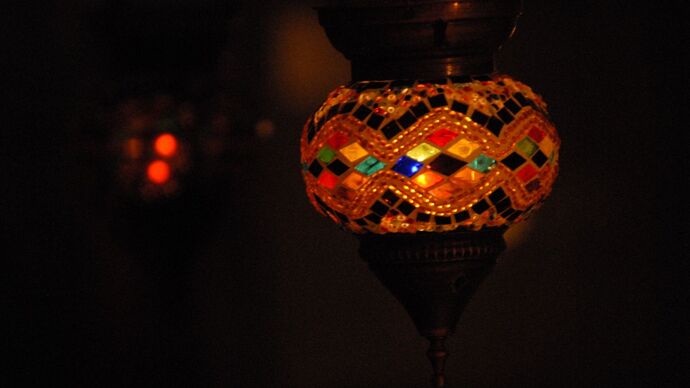
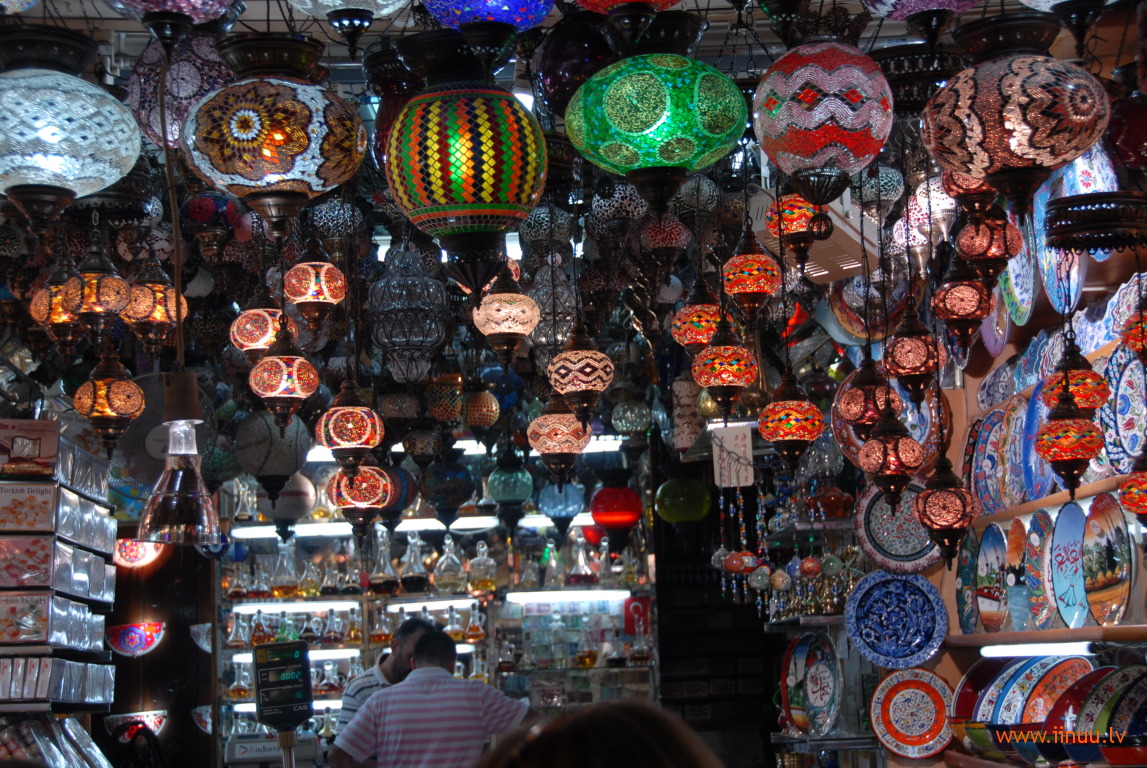
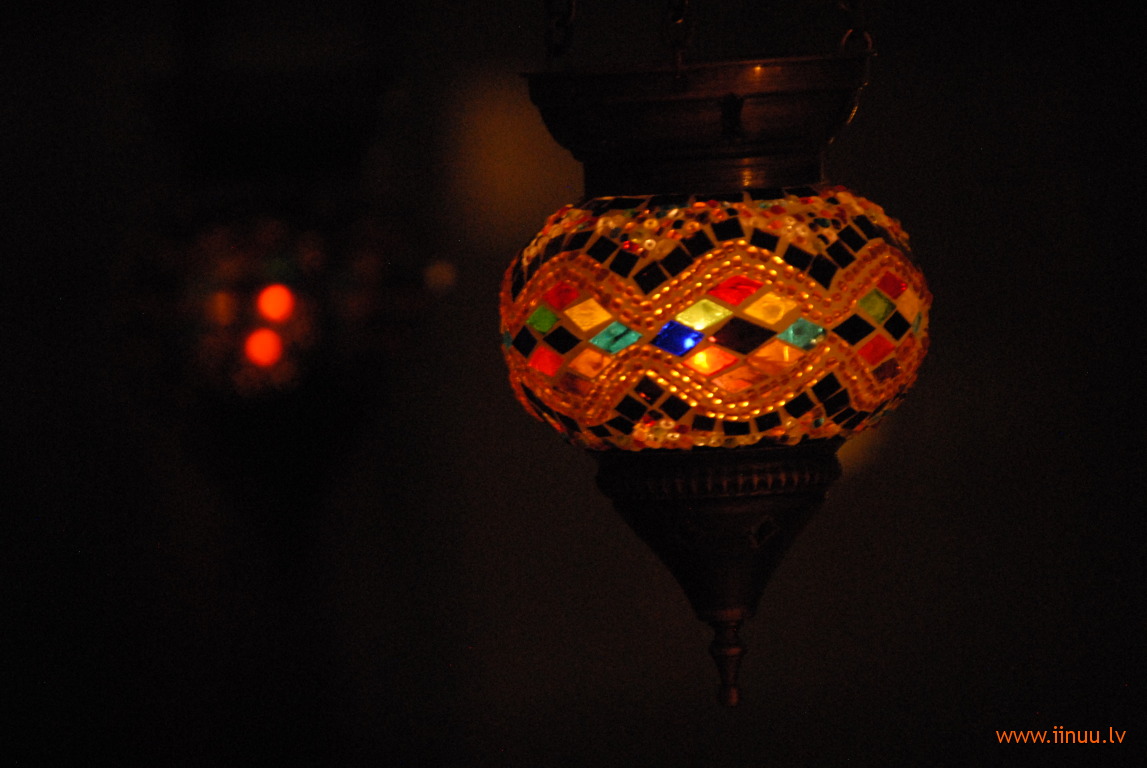
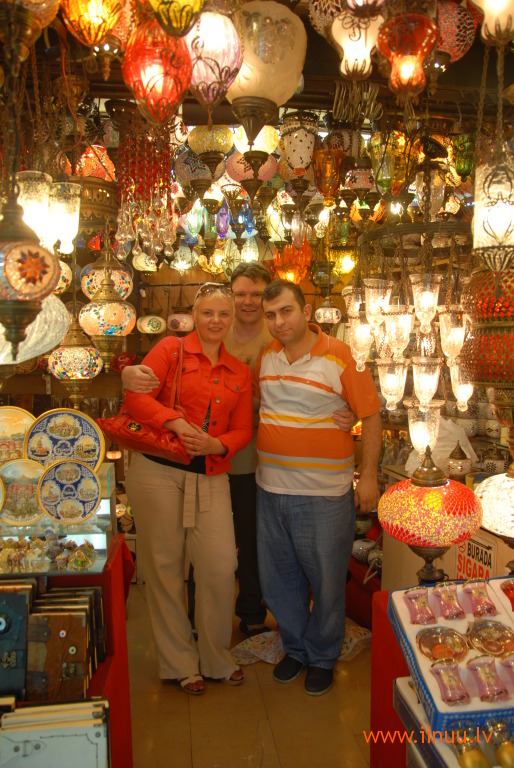
We could not walk past the magnificent lanterns either, which glowed in a splendid richness of colours; moreover I had promised myself to bring one home from an Eastern market for the living room décor. There too we were received as their own guests (a lovely ritual they have) - they asked how we were enjoying Istanbul, treated us to water (in some places tea or coffee was offered from small delicate cups), lifted down various lanterns hanging from the ceiling and showed how they glow in the light of a little bulb or a candle flame. In the end we were photographed and embraced like brothers.
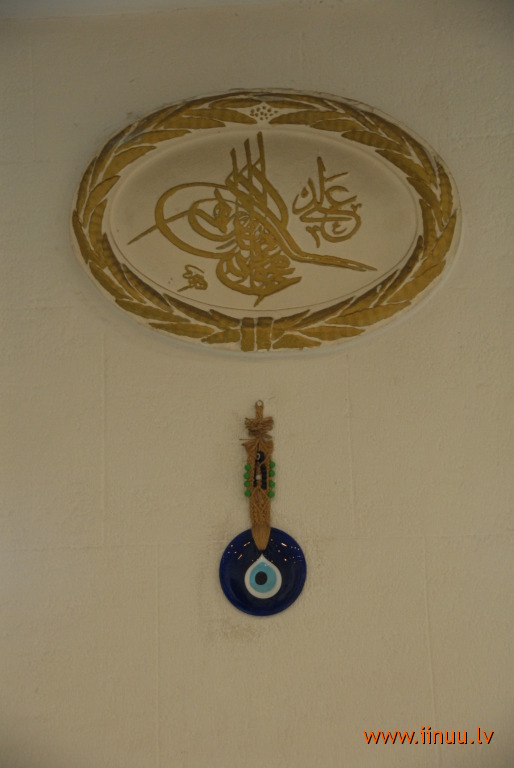
Everywhere one turns - in souvenirs, in jewellery, in hotels and shops on the walls - there is the blue eye (even on glass penguin figurines on their tummies). It turns out Turks are quite superstitious, firmly believing that the blue eye will protect against the evil eye.
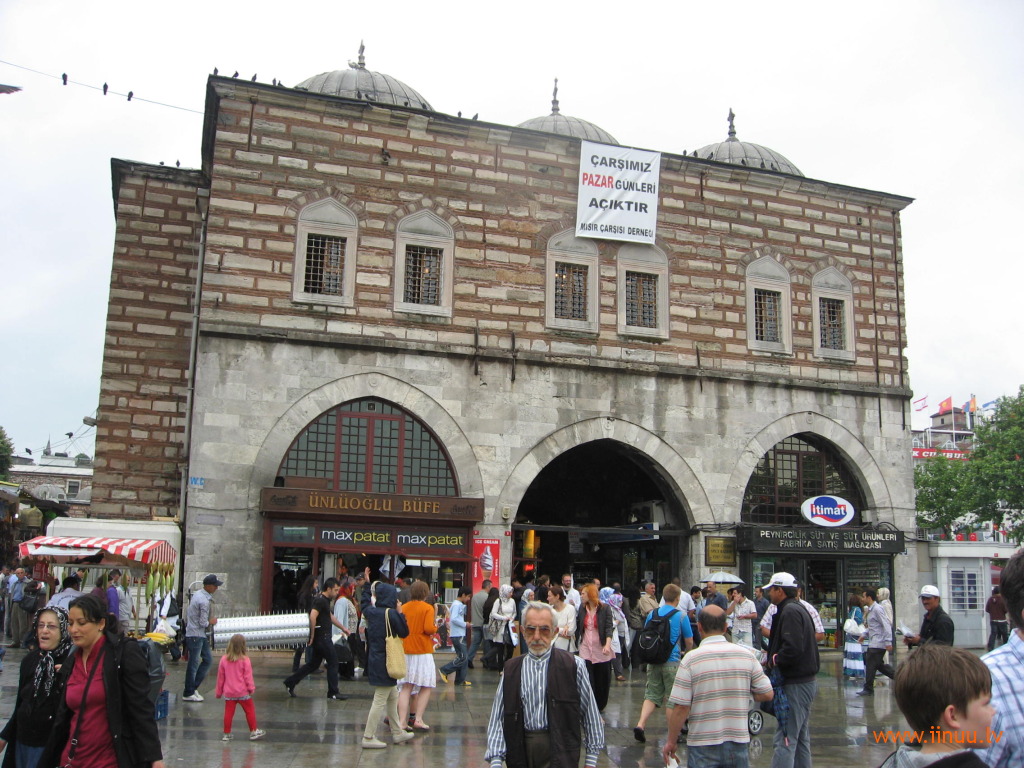
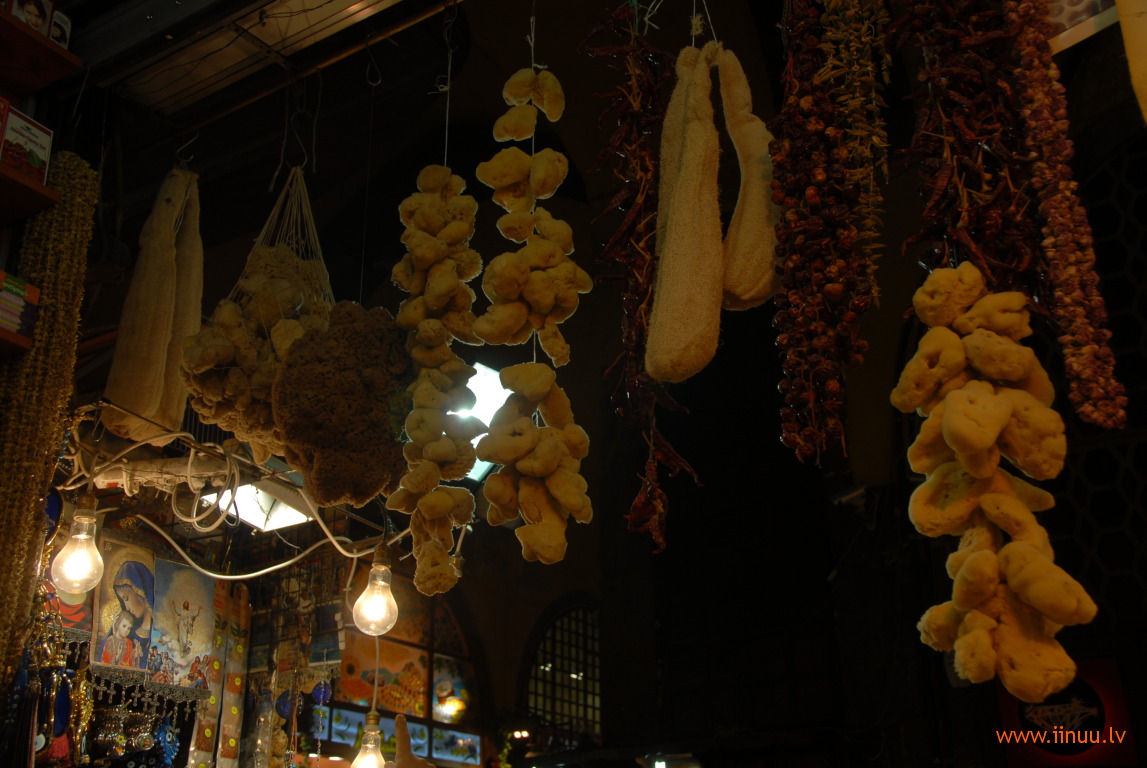
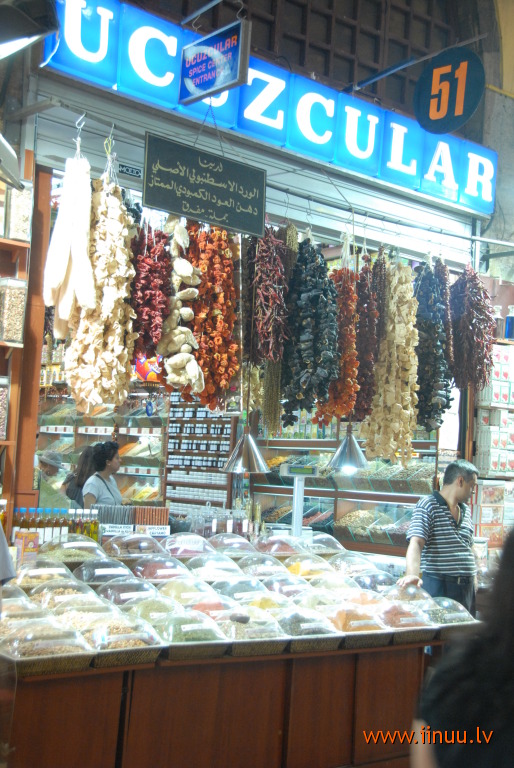
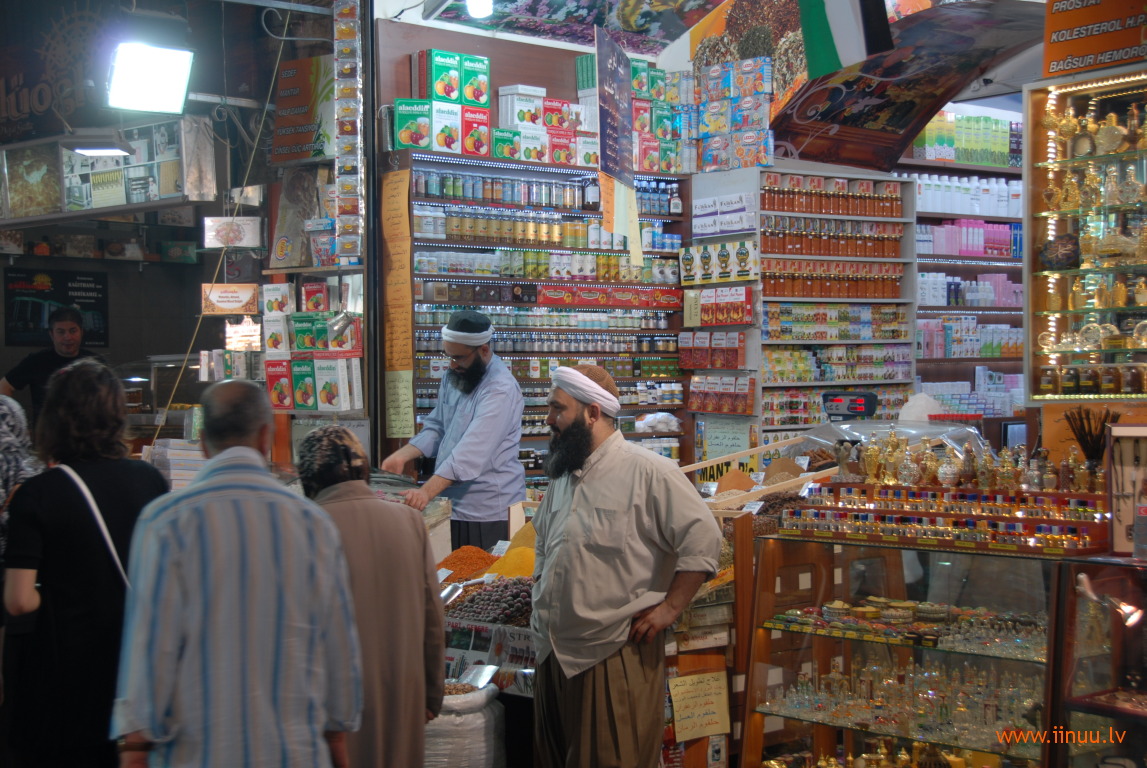
If all manner of dishes, carpets, gold, pipes, scarves, and goodness knows what else can be purchased at the Grand Bazaar, then all bodily pleasures and delights are catered for by the Spice Market, located by the Galata Bridge next to one of the many mosques. The market is laid out in an "L" shape and is much smaller and easier to navigate.
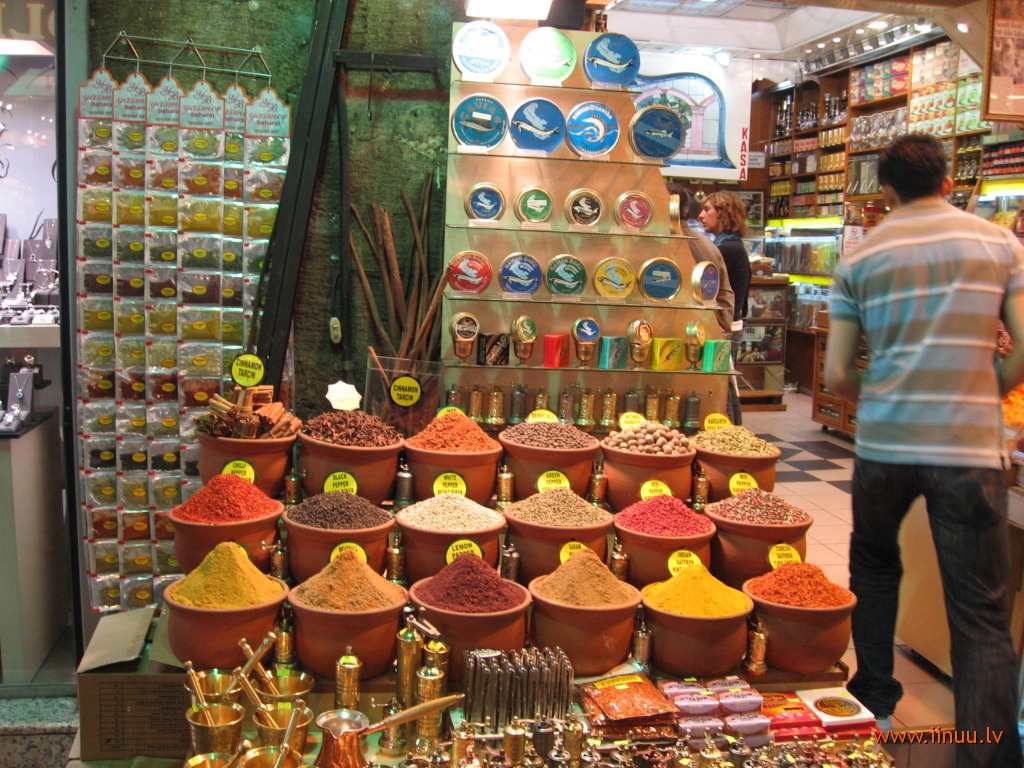
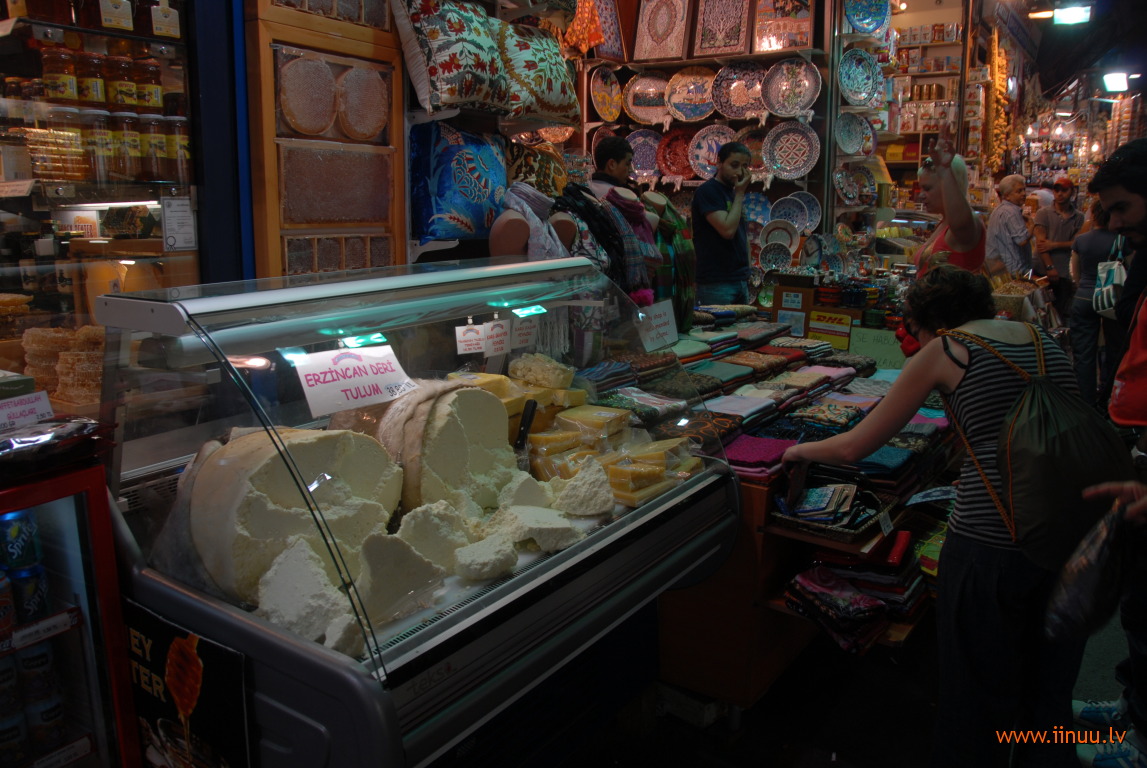
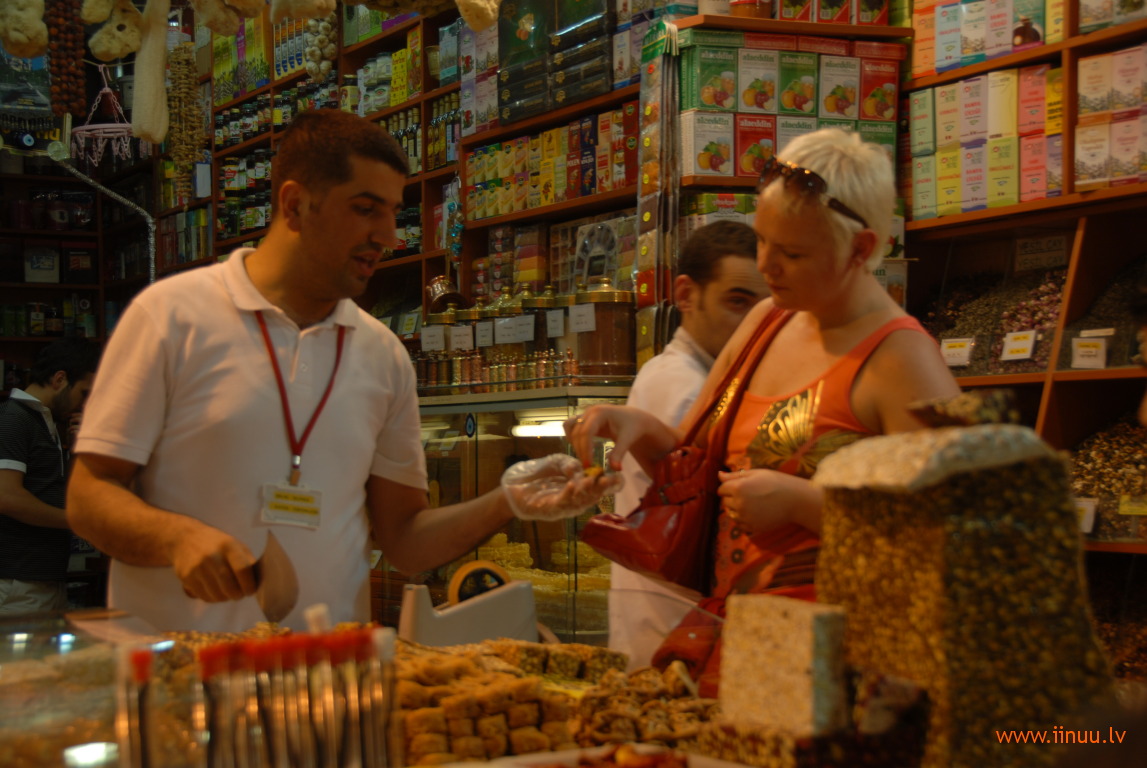
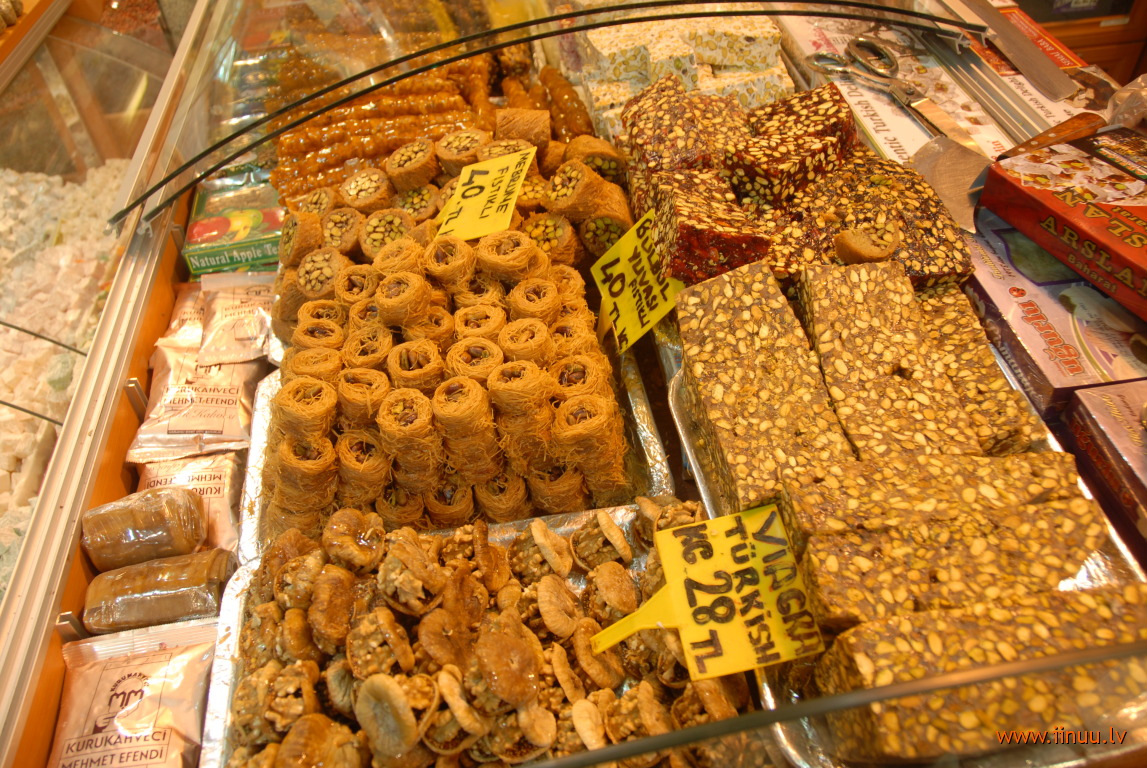
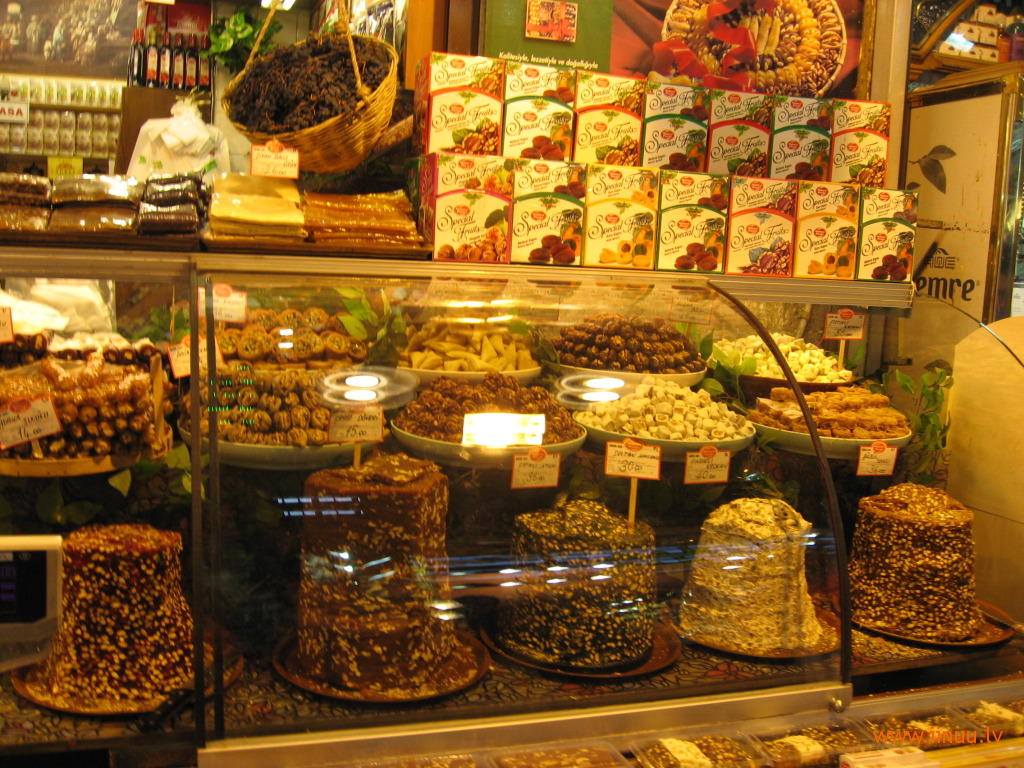
There again one can become confused in the bouquet of aromas and flavours. We started by buying coffee at a specialist shop next to the market. 100 g of Turkish coffee - 2 TL. The option to choose from various package sizes. Then we went to sample various spices and the celebrated Eastern sweets. Spice prices ranged from 38–40 TL/kg. Saffron, cinnamon, turmeric, tarragon, marjoram, various blends for meat and fish. Mountains of different teas; we sniffed our way to utter confusion. The popular apple tea, rose petal tea, and so on. Sweets could be eaten to one's heart's content for nothing at all, without buying anything, as samples were given everywhere along with recommendations as to what in the vendor's view was better. The most popular sweets - lokum (16 TL/kg) and baklava (38 TL/kg).
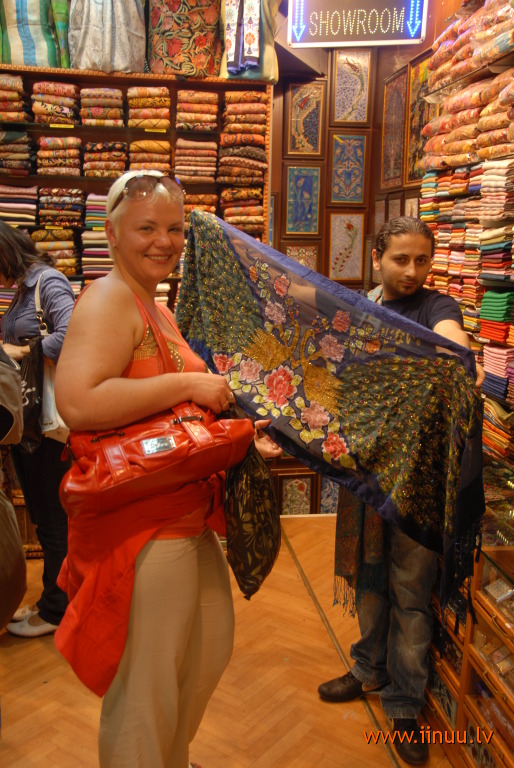
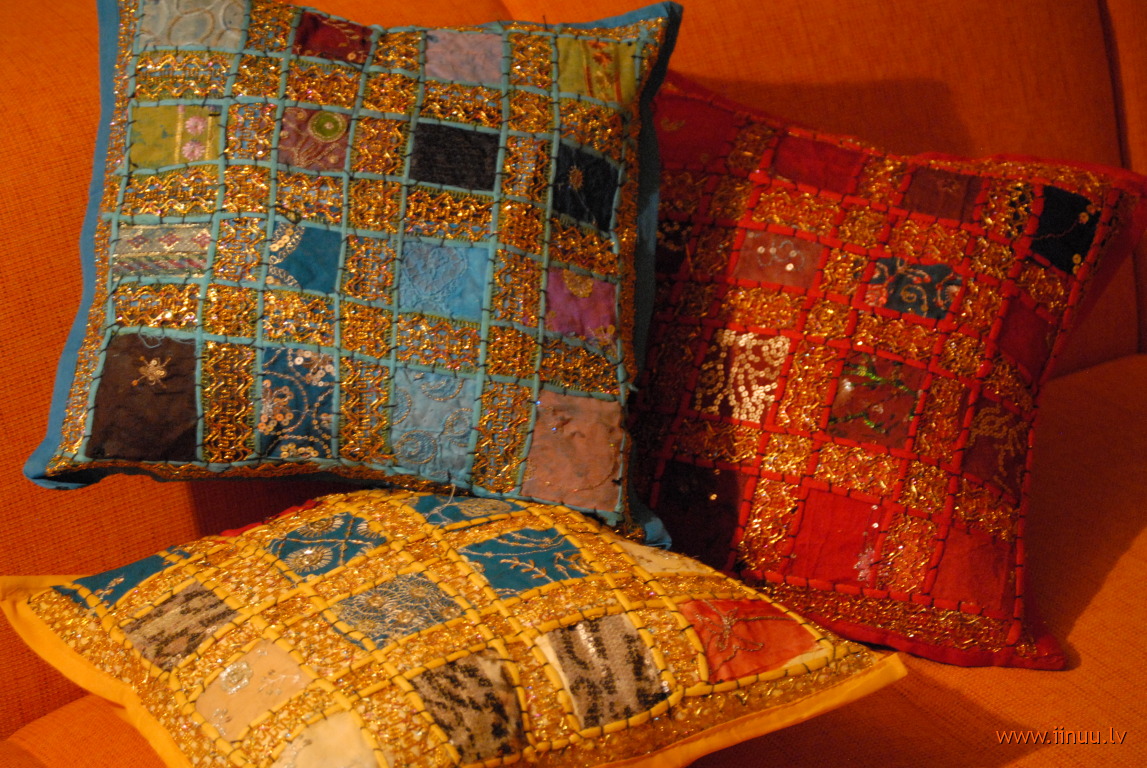
Prices were marked everywhere for food items, so here one could relax and only decide whether or not to let oneself be sold as many grams as possible. In essence the vendors' attitude here was not so insistent either - one could linger longer examining a tempting scarf or cushion cover embroidered with various patterns and small stones.
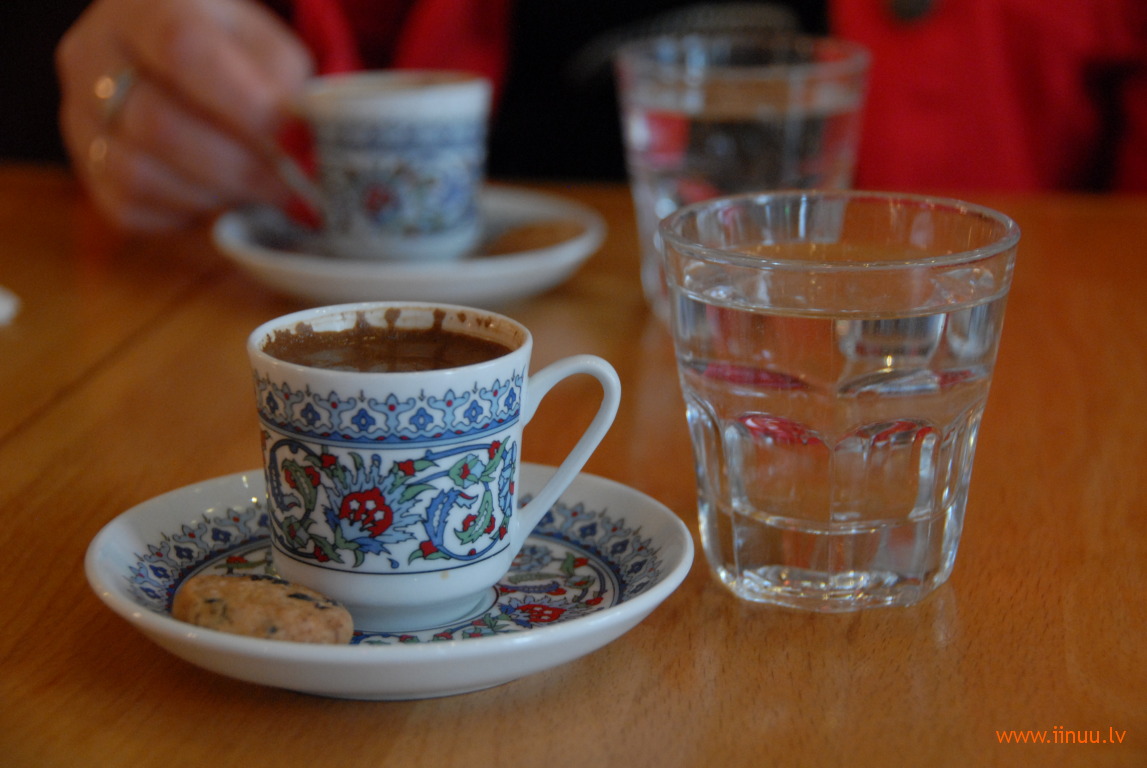
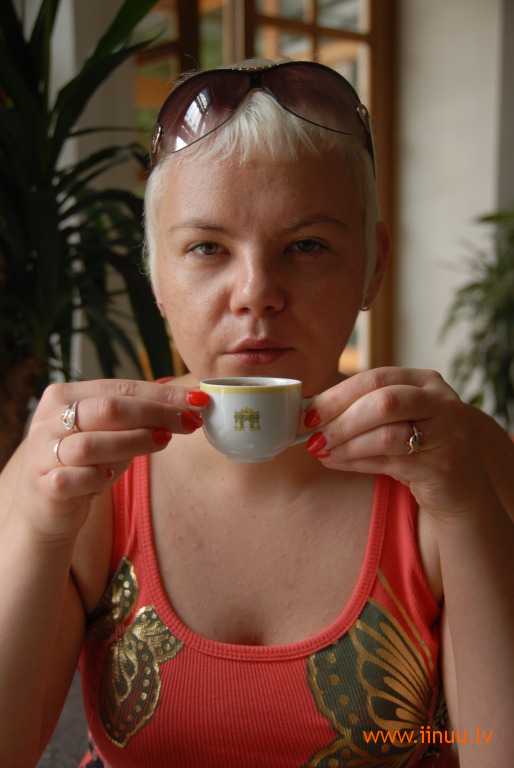
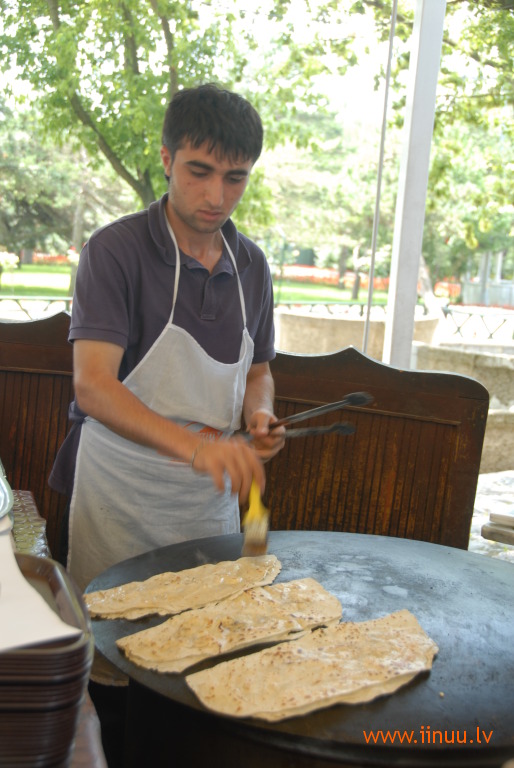
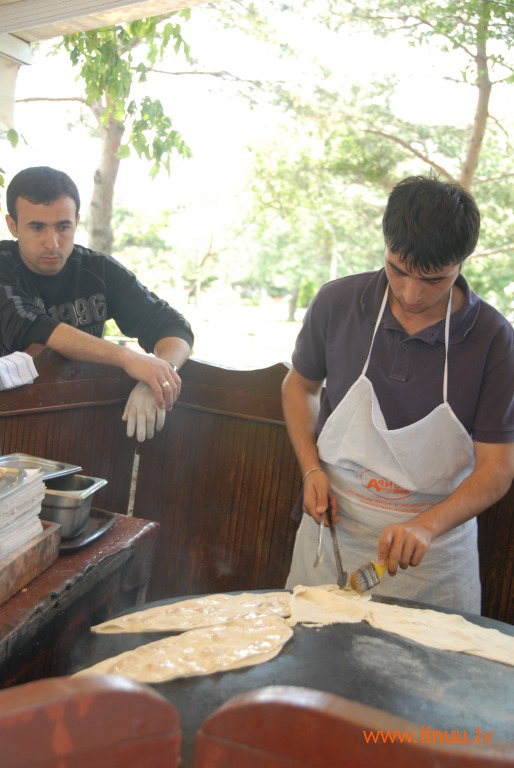
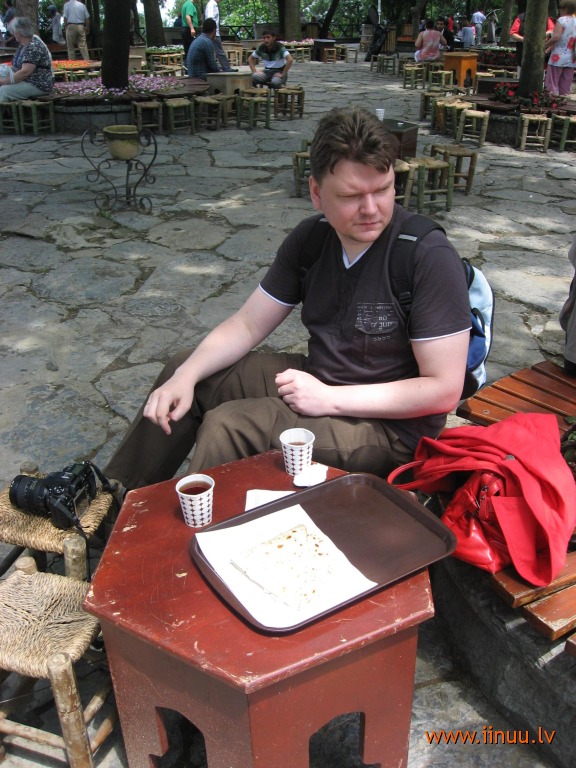
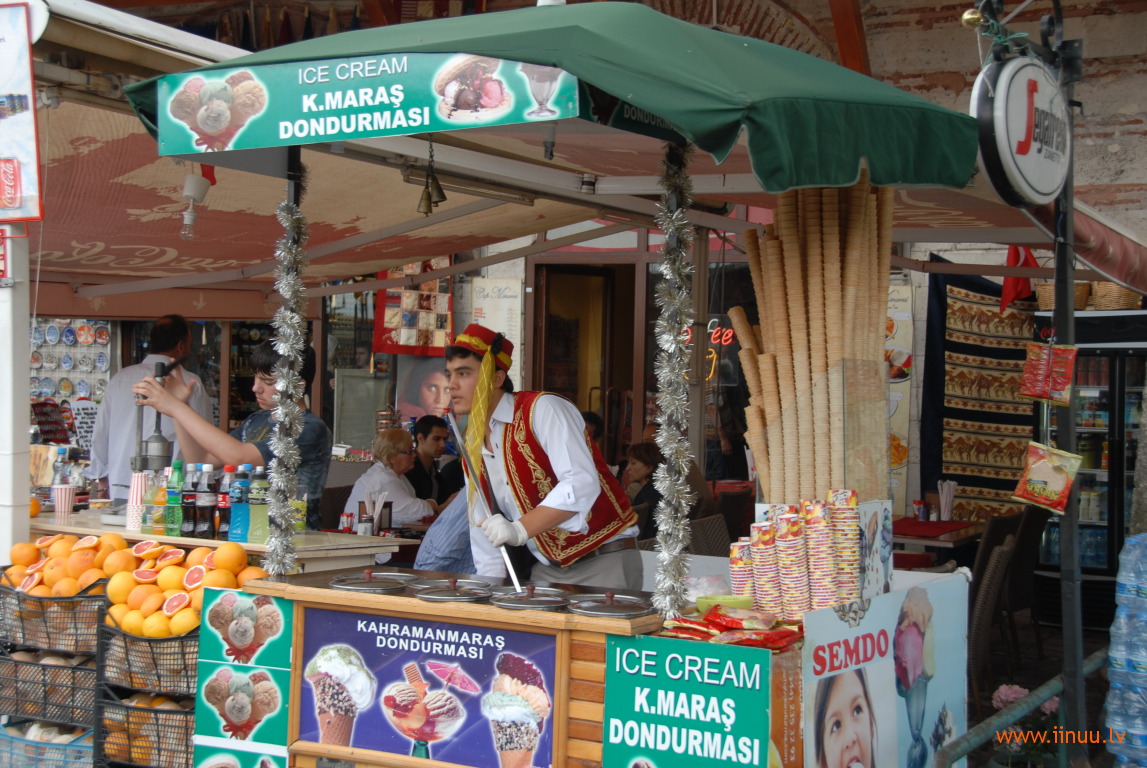
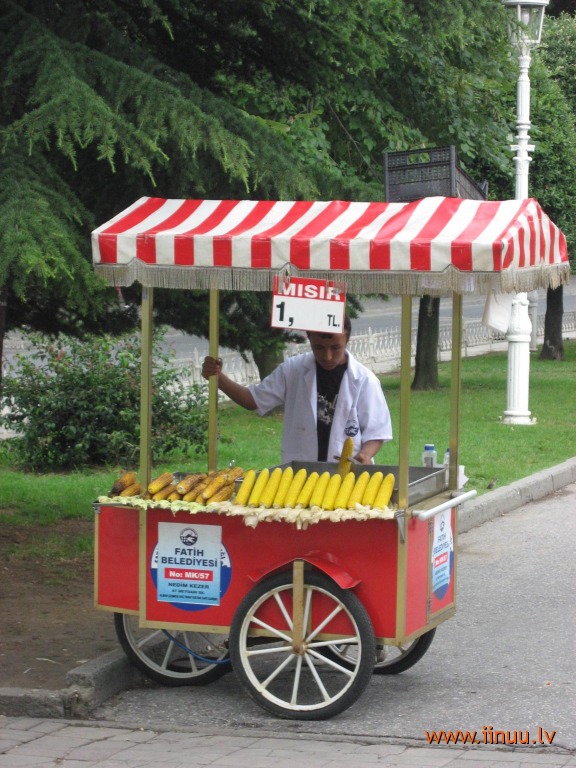
Continuing on the subject of culinary pleasures, in several places we sampled Turkish coffee. Served in small espresso cups, it was not at all as strong as to require drinking the water that came alongside it. For a seasoned coffee drinker like me, this coffee did not seem particularly impressive - comparatively with what I had tried in Spain a couple of years ago. In Istanbul there was no doing without the traditional unleavened flatbread with various fillings, kebabs, and grilled corn, sold practically on every corner, alongside large soft simit rings covered in sesame seeds.
In general, a meal always consisted of cold starters (which I particularly did not take to), soup, a main course, and fruit. A sweet dish or dessert in the Latvian sense is practically never served; it is always fruit or berries, or baklava or halva. At breakfast in the hotel, the local yogurt (or something similar) was a surprise - which could be chosen together with cereal or fruit, or vegetables. Extremely sour. As for drinks - the beer was rated by those in the know as "nothing special"; on the other hand the white wine, which I gladly had with a meal, was always nicely chilled and enjoyable.
Looking back on the market visits, one must say that a Latvian like me does not really know either how to properly trade or how to properly bargain (so to speak, it's beneath one's dignity). Moreover, reviewing what was purchased, one would wish that such a spice market were to hand at least a couple of times a year. The food I cook at home now with the spices I bought there genuinely tastes much better.
comments