Researchers' Night 2015 at the University of Latvia Natural Sciences Academic Centre
This year for Researchers' Night we headed to the newly opened University of Latvia Natural Sciences Academic Centre in Torņakalns at 1 Jelgava Street. Our interest was sparked not so much by the planned events or lectures as by the building itself and a tour of it.
This year for Researchers' Night we headed to the newly opened University of Latvia Natural Sciences Academic Centre in Torņakalns at 1 Jelgava Street. Our interest was sparked not so much by the planned events or lectures as by the building itself and a tour of it.
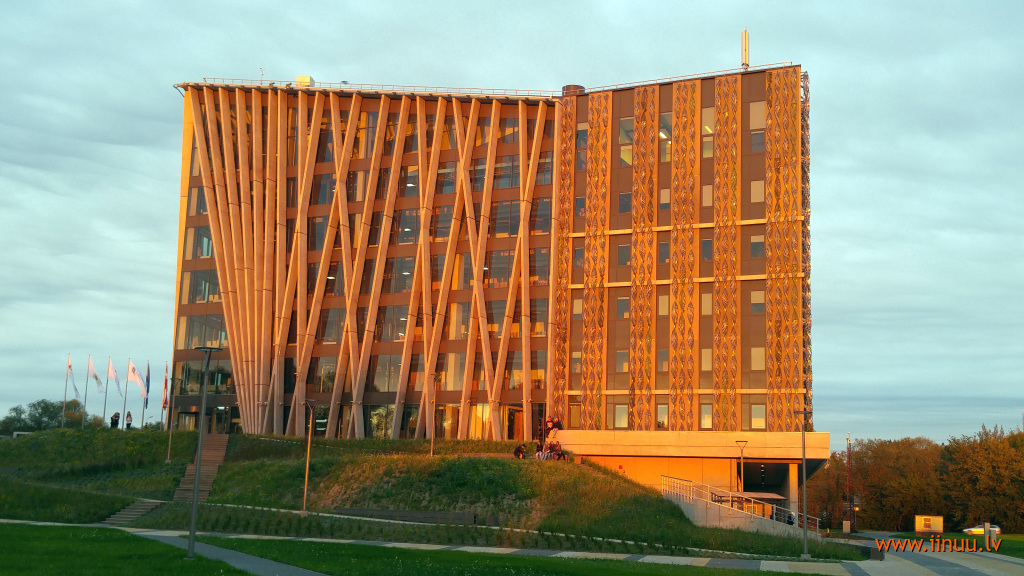
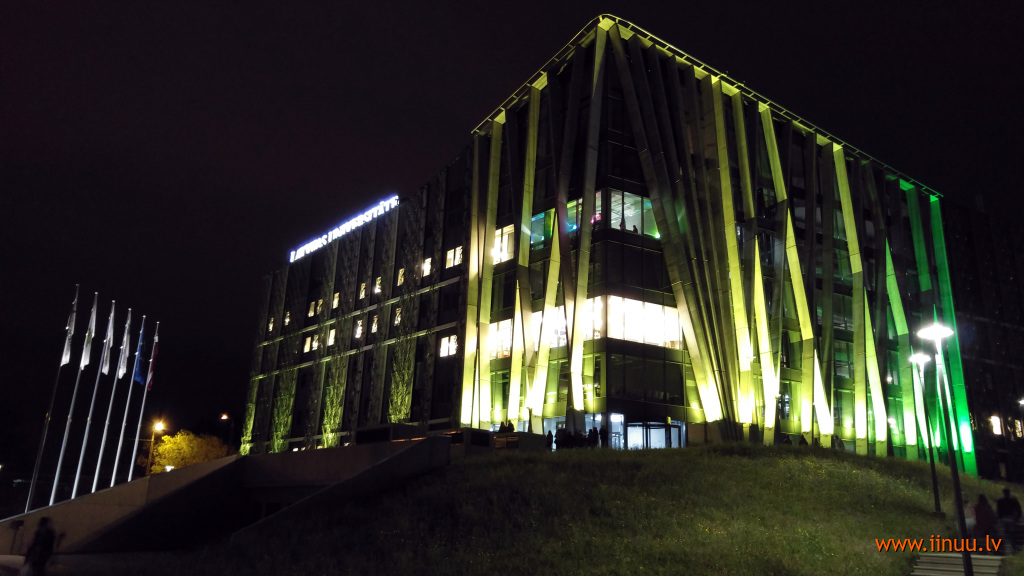
Having successfully parked in the fairly spacious car park next to the centre, we headed up the hill, where the new modern building gleamed in the evening sun. The many windows that lightened the massive reinforced concrete structure caught the eye, as did the decorative metal lattice running the full height of the building - currently still bare but intended for climbing plants to reach towards the sun.
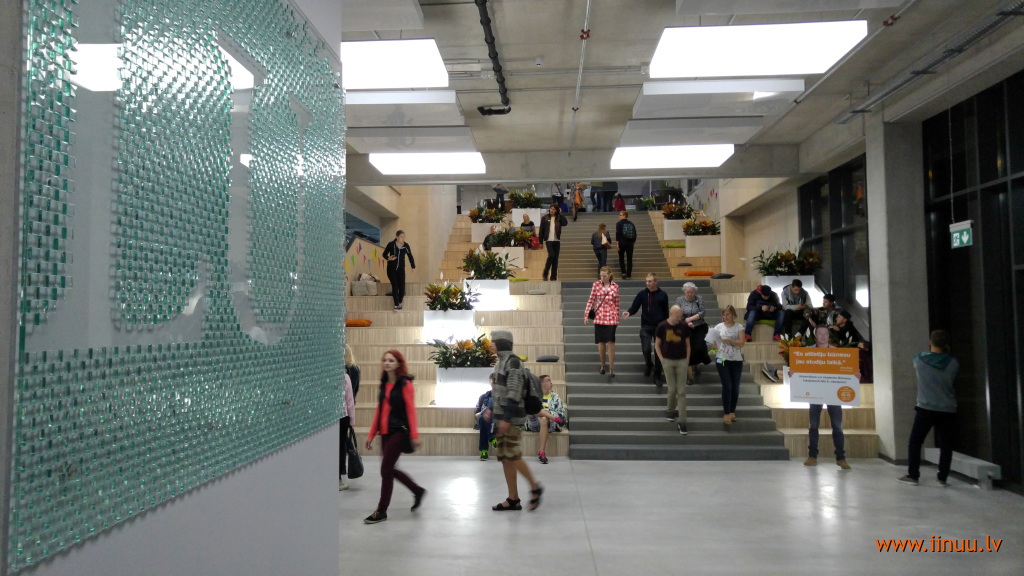
Entering on the ground floor and climbing the broad, bright staircase - on both sides of which the steps have been converted into comfortable seating with lettuce-green cushions and plant oases - visitors were greeted by Jurijs with a tablet computer in hand, the screen displaying the word TOUR. Ah, we had found the right person!
Tour of the Natural Sciences Centre
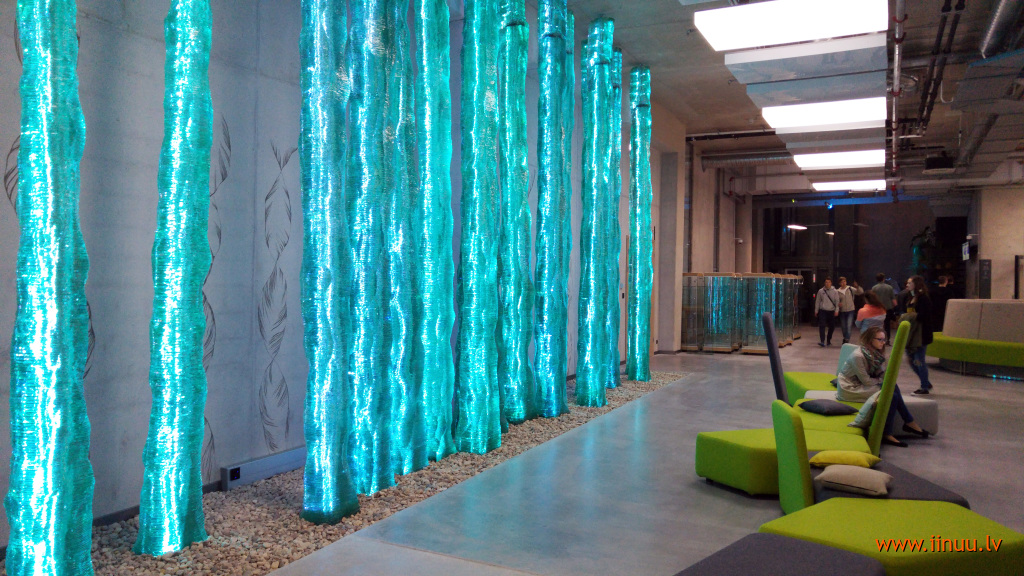
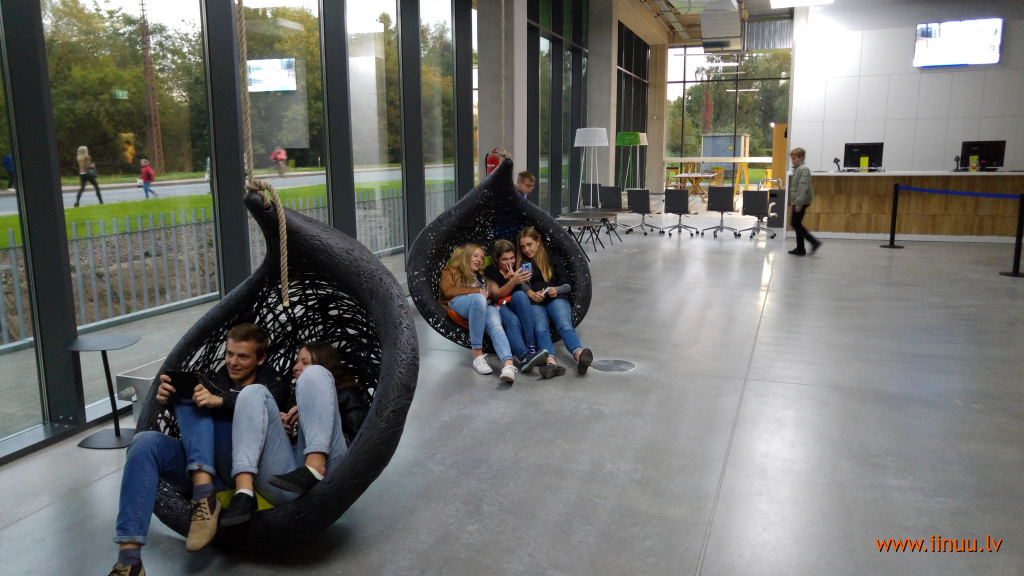
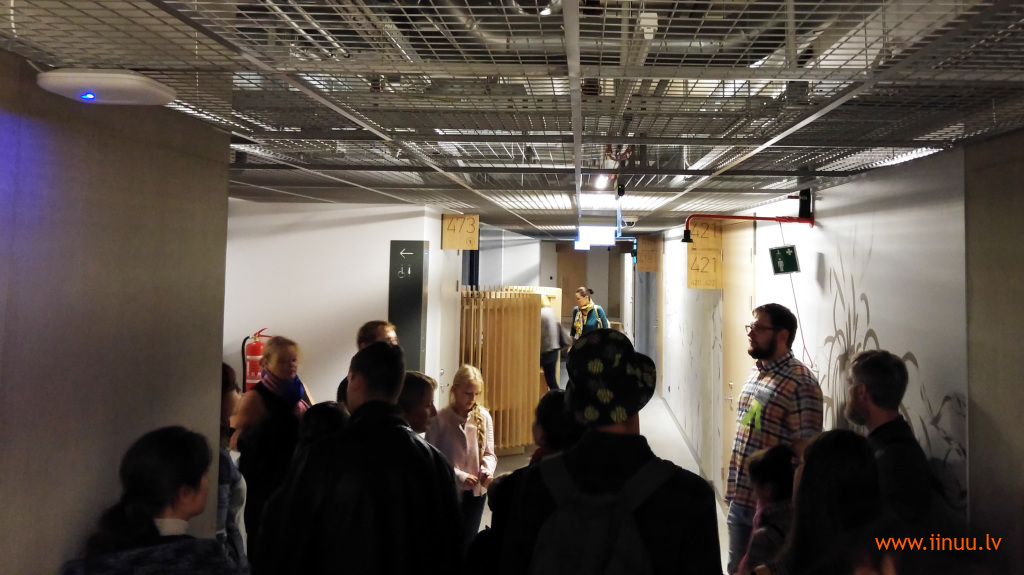
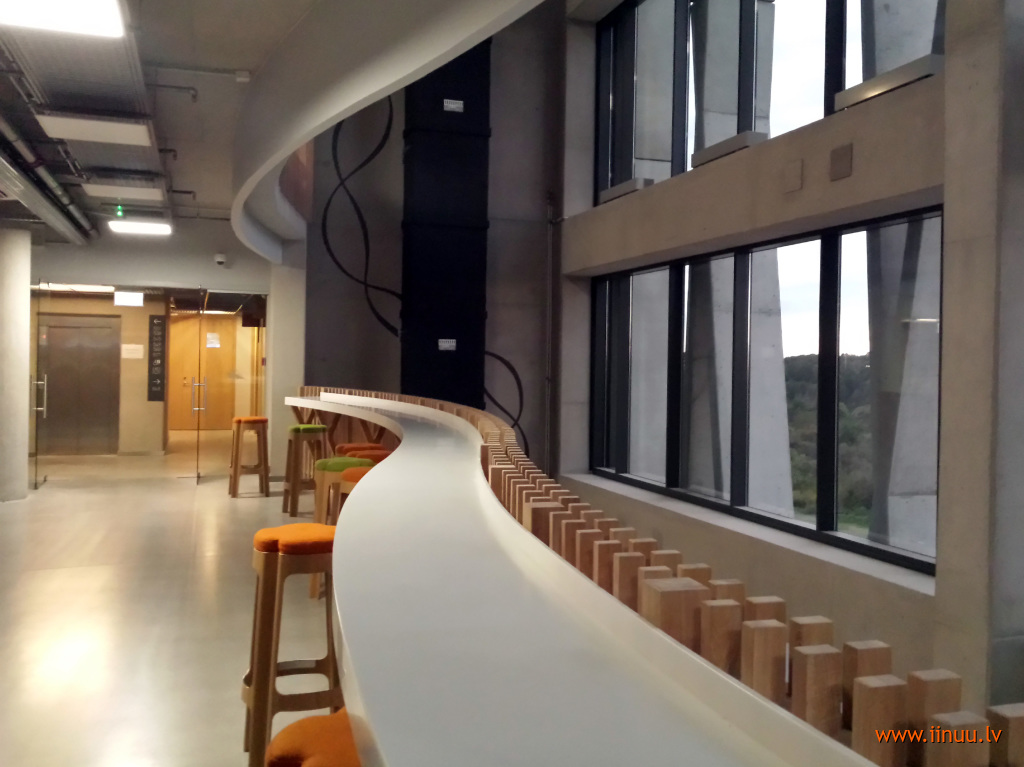
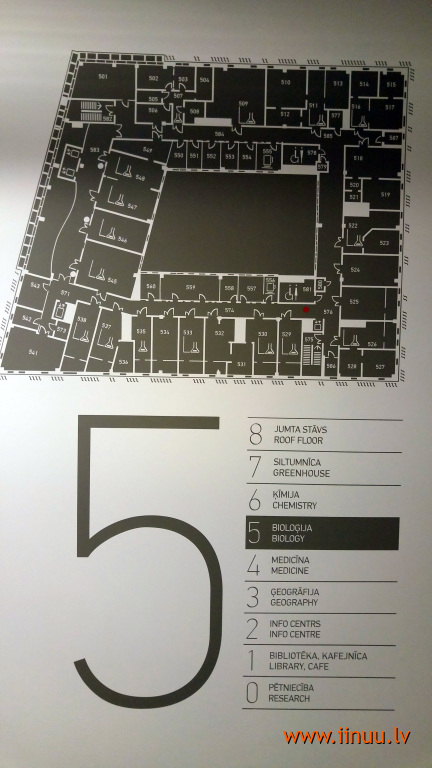
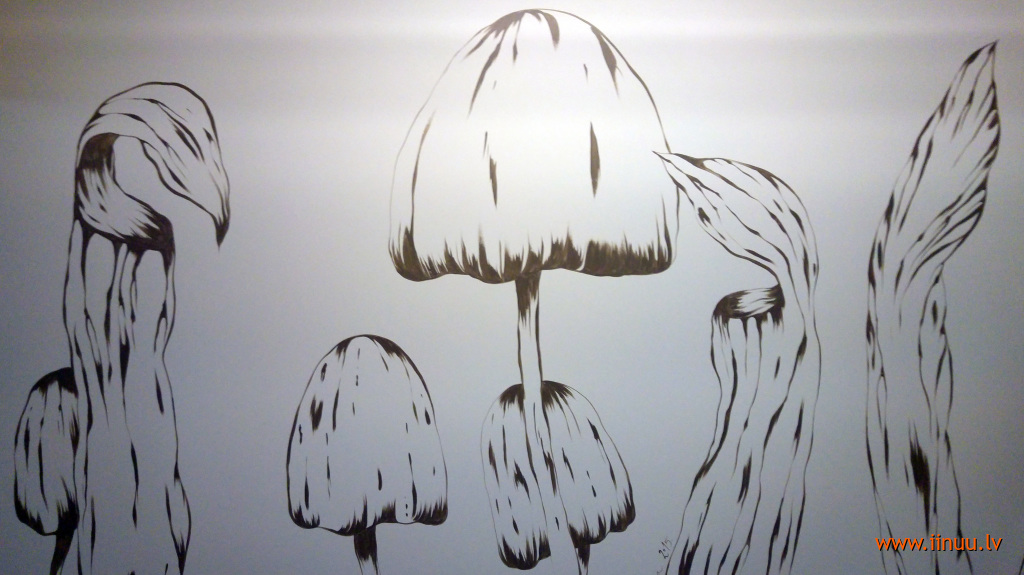
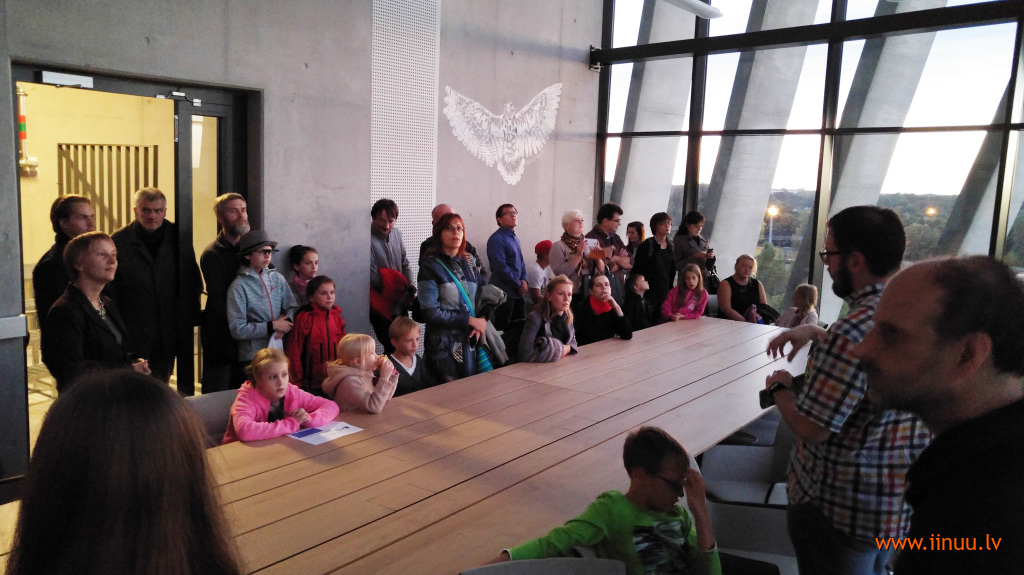
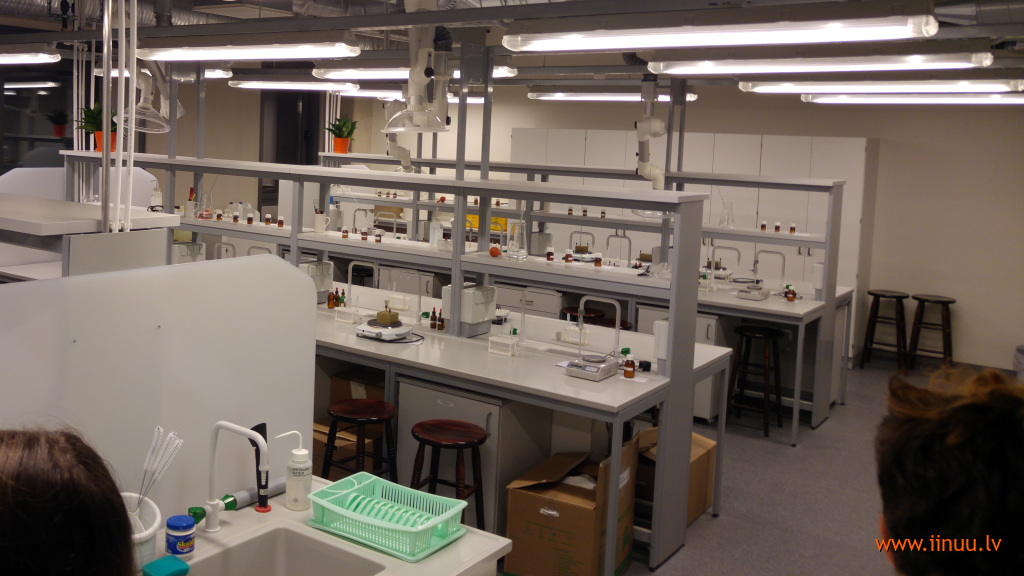
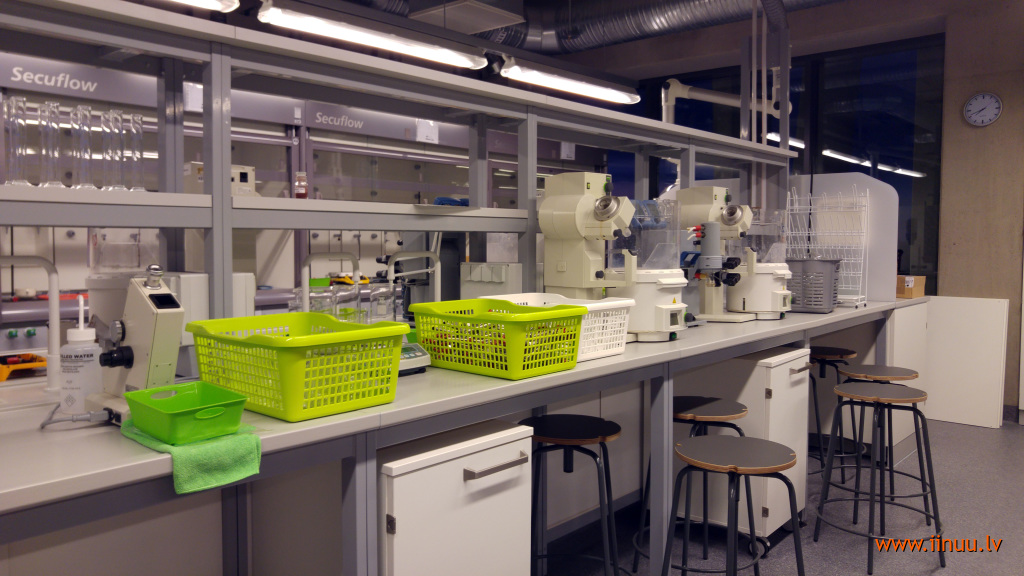
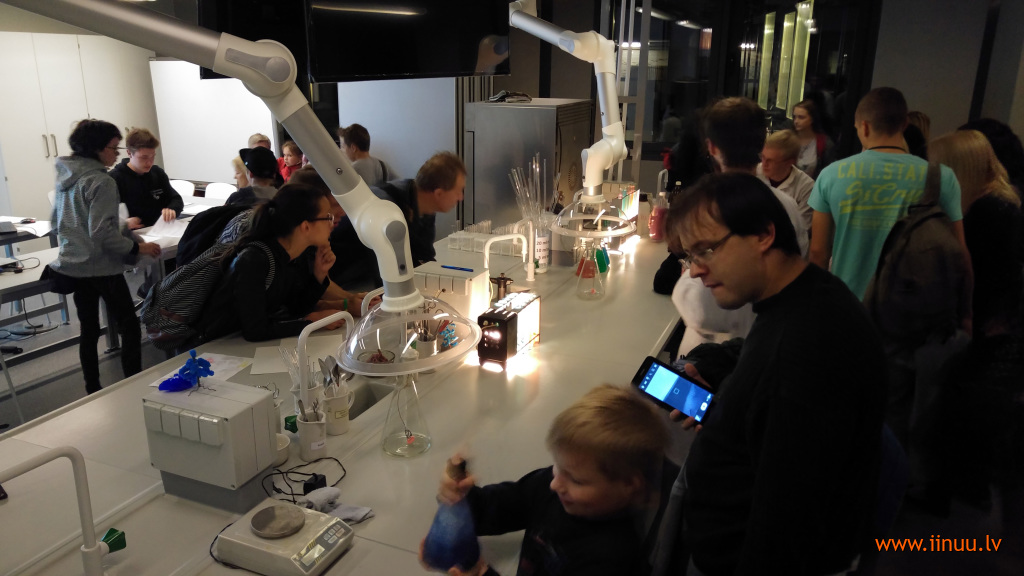
Jurijs took us through all the floors of the building, briefly explaining the purpose of each floor, the modern and technologically advanced solutions (fume hoods, laboratory equipment, automatic lighting, greenhouses on the roof, electronic access cards), the design appeal and functionality (custom-made furniture, rocking chairs, beanbags, internally illuminated glass pillars, walls painted by Kristīne Luīze Avotiņa), as well as how proud and happy he is to be one of those natural sciences students fortunate enough to study in this building.
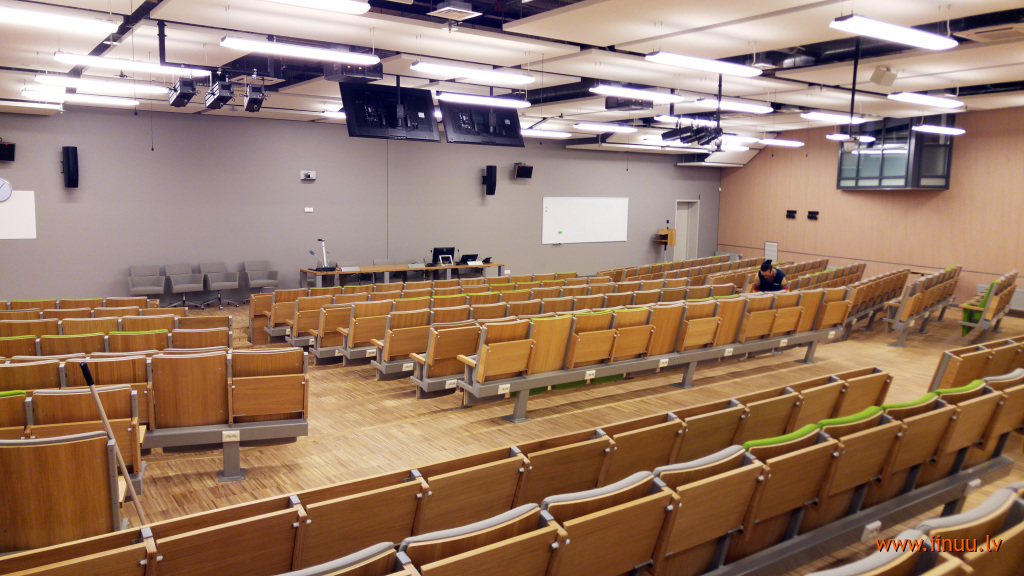
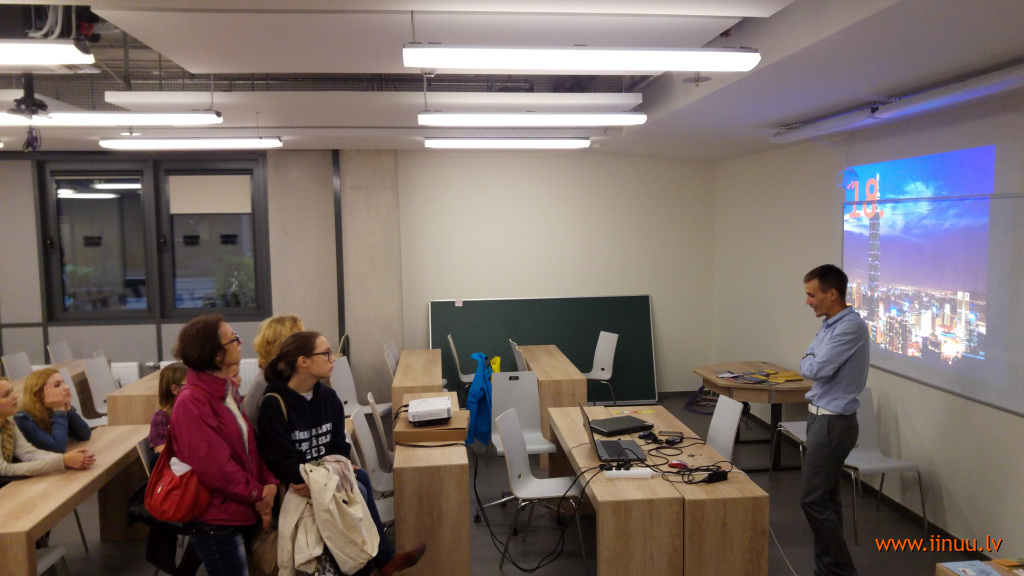
The first lecture hall we visited, called Magnum, is the largest in the building. The room has capacity for 300 students or seminar participants. Other lecture halls, laboratories, faculty rooms, and relaxation areas are distributed across the floors. Chemists, geographers, physicists, mathematicians, and optometrists study here.
A sense of pure envy arose for today's University of Latvia students, who have the opportunity to study in such a modern and well-appointed environment. If in the mid-1990s, when I began my studies, the new building of the UL Faculty of Education and Psychology with its glazed ceiling above the so-called "pool" (recreational space) seemed like an architectural achievement, then by today's standards of teaching space design and technical provision it all pales enormously.
The most remarkable thing is that such a building was completed in a year and a half. One's head starts to spin imagining how the face of the city could change if everything were rebuilt at such a pace. For the University of Latvia too, this is just the beginning - right there in Torņakalns, next to this new building, construction is planned to continue, creating a whole student campus with accommodation buildings (the architecture envisioned for them is such that one can barely bring oneself to call them dorms or bunks), cafeterias, a sports centre, various service buildings, and even a church. All the UL faculties scattered around Riga will be relocated to this new campus, with the exception of the historically important central building on Rainis Boulevard.
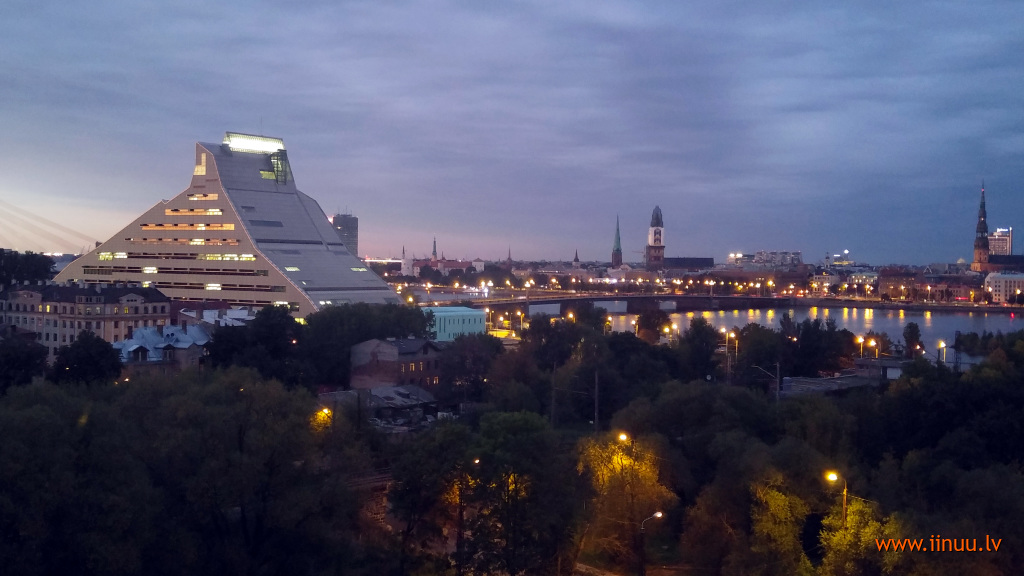
The tour ended on the top floor of the building, from where the large windows of the conference room opened onto a beautiful view of the city glittering with countless lights, now enveloped in the autumn evening darkness. Right alongside stands the Castle of Light - the library for students and researchers.
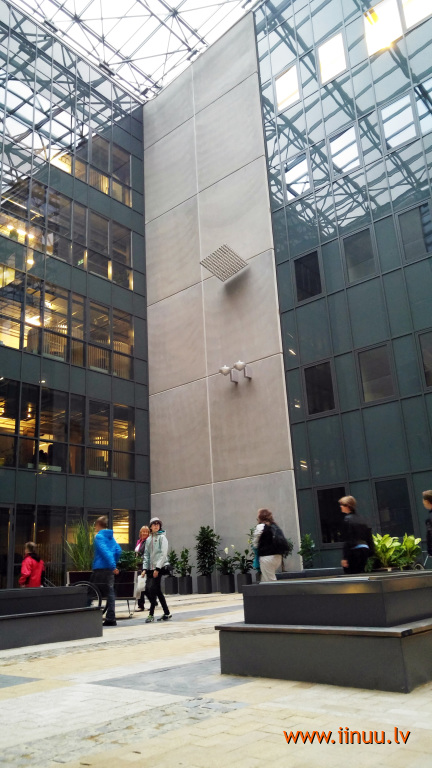
Oh yes, I forgot to mention the simply but tastefully appointed inner courtyard in the centre of the building, in which glass skylights are built that offer a view down into the lecture hall below. The building's facade itself is illuminated in various coloured lights - like the sun in Latvian folklore: three-coloured: now blue, now green, now red. On the doors, windows, and glass partitions, an oak leaf symbol is engraved.
Researchers' Night
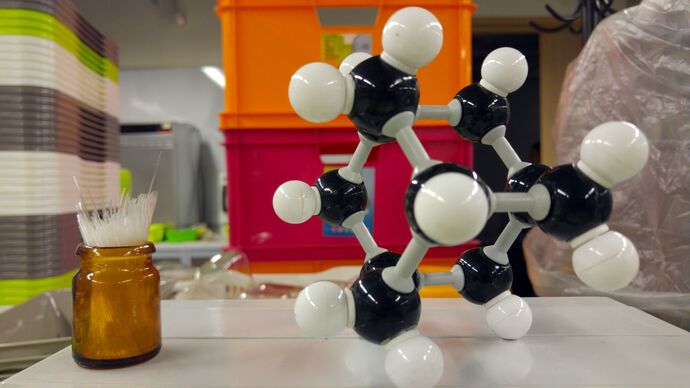
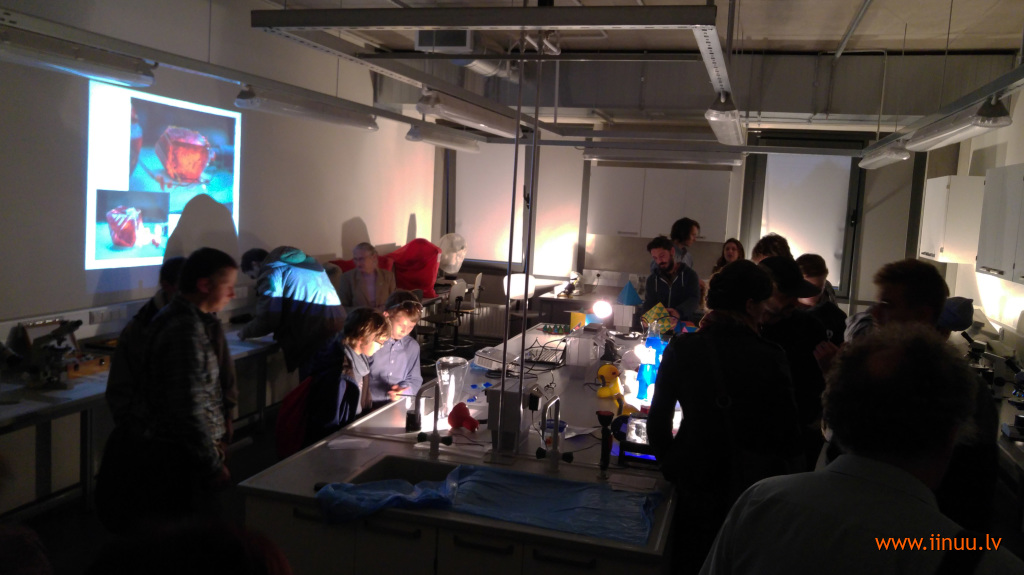
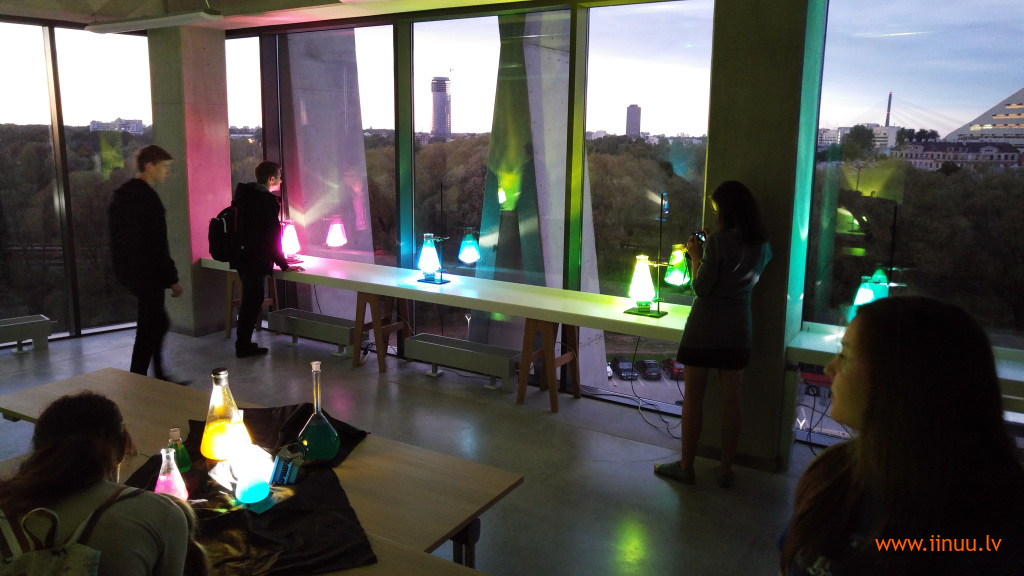
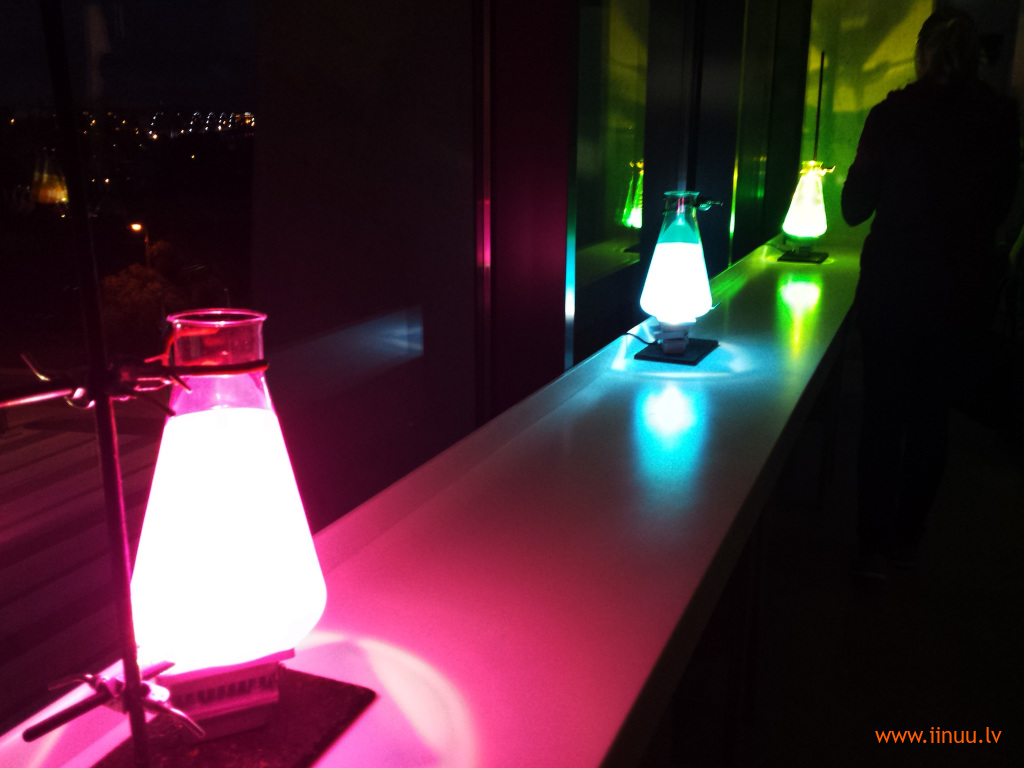
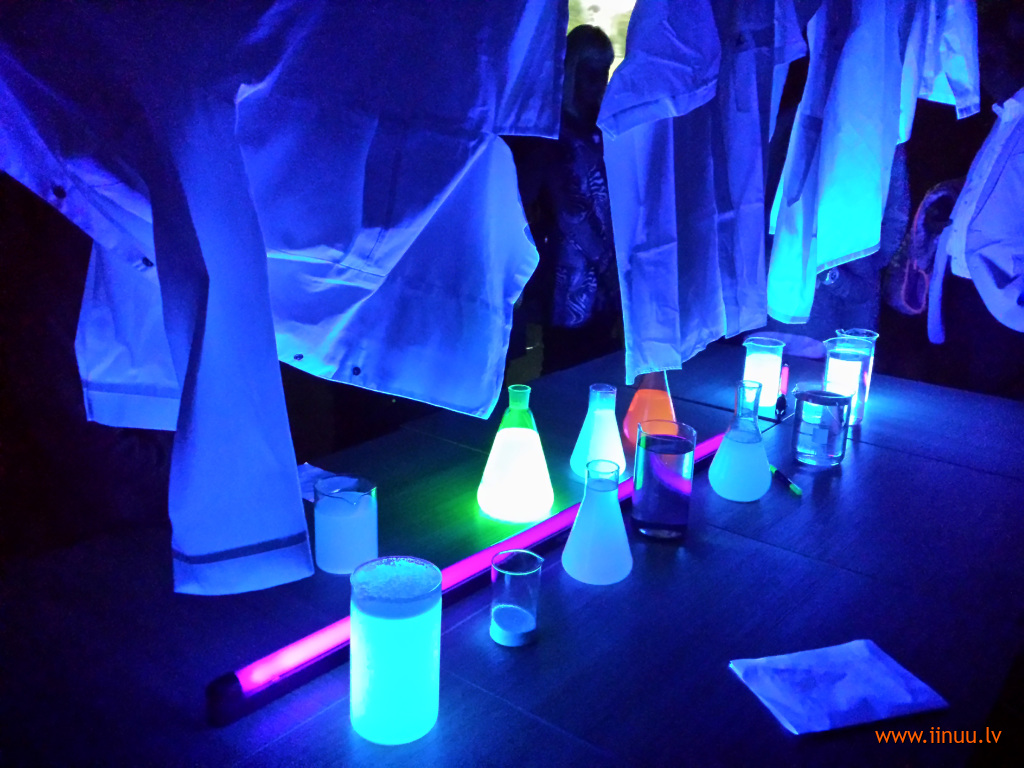
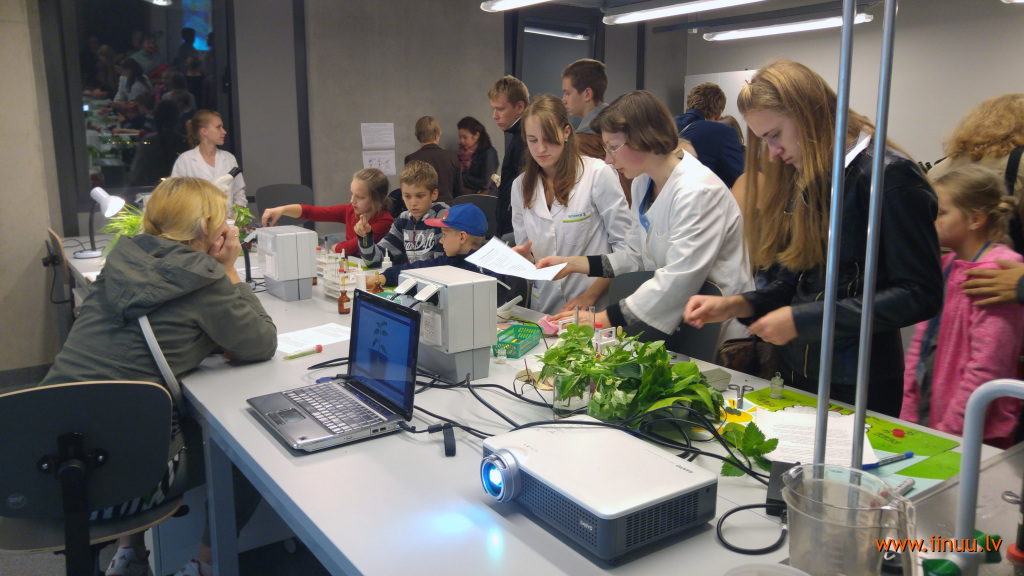
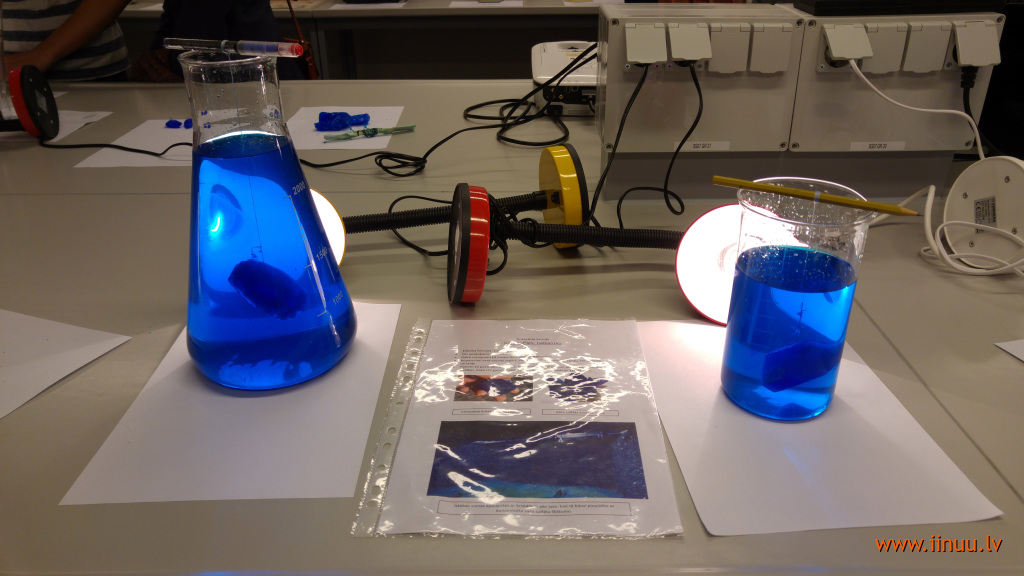
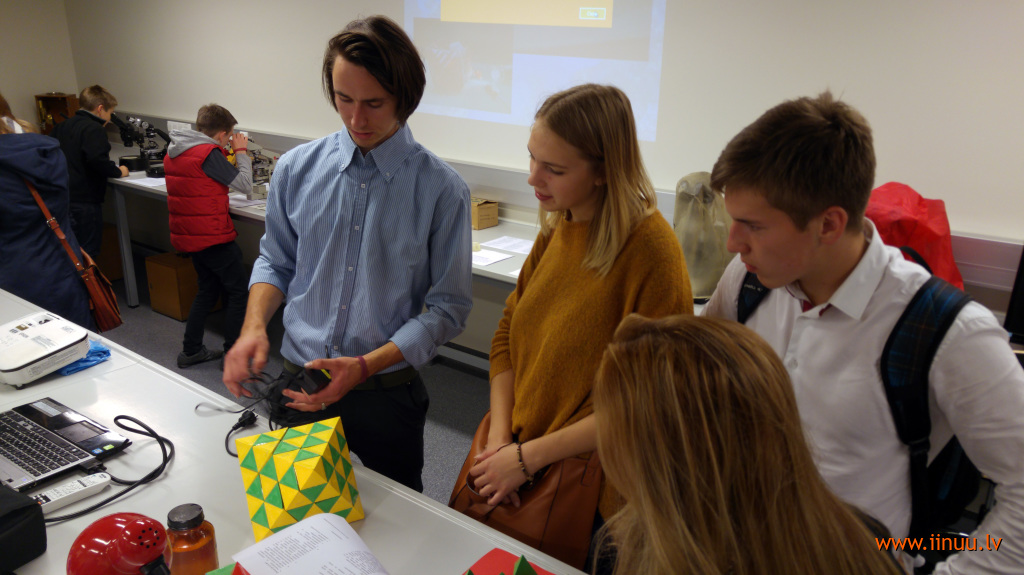
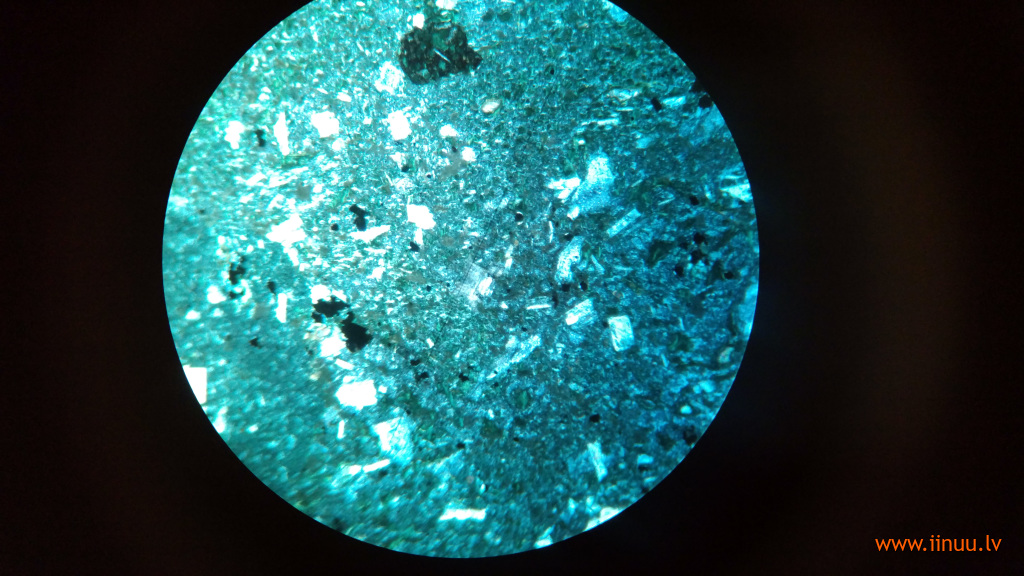
Very well, something must also be said about Researchers' Night itself. Activities were taking place on every floor of the building. Biology students explained and demonstrated the principles of photosynthesis; in the Earth sciences faculty, microscopes allowed viewing of the structure of various rocks; one could observe how crystals are grown; in the chemistry faculty rooms, various luminescence and fluorescence experiments (flasks glowing in various colours).
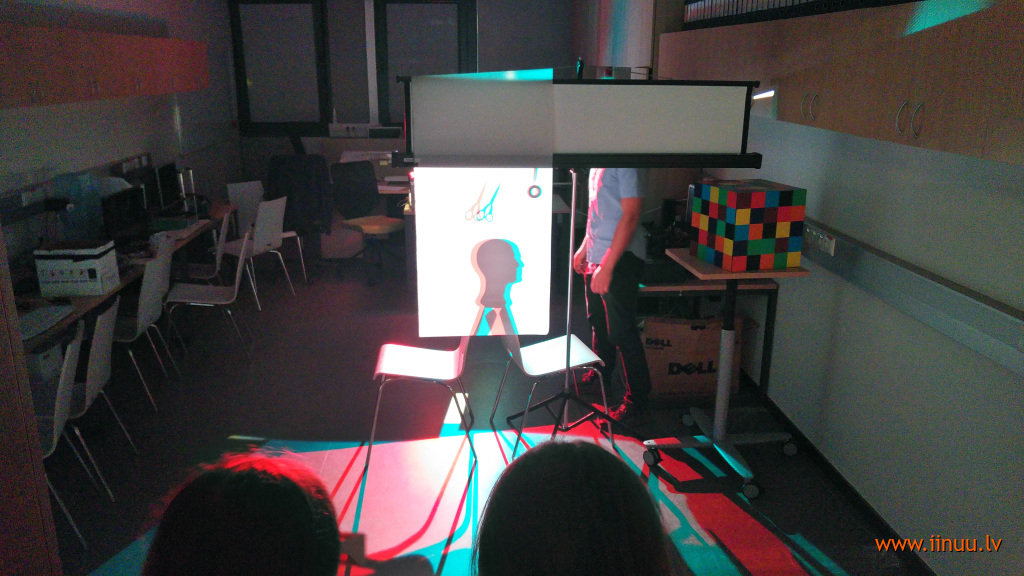
Also interesting were the visual perception examples - 3D objects viewable with two-colour glasses, GIFs of printed images, curved and straight lines, deceptive colour perception when the arrangement of blue-black and white-gold stripes changes. In one dark room one could observe an experiment with shirts and washing and bleaching agents - which garments glow under UV light after washing, and which do not.
In a word, despite the crowds of interested visitors of various ages and nationalities, a very well spent and educational evening. I hope in a couple of years to visit the new modern humanities and social sciences centre. ;)
More about the centre and its future plans can be read at www.tornakalns.lv
comments