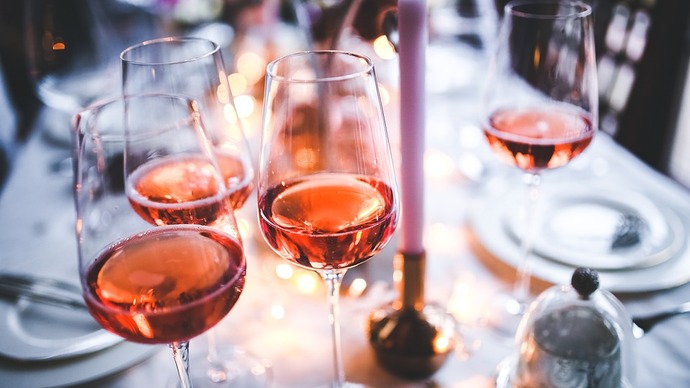
A Madeira Wine Evening
Although the event took place at the end of last year, I decided to write about this lovely Madeira wine tasting evening, as the pleasant aftertaste has lingered right through to today. It will be something of a report on what was heard and seen, since unfortunately the magical aromas and flavours of Madeira cannot be conveyed - one simply has to experience them oneself. But briefly: about the production technique, grape varieties, and wine styles, and the discoveries made during the tasting.
Although the event took place at the end of last year, I decided to write about this lovely Madeira wine tasting evening, as the pleasant aftertaste has lingered right through to today. It will be something of a report on what was heard and seen, since unfortunately the magical aromas and flavours of Madeira cannot be conveyed - one simply has to experience them oneself.
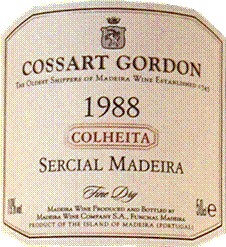
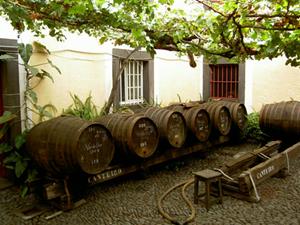
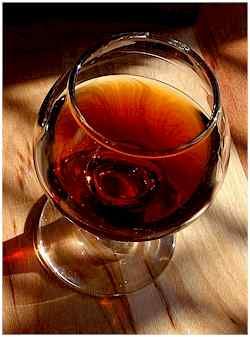
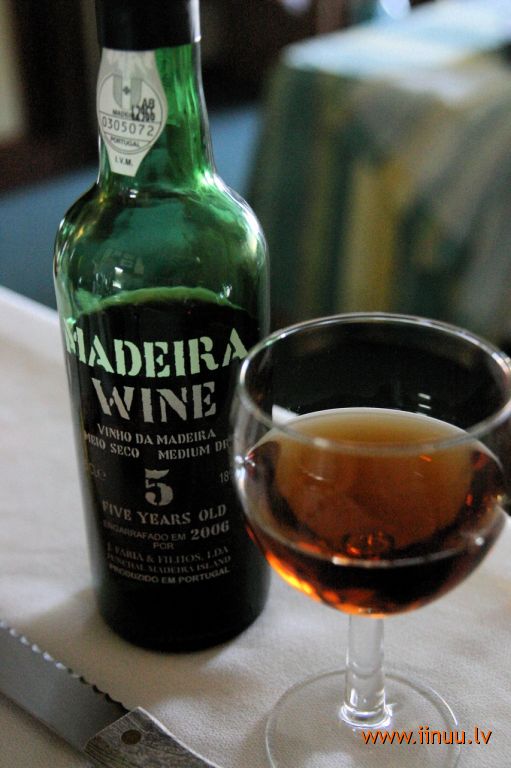
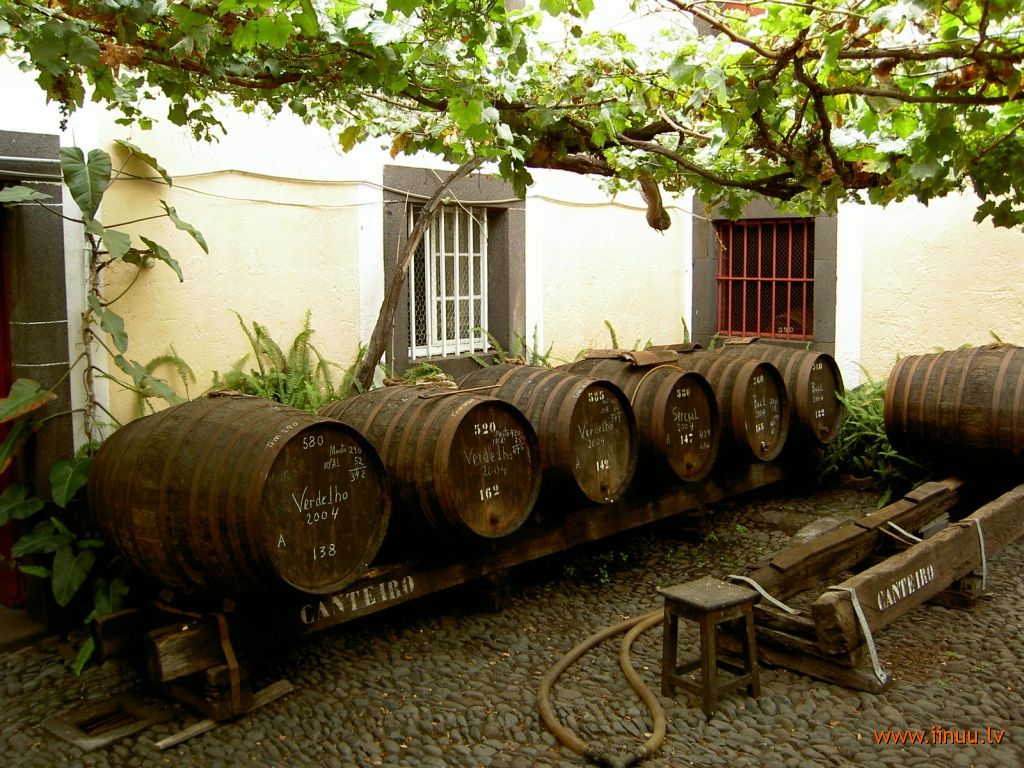
When all ten guests had arrived, the hostess invited them to the table where already at least five wine glasses were lined up for each. The evening began with Cossart Gordon Sercial Madeira Colheita, a Madeira wine of the 1988 vintage, bottled in 2005. The wine has aged for 17 years, naturally matured in oak barrels placed in warm dry attics (such wines are called "Vinhos de Canteiro"). A clear amber-bright colour with a golden-greenish hue, characteristic flavours of nuts and raisins, and a persistent aroma.
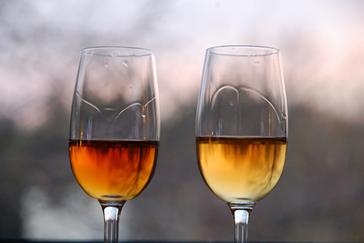
I am no expert in drinks, but my first impression, largely influenced by the colour, was - this is something cognac-like. The aroma too seemed somewhat heavy and dense, but tasting it brought a surprise - a pleasant, light wine. Of course, how much the word "light" can be applied to fortified wines. This wine too was 19% alcohol.
While we enjoyed the first Madeira, the hostess introduced us to the history of the island of Madeira, its geographical location, and the making of its wine fame. I will also give a brief account of what was heard and later researched in more detail online.
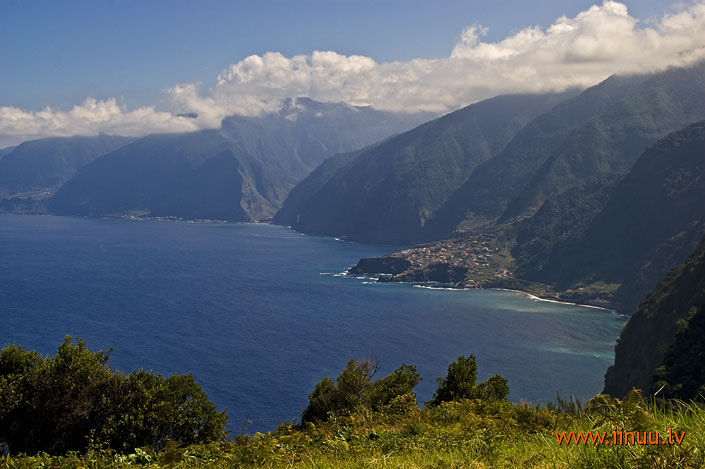
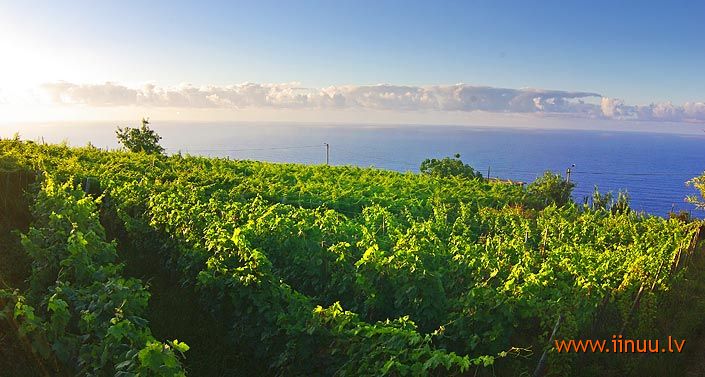
Madeira is an island belonging to Portugal in the Atlantic Ocean fairly close to the African coast (around 500 km to the west of Morocco). It is of volcanic origin and most of it is covered by forests, hence the name "Madeira" coming from the Portuguese word for "wood." The island was discovered in 1420 by the Portuguese navigator João Gonçalves Zarco, although historical sources indicate it was already known to Phoenician sailors. The timber was felled in large quantities, but the work was hindered by the rocky shores and steep slopes, so the island was practically set on fire and burned for a full seven years. This resulted in very fertile soil, which was later planted with sugar cane and still later with vines.
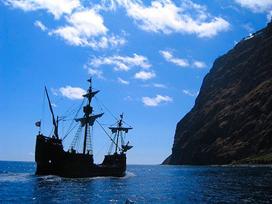
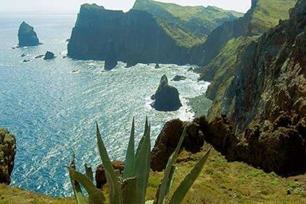
The island began to be settled by immigrants from Portugal and England, as Madeira was located in a very convenient spot where many caravels from Europe heading to India would stop to replenish provisions. That is when the history of Madeira wines began, though wine had been produced there for a long time already, but it was not notable for anything significant or surprising in flavour. Only after travelling in oak barrels across the oceans and seas did it acquire its distinctive flavour and hue. Moreover, to halt the fermentation, sugar cane spirits or brandy were added to it. This fortified wine proved very much to the taste of the English, who began purchasing and trading it in large quantities, thereby popularising Madeira. As a reminder of old times, to this day a ship graces some Madeira bottle labels. Originally the wine was even written up, given the name of the ship that carried or matured that particular wine.
In 1976, Madeira gained the status of an autonomous Portuguese region with its own capital Funchal, coat of arms, flag, and president. Today the island earns its living mainly through tourism and wine. The climate is very pleasant, the air temperature varying throughout the year between +16 and +25 degrees. The soil is fertile - the only issue is that it is still cultivated by hand without machinery, as the terrain is unforgiving.
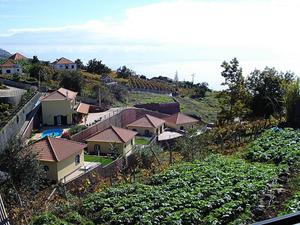
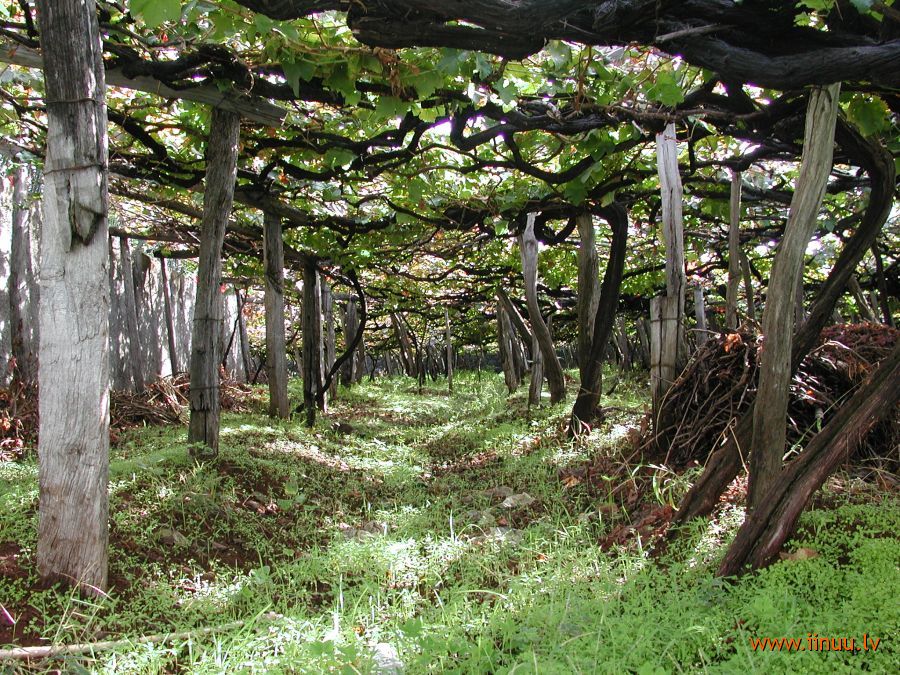
In Madeira there are no one or two large vineyard growers and harvesters, as almost the majority of the local population is involved in grapes. The vineyards too are not large, but divided into fairly small plots of land.
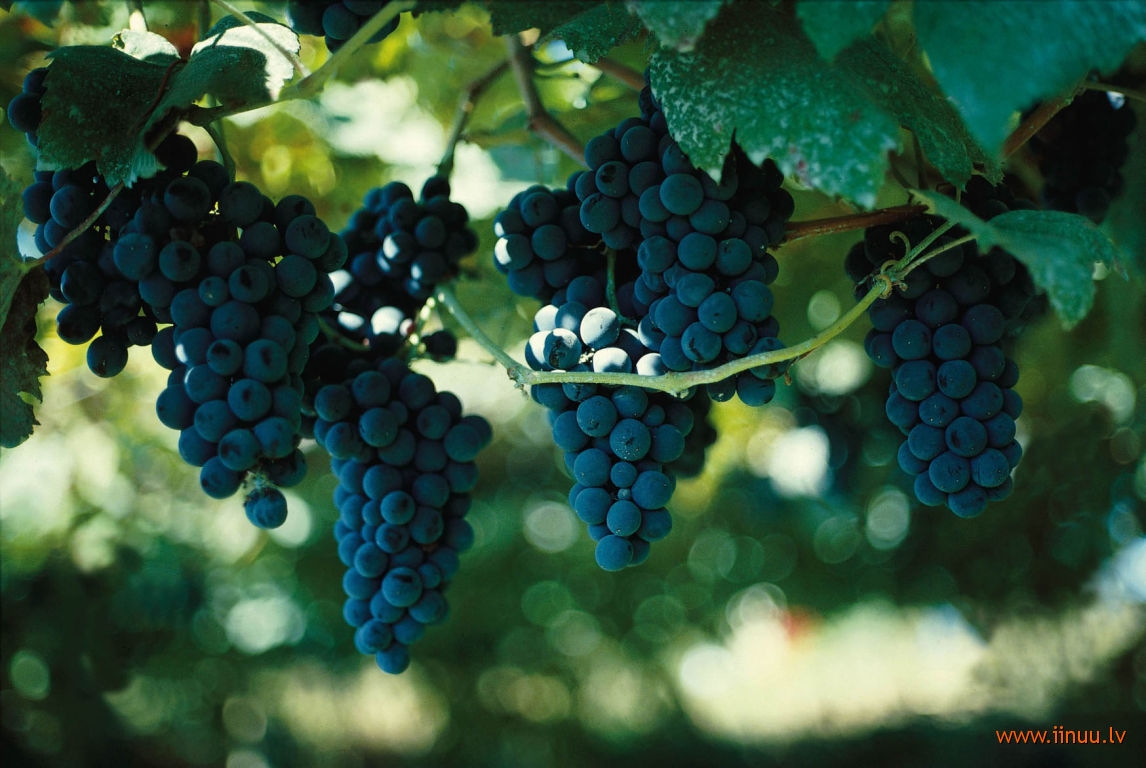
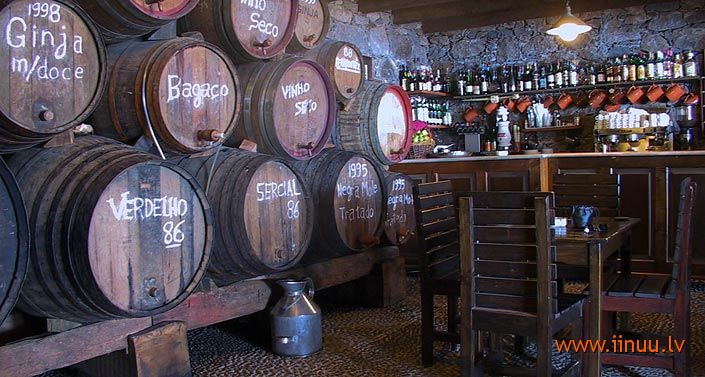
The previously tasted wine Cossart Gordon Sercial Madeira Colheita (1988) is made from Sercial - one of the four classic white Madeira grape varieties. This variety is usually used to produce dry wines, which have an elegant flavour with notes of burnt caramel and an almond aroma. Malmsey - another white grape variety that gives the wine a dark amber colour, a sweet honey flavour with hints of burnt caramel. From Malmsey, then, sweet wines are produced. Verdelho - this grape variety is grown mainly on the northern slopes of the island. The wine has a golden colour, a medium-dry, slightly refreshingly acidic flavour. With age, notes of burnt caramel and a smoky aroma appear in the wine. It is the most popular of all four grape varieties, producing a medium-dry wine. Bual - this grape variety is grown mainly on the southern slopes of the island, resulting in a wine with a gently sweet flavour, an amber tone, and a nutty aroma. Less commonly found than the others.
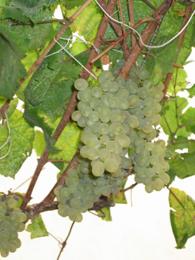
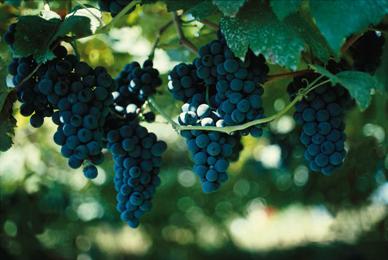
The Tinta Negra Mole grape variety (dark red grapes) is also used in Madeira wine production, though it is more suitable as a complement to other grape types to give the wine a more complex bouquet. Although in terms of volume, around 90% of all wines are derived from this variety. Usually this variety is not stated on the wine bottle label.
The evening continued with snacks and two Portuguese wines. We enjoyed Portal Da A'guia DOC 2008 wine and snacked on a cheese-and-salmon pâté with a wedge of lemon and freshly baked white bread. This dry white wine is a blend of two white grape varieties. Blended wines are not as premium, but equally well complement food. This one was soft, with tropical fruit notes, hints of melon, and a grapefruit finish. The hostess recommended this wine with fish starters and grilled prawns. A good white wine with an unassertive aroma - I liked it.
With venison and roasted bell pepper was served Barco Negro DOC Douro 2007 - a blend of three varieties of red grapes. Apparently it pairs wonderfully with veal fillet, chicken or duck, wild mushrooms, and medium-hard cheeses, but I must admit that neither game nor red wines are my domain. The wine seemed oversaturated with fruit aftertaste, as if soaked through with a dark-earth heaviness.
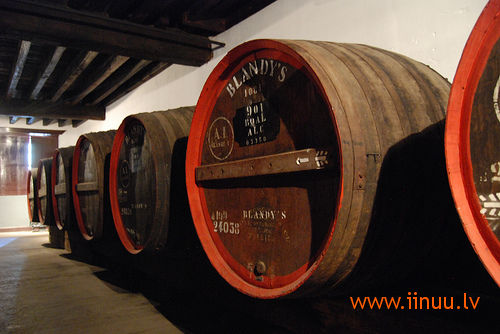
Then we returned to white wines - a blend of three of the Madeira white grape varieties described above, Sercial, Bual, and Verdelho - Blandy's Madeira Rainwater Medium Dry Madeira. Aged at least three years in oak barrels, with a fruity and nutty aroma. It reminded me of the colour of dark cognac, with a sweetish flavour. Good as an aperitif and also with dessert. Slightly reminiscent of the first wine tasted, but the first wine's aromatic bouquet was more persistent. The price category also differs - if the first costs around 25 LVL, this wine is 11–12 LVL. This wine should be served at 14 degrees. Alcohol content - 18%.
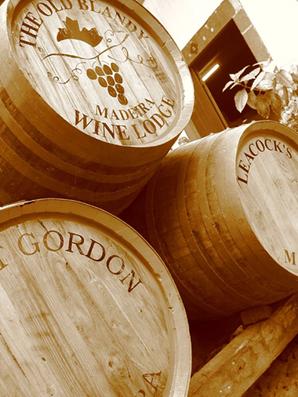
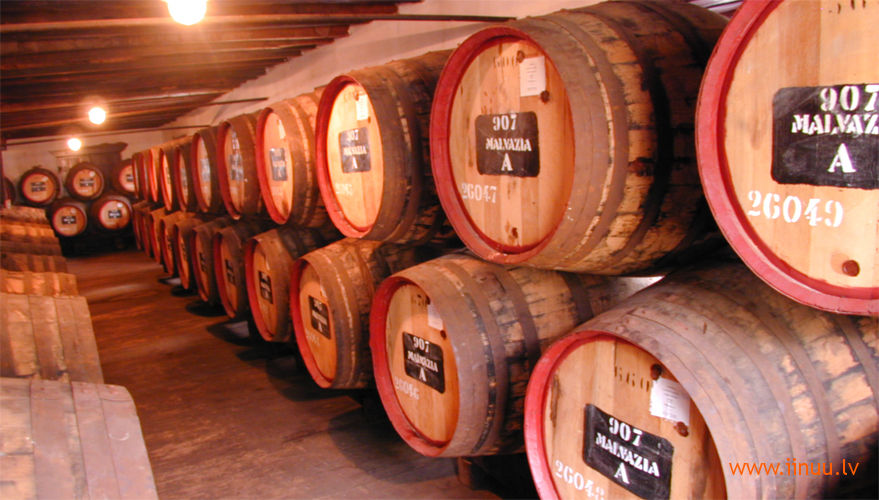
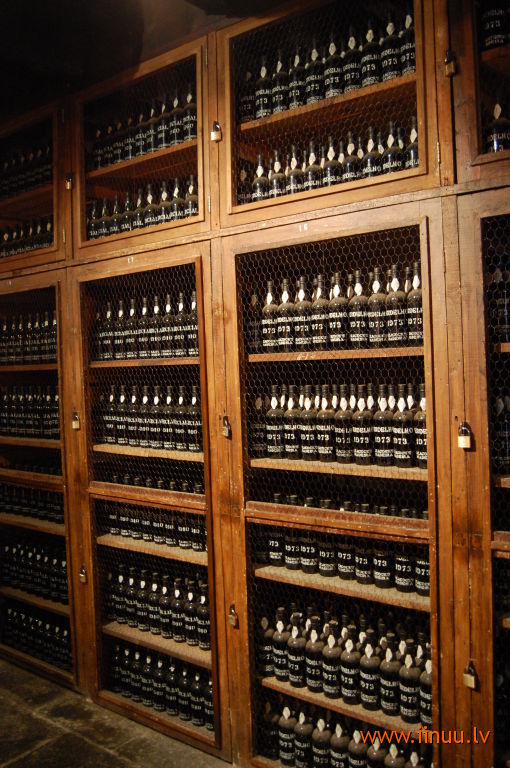
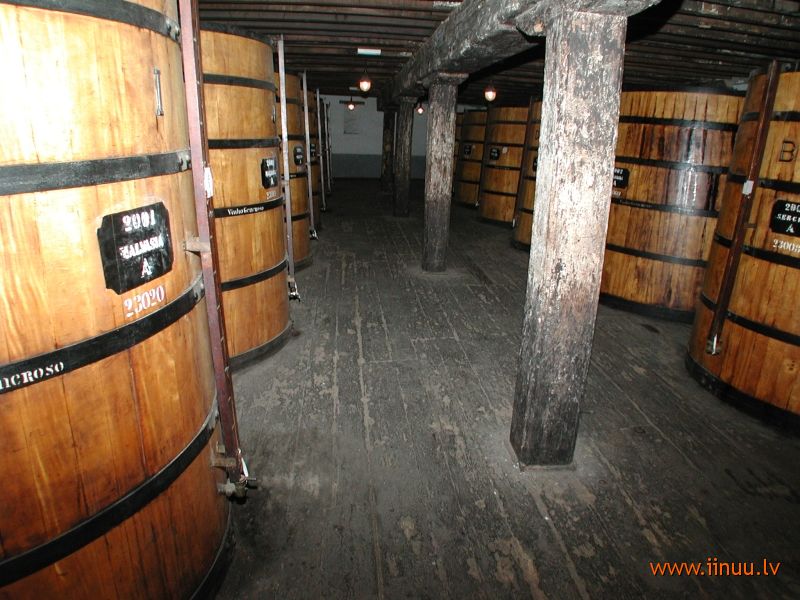
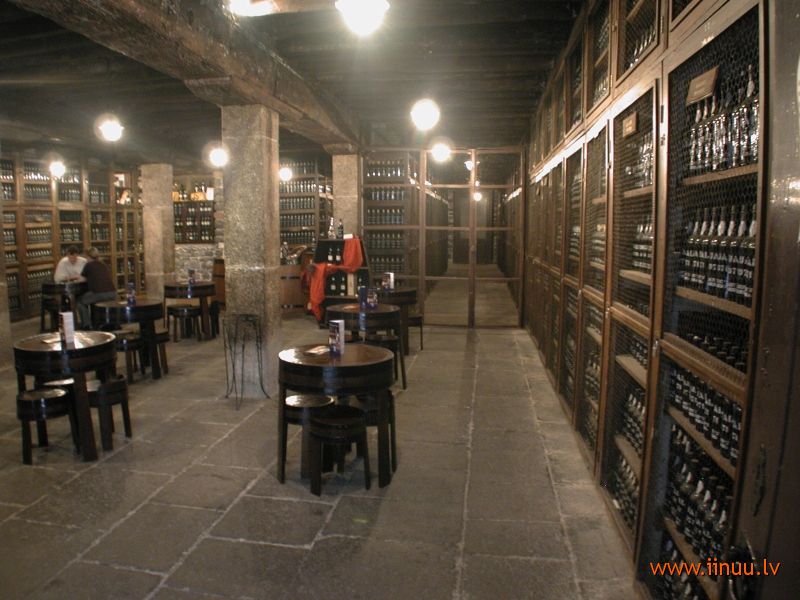
The hostess told us about the classification of wines by flavour and maturation categories, and also briefly introduced us to the Madeira wine production technique, which is essentially the same for all at the outset - the fermentation of grape juice is halted at a certain stage by adding brandy. What differs are the maturation methods, which also give the wine a particular quality, category, and therefore value. The fastest maturation involves heating the wine for three months in a metal barrel, then cooling it for three months, testing, pouring into oak barrels, and ageing for a couple of years, then bottling and selling. The highest-quality Madeira maturation can take twenty or more years. This is how the so-called Vintage wines are created. They can be identified at a glance by the fact that obligatorily on the bottle will be stated one specific grape variety and the vintage year. These wines are poured into 480-litre oak barrels and stored in sun-warmed attics for 20 or more years.
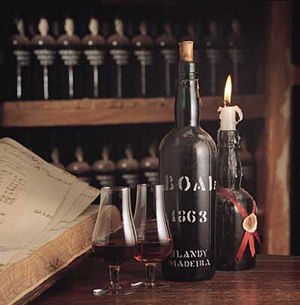
At the evening's close came the highlight of the event - the 20-year-aged wine from the Bual grape variety, Cossart Gordon Madeira 1969, bottled in 2004. The aroma above all - right away. The feeling was that simply inhaling it deeply, one could do without dessert (though the almond cake served alongside was a very apt choice and delicious). This wine truly pairs superbly with cakes and nuts.
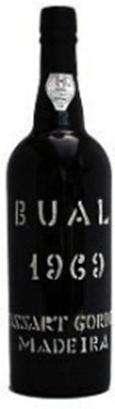
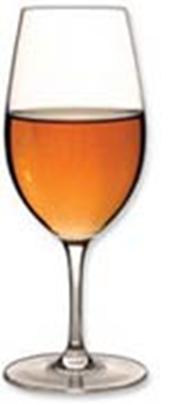
Although the wine was 21% alcohol, one wanted to hold each sip in the mouth for a long time before swallowing. If asked to distinguish the first, second-to-last, and last wine by colour, I, as a non-expert, could genuinely make a mistake - cognac-coloured with a barely perceptible greenish sheen. Comparing the aromatic bouquets, this last one prevailed over all. Even now it seems to me that writing and remembering, I can sense that unforgettable aroma. That is what a good wine means. The price, it must be said, is also good - hovering around 100 LVL. Another lesson - these vintage-type wines must be opened at least 24 hours before serving. Remarkable, what a powerful aroma! Moreover, later when sniffing the already empty glass, one could still detect the scent of this wine, when the previous one had already begun to fade.
It truly was a lovely evening of self-indulgence and getting acquainted with Madeira wines. Thank you to the hostess Larisa for the lovely hospitality and the valuable information! :)
comments