SPAIN August 2007
Catalonia – Lloret de Mar – Costa Brava
Catalonia – Lloret de Mar – Costa Brava
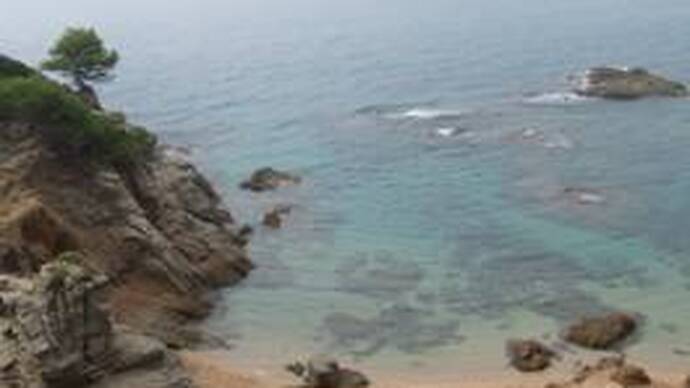
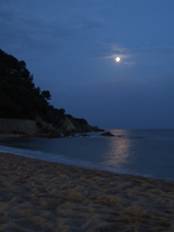
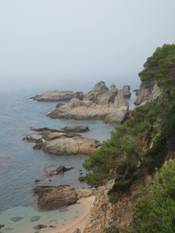
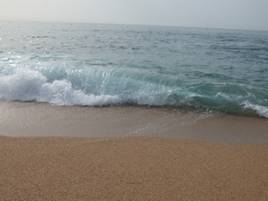
Costa Brava, which in translation means 'wild coast', justifies its name - steep cliffs washed by the warm waves of the Mediterranean, with sandy beaches here and there ... I saw it for the first time by moonlight. The evening was warm as milk, the beach sand crunched under bare feet - quite unlike the beach sand here in Latvia, coarse and primordial.
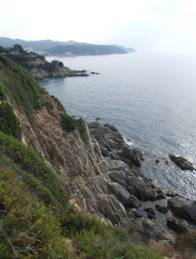
Costa Brava is a surprisingly beautiful Mediterranean coastline that begins near Barcelona and ends almost at the French border. These are bays, pine-clad shores, attractive beaches swept by sea breezes with dazzlingly white sand. For the greater part of the coastline there is no access to the sea - the mountains and steep cliffs have come so close to the sea as to leave not even the smallest patch of ground for a beach. However, in places where narrow beaches are accessible, charming resorts have developed. These spots are popular with swimming enthusiasts, as 10 m from the shore the sea is already sufficiently deep. Some of the most popular resorts are Costa Brava, Tossa de Mar and Lloret de Mar. They offer not particularly expensive, but unforgettable recreation.
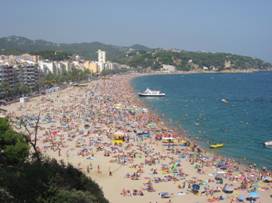
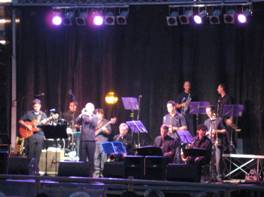
The Costa Brava beaches are always full of holidaymakers speaking various languages. Here there is entertainment for all tastes - water sports, boat trips, fishing, sunbathing, fireworks in the evenings, dancing, music, sangria cocktails.
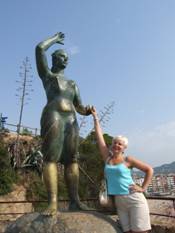
Centre image - Monumento a la Mujer Marinera - a 2.40 m tall brass sculpture of a sailor's wife. By Ernest Maragall, erected in 1967. Located on one of the rocky shore summits in the section between beaches Platja de Fenals and Platja de Lloret. According to tradition one must touch the brass woman's hand so that longings and waiting may be fulfilled.
The Costa Brava beaches are always full of holidaymakers speaking various languages. Here there is entertainment for all tastes - water sports, boat trips, fishing, sunbathing, fireworks in the evenings, dancing, music, sangria cocktails.
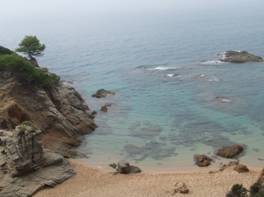
But the finest thing in this nature's paradise engulfed by the noise of civilisation - the possibility of solitude for two, finding a sandy patch by the sea enclosed on all sides by steep rocky shores, savouring the hot sun, the salty water, the cloudless skies.
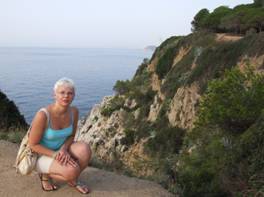
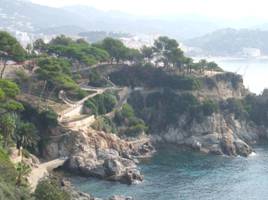
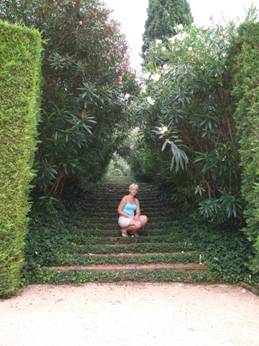
If you do not wish to lose yourself in the silence, but prefer to feel free and kinaesthetically enjoy the pleasures of a Spanish summer, you can bask in the sun or splash in the coastal waters at a nudist beach - naturally without the superfluous garments. We found such a spot beyond the popular Jardins de Santa Clotilde - the Gardens of Saint Clotilde (entry ticket 4 EUR). They were created in 1919 by architect and landscape designer Nicolau Maria Rubió i Tudurí at the initiative of the Marquis Marquès de Roviralta.
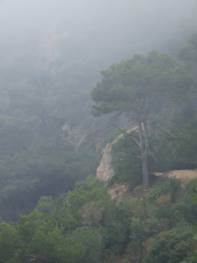
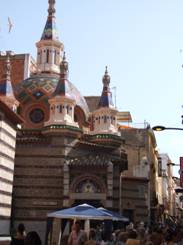
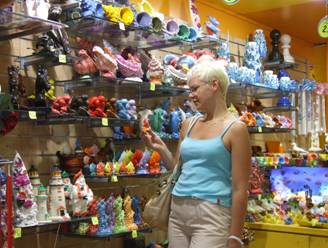
The city's most bustling little alley is Carrer de la Vila, both sides of which are lined with many varied souvenir, jewellery, and clothing shops. Mainly Turkish traders' stalls. The shops and various types of eateries are open all day until late evening, except during the siesta from 13:00 to 17:00. Although Lloret de Mar does not stand out for any architectural monuments, on this aforementioned alley the Iglesia Parroquial church is worth a visit (see image).
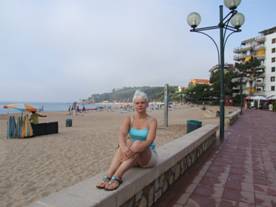
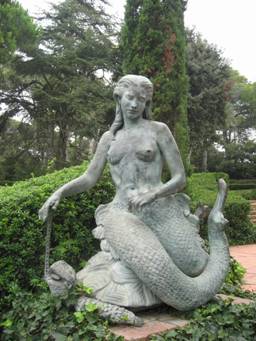
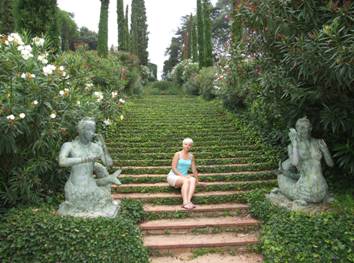
The garden's layout reflects the atmosphere of early 20th century Catalonia, created in the Italian Renaissance style. The total area of Jardins de Santa Clotilde is 23,830 m². The three main compositional elements - plants (pines, cypresses, thujas), sculptures, water (fountains, ponds, the steep sea cliff). Paths and steps are separated by decoratively trimmed cypress groves.
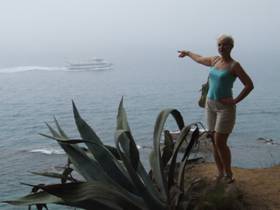
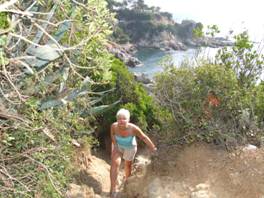
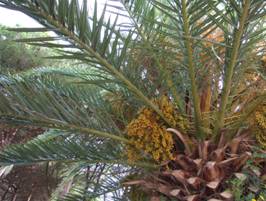
I would definitely recommend viewing the coastline both by clambering over rocky hillocks overgrown with dwarf pines, cacti, cypresses, agaves, and palms imported from Africa, and by taking a sightseeing boat along the cliffs.
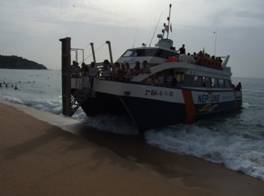
We chose the boat "Neptune" with a glass floor, through which one can observe the sea bottom during the journey. It ran every hour from the beach at Lloret de Mar to another, larger beach at Tossa de Mar (return trip - 12 EUR per person). Interestingly, these boats need no jetties - they pull up directly onto the beaches and passengers reach the deck via a visually fragile but in reality very sturdy little gangway.
Lloret de Mar is the largest and most popular resort on the Costa Brava coastline, Catalonia's main tourist centre and one of the most visited places on Spain's Mediterranean coast. In this city of 14 thousand residents there are 250 thousand tourists.
The city's most bustling little alley is Carrer de la Vila, both sides of which are lined with many varied souvenir, jewellery, and clothing shops. Mainly Turkish traders' stalls. The shops and various types of eateries are open all day until late evening, except during the siesta from 13:00 to 17:00. Although Lloret de Mar does not stand out for any architectural monuments, on this aforementioned alley the Iglesia Parroquial church is worth a visit (see image).
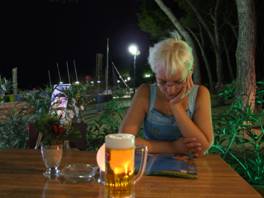
Lloret de Mar is located approximately 70 km from Barcelona. Before the tourist boom that began in the 1970s, the area's main livelihood was wine, olives, and fishing. Nowadays it is a city that houses the largest share of the coast's hotels, restaurants, discotheques, and entertainment centres. Along the seafront stretches a wonderful pedestrian promenade, while alongside it in the open entertainment area, nightlife teems. You are offered evenings in modern casinos, savouring excellent Spanish cuisine in a cosy restaurant, or enjoying a lively evening at a discotheque. Thousands of restaurants, cafés, and nightclub lights illuminate the sea - from the coast the view is magical. Most entertainment venues close only at dawn.
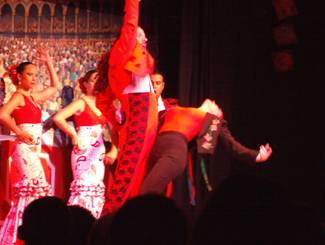
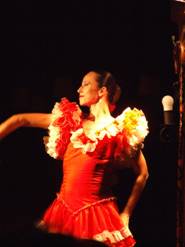
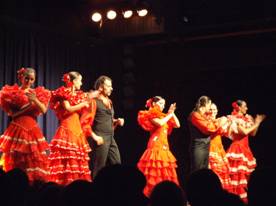
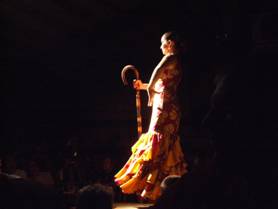
Although Catalonia is not the land of typical Spanish symbols (flamenco and bullfighting come from Andalusia), not far from Lloret de Mar lies Santa Susanna, where in a large tavern tourists can enjoy both dinner and a flamenco show La Siesta (www.lasiesta.net). One should expect to spend around 40 EUR per person.
Performing are flamenco dancer Jose Leon with his group, followed by tenor Sam and guitarist Diego Cortes. At the close of the evening each guest can receive their own photo with the artist's autograph and Gracias por su Visita (a pleasure at 7 EUR).
comments