The Wines of Sunny California
From the very first moments of the presentation I understood that writing about these wines and this wine region would be much easier, as it is far freer from canons. California wines account for 9/10 of all wines produced across the great United States. The climate is wonderfully obliging - warm and sunny almost all year round. The fundamental principle: simplicity and accessibility for the wine drinker.
On a truly wintry Friday evening, another gathering of the wine lovers' club took place at Larisa's. On the evening's agenda: wines of California, USA. From the very first moments of the presentation I understood that writing about these wines and this wine region would be much easier, as it is far freer from canons, centuries-old traditions, and perhaps even slightly more superficial than the good old Europe. Yet in any case, California wines have today claimed an important niche in the wine world and found their consumers.
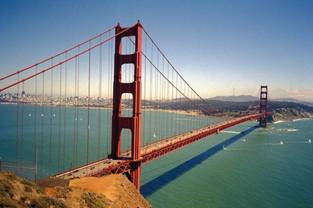
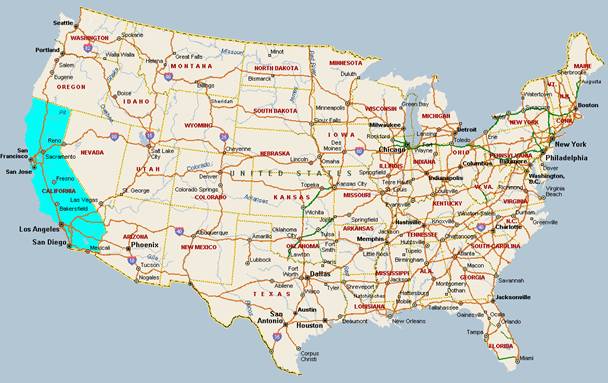
First, a little about California - one of the USA's states, 3rd in size and 1st in population, with its capital Sacramento and its governor Arnold Schwarzenegger, widely known the world over from action films. We have not been to America and its geography, culture, and traditions have never truly captivated us (though these do seep through every crack into Europe too - with burgers, Halloween, rock and roll, pop culture, and so on) - yet a couple of cities are familiar from the media and books: San Francisco (Alcatraz prison island, the Golden Gate Bridge), Los Angeles, or the City of Angels (California's largest city, the mecca of the film industry - Hollywood on the city's outskirts, smog). It turns out that the state of California is larger in area than Germany.

Speaking of the grape-growing and winemaking industry, California wines account for 9/10 of all wines produced across the great United States. The climate is wonderfully obliging - warm and sunny almost all year round. While for successful grape ripening at least 100 sunny days per year are needed, here there are a full 180 days of sunshine. The proximity of the Pacific Ocean and its favourable fog, as well as minimal weather fluctuations, pose no threat from harsh frosts.
A little music to stir the associations - Beach Boys "California Dreaming"
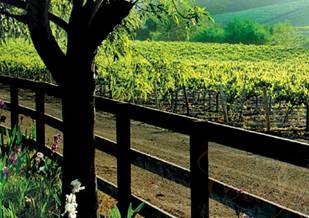
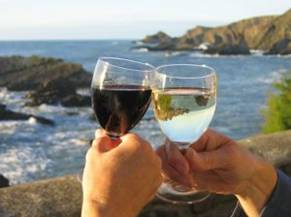
Photo from California Wine Club
Unlike in Europe, in California the grape grower and the wine producer are separate - that is, winemakers do not own the vineyards themselves but purchase grapes from various growers. All wines are aged in oak barrels. Winemakers enjoy extraordinarily free rein in blending grape varieties when making their wines, so the reliability of what is stated on the label is: 100% for the state of origin, 75% for the grape variety indicated, 95% for the year. American freedom, individual rights, and the freedom to experiment are expressed to the fullest in winemaking too. The fundamental industry principle: simplicity and accessibility for the wine drinker. Moreover, a price range from $2 to $200 makes California wines very accessible to consumers. There are no strict quality criteria (nor is anything of the sort indicated on the labels, unlike in Europe) - the main criterion appears to be: drinkable / undrinkable.
The history of California winemaking is quite interesting: it began in the mid-18th century, survived the Gold Rush era, Prohibition (during which the number of wineries shrank to 160), then an attack of the phylloxera pest on the vineyards (which reduced winemakers to as few as 10), until finally the dizzying rise to around 1,400 wineries today. The proportions of white and red wine over the years swung from a dominance of red to a prevalence of white, until in 2000 they stabilised at around 55% white wines and 45% red wines.
The first wine from the distant continent - Bonterra Viognier Mendocino, a white wine, 14%. Grape varieties: Viognier 85%, Marsanne 10%, Roussanne 3%, Muscat 2%. Aged 4 months in oak barrels. The colour is oily, the flavour also expressive and creamy in structure, an exotic fruit and floral bouquet. Enjoyed together with Caesar salad.
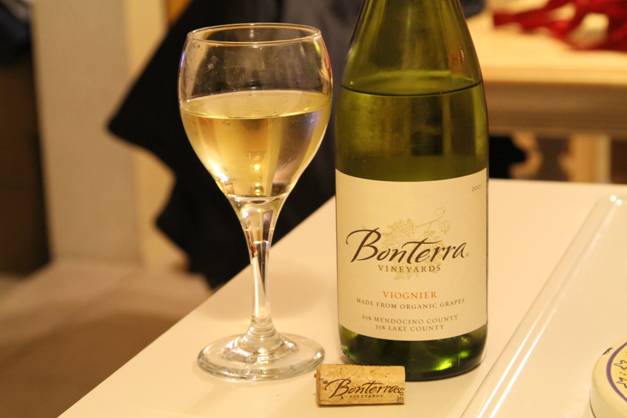
Photo from Weekly Wine Journal
Subjective verdict: the aroma resembles Riesling - my first thought was it would be to my taste; in flavour, tangy, rich; association - a meadow in bloom. Liked it!
Sonoma-Cutrer Russian River Ranches Chardonnay - white, 14.2%, from the Chardonnay (CH) grape, aged 12 months in oak barrels. Chardonnay has an aroma of apples baked in butter - a grape whose finest companion is an oak stave. The aroma is the sun's gift: jasmine, rose petals predominating over tropical mango, pineapple, and pear. The flavour is refreshing, an expressive structure complementing the complex citrus, lychee, and meadow flower combination with just a hint of vanilla.
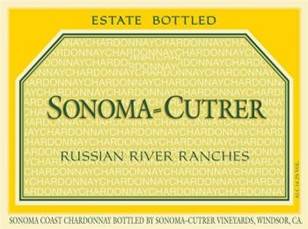
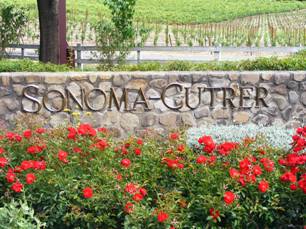
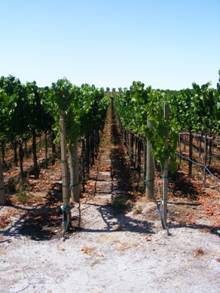
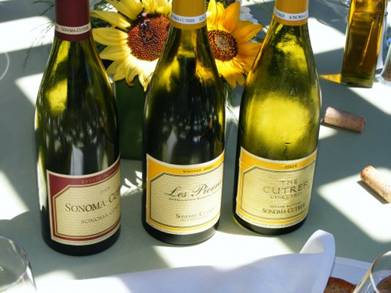
Photo from John on Wine – a wine blog
Subjective verdict: association - summer; pleasant acidity, vanilla, creamy flavour. Liked it!
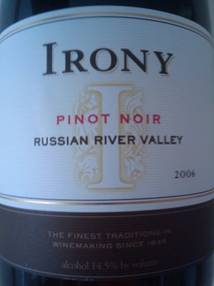
Irony Pinot Noir Russian River Valley 2006 - red, 14.5%, primarily from Pinot Noir grapes. Aroma of ripe cherries and wild berries mingling with cedar notes. The wine is aged 18 months in oak barrels. Ideal with roasted meat, beef dishes, and cheese. The roasted yellow bell pepper prepared by Larisa was also excellent.
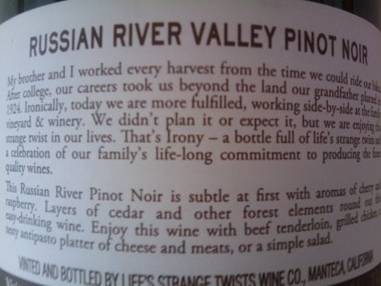
Subjective verdict: the tannins make themselves known, yet a creaminess is preserved; not on its own, but good with meat; the reddish-brown colour is indicative of a certain heaviness.
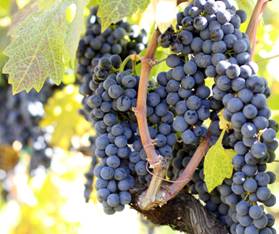
Villa Mount Eden Antique Vines Zinfandel 2005 - a red wine, 14.5%, from Zinfandel 85% and Petit Sirah 17% grapes. Notably, Zinfandel is considered a grape that originated in America itself, rather than one of the many imported from Europe. The wine is aged 12 months in oak barrels. The aroma is reminiscent of plums and raspberries. Excellent with BBQ, poultry, ribs, cheese fondue, lasagne. Serving temperature 16–18°C.
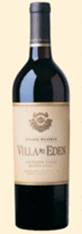
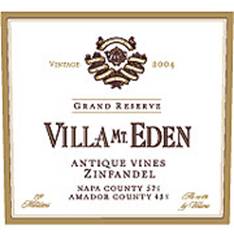
Subjective verdict: the astringent sensation of the tannins is not as pronounced; enjoyed it with the sweet cranberry and rosemary/mint sauces served alongside. An unfortunate attempt at imitating antique style on the label.
Robert Mondavi Private Selection Cabernet Sauvignon 2005 - from at least 75% Cabernet Sauvignon, Syrah, a little Merlot, Malbec, and Petit Sirah grapes. The wine has a pronounced ripe plum flavour with a wild raspberry accent. Served with snacks, grilled chicken, seafood, and light Italian pasta.
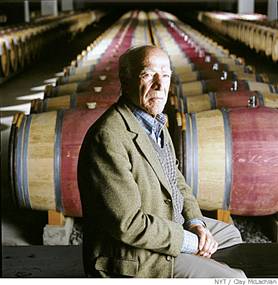
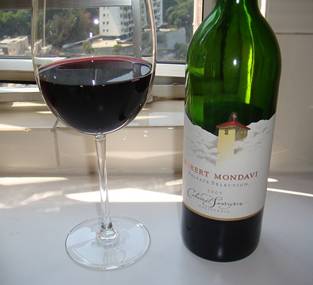
Photo from Clay McLachlan & PP Martin
Subjective verdict: a soft finish, the tannins are not intrusive; a childhood syrup aroma; can be enjoyed on its own without calling for meat. One of the few red wines I like!
With the last wine - the old-timer Stephan Ridge Paso Robles 1999 from 40% Cabernet Sauvignon and 60% Shiraz grapes - for the first time there was the experience of a wine that had outlived its prime and was no longer truly enjoyable. Subjective verdict: smells of port wine, the flavour is hard to put into words. As compensation, Larisa offered a seventh wine from her personal cellar, which had not been on the evening's tasting list - Fetzer Valley Oaks Zinfandel 2008 - a red wine, with a green pepper aroma.
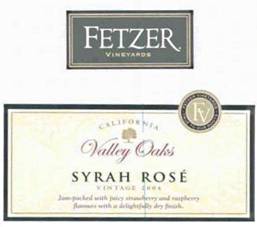
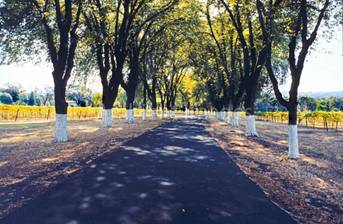
Photo from California Stock Photo
It turns out that it has been about a year since I joined the wine lovers' club. I have now at last gradually worked out two things for myself - I like white wines from the Chardonnay grape; and second - I need a proper thick yet convenient notebook in which to compile the most important information about wines from various countries, so I can walk confidently into specialist wine shops and take it along when travelling to a specific wine region.
comments