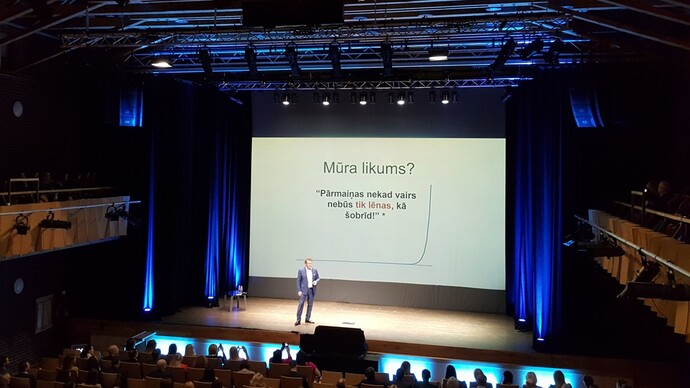
The "Human Factor" Future Challenges Conference in Cēsis
If I had to describe it in a few words, I would say this - a professionally and high-quality organised conference on a topic very relevant today, but still insufficiently highlighted. Many people everywhere talk about leadership, management, the digital environment, and sales and marketing mastery - but finally, someone is talking directly about human resources and the questions surrounding changes in the work environment, form, and organisation in the near future. Because "change will never be as slow as it is right now".
On Friday 24 March, HR professionals and other interested parties gathered at the Vidzeme Concert Hall in Cēsis to participate in the "Human Factor" conference dedicated to questions of personnel development, motivation, and management. In total, 15 speakers and a wide range of topics - from employee generations, flexible and remote working, and different work environments to future challenges, a changed profession classifier, and an entirely different mission for the leader-manager in a company.
As always, I want to highlight the speakers and insights that prompt reflection, analysis, and possibly a change of something in one's own company.
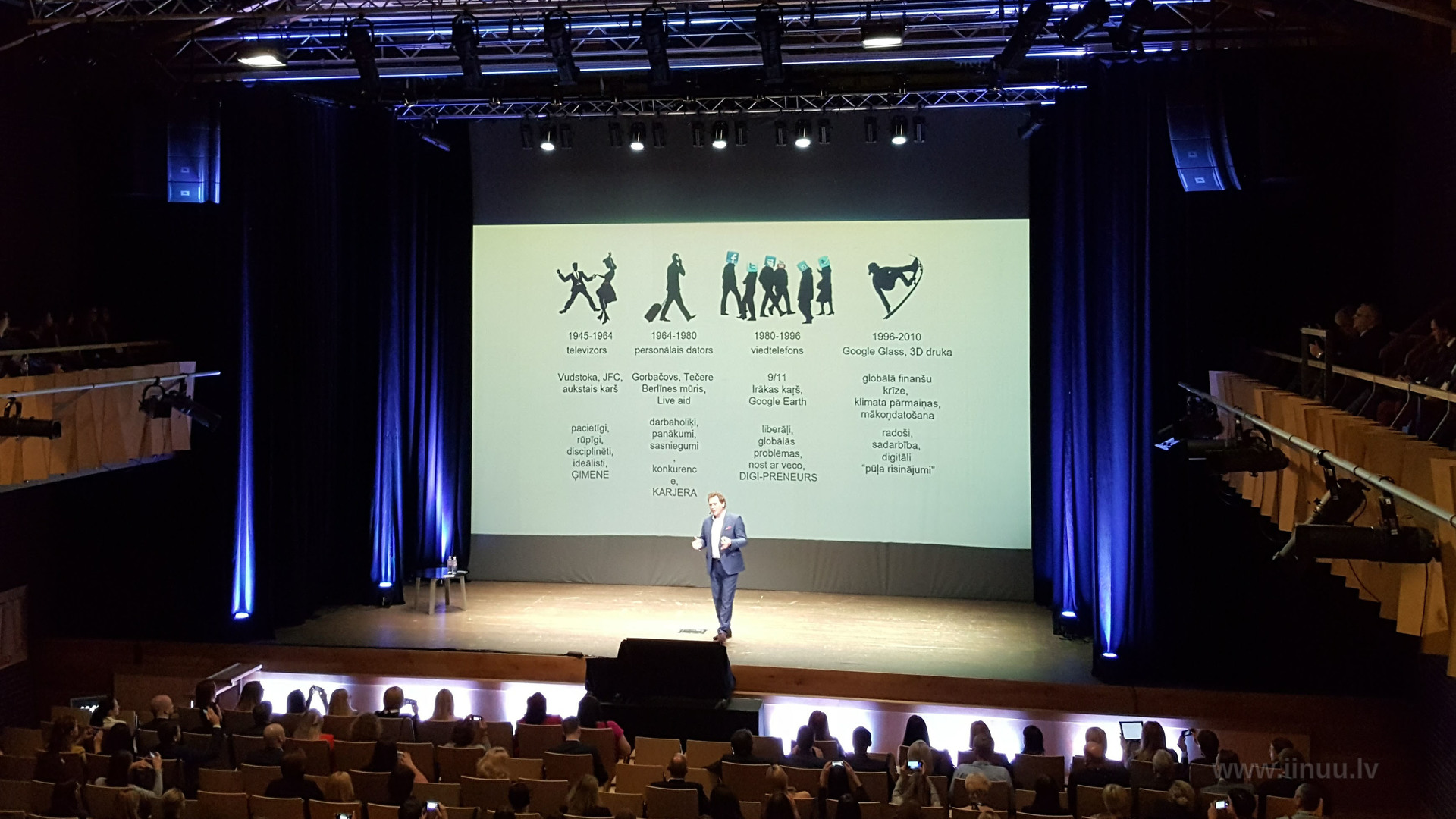
Haralds Burkovskis: And then 5 generations of employees meet in a team…
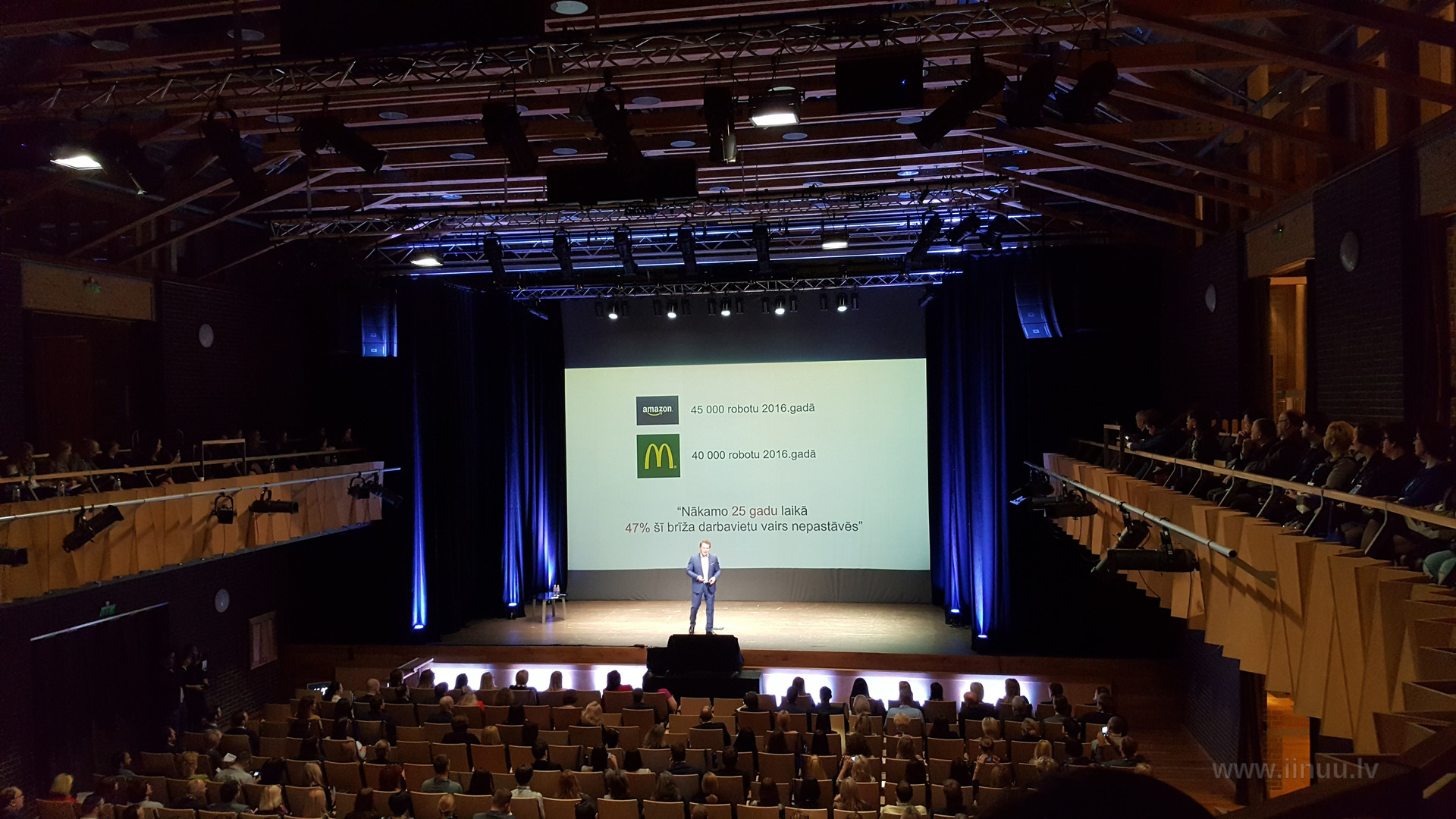
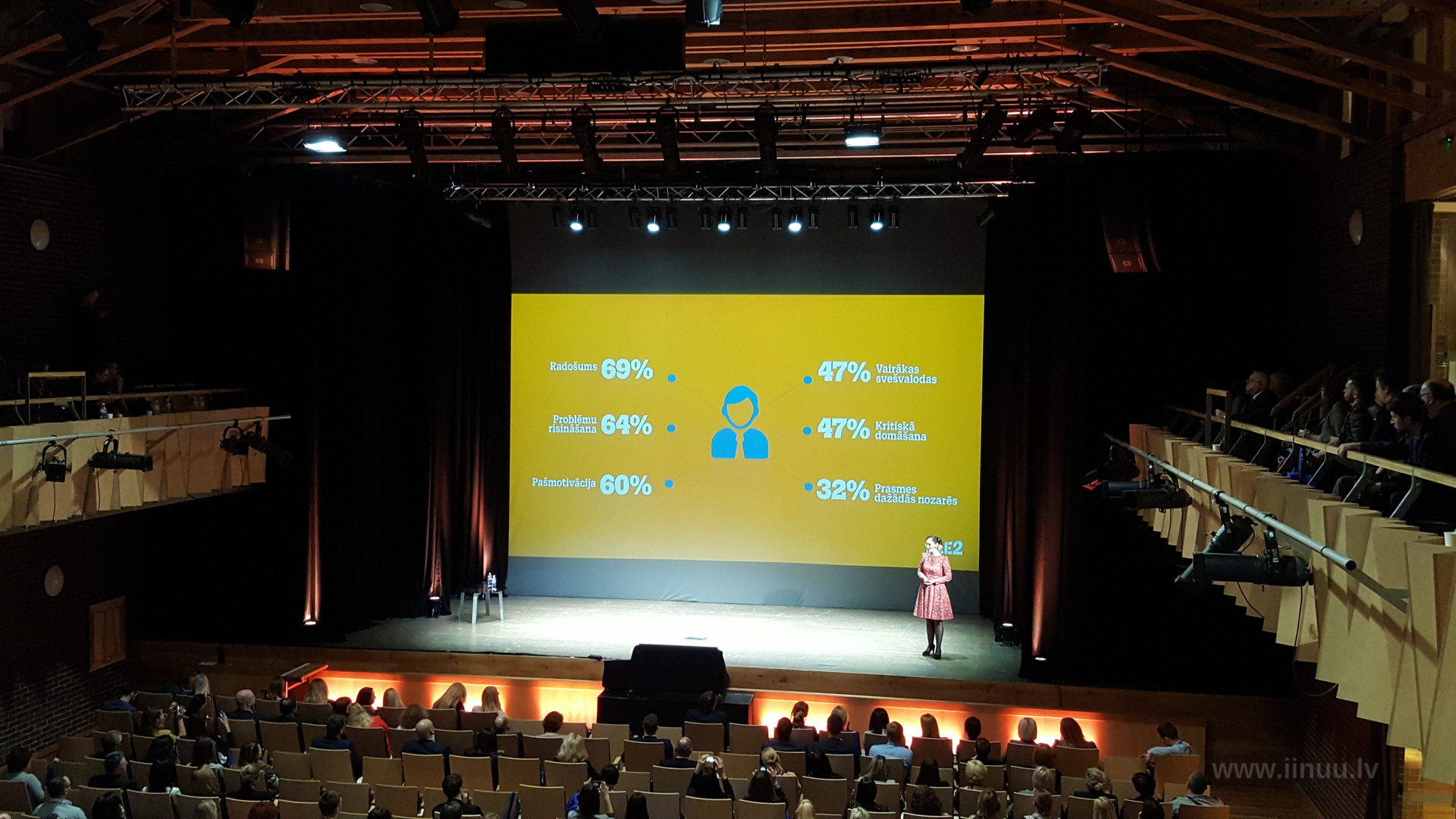
Haralds opened the conference with a presentation in which he traced the rapid pace of development the world is experiencing, invoking Moore's Law*. These rapid changes undeniably affect the HR field as well. A fairly credible forecast: within the next 25 years, 47% of current jobs will no longer exist. Here are some examples of what is already happening in the world's largest companies. In 2016, Amazon employed 45,000 robots and McDonald's - 40,000 robots.
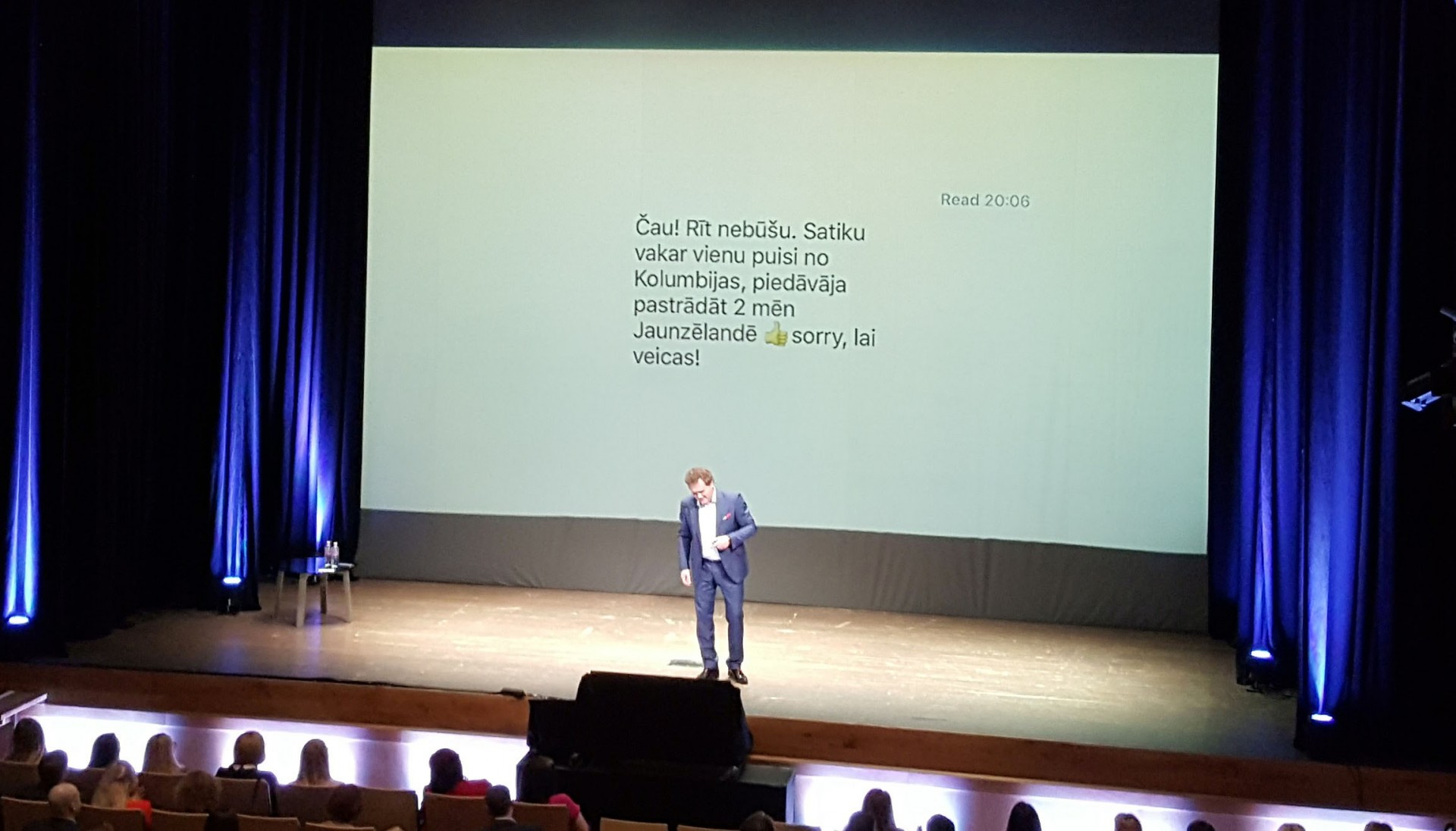
Generational change and the attitude towards work characteristic of each generation - its own paradigm of values and beliefs - also brings significant change with it. If until now and still in most workplaces today a resignation is submitted in writing on paper and followed by a one-month notice period, in the future a notification of departure will most likely look like this, sent for example via WhatsApp or another online messaging tool:
Accordingly, the following challenges are expected in the HR field:
- results, not working hours;
- remote and mixed, not 9:00–17:00;
- salary, bonuses, holiday?! But what else do you offer?
- your own boss, not control and supervision;
- how would you change the world to make it better?
* Moore's Law is the observation that throughout the history of computing hardware, the number of transistors on integrated circuits doubles approximately every two years. The law is named after Intel co-founder Gordon Moore, who described this trend in his 1965 publication.
Vita Brakovska: Work in five years' time - will it be the same as today?
- New ideas need old spaces (offices in former factory premises, converted garages, etc.).
- Individualised furnishings - for example, hammocks suspended from ropes instead of chairs (think creatively, put the mind in a hammock).
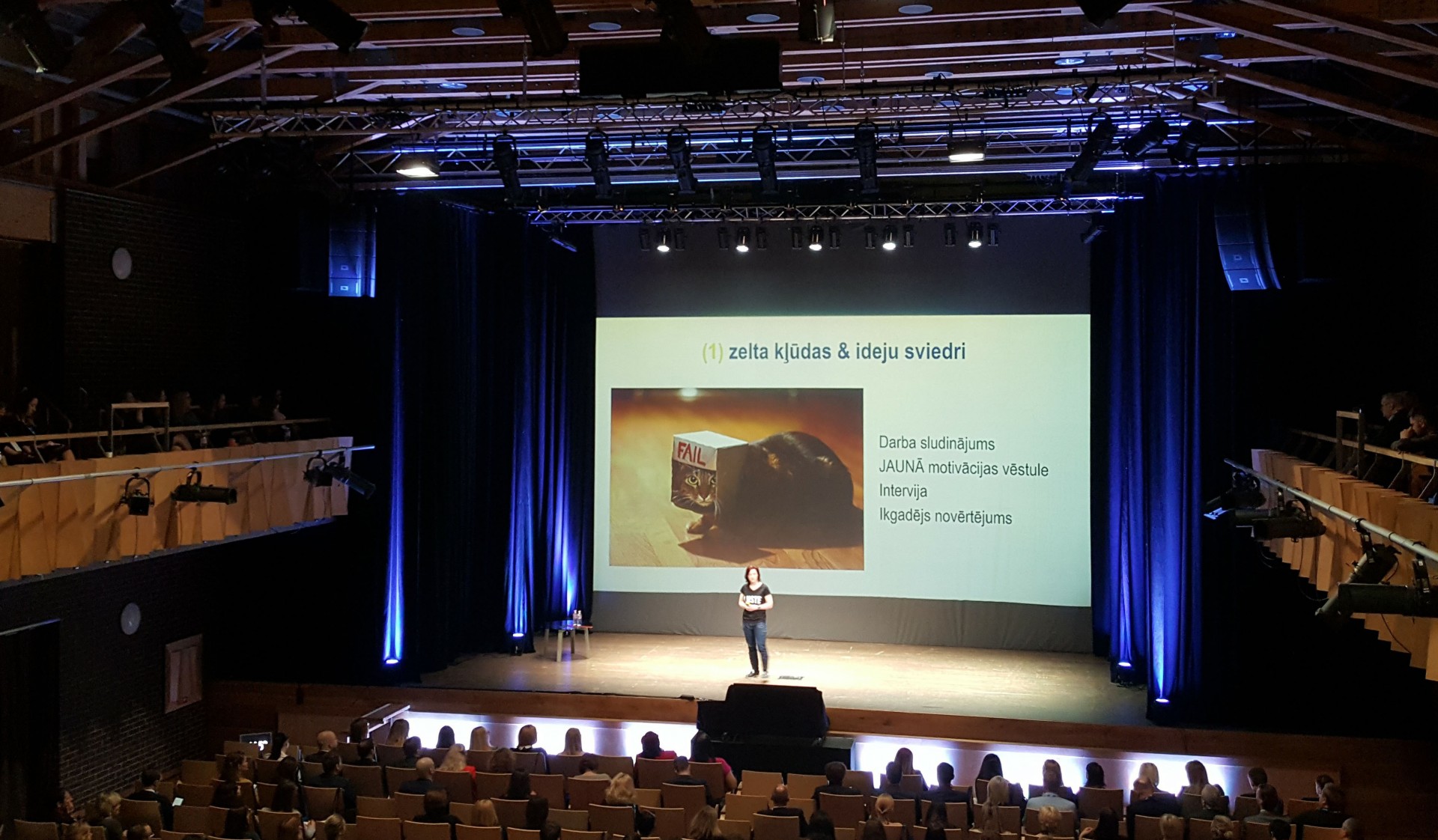
- In job interviews and motivation letters, ask candidates about mistakes they have made, because it is only by making mistakes that a person develops.
- Good employees "go left" (they do not only what is in their job description, but do something more - find non-traditional solutions).
- When did you last experience something for the first time?
Kristīne Mennika: A flexible work environment
A flexible working schedule requires three things - technology, mental maturity, and remembering that not all roles and positions are suited to this form of work.
A leader's mission is to serve, to take responsibility, and to help employees grow. The only thing one can create is an environment.
In building relationships, self-confidence goes hand in hand with humility (not to be confused with self-abasement).
Vaira Vīķe-Freiberga: Work - obligation, virtue, or exciting game?
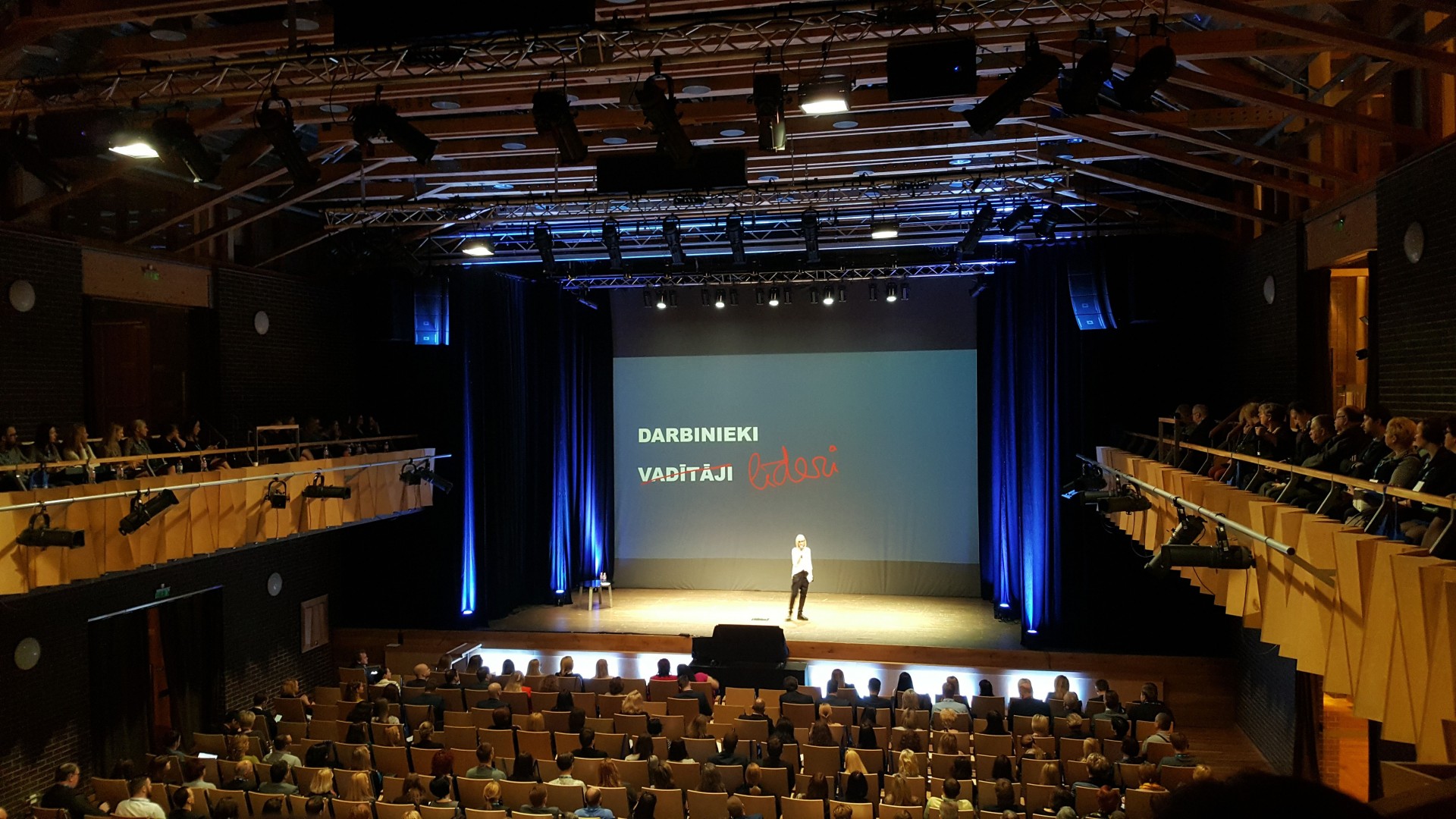
VVF surprised the audience by singing in a resonant voice several work folk songs that characterise the Latvian work ethic, which in turn is bound up with human dignity.
- The rhythm (rimts) of Latvian folk songs helps with monotonous and heavy work.
- Folk songs employ the visualisation of a positive outcome. (Very contemporary - even today in coaching, the power of visualisation for achieving results is spoken of.)
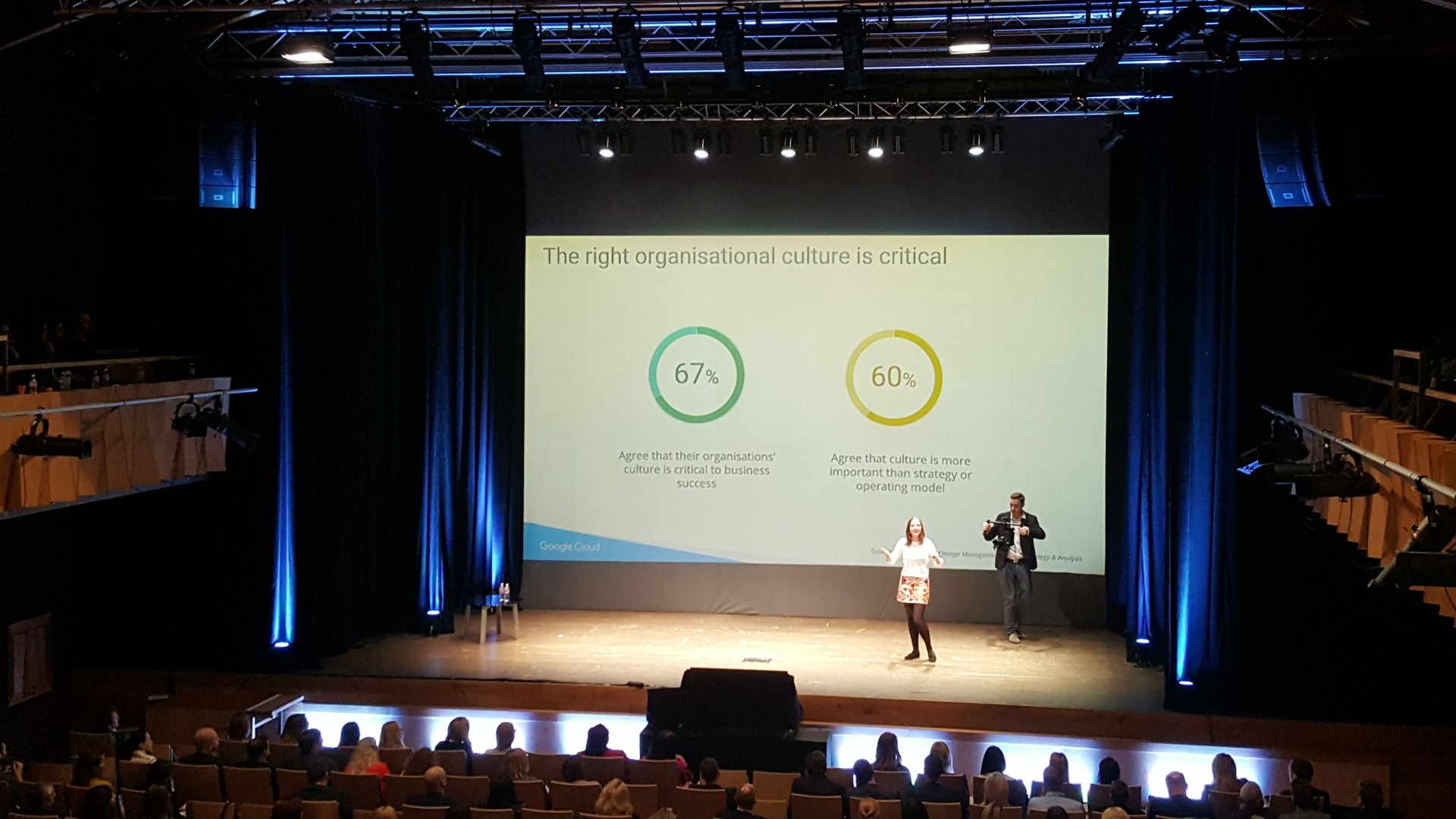
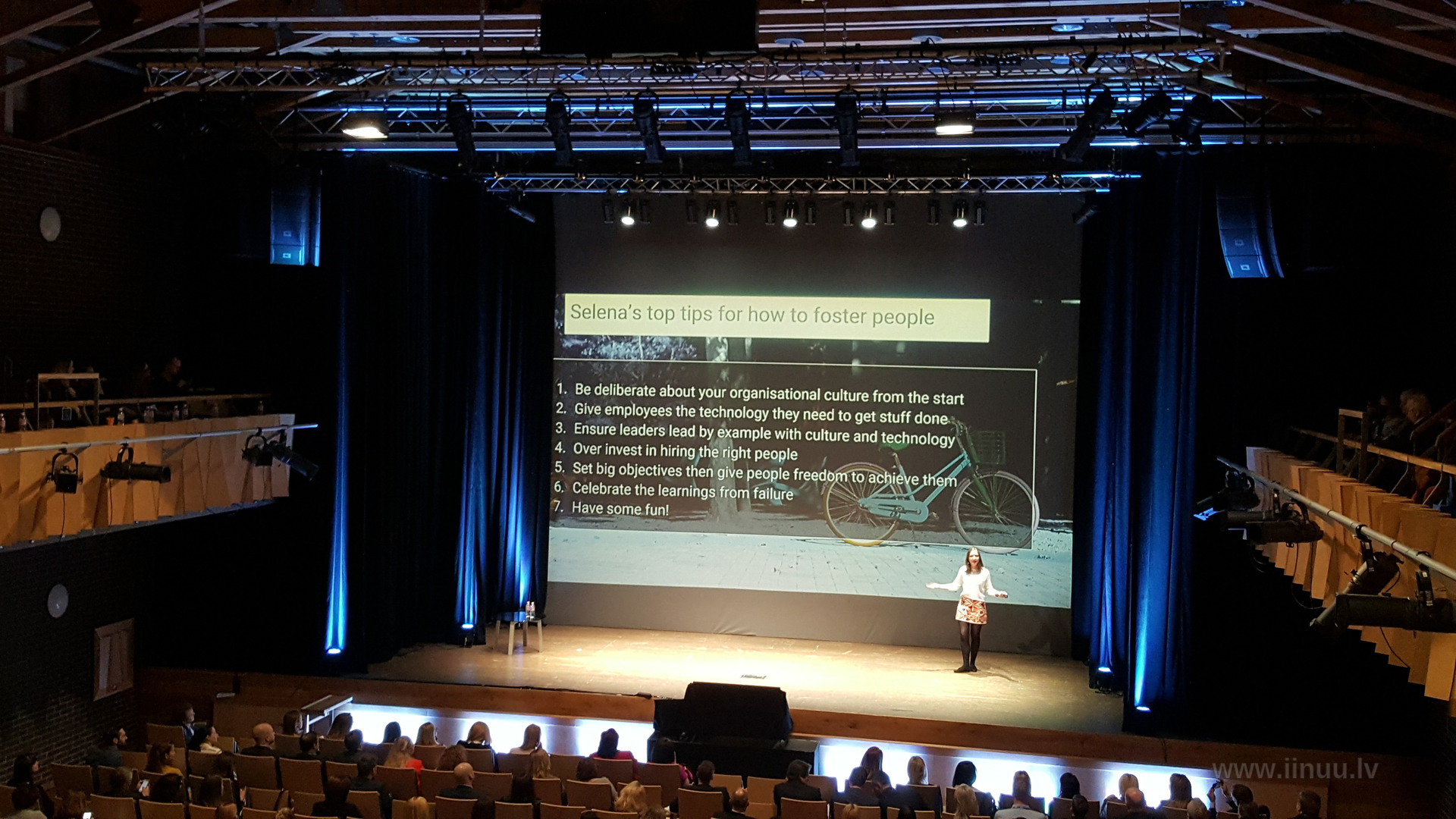
Selena Harries: Google culture - How to foster innovation and collaboration internally
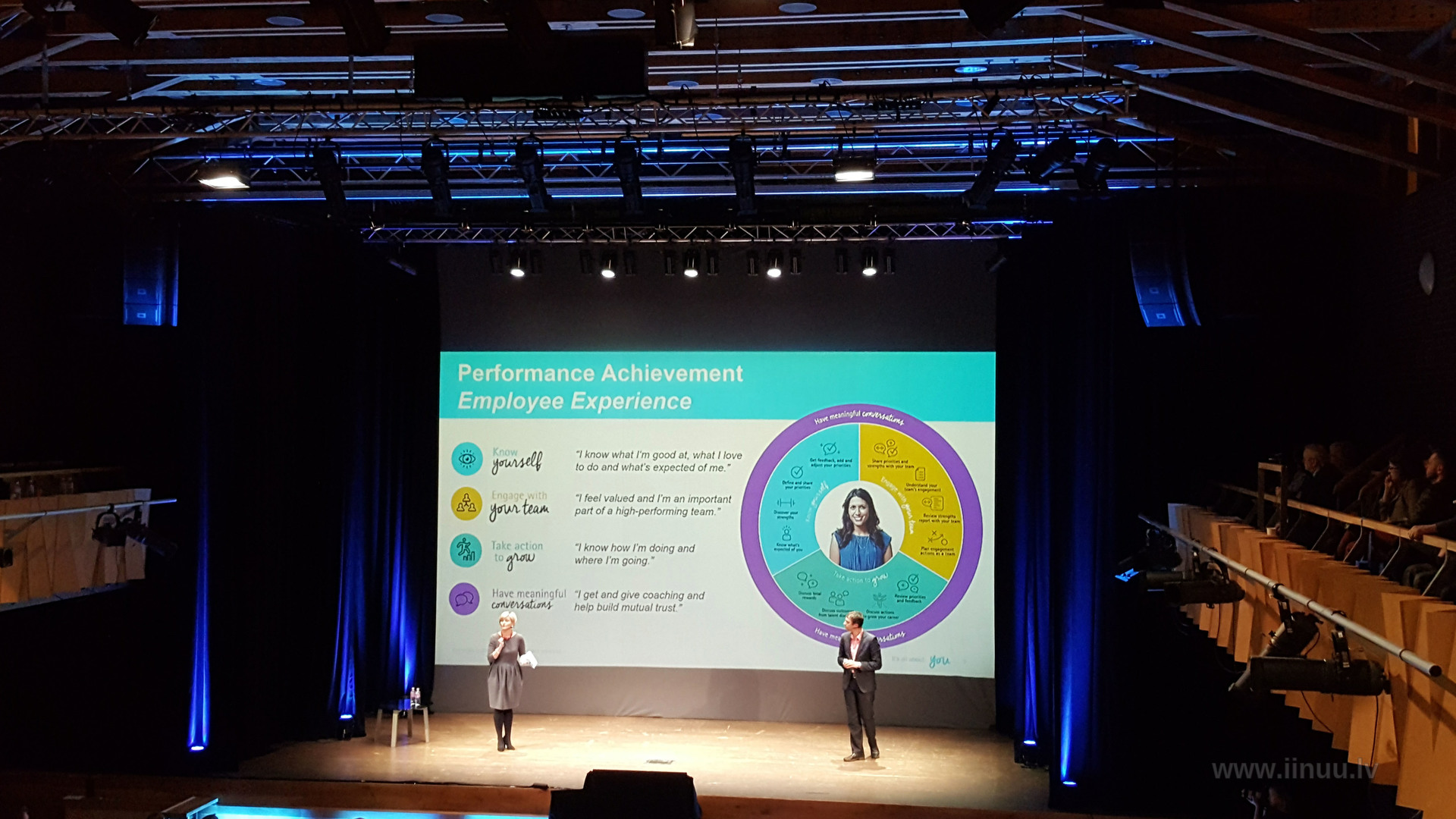
One of the few English-speaking lecturers, a Google UK employee. In my view, very valuable insights from a globally successful company, including in the field of HR attraction and motivation.
- Google spends a great deal of time on recruitment. Lengthy selection processes. She herself went through ten rounds of selection before being hired by the company.
- The primary goal: to find a person who fits the company culture.
- Involves existing employees in the selection process.
Feedback is a gift.
- Employees are allowed to spend 20% of their working time on things outside their direct responsibilities. They can invent something new, participate in charitable projects, mentor others, and so on.
- An error culture has been developed in the company. Mistakes are permitted and learning from them is encouraged.
- The Googler 2 Googler (G2G) programme has been introduced, allowing employees to continuously learn from each other.
- Offices are arranged like homes, with the spaces and objects characteristic of a home.
Daniels Pavļuts: What is true leadership?
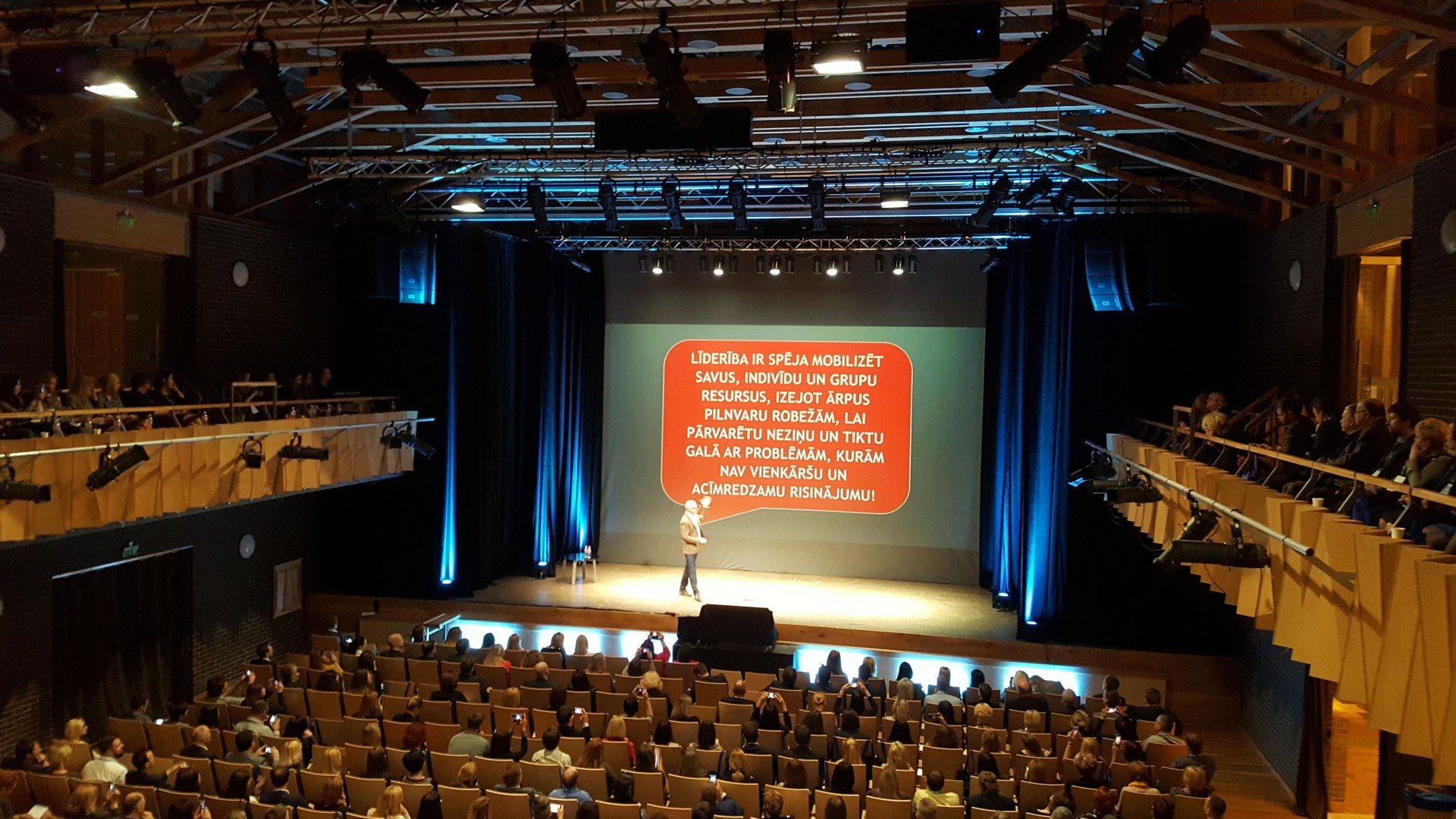
Daniels spoke about the "unbeautiful" truth that, contrary to the cultivated belief, leaders are not "pure and fluffy". They step on people's toes, are uncomfortable, constantly exceed their authority, manipulate other people, and are by nature very lonely individuals - because they often stand alone against everyone.
Leadership is the ability to mobilise one's own, individual and group resources - going beyond the bounds of one's authority - in order to overcome uncertainty and deal with problems that have no simple or obvious solutions.
Ieva Kalve: Change - take it easy
A charismatic speaker with an interesting theory about types of change. But the two "golden" insights I want to highlight are these:
- You always have the choice to be at the mercy of change or to become a change-maker yourself.
- Latvian industriousness and the habitual overworking (working after hours, on weekends) is not a compliment to carry around the world like a flag - it is a weakness of mentality. "I'm ready to work like crazy, just don't make me think!"
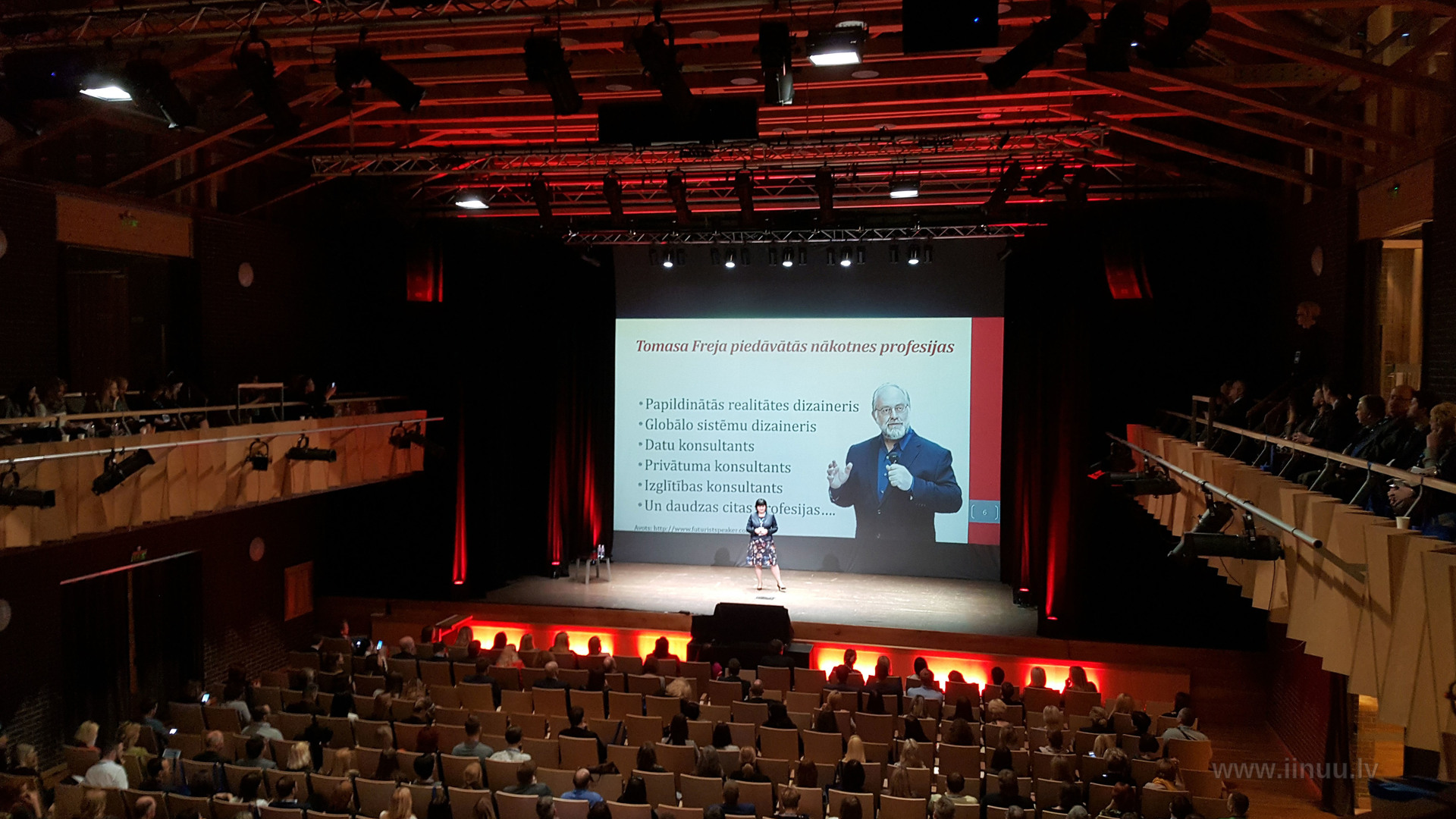
Līga Peiseniece: The profession classifier in 2025
Not only work organisation and environments are changing - professions are changing too: dying out and being born. And the pace is getting ever faster. This is why the profession classifier must also change, become more flexible, and respond more quickly to these changes.
Līga introduced the future professions of futurologist Thomas Frey - augmented reality designer, privacy consultant, data consultant, global systems designer, and others. Ask yourself this question now - can a robot replace you in your current profession? If the answer is "more likely yes than no", it is time to start thinking about a new profession.
Invent your new profession before yours becomes extinct!
Māris Resnis: Simple, simpler, simplest
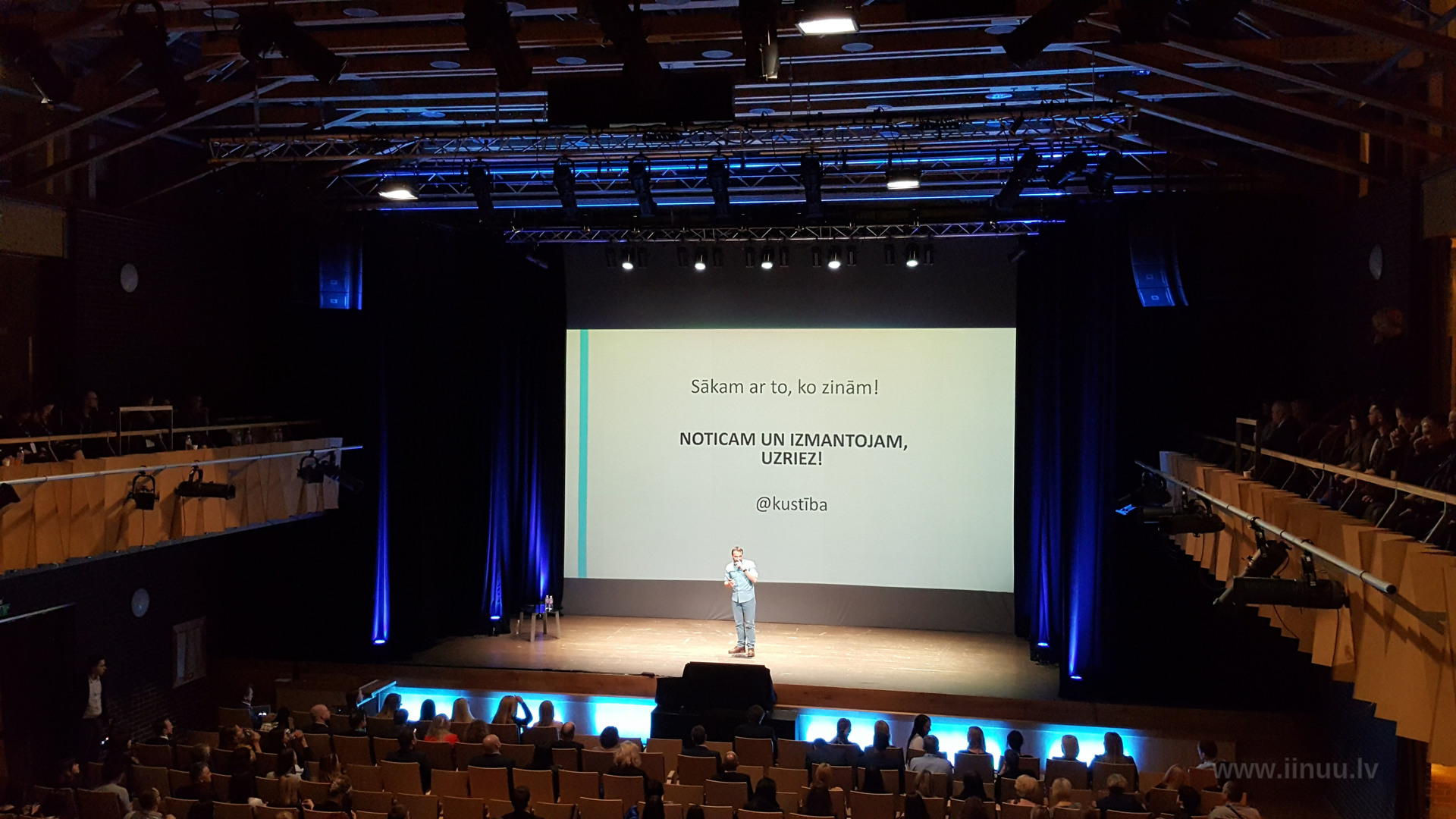
Everything is simple. We start with what we know, believe, and use - RIGHT NOW!
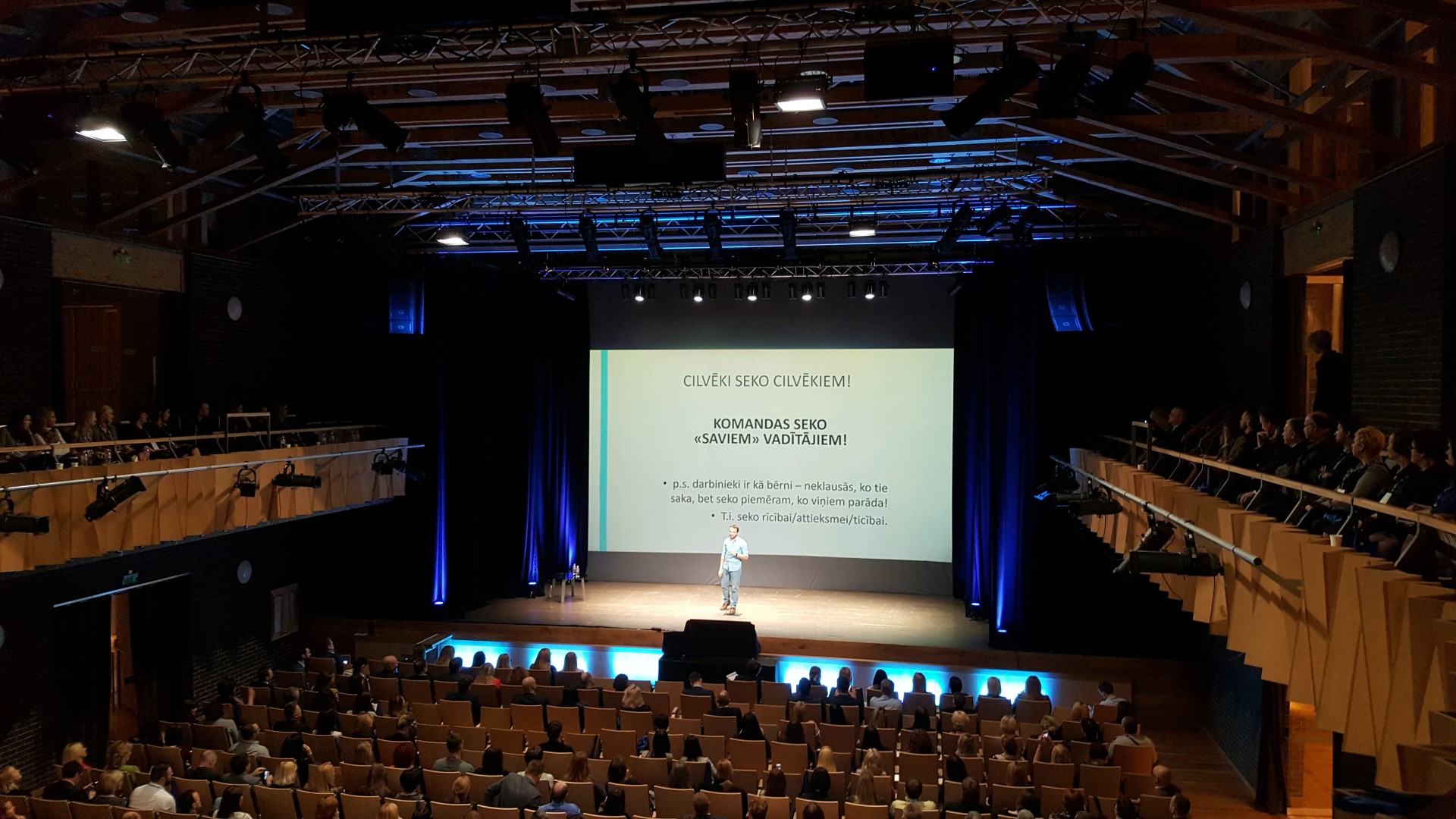
People follow people. A team follows its leader. If the leader believes, so do the employees. Employees are like small children - they don't listen to what they are told, but follow the example they are shown.
The manager is the loneliest profession. The team will only understand up to a certain point. Possible support: another manager or a group of managers.
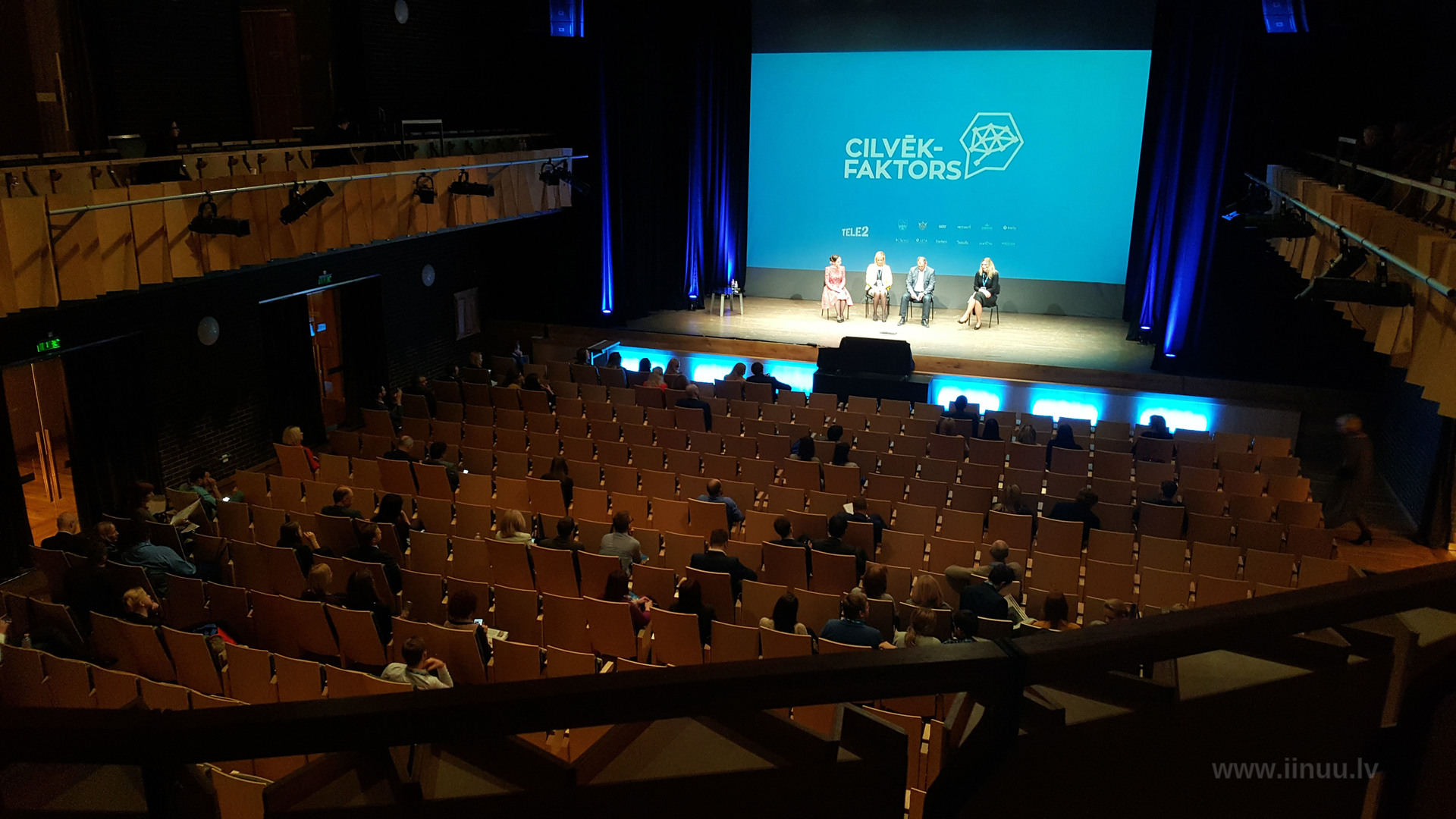
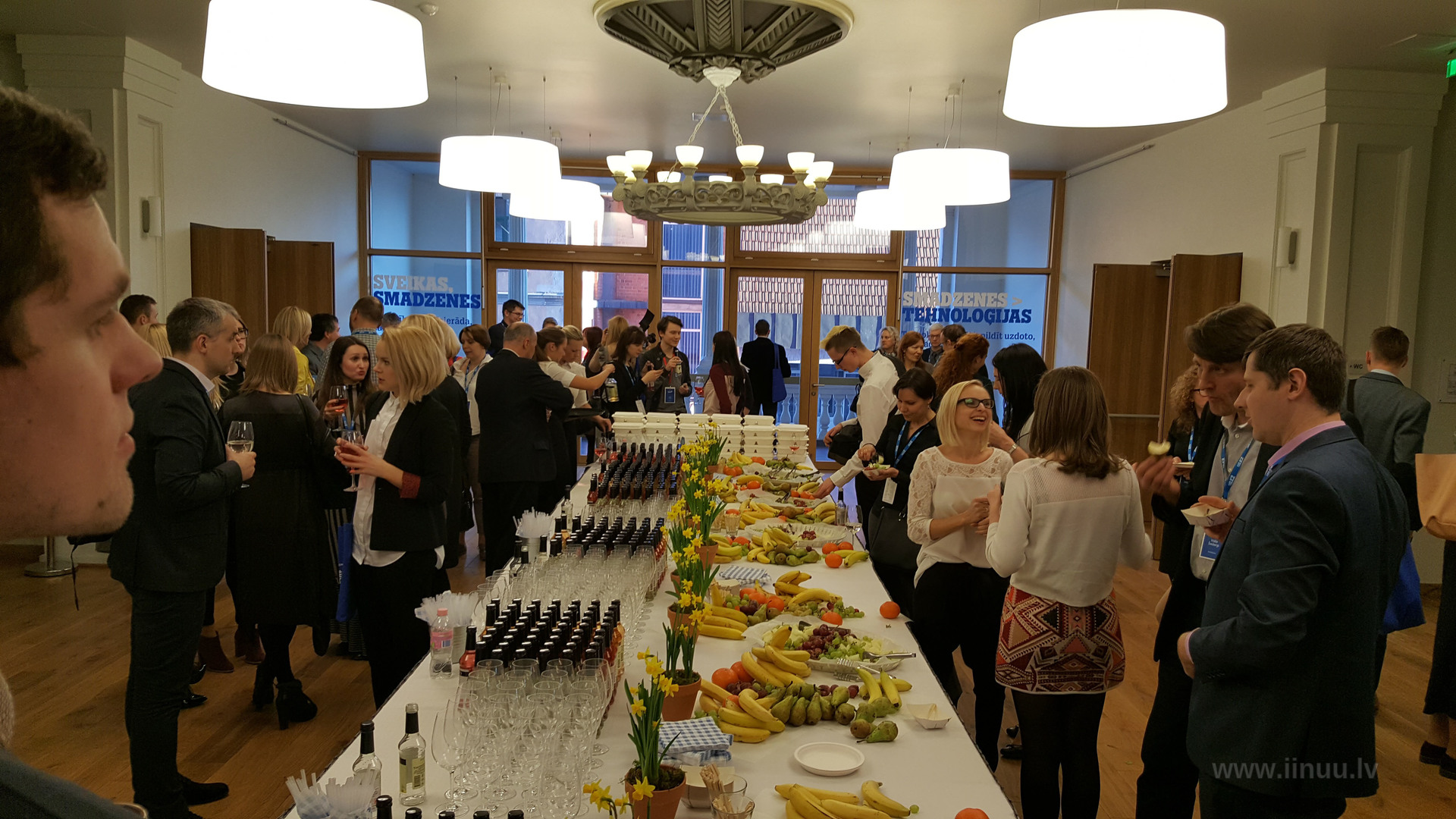
It must be said - Latvians are an impatient and intolerant people. When at the close of the conference there was a discussion in which three industry specialists and managers talked about HR questions, future trends, and how these are already affecting their companies, the large hall was already almost empty. The crowd had now moved to the drinks tables and conversations that mostly concluded without any "next step".
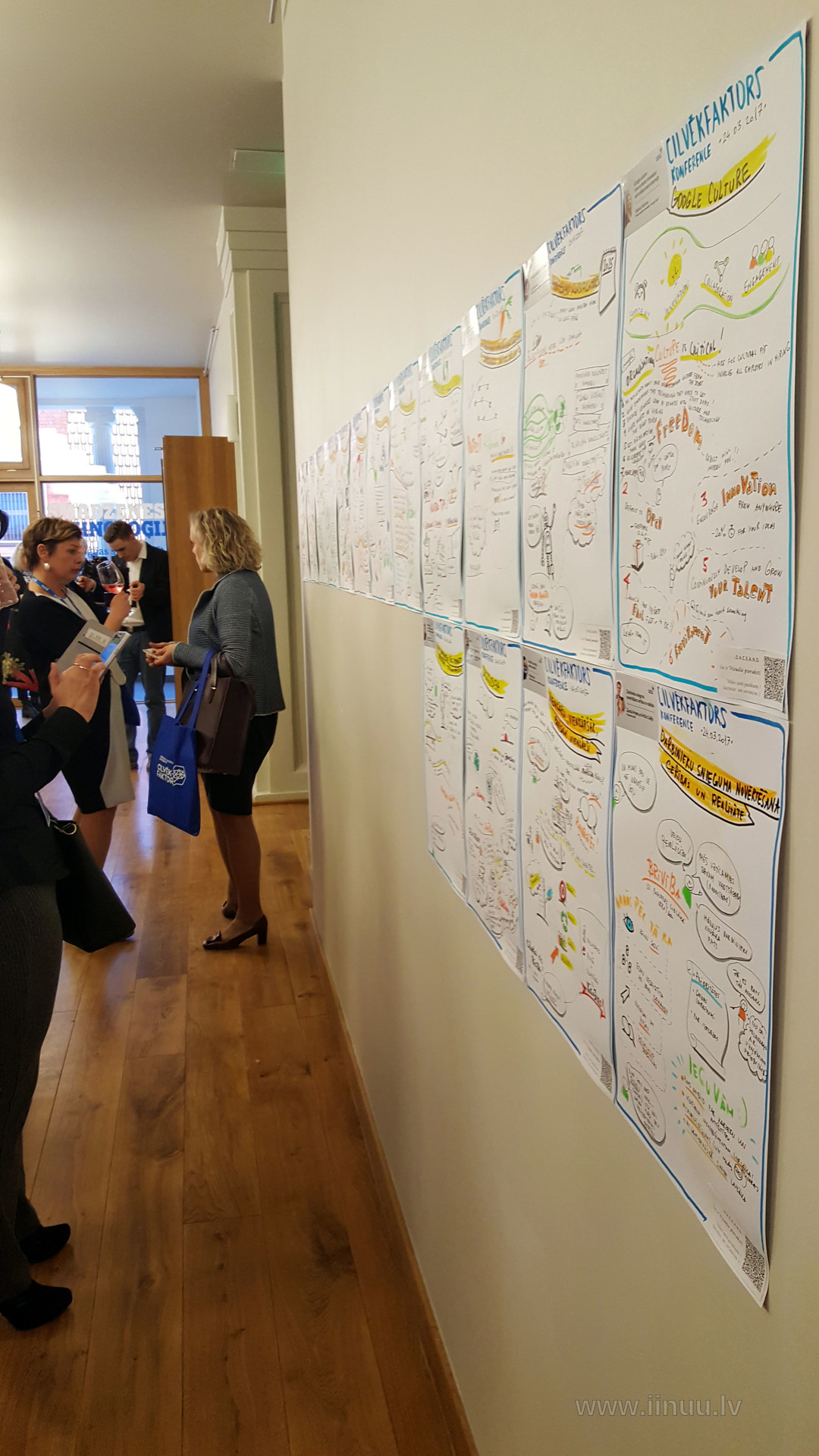
Narcissi in pots and sunbeams through the large concert hall windows announced unmistakably that spring had arrived. On the walls of the informal conversation room - interesting and much admired by many conference participants - were Dace Andersone's visual notes: graphic summaries of the speakers' presentations.
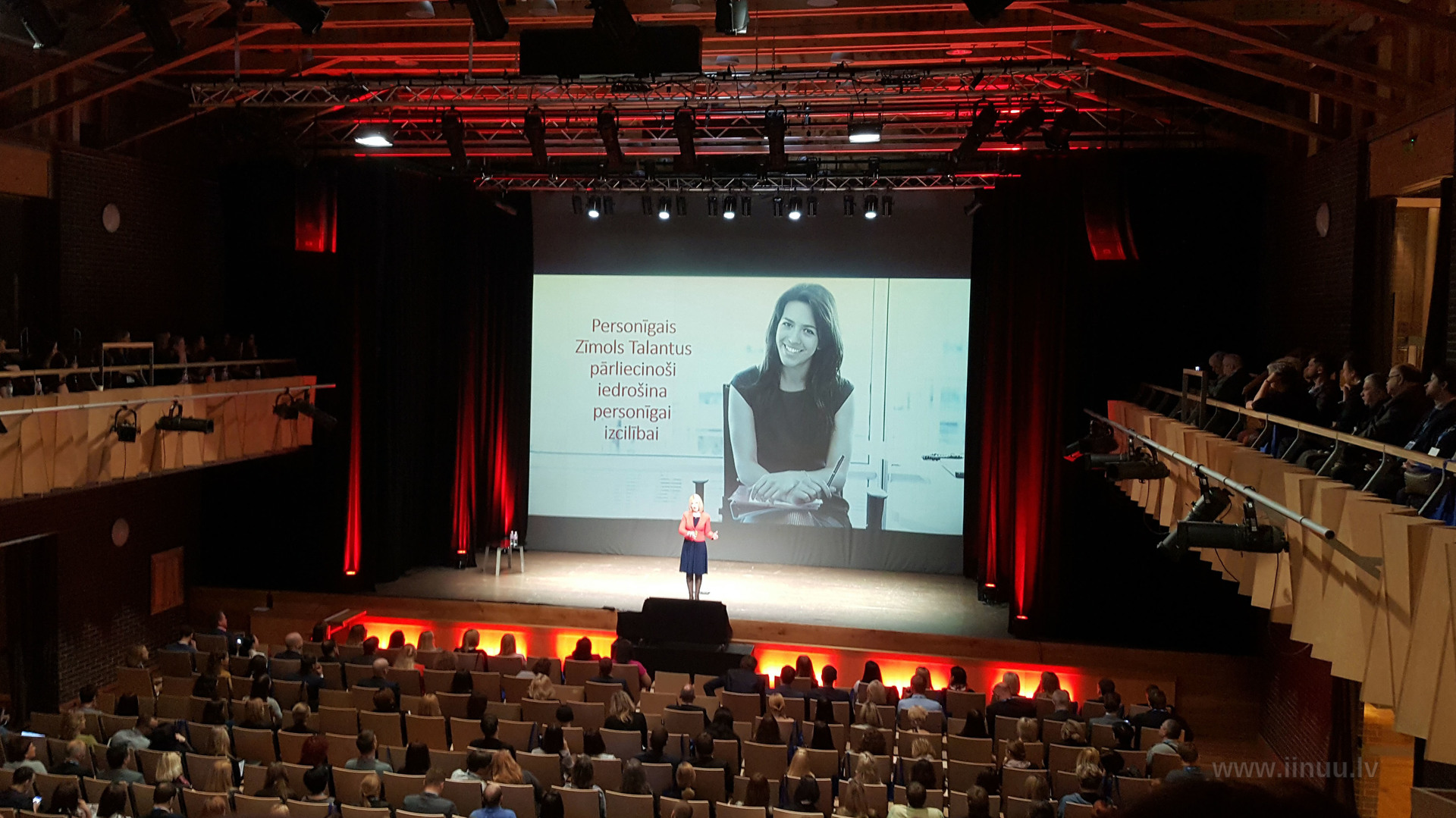
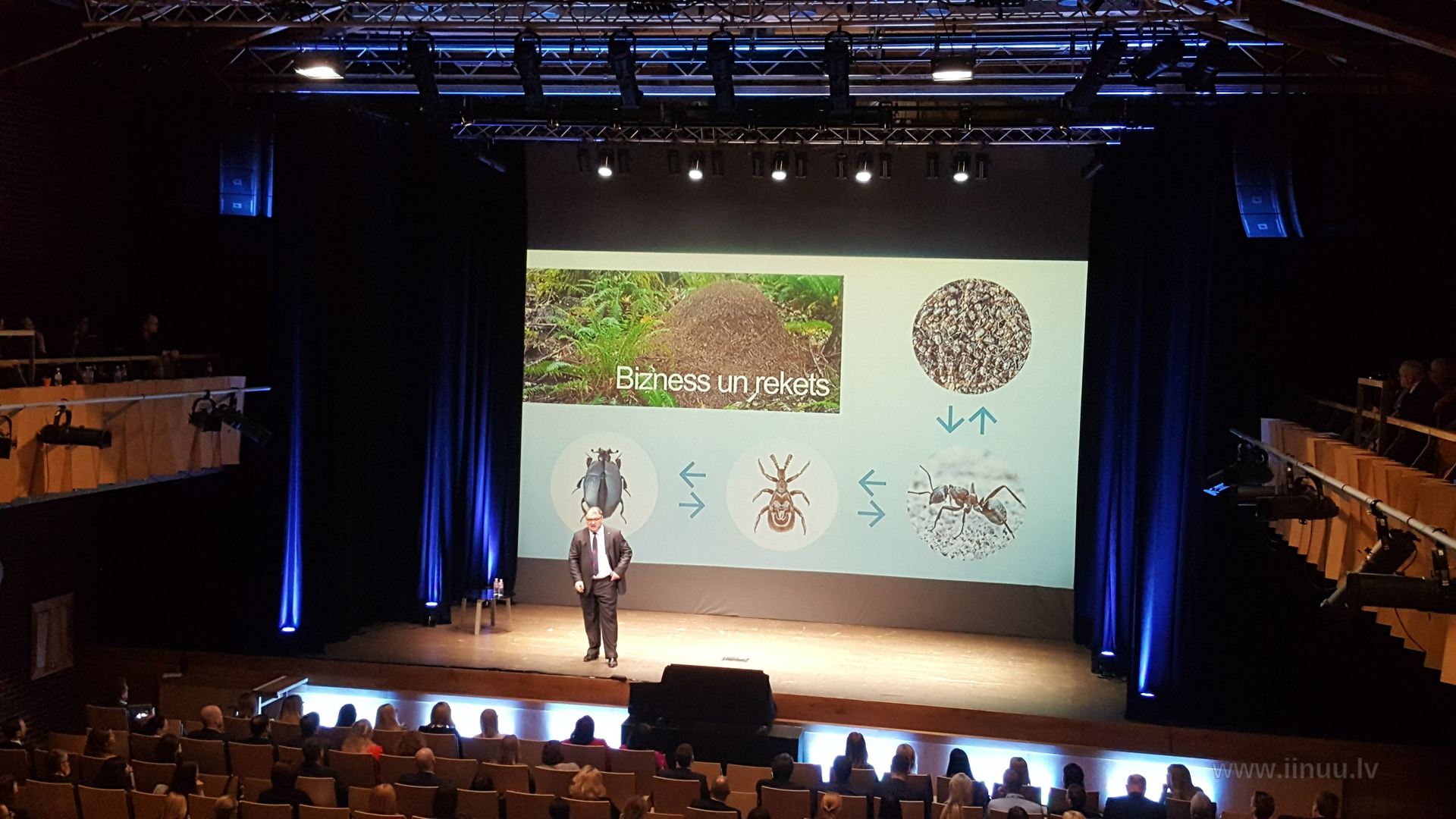
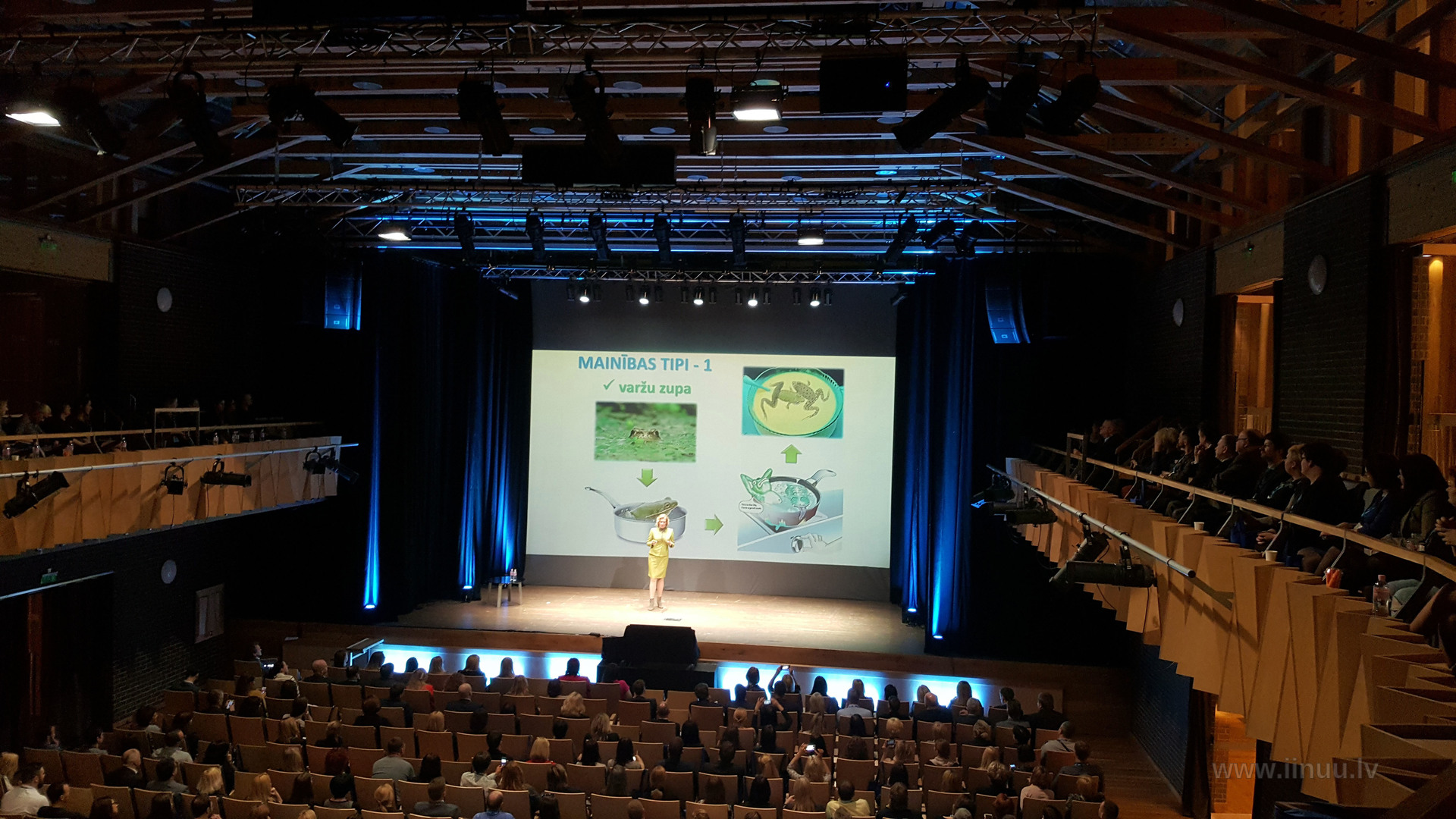
Below I have added a few more photos of other speakers and the most striking presentation slides.
comments