
The Camino de Santiago
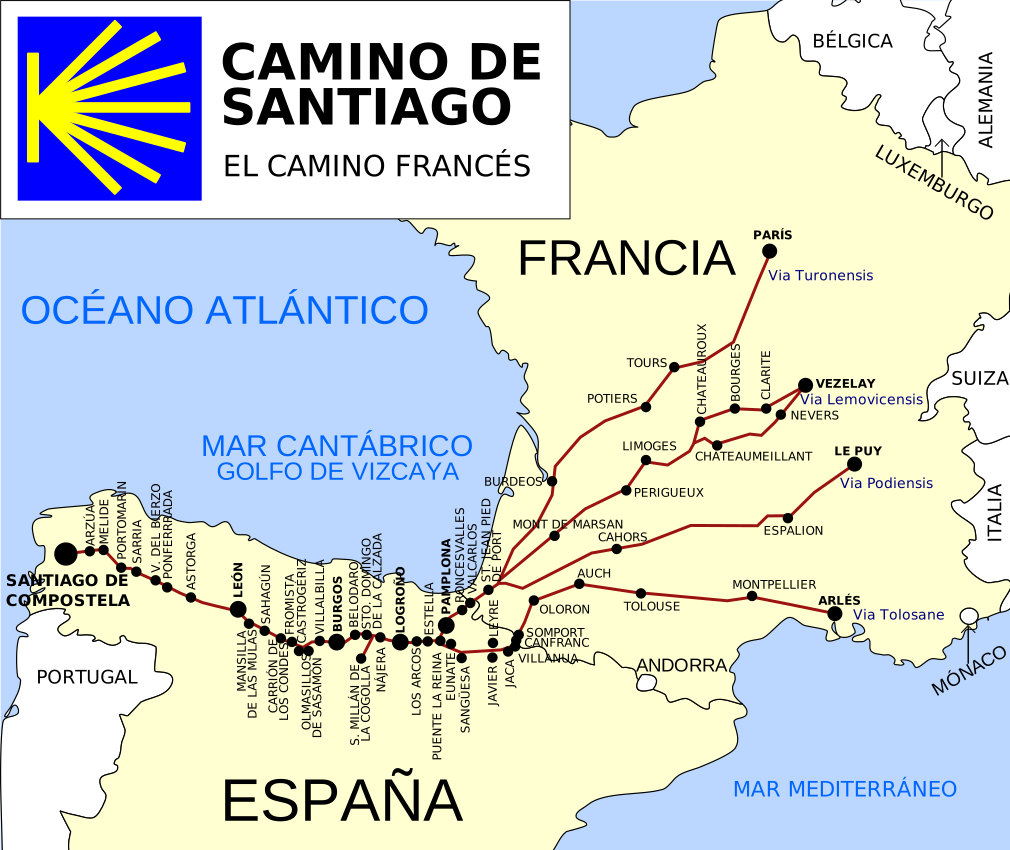
I was moved by Emilio Estevez's feature film "The Way" (2010), which I watched yesterday - based on the story of a man who has lost his son and walks the Camino de Santiago in his place, from France to the north-western Spanish city of Santiago de Compostela, where the relics of St. James rest. The Camino de Santiago is more than 800 km long, to be covered on foot, and it is each person's individual journey of discovery, forgiveness or dedication.
I was moved by Emilio Estevez's feature film "The Way" (2010) (not to be confused with "The Road," 2009), which is based on the story of a man who has lost his son and walks the Camino de Santiago in his place, from France to the north-western Spanish city of Santiago de Compostela, where the relics of St. James rest. The Camino de Santiago is more than 800 km long (for comparison: the distance Riga–Moscow is 920 km, Riga–Berlin 980 km), to be covered on foot, and it is each person's individual journey of discovery, forgiveness or dedication.
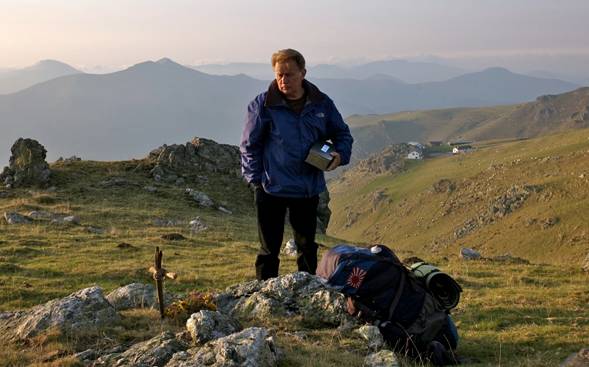
Strangely, I first learned of this road by reading Paulo Coelho's "The Pilgrimage", where the book's main character undertook the journey, but I only felt it as something filled with deep meaning now.
"The Road to Santiago is only one of four roads. It is the Road of the Sword - it can give strength, but that is not enough. [...] The first is the Road to Jerusalem, also called the Road of Ercen, or the Road of the Holy Grail - it gives the ability to perform miracles; the second is the Road to Rome, also called the Road of the Crosses - it teaches communication with other worlds. [...] The Road of Kara [...] It is a secret road. If you choose to walk it, you will have no helpers. Only yourself." (p. 58)
In the preparation process and for walking the Camino today there are many aids - information on the web from walkers or pilgrims (the name for those who walk the Camino, also a keyword when searching for accommodation); a Camino de Santiago Forum on Facebook; an Android mobile app; route maps; photo albums from stopping places along the route (the route is marked with statuettes and signposts adorned with the scallop shell symbol - the sign of recognition among pilgrims), and so on.
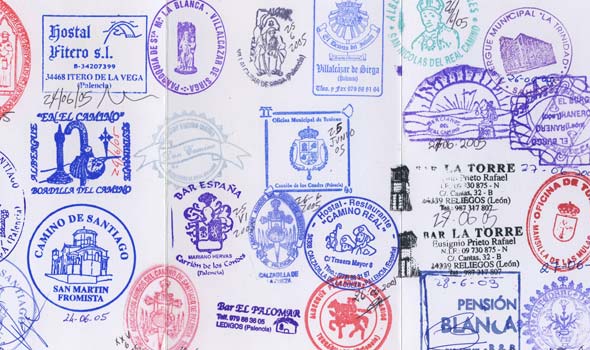
It turns out that since the Middle Ages, pilgrims have had special passports in which stamps are impressed at each stopping place. Moreover, the film shows that at the final destination one can even receive something like a certificate attesting that you have completed the Camino de Santiago with such-and-such a purpose (a little commercialisation, but so be it).
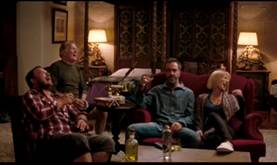
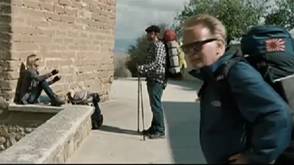
One of the rewards of walking the Camino de Santiago is the strangers one meets along the way, each with their own purpose, life story, experience and view of the world. In this film too, the main character Tom (a doctor from America) meets and acquires three permanent travelling companions - colourful personalities: the Dutchman Joost, who hopes to lose weight during the journey for the joy of his beloved wife and loved ones, but who cannot for a single moment forgo a little bit of jamón, Spain's characteristic cured meat, fragrant cheese and refreshing red wine; Irish writer Jack, whose main goal is to compile a list of the pilgrims he meets and their reasons for travelling, and in the end write a book; and Sarah, who has also lost a child and is walking her own road of grief.
Tom completes this road, leaving a handful of his cremated son's ashes at each stopping place. Encouraged by a Spanish Romani man, the main character travels a few more kilometres to the ocean, to scatter the ashes in the rolling, free waves, rather than leaving them within the walls of the sacred church. In my view, this is actually a more logical end to the journey - for more truthful is the pilgrim who walks driven not by religious but by personal motives.
Looking through old photographs from our trip to Spain and the Basque Country, I realised that without knowing it, in 2008 we had visited one of the stopping points on the Camino de Santiago - Burgos. A few frames from La Catedral de Santa María de Burgos also flashed by in the film.
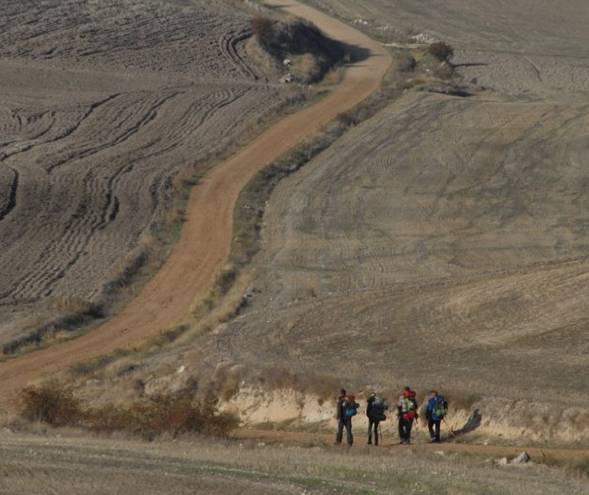
However it may be, the Camino de Santiago is to be walked by each person individually, through foreign land, without any guaranteed shelter or food, when each night's lodging or laid table comes as a gift from God, with deeply intimate, personal motives that you sometimes cannot even reveal or tell to your closest people - yet a moment comes when you can share them with a chance stranger encountered along the way.
.jpg?w=690&mode=16x9|crop)


comments