How Shall We Dye Our Easter Eggs?
Every home and family has certain traditions they follow when dyeing eggs for the Easter holiday. Perhaps it's time to try a different technique? This time, without delving into the symbolism of the egg or its connection to the spring equinox or Christian church festival, I invite you to share ideas on how to make this holiday more colourful and appealing.
Every home and family has certain traditions they follow when dyeing eggs for the Easter holiday. Perhaps it's time to try a different technique? This time, without delving into the symbolism of the egg or its connection to the spring equinox or Christian church festival, I invite you to share ideas on how to make this holiday more colourful and appealing.

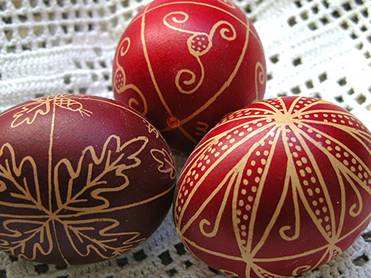
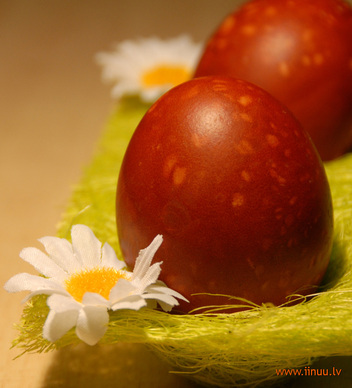
The most traditional egg-dyeing method, known since our great-grandmothers' time, is dyeing in onion skins. Connoisseurs say that red onion skins should be used, along with brownish eggs, in order to achieve a richly saturated red colour.
Variations follow with various embellishments - wrapping on a dried grass stalk or flower. I personally love using grains, especially pearl barley and rice. Before placing the eggs in the slightly simmered onion skin water, each egg is wrapped in a stocking into which a little grain is poured and spread evenly. In the dyeing process, this creates surprisingly delicate patterns of dots and stripes.
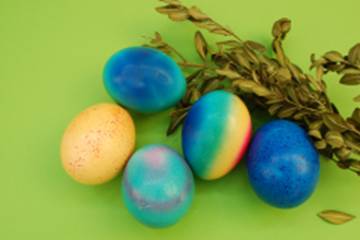
There is, of course, the option of purchasing artificial egg-dyeing products in many and varied shades. As Easter approaches, a wide selection can be found on shop shelves. Particularly vivid and tempting are the dyes made in Germany, even with various pearlescent gleams. You put on the gloves included, heat the dye tubes in water, then apply the colour to the eggs with a brush or simply with the palms of your hands.
Once the initial excitement of the commercial gleam has passed, however, you start looking for ways to give eggs their colour shades in a much more economical, natural, and I believe also healthier way. Then the many gifts of nature come to the rescue - chamomile, to achieve a lemon-yellow tone; peppermint and birch leaves give a greenish hue; alder bark creates a brownish-red shade. Bear in mind that when dyeing with natural ingredients, eggs with a white shell should be chosen.

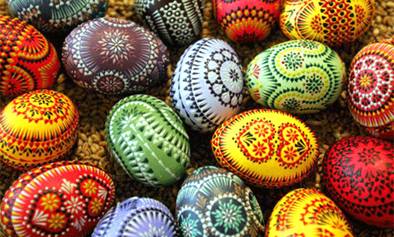
A distinctive finish with a scratched pattern can be achieved using blueberry compote or jam. Eggs dyed in it turn a blackish purple. A freshly dyed egg, before it has completely cooled, is wiped and then a pattern or design is scratched into it with a needle.
To make the egg shell shine after natural dyeing, it can be lightly greased by rubbing in a little oil or butter with a cloth. Every homemaker also knows that when dyeing - or indeed simply boiling - eggs, it helps to add salt, not for flavour, but to make the shell more durable.
If you practise any other egg-dyeing techniques, feel free to share your experience - or send photos of your works of art to [email protected], and I'll add them to the article so we can all enjoy them together as we welcome Easter!
Photos submitted:
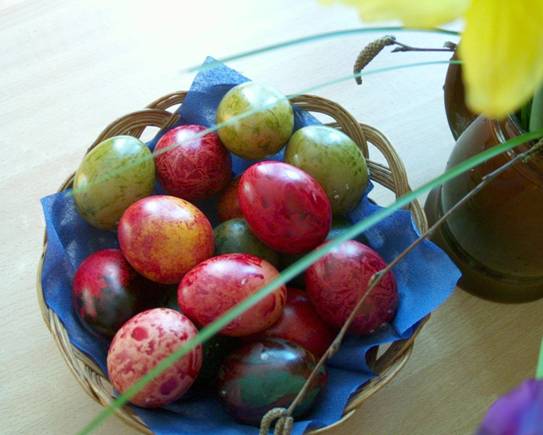
Author: gerda
comments