
Elegy
There are films that speak to you, and there are those that don't. "Elegy" (Elegy, 2008) is one of the former. Not so much for the age-old revelation that love knows no age, but for the aching sense of loneliness - the loneliness that a person consciously or unconsciously chooses for themselves.
A lyrical, melancholy mood, usually a motif of love, personal impressions, intimate feelings - that is elegy.
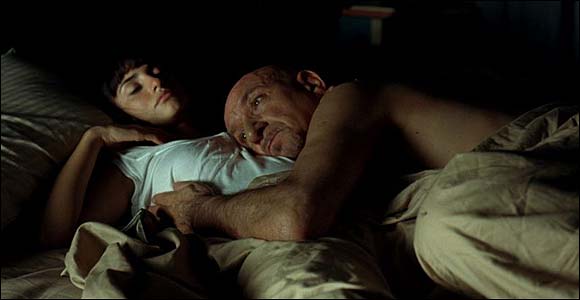
There are films that speak to you, and there are those that don't. "Elegy" (Elegy, 2008) is one of the former. Not so much for the age-old revelation that love knows no age, but for the aching sense of loneliness - the loneliness that a person consciously or unconsciously chooses for themselves.
The more interesting couple in the film was actually the secondary one - not the beautiful student Consuela Castillo and the deeply smitten, accomplished, and aging professor and art critic David Kepesh, but the businesswoman of middle age Carolyn and the professor. The latter meet once a week, or less, over the course of 20 years; they make love; they are both self-sufficient, professionally successful and independent people.

Both David and Carolyn are solitaries who have condemned themselves to that state. One can reflect on several reasons - egoism, careerism, self-rejection, or a refusal to allow oneself to be weak, emotional, happy... Both characters could well have come from single-child families, where all the parents' love, worries, anger and responsibility are loaded onto a single pair of shoulders. Growing up and living with the thought that I must be the cleverest, the most admired, the most successful in work and career; that I must not cry when I am in pain, and must not stay with a person if I have to change my principles or have come to feel that the relationship is wrong, destructive, without a future.
David and Carolyn are kindred spirits, though only once in 20 years do they allow themselves to speak openly about it and acknowledge their loneliness and their longing for a close person to grow old with together. Neither this longing, nor sadness, nor loneliness, nor passion compels either of them to change - only time, or more precisely, age. Both these characters are still young in their thoughts, their freedom and daring, their ability to look at the world with a child's eyes, to find in people and in art something admirable, beautiful, worthy of wonder. What betrays them both is the ageing body. And it is nonsense to say that women suffer their fading more painfully. I think it affects both sexes equally - only women are more persistent in their efforts to keep their appearance fresh for longer.
What is more selfish - to meet and marry a close person, to devote yourself and receive devotion in return, so that in old age there is someone at your bedside as you die; or - to live, to enjoy life, to give and create for those around you and for society, and, renouncing commitment, to remain in solitude?
comments