The Film "Hannah Arendt" (2012)
This is a biographical film about the German political theorist, publicist and philosopher of Jewish origin Hannah Arendt (1906–1975) and her period of life in the USA, when she was preparing a series of reports for The New Yorker on the trial of war criminal Eichmann in Jerusalem. The articles caused a great stir in society. She allowed herself to distance herself from national identity and philosophised about evil.
This is a biographical film about the German political theorist, publicist and philosopher of Jewish origin Hannah Arendt (1906–1975) and her period of life in the USA, when she was preparing a series of reports for The New Yorker on the trial of war criminal Eichmann in Jerusalem. The articles, published in the press and later compiled into a book, caused a great stir in society and particularly in the Jewish community, which came out sharply against Hannah Arendt. She allowed herself to distance herself from national identity and philosophised about evil, also introducing the new concept of the "banality of evil."
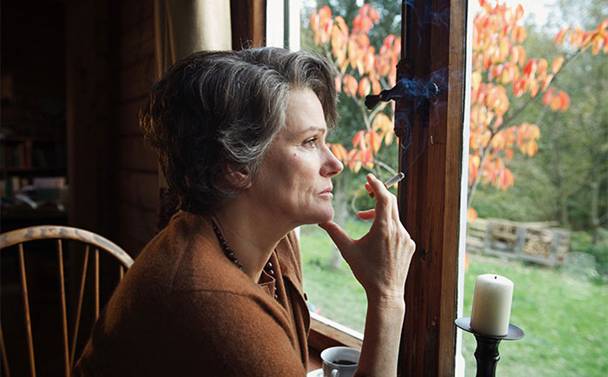
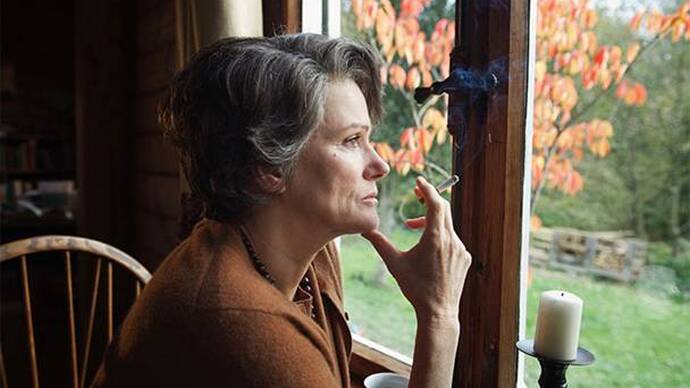
Actress Barbara Sukowa in the role of Hannah Arendt. Photo: Véronique Kolber - Zeitgeist Films - imdb.com
Evil is not an exception, not a demon, but rather an emptiness of personality, a narrowness of mind, manifested in unconditional submission to the majority opinion without thought, analysis or critical evaluation. This is what she saw in the accused Eichmann - and not the cold-blooded, deliberate killer that the Israeli court tried to portray him as.
The film also sketched, briefly, Hannah Arendt's connection with the German philosopher Martin Heidegger, at whose lectures she had arrived during her studies in order to learn how to think - and also to encounter a kindred spirit. Meanwhile, vividly depicted is the change in attitude of society, academic circles and even close family friends when the philosopher stood firm for her thoughts and conclusions, which were in contradiction with previously generally accepted norms. What fascinated was her ability to resist the pressure of those around her, even though emotionally it was very difficult. In a conversation with her husband, Hannah's character simply let slip the phrase that it was now apparent who had been true friends and who had merely pretended or wished to be in their company for the sake of popularity.
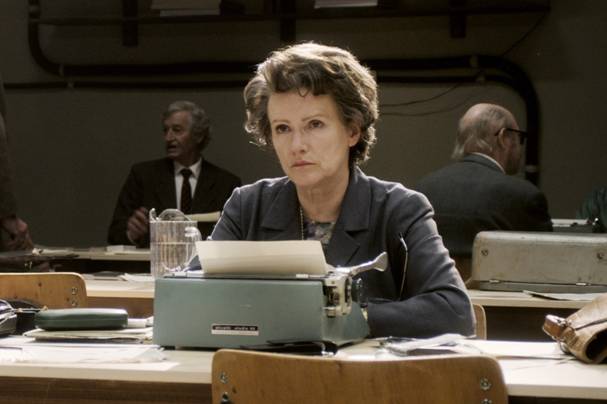
Actress Barbara Sukowa in the role of Hannah Arendt. Photo: Zeitgeist Films - imdb.com
The philosopher always maintained that she loves specific people, but not nations or separate groups or factions. This also resonates in Hannah's conversation with an old friend, dying in Jerusalem, who turns away from her after reading the Jewish press articles.
Also striking was the question about which the filmmakers indirectly prompted discussion: the prevailing or even growing non-thinking in society, which is certainly a threat to the rise of a new totalitarian regime in any country, at any time or under any circumstances.
comments