Those Touched by Čaks
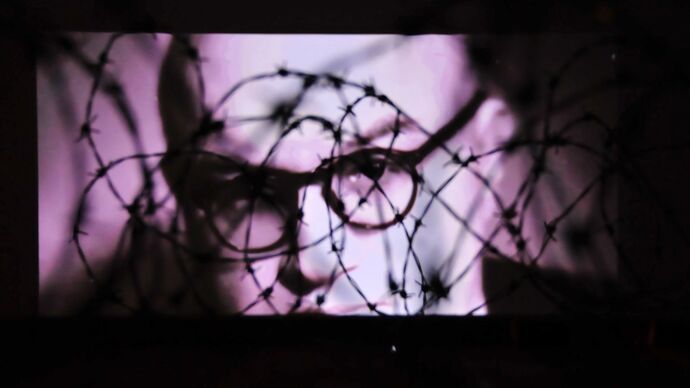
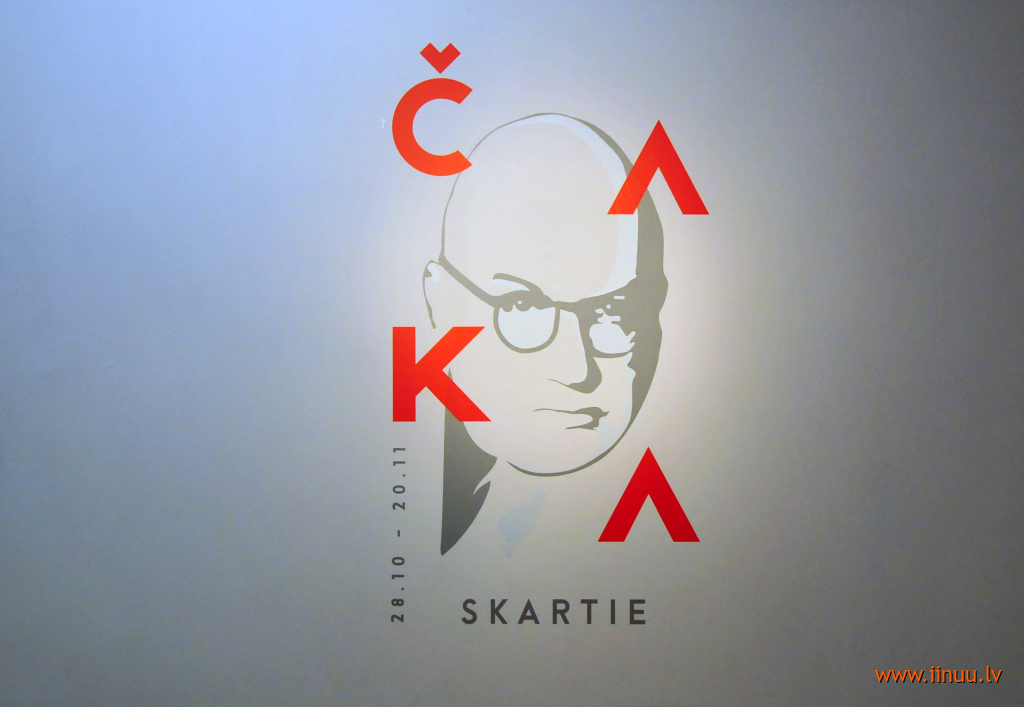
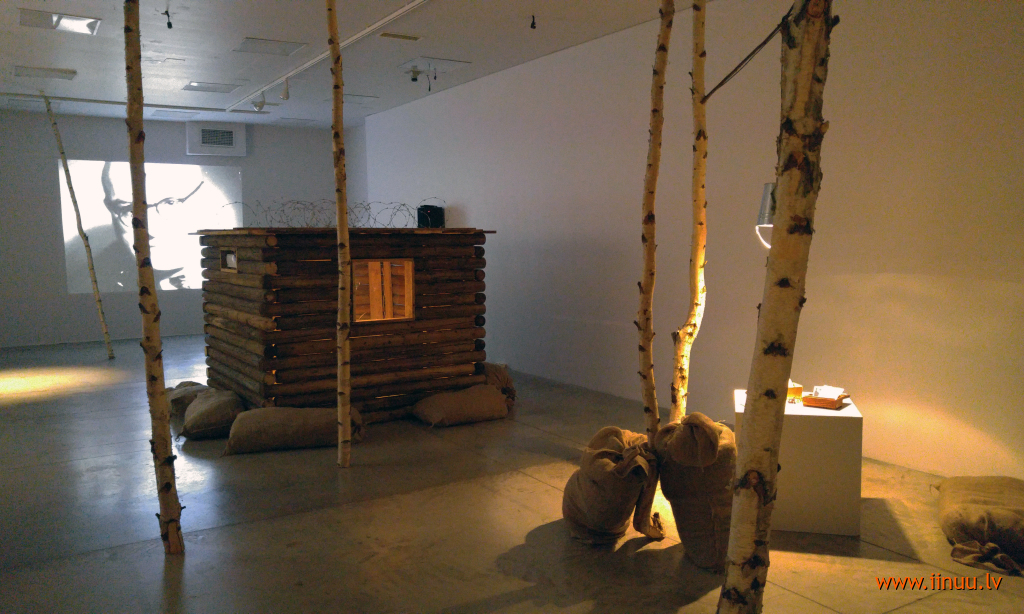
The impulse to write about Čaks' "Those Touched by Eternity" came from the exhibition at the Riga Art Space, where unfortunately only one small room is devoted to this theme. Though in my opinion one could fill an entire exhibition hall with talk of Čaks' work. From my school days (I am a child of the Awakening) the poem that stands out most vividly in my memory is the one Čaks wrote - The Sermon at Piņķi Church.
The impulse to write about Čaks' "Those Touched by Eternity" came from the exhibition at the Riga Art Space, where unfortunately only one small room is devoted to this theme. Though in my opinion one could fill an entire exhibition hall with talk of Čaks' work - about Riga's streets, coachmen, bustling crowds, lanterns, shop signs, taverns, neighbourhoods, trams, about the riflemen. Latvia's 97th birthday and the relatively recently passed 114th anniversary of Čaks' birth are an fitting occasion to speak of those touched by Čaks.
At the aforementioned exhibition I came across some interesting facts about the creation of the poem cycle "Those Touched by Eternity". Aleksandrs Čaks first encountered the riflemen during the Civil War in Russia (1918–1922). Later, in the 1930s, working on the editorial staff of the publication "Latvian Riflemen", Čaks became acquainted with the fate stories of several riflemen. It was then that the idea arose to write a poem cycle dedicated to the Latvian Riflemen.
Few knew that Čaks had specifically rented a small room in the building at 51 Marijas Street so as to work on the poem cycle undisturbed. From it emerged 22 poems, of which only 8 were included in the first edition of 1937, while two years later, in 1939, the second part of the cycle appeared with 14 poems.
On 10 January 1940, at the House of the Latvian Society, Aleksandrs Čaks was presented with the Anna Brigadere Prize for the poem cycle "Those Touched by Eternity". However, already in 1945 the cycle was placed on the list of banned literature.
During the Awakening, the poem cycle was reborn. In 1988 the publishing house "Liesma" published "Those Touched by Eternity" in full in a print run of 50,000 copies. In 2010 the cycle was translated into Georgian by Ēriks Grigolija.
From my school days (I am a child of the Awakening) the poem that stands out most vividly in my memory is the one Čaks wrote - The Sermon at Piņķi Church, where Colonel Jukums Vācietis delivers his inspiring address to the regiment of riflemen. I will try to recall and quote fragments:
Men of Zemgale, look upon this painting,
This sacred painting in the vault's recess.He points with his stubby finger.
His voice rings like a trumpet through the thick walls.Christ there walks upon the waters as if on sand
And does not sink, because he believes in himself,
In his spirit, in the work he does.You too believe and you shall not sink,
Shall not drown again in nonexistence
Where you have been for hundreds, hundreds of years.Believe in your strength, men of Zemgale,
In your hatred, in your endurance,
In your rights and your hidden happiness.The stone on which you stand - yours,
Every flower that you see - yours,
Trees, grass, all the earth - yours,
The sky above, the space around - yours
As surely as your eyes, your shoulder and your firm palm,
The bitterness you feel within your hearts.[..]
To go into battle is the lot of free men,
To die in battle is the lot of free men,
So that afterwards, like a living, mighty breath,
It might lift up their entire people.
This was, it seems, in the 1990s the most popular poem fragment from "Those Touched by Eternity" - and in my view it remains so.
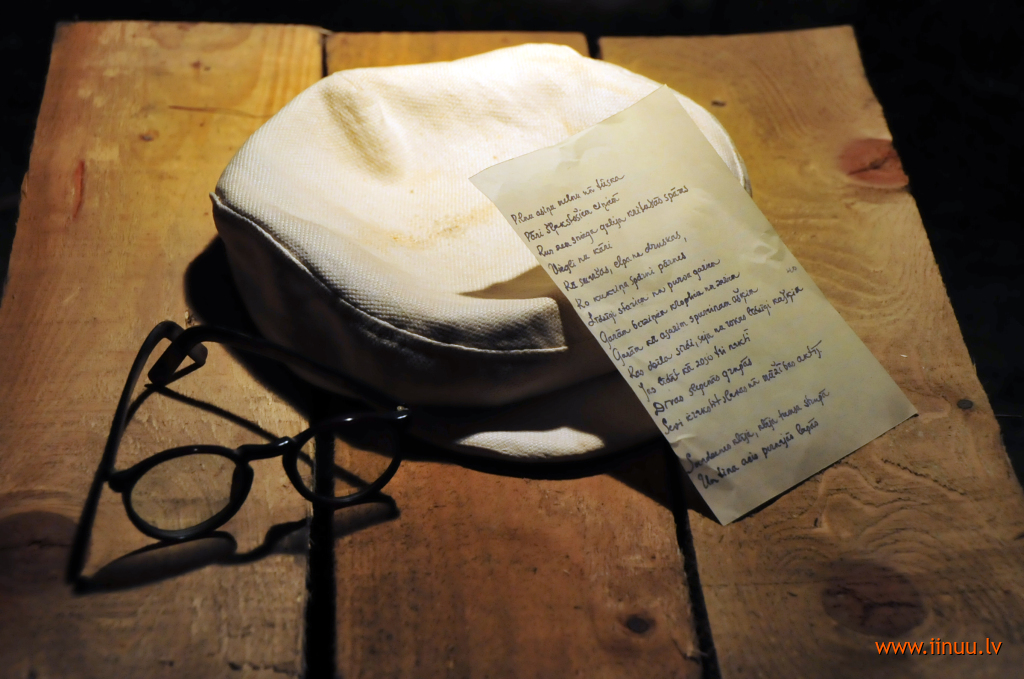
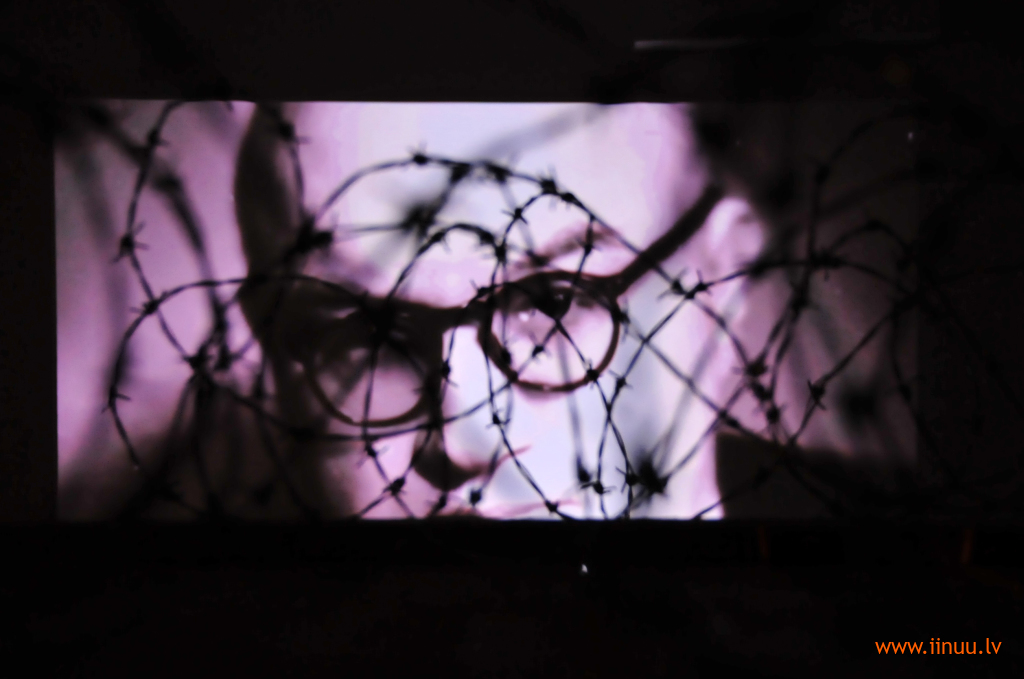
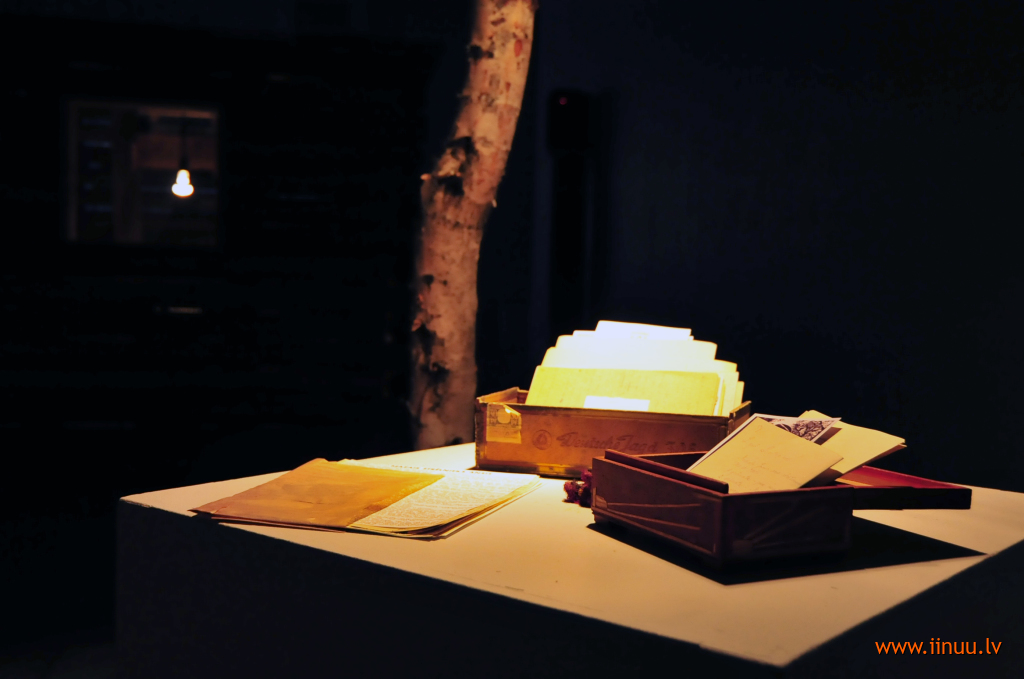
A few more photographs from the exhibition for your perusal.
comments