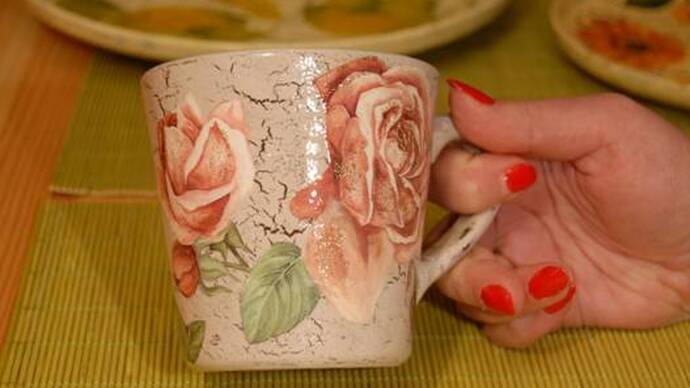
Decoupage on Crockery
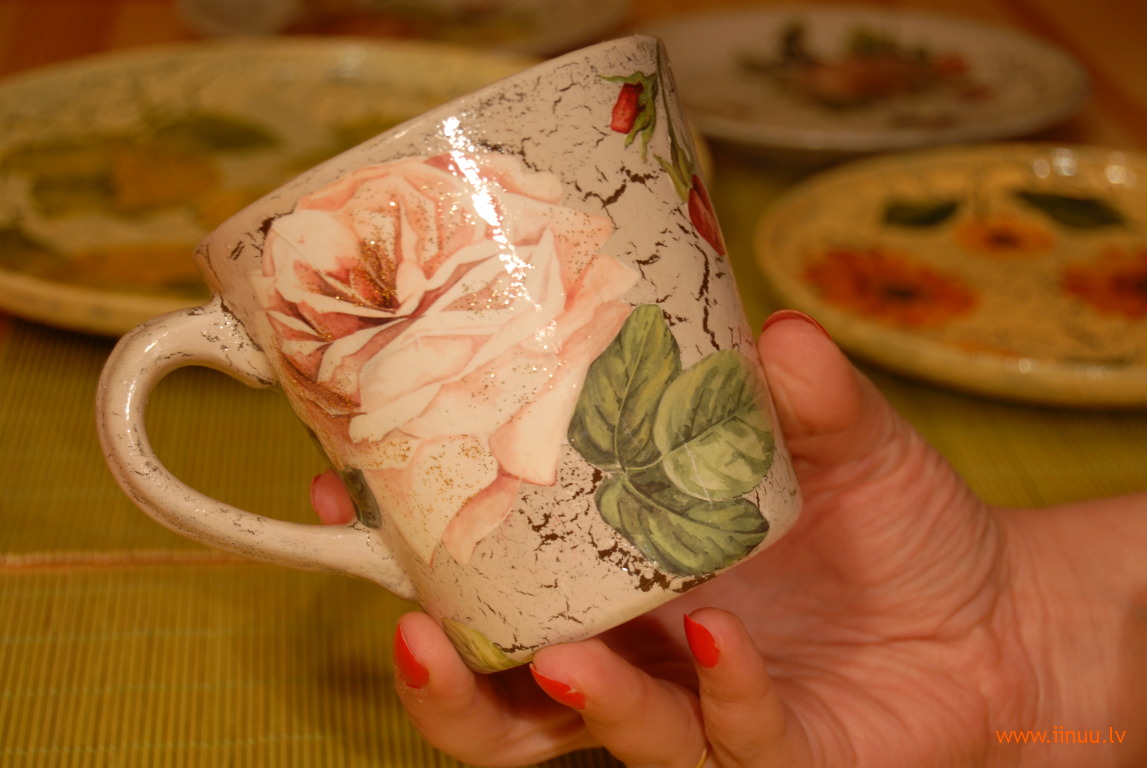
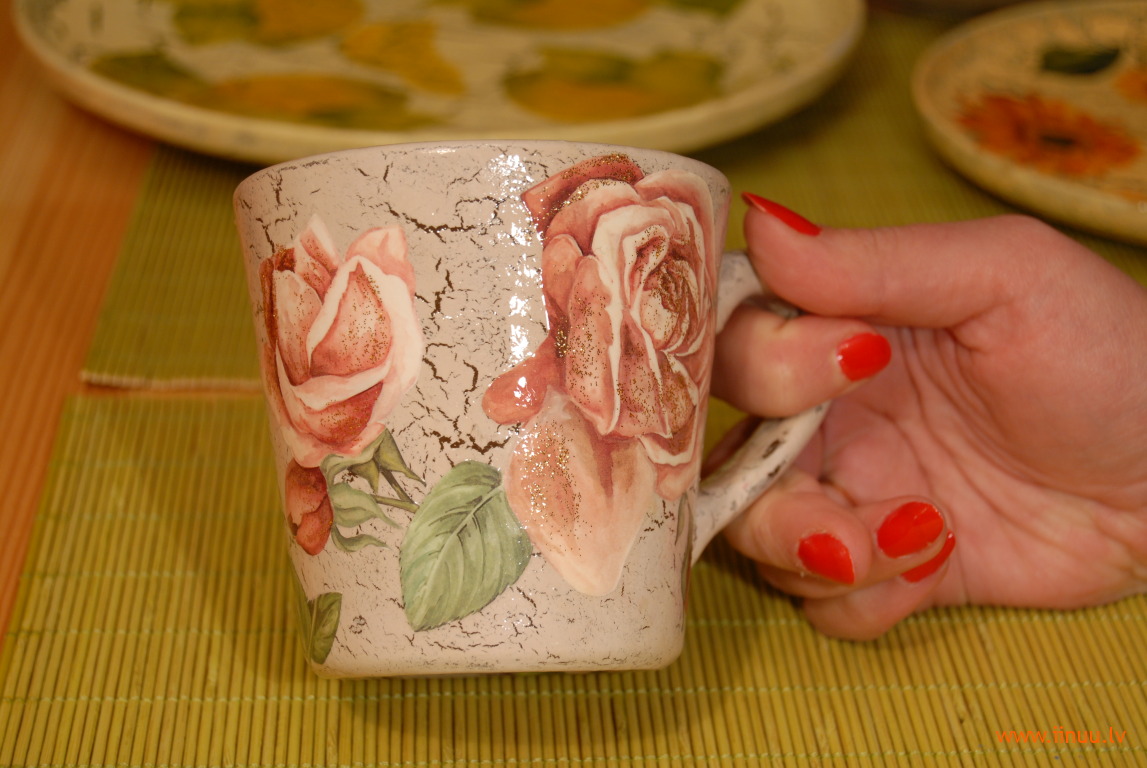
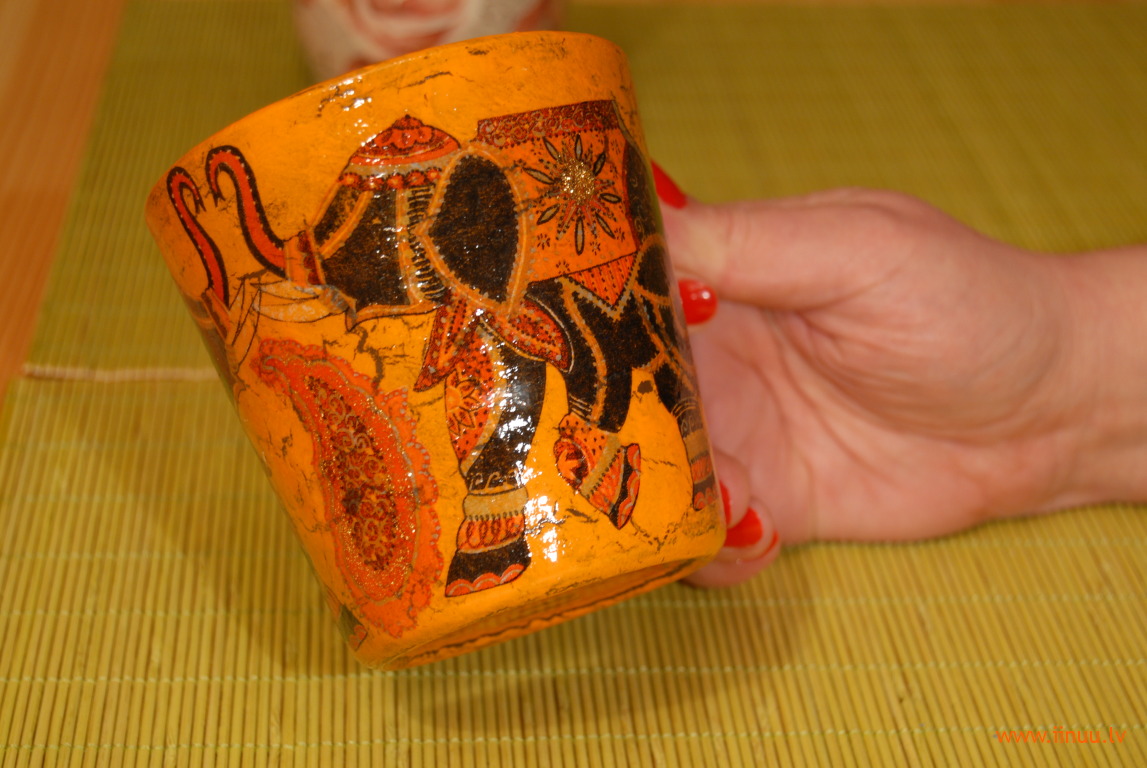
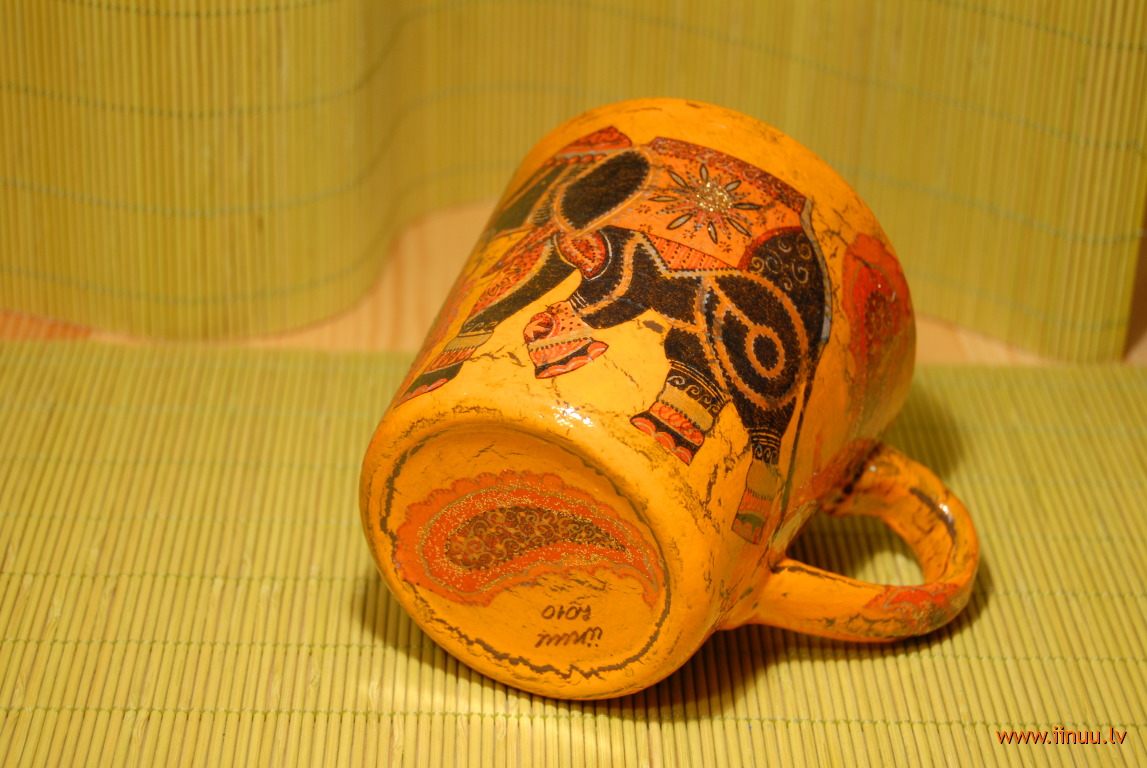
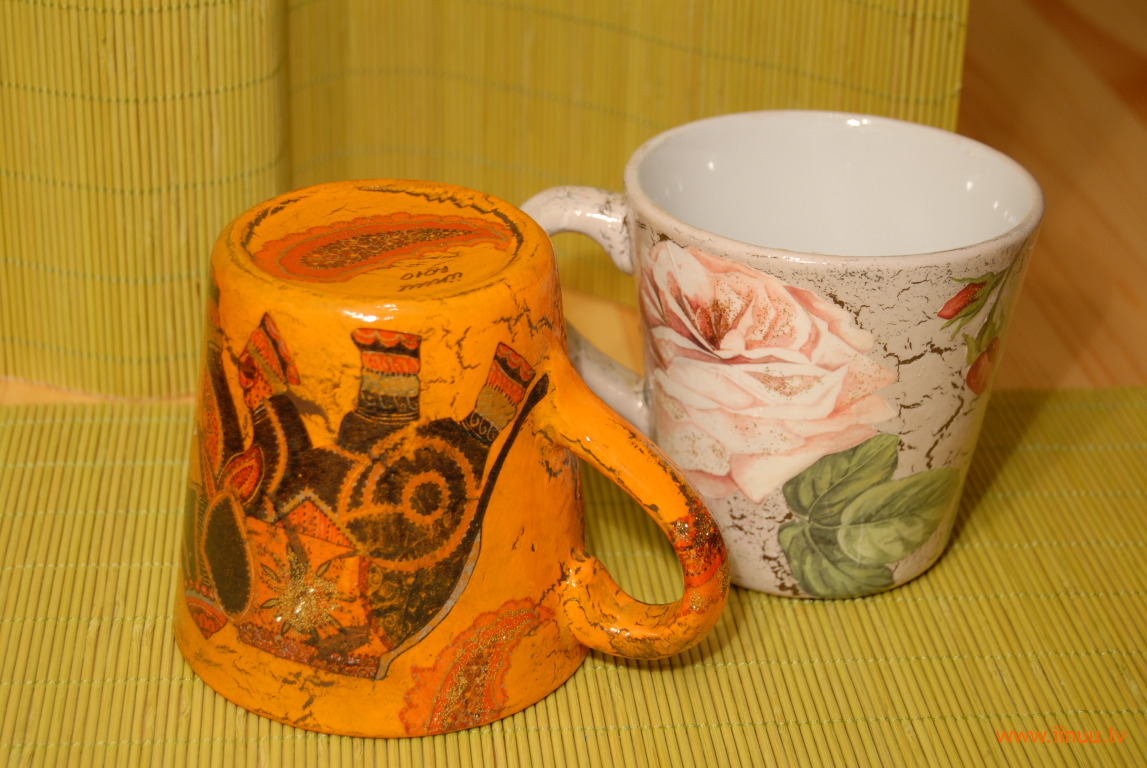
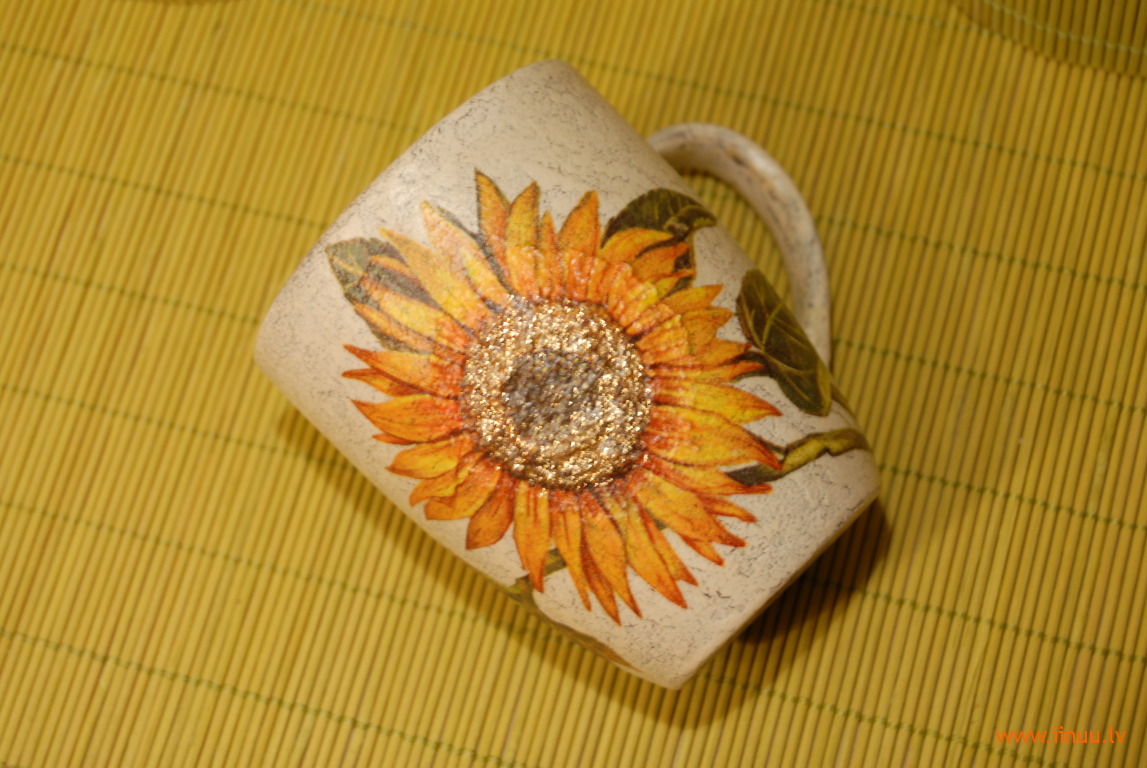
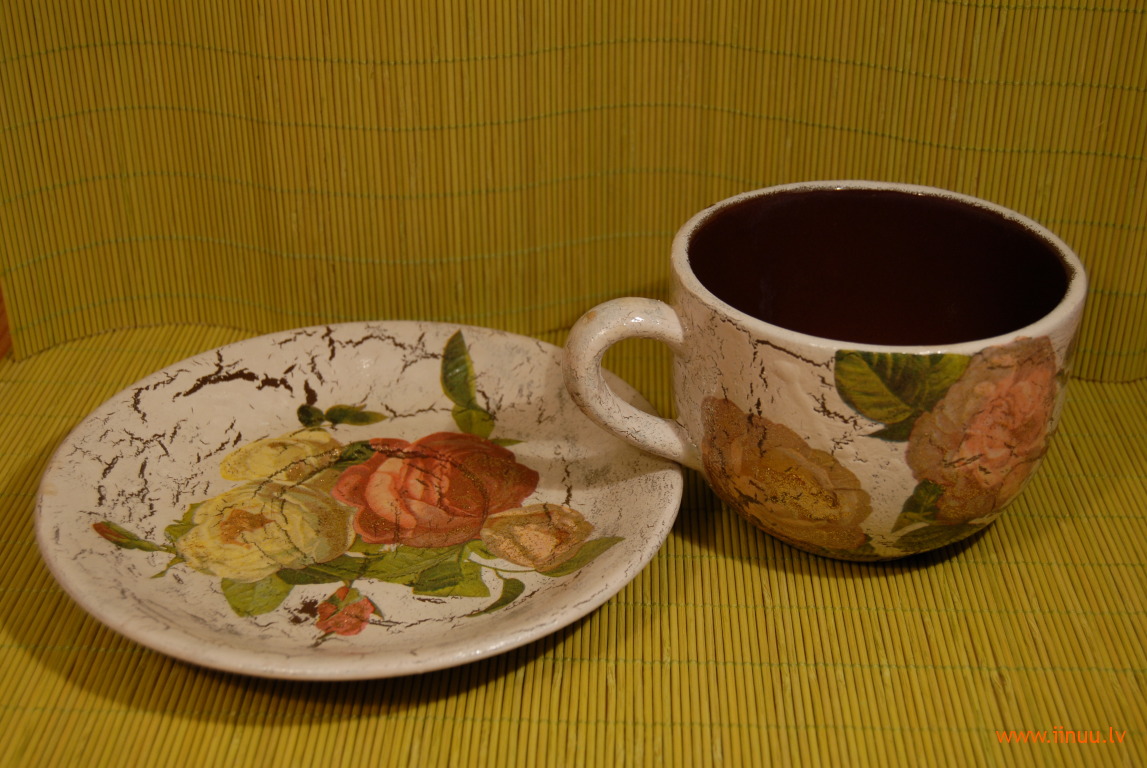
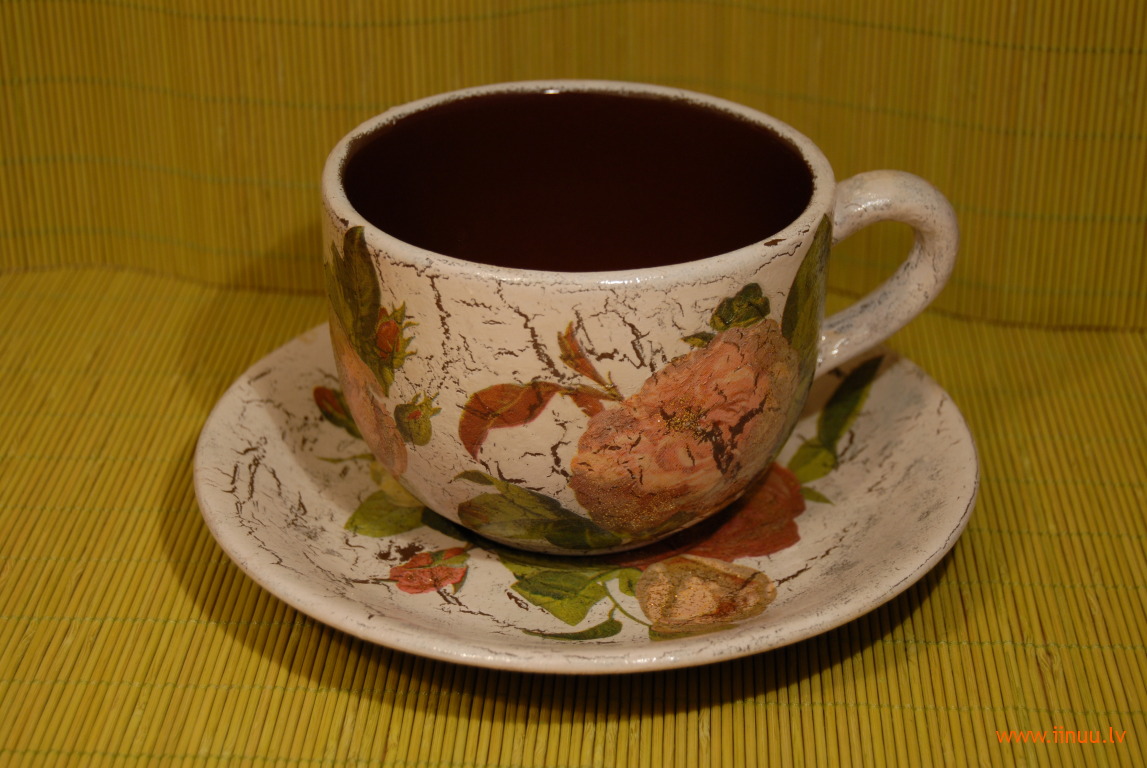
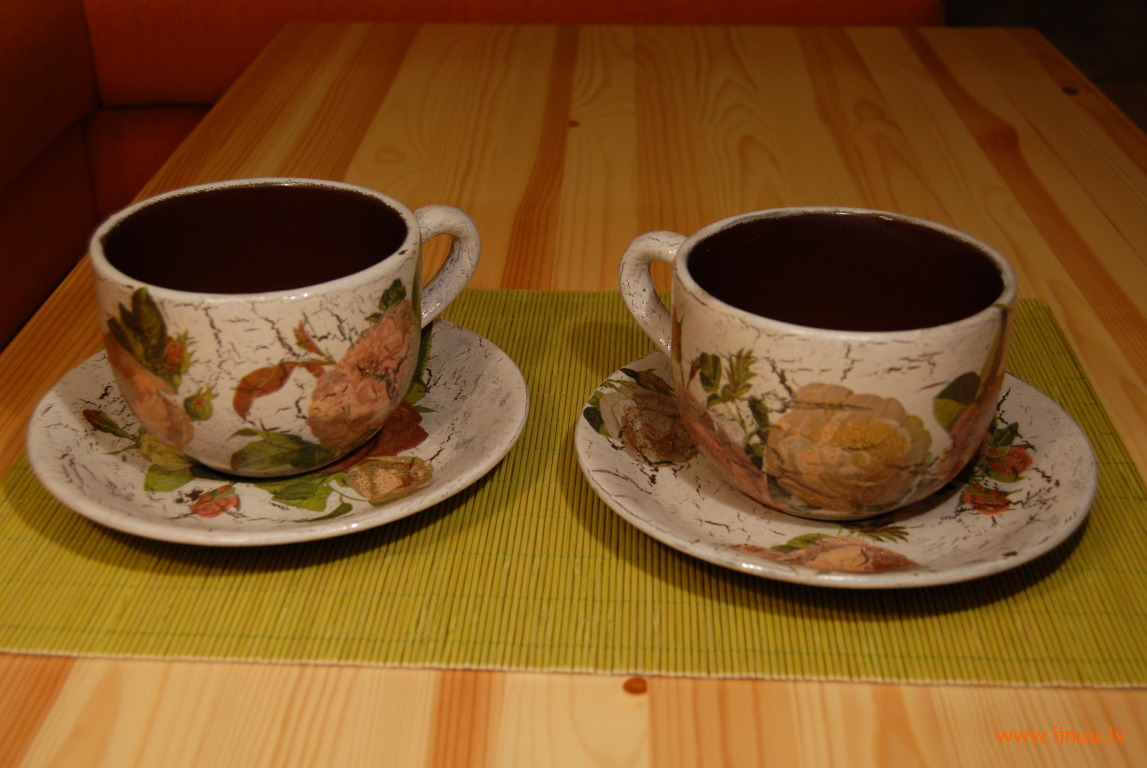
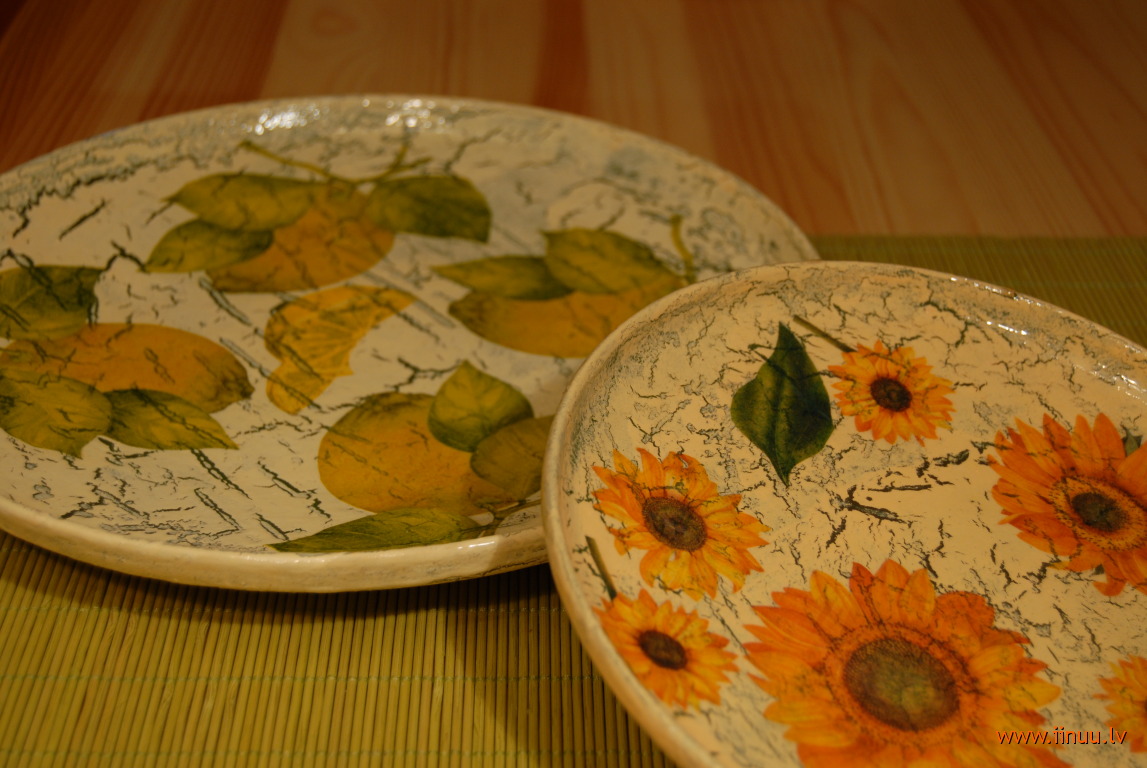
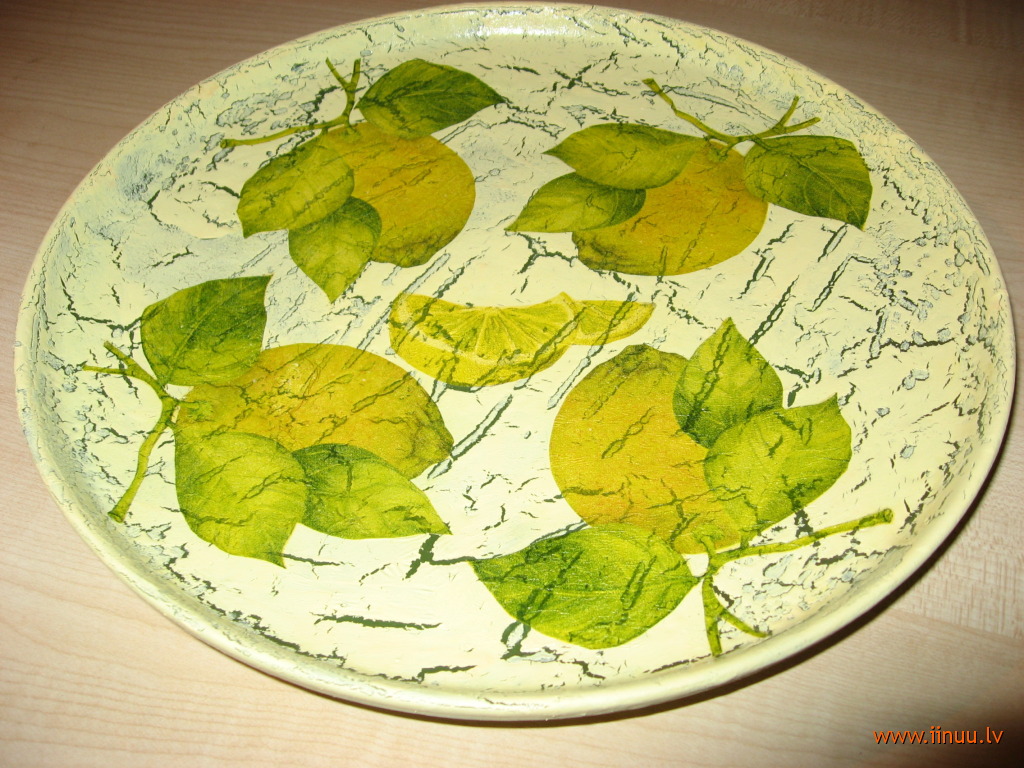
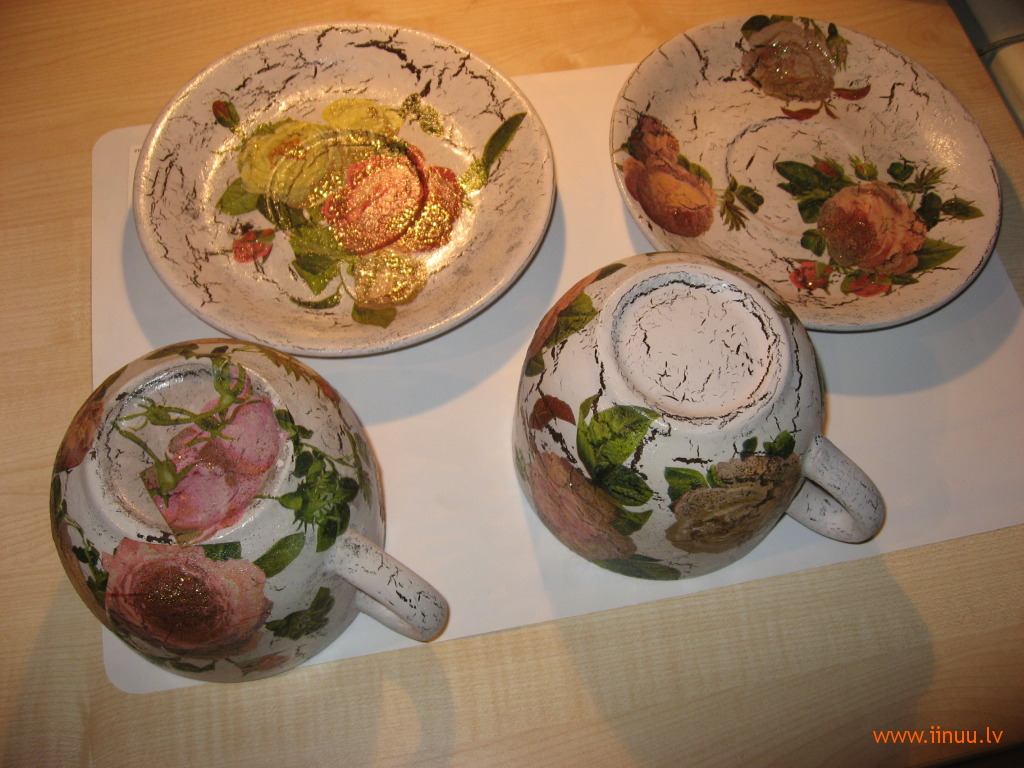
This time, about how to handcraft vintage-style crockery - a cup, saucer, fruit bowl, plate. What follows is about the making process, the materials used and the result.
This time, about how to handcraft vintage-style crockery - a cup, saucer, fruit bowl, plate. What follows is about the making process, the materials used and the result.
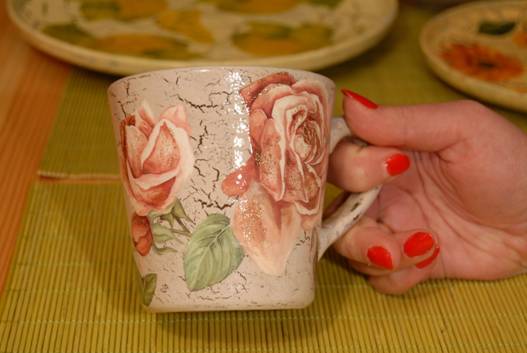
Required:
- a plain-coloured mug or plate;
- rice paper or napkins with a floral or other easily cut-out pattern;
- acrylic paints (white, dark brown, green, yellow);
- craquelure (lacquer) for porcelain and ceramic surfaces;
- decoupage glue;
- glue with gold sparkles;
- lacquer (matt or glossy) solvent-based;
- scissors;
- brush;
- a piece of foam;
- rubber gloves.
Where to buy? - At the shop "Marina" (Stabu Street 49a, Riga): acrylic paint (LVL 3.49/piece); rice paper (LVL 1.73 per sheet); napkins available individually (LVL 0.20 each); glue (LVL 5.99); craquelure medium (LVL 4.67). At "Tiimari" (shopping centres Spice, Alfa, Olympia, Origo): glue with gold sparkles (LVL 1.25), mug (LVL 1.05). At "Depo": lacquer (approx. LVL 3–4; yacht varnish works well).
Step 1.
Cut flowers or other images from the napkin or rice paper strictly along the outline.
Step 2.
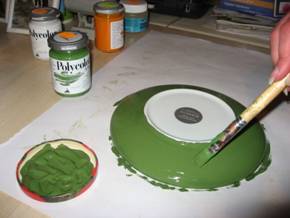
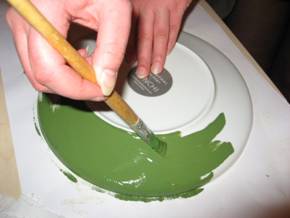
Paint the surface of the plate or mug with the acrylic paint chosen as the base - the colour that will show through the cracks. A dark brown tone looks good. Allow to dry, waiting about half an hour or using a hair dryer.
Step 3.
Apply one coat of craquelure with a brush. Allow to dry.
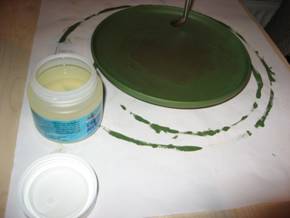
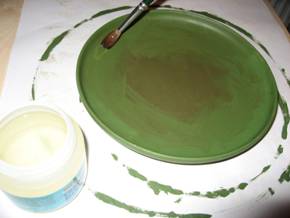
Step 4.
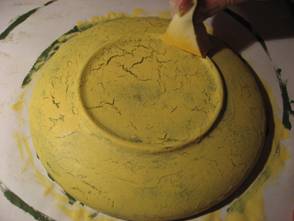
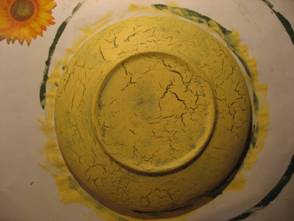
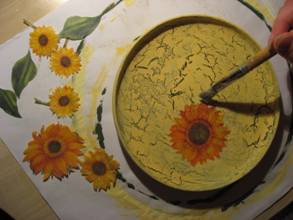
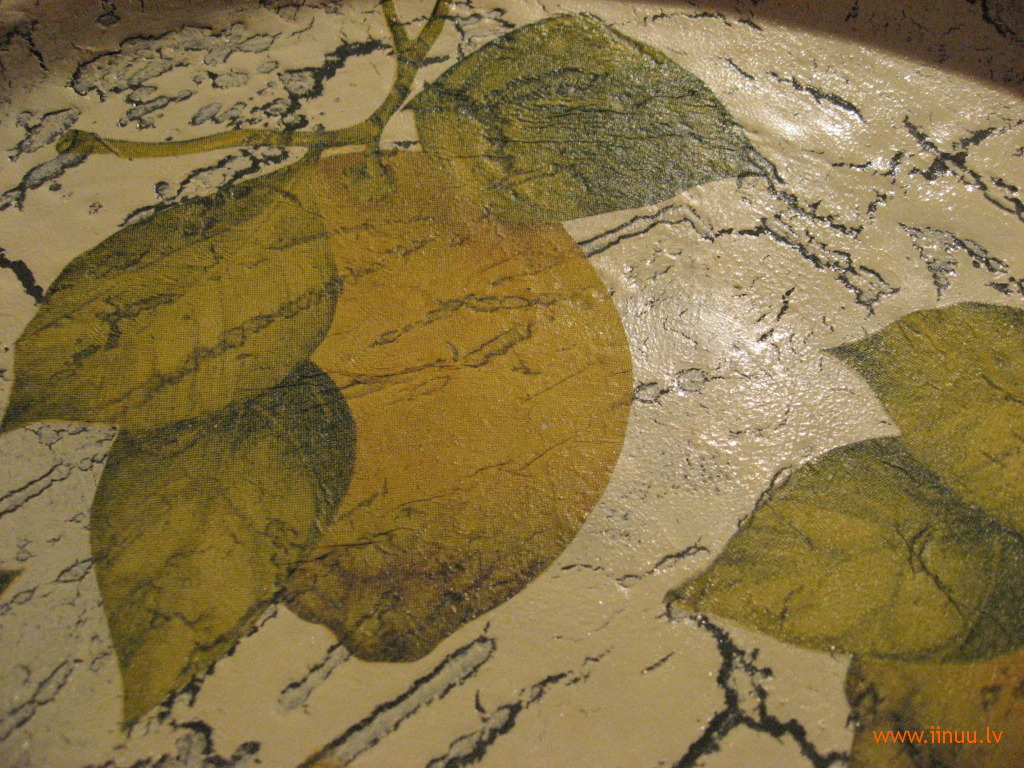
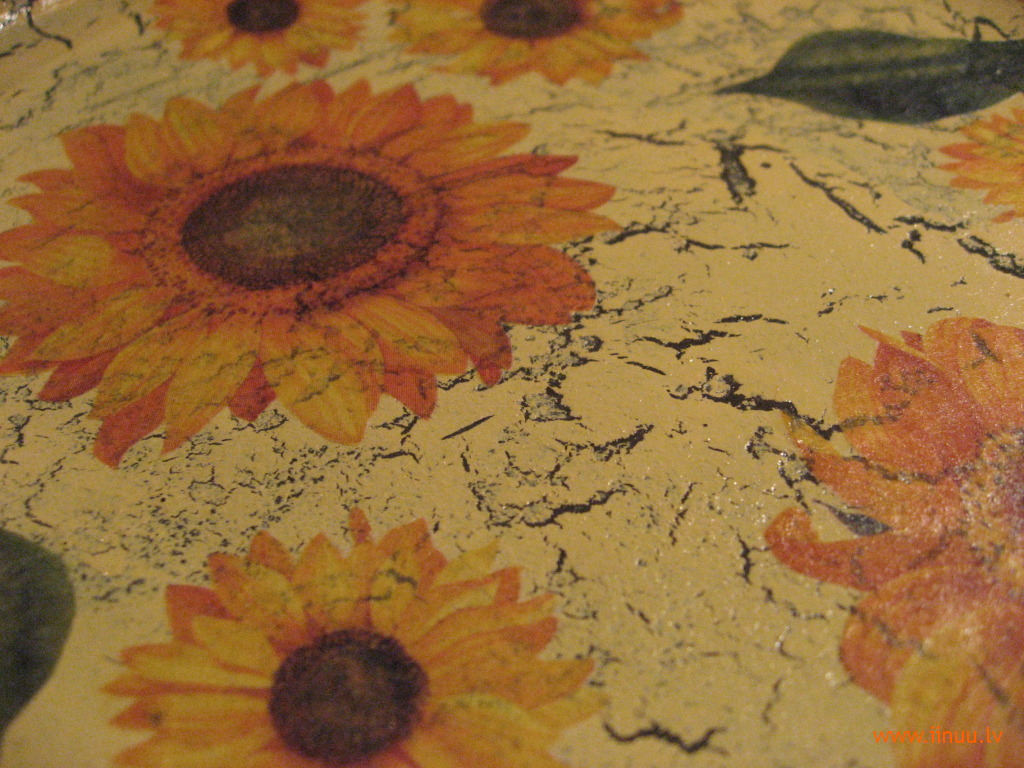
Apply the top coat of light acrylic paint with a brush, or better a piece of foam. Take care to apply only a single coat - that is, once the paint has been applied, do not go over it again. As it dries, cracking forms. Each piece is unique because the cracking pattern is always different. The less the previous coat has dried, the larger the cracks.
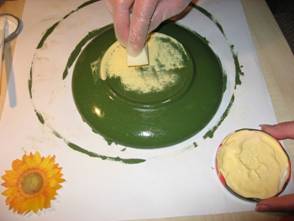
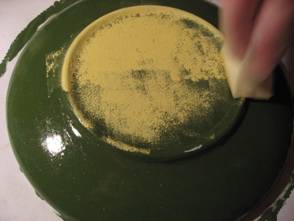
Step 5.
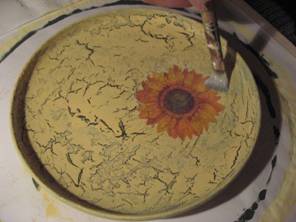
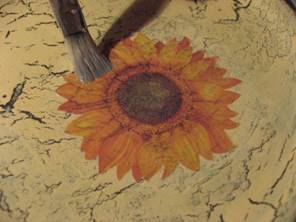
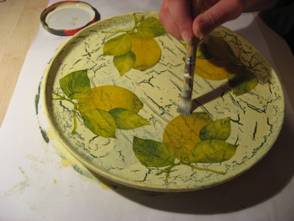
Once all the paint and lacquer layers have dried, use decoupage glue to stick the cut-out flowers and images onto the aged surface of the mug. Leave to dry for approximately twenty-four hours.
Step 6.
For the mug surface to be durable when used, washed or rinsed in water, it must be varnished two or even three times with a solvent-based lacquer. Allow to dry thoroughly for a couple of days.
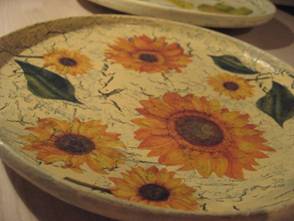
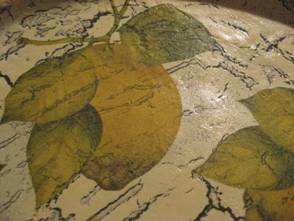
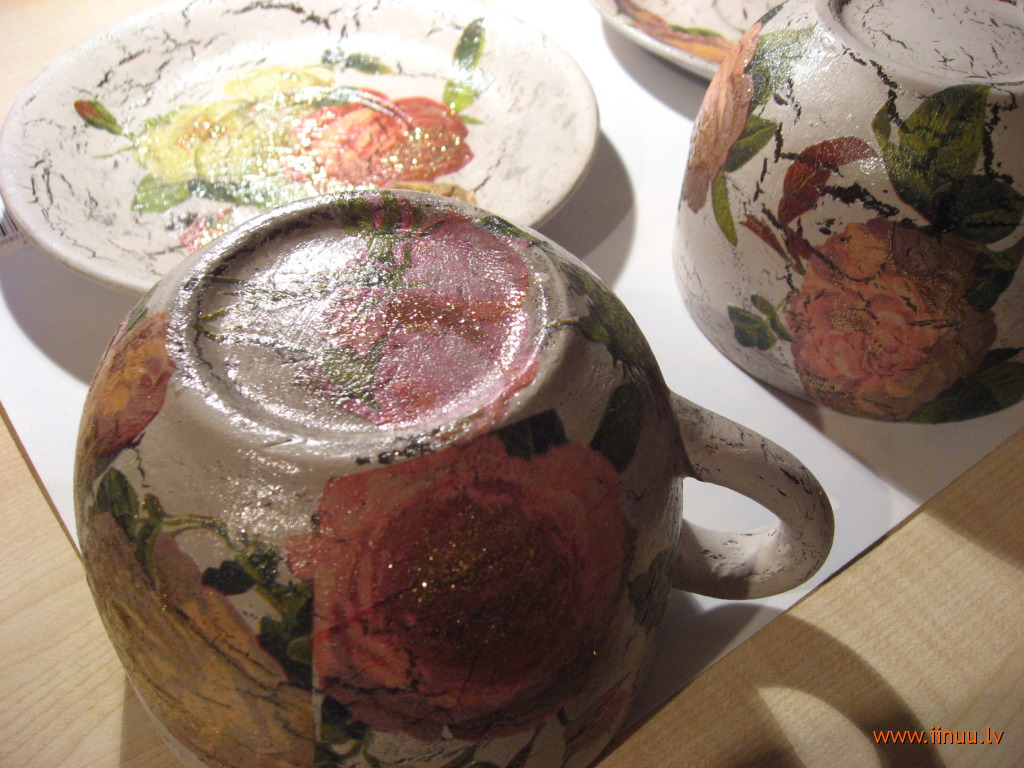
Finally, if necessary, trim the edges with a razor blade or scrape off any accidental paint or lacquer drips. The vintage-style crockery is ready.

comments